Linking between multilingual versions of a website is one of the more technically demanding areas of international SEO. Done correctly, it helps search engines understand which language or regional version of a page to serve to which audience, and it supports a coherent internal linking structure across all language variants. Done poorly, it can lead to duplicate content issues, incorrect language targeting, and wasted crawl budget. This article explains the key methods, common mistakes, and practical considerations for businesses managing multilingual websites.
Key Takeaways
- Hreflang annotations are the primary technical signal for telling search engines which language or regional version of a page corresponds to which audience, but they must be implemented consistently across all variants to work correctly.
- Internal linking between language versions should be deliberate and contextually appropriate, not automatic or indiscriminate, to avoid confusing users and diluting crawl signals.
- Backlink acquisition for multilingual websites requires a language- and region-specific approach; links pointing to one language version do not automatically benefit other versions.
- URL structure choices, such as subdirectories, subdomains, or country-code top-level domains, affect how link equity flows between language versions and how search engines interpret geographic targeting.
- A technical SEO audit of the existing multilingual setup is advisable before launching a link building campaign, since structural problems can limit the impact of any new links acquired.
Why Linking Between Language Versions Matters for SEO
A multilingual website typically serves the same or similar content in two or more languages, sometimes also targeting different geographic regions. Search engines need clear signals to determine which version is intended for which user. Without those signals, a search engine may index the wrong version for a given market, serve a French-language page to English-speaking users, or treat near-identical translated pages as duplicate content. Correct linking between language versions, combined with accurate hreflang annotations, reduces these risks and helps each version compete in its intended market.
From a link building perspective, multilingual websites present a specific challenge: organic backlinks tend to accumulate unevenly. The primary language version, often English, typically attracts the most external links, while secondary language versions may have thin backlink profiles. This imbalance can suppress rankings for those secondary versions even when the content quality is comparable. Understanding how link equity flows across a multilingual structure is therefore important before planning any outreach campaign.
Hreflang: The Core Technical Signal
Hreflang is an HTML attribute, or an equivalent XML sitemap or HTTP header signal, that tells search engines the language and, optionally, the regional targeting of a given page, and which other pages are its language or regional equivalents. Google and Yandex support hreflang; Bing uses a different approach based on content-language meta tags and geographic targeting settings in Bing Webmaster Tools. Hreflang does not directly affect how link equity is distributed between pages, but it does affect which version a search engine chooses to rank for a given query in a given locale.
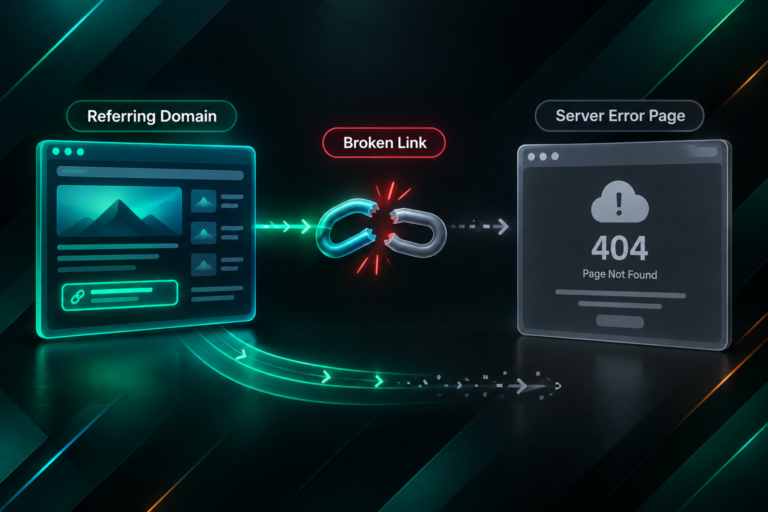
A correctly implemented hreflang setup requires that every language variant of a page references all other variants, including itself. If a page in French references the English version but the English version does not reference the French version, the annotation is incomplete and may be ignored. This reciprocal requirement means that adding a new language version requires updating the hreflang annotations on every existing variant, which can be operationally demanding on large sites. Common implementation errors include missing self-referencing annotations, mismatched URLs, incorrect language or region codes, and hreflang tags that reference pages returning non-200 HTTP status codes.
Hreflang annotations can be placed in the HTML head section of each page, in an XML sitemap, or in HTTP response headers. For large multilingual websites, the XML sitemap approach is often more manageable, since it centralises the annotations rather than requiring changes to individual page templates. Whichever method is chosen, consistency across all variants is essential.
URL Structure and Its Effect on Link Equity
The URL structure chosen for a multilingual website has a direct bearing on how link equity flows between language versions and how search engines interpret geographic targeting. The three main approaches are subdirectories, subdomains, and country-code top-level domains (ccTLDs).
Subdirectories (for example, example.com/fr/ for French content) keep all language versions under a single domain. This means that domain-level authority signals, including the backlink profile of the root domain, are shared across all language versions. A new link pointing to the root domain may benefit all subdirectory versions to some degree, though the effect on individual pages depends on internal linking and other factors. Subdirectories are generally considered the most straightforward structure for smaller multilingual sites or those with limited resources for building separate backlink profiles.

Subdomains (for example, fr.example.com) are treated by Google as part of the same site for most practical purposes, but the relationship between the root domain’s backlink profile and individual subdomains is less direct than with subdirectories. Some SEO practitioners consider subdomains to be slightly weaker than subdirectories for consolidating link equity, though Google has stated that it handles both similarly. In practice, the difference may be less significant than the quality of the content and the backlink profile of each subdomain.
Country-code top-level domains (for example, example.fr) are separate domains in the eyes of search engines. Each ccTLD requires its own backlink profile to build authority in its target market. This approach offers the strongest geographic targeting signal but also the highest ongoing investment in link acquisition, since links to example.com do not pass equity to example.fr. For businesses with the resources to build and maintain separate link profiles for each market, ccTLDs can be effective. For those with limited outreach capacity, the fragmentation of link equity across multiple domains can be a significant disadvantage.
Internal Linking Between Language Versions
Internal links between language versions serve a different purpose from hreflang annotations. While hreflang tells search engines about language equivalence, internal links between versions can help users navigate to their preferred language and can distribute crawl signals across the site. However, internal linking between language versions should be implemented thoughtfully rather than automatically.
A common approach is to include a language switcher in the site header or footer that links to the equivalent page in each available language. This gives users a clear navigation path and ensures that search engine crawlers can discover all language versions from any entry point. The language switcher links should point to the canonical URL of each language version, not to a redirect or a JavaScript-rendered destination, to ensure reliable crawling and indexing.
Contextual internal links within body content, such as a link from an English blog post to the French version of a related article, are less common and should only be used when they genuinely serve the reader. Linking between language versions within body content can be appropriate in specific cases, such as a page that explicitly discusses multilingual resources, but it is not a standard practice for most websites. Indiscriminate cross-language internal linking can create a confusing user experience and may dilute the topical relevance signals that search engines use to evaluate individual pages.
For large multilingual websites, internal link audits are a useful tool for identifying orphaned language versions, pages that are not linked from any other page on the site, and inconsistencies in the language switcher implementation. Orphaned pages may not be crawled or indexed reliably, regardless of how strong their external backlink profile is.
Backlink Acquisition for Multilingual Websites
External backlinks remain one of the more significant signals that search engines use to evaluate the authority and relevance of a page. For multilingual websites, the challenge is that backlinks tend to accumulate naturally toward the primary language version, often leaving secondary language versions with weaker profiles. Addressing this imbalance typically requires a deliberate, language-specific outreach strategy.
When planning link acquisition for a multilingual website, it is important to distinguish between links that point to the root domain and links that point to specific language versions. A link from a French-language publication pointing to example.com/fr/article provides a stronger relevance signal for the French version of that article than a generic link to the root domain. Publishers in the target language market are generally more appropriate outreach targets than English-language publications, both for relevance and for the geographic signals that local links can provide.
Manual outreach for multilingual link building typically involves identifying publishers, bloggers, journalists, and resource pages in the target language market, then pitching content or link placements that are genuinely relevant to their audience. This requires outreach in the target language, which adds complexity compared to a single-language campaign. Machine-translated outreach emails are generally ineffective and can damage the credibility of the campaign. Working with outreach specialists who have native or near-native proficiency in the target language is advisable for markets where language quality matters to publishers.
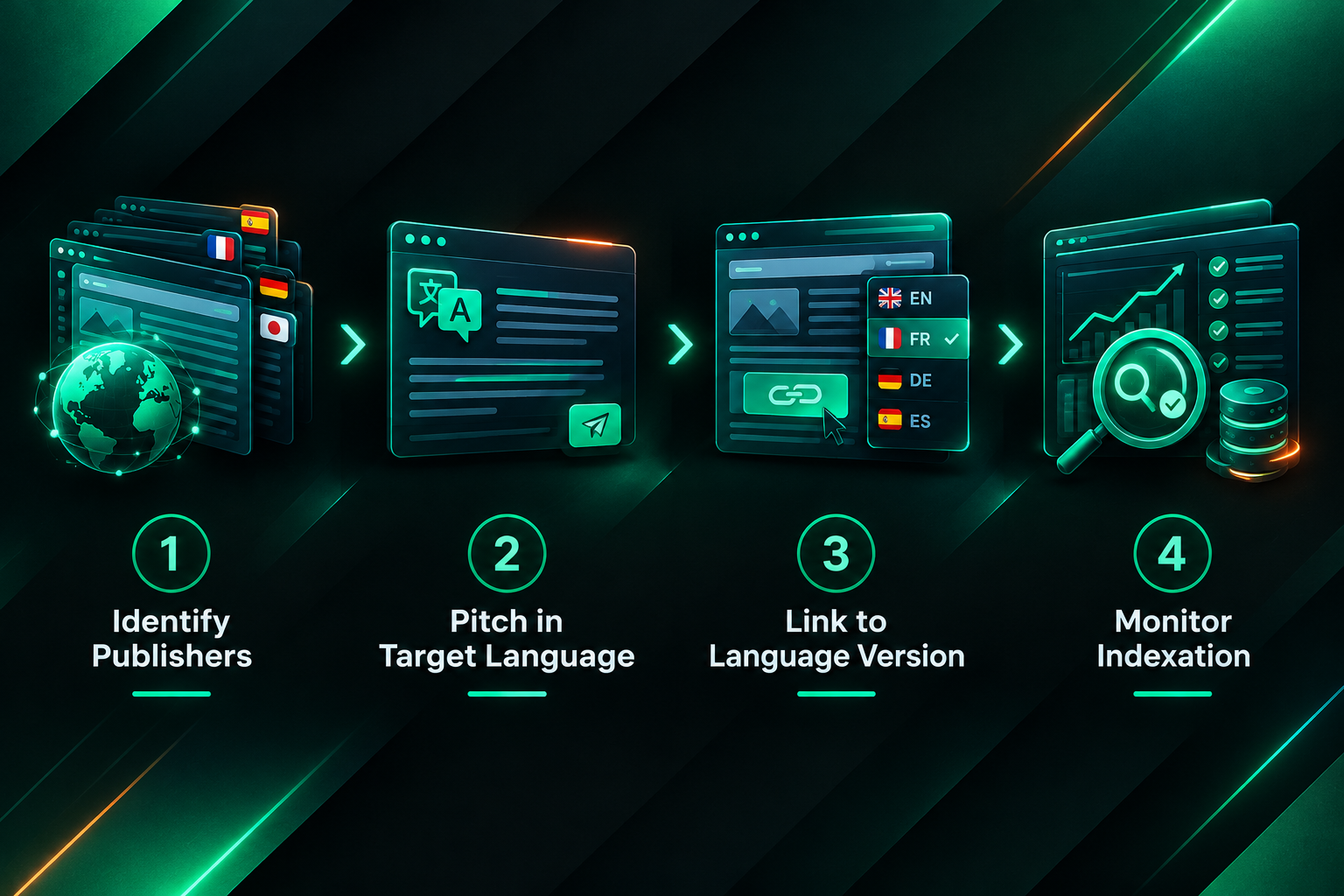
Guest posting in the target language market can be an effective way to build relevant backlinks to specific language versions. The guest post content should be written in the target language, published on a topically relevant site with a genuine audience in that market, and should link to the appropriate language version of the target page. As with any guest posting campaign, the quality of the publishing site matters: a link from a low-quality or irrelevant site provides limited benefit and may carry risks if the site has a poor editorial reputation or a manipulative link profile.
Digital PR campaigns adapted for specific language markets can also generate editorial backlinks to language-specific versions. This might involve creating data-driven content, research reports, or newsworthy assets in the target language and distributing them to relevant media outlets in that market. The investment required for a well-executed multilingual digital PR campaign is typically higher than for a single-language campaign, but the links acquired tend to be editorially earned and from authoritative sources.
Assessing Backlink Quality for Multilingual Pages
Evaluating the quality of backlinks for multilingual pages involves the same general principles as for any link building campaign, with some additional considerations related to language and geographic relevance. Third-party metrics such as Domain Rating from Ahrefs, Domain Authority from Moz, or Trust Flow from Majestic can provide a rough indication of a linking site’s authority, but these are proprietary estimates rather than Google-provided signals. They should be used as one input among several, not as the sole criterion for assessing link quality.
For multilingual link building, additional quality factors include the language of the linking page, the geographic location of the linking site’s audience, the topical relevance of the linking site to the target page’s subject matter, and whether the link is editorially placed within relevant content or added in a way that appears manipulative. A link from a French-language technology publication to a French-language software page is likely to be more relevant than a link from a generic English-language directory, even if the directory has a higher domain-level authority metric.
Anchor text for links to multilingual pages should reflect natural linking patterns in the target language. Exact-match anchor text in the target language may be appropriate in some contexts, but a natural mix of branded, descriptive, and partial-match anchors is generally more consistent with organic linking behaviour. Anchor text strategies should be assessed in the context of the existing backlink profile for each language version, not applied uniformly across all versions.
Common Mistakes in Multilingual Link Structures
Several recurring errors can undermine the effectiveness of a multilingual linking strategy. Understanding these mistakes helps both in-house teams and external providers avoid them during campaign planning and implementation.
- Incomplete hreflang implementation: Missing reciprocal annotations, incorrect language codes, or hreflang tags pointing to redirected or non-indexable URLs are among the most common technical errors. These can cause search engines to ignore the annotations entirely.
- Treating all language versions as a single entity for link building: Acquiring links only to the root domain or the primary language version and expecting those links to benefit all language versions equally is a common misconception. Each version may need its own targeted outreach effort.
- Using machine translation for outreach: Outreach emails or guest post pitches that are clearly machine-translated are frequently ignored or rejected by publishers in the target language market.
- Ignoring canonical tags: If canonical tags on language versions point to the primary language version rather than to themselves, search engines may not index the secondary versions independently, making any links pointing to them less effective.
- Neglecting local link sources: Focusing exclusively on high domain-authority international publications and ignoring locally relevant sites in the target market can result in a backlink profile that lacks geographic relevance signals.
- Inconsistent URL structures: Mixing subdirectories, subdomains, and ccTLDs without a clear rationale can create confusion for both users and search engines, and can complicate link equity analysis.
When to Conduct a Technical Audit Before Link Building
A technical SEO audit of the multilingual setup is advisable before investing in a link building campaign for any language version. If the hreflang implementation is incorrect, canonical tags are misconfigured, or language versions are not being indexed reliably, new backlinks may have limited impact regardless of their quality. Identifying and resolving these structural issues first ensures that the link equity from any acquired links can be properly attributed to the intended pages.
An audit should examine hreflang annotation completeness and accuracy, canonical tag configuration for each language version, crawlability and indexation status of all language variants, internal linking patterns including the language switcher, and the existing backlink profile for each version. Tools such as Google Search Console, Screaming Frog, Ahrefs, and Semrush can assist with different aspects of this audit, though interpreting the findings in the context of a specific multilingual structure requires SEO experience.
For businesses working with an external link building provider, sharing the results of a technical audit before the campaign begins can help the provider target the most appropriate pages and avoid acquiring links to versions that are not yet indexing correctly. This coordination between technical SEO and link acquisition is particularly important for multilingual websites, where the interaction between hreflang, canonicals, URL structure, and backlink profiles is more complex than for a single-language site.
Frequently Asked Questions
Do links to one language version of a website help other language versions?
Not directly. Links pointing to a specific language version primarily benefit that version. Domain-level authority signals may have some indirect effect across subdirectory-based structures, but each language version generally benefits most from links that point to it specifically and from relevant sources in the target language market.
Does hreflang pass link equity between language versions?
No. Hreflang annotations are a language and regional targeting signal, not a mechanism for passing link equity. They help search engines select the correct version to rank for a given query in a given locale, but they do not transfer authority between pages.
Should I build links to all language versions simultaneously?
This depends on the website’s goals, resources, and the competitive landscape in each target market. A phased approach, starting with the language versions that represent the highest commercial priority or the largest opportunity gap, is often more practical than attempting to run simultaneous campaigns across all versions.
Can I use the same anchor text strategy for all language versions?
Anchor text should reflect natural linking patterns in each target language. A strategy developed for English-language links may not be appropriate for French, German, or Japanese links. Each language version’s anchor text profile should be assessed independently.
What URL structure is best for multilingual link building?
There is no universally correct answer. Subdirectories are generally easier to manage for link equity consolidation. ccTLDs offer the strongest geographic targeting signals but require separate backlink profiles for each domain. The right choice depends on the business’s resources, target markets, and long-term SEO strategy.
How do I find link building opportunities in a foreign language market?
Competitor backlink analysis using tools such as Ahrefs or Semrush can identify sites that link to competing pages in the target language. Local industry directories, language-specific media outlets, and topically relevant blogs in the target market are also useful starting points. Outreach should be conducted in the target language by someone with genuine proficiency.
Planning a Multilingual Link Building Strategy That Works
Linking between multilingual versions of a website effectively requires coordinating technical implementation, internal linking, and external link acquisition in a way that is specific to each language and regional market. The technical foundation, particularly hreflang annotations, canonical configuration, and URL structure, must be sound before a link building campaign is likely to deliver meaningful results for secondary language versions.
For businesses managing multilingual websites, the most practical approach is to treat each language version as a distinct entity for link building purposes while ensuring that the technical signals connecting those versions are correctly implemented. This means conducting outreach in the target language, targeting publishers with genuine audiences in the relevant market, and building backlink profiles that reflect the geographic and topical context of each version.
If your multilingual website has language versions that are underperforming in their target markets despite reasonable content quality, a combination of technical audit and targeted link acquisition may be worth exploring with a qualified SEO provider. The interaction between hreflang, URL structure, internal linking, and external backlinks is complex enough that a site-specific assessment is generally more useful than a generic strategy. Understanding the structural factors first gives any link building effort the best chance of contributing to measurable improvements in organic visibility for each language version.