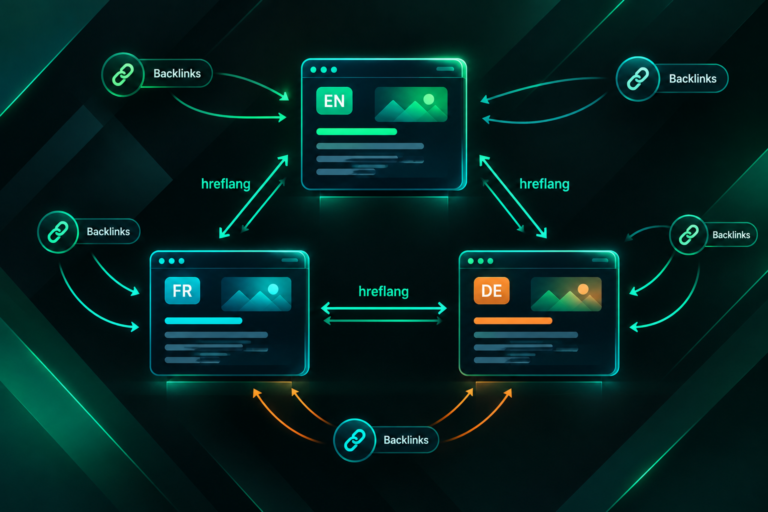
When a page returns a server error, any backlinks pointing to it stop delivering their intended value. For websites that have invested time and resources in building a backlink profile, undetected server errors can quietly erode ranking potential without triggering an obvious alert. Understanding how different error types affect link equity, crawlability, and search visibility helps you protect the value already earned through link acquisition and avoid losing ground to competitors whose pages remain accessible.
Key Takeaways
- Server errors on pages with backlinks interrupt the flow of link equity, potentially reducing the ranking benefit those links were intended to provide.
- Temporary server errors (5xx) are treated differently from permanent client errors (4xx) by search engine crawlers, but both require prompt attention when they affect linked pages.
- A 404 error on a page with strong backlinks represents a measurable loss of link value unless the page is restored or a 301 redirect is implemented.
- Regular monitoring of crawl errors in Google Search Console is essential for any website actively building or maintaining a backlink profile.
- Recovery is possible in most cases, but the speed of action affects how much link equity can be preserved.
What Server Errors Mean for a Linked Page
A server error is an HTTP status code returned when a browser or crawler requests a URL and the server cannot fulfil that request. The two main categories relevant to SEO are 4xx client errors, where the requested resource cannot be found or accessed, and 5xx server errors, where the server itself fails to respond correctly. Each category has a different implication for pages that carry backlinks.
When Googlebot or another search engine crawler visits a URL and receives an error response, it cannot render or index the page content. If that page has backlinks from external websites, the crawler still follows those links and attempts to access the destination. An error response tells the crawler that the page is unavailable, and over time this affects how the page is treated in the index. The practical consequence is that the ranking signals associated with those backlinks cannot be applied to a page that consistently fails to load.
It is worth distinguishing between a page that has never ranked and a page that previously ranked and accumulated backlinks over time. For the latter, a server error introduces a gap between the link equity that exists in the backlink profile and the ranking benefit the website actually receives. That gap widens the longer the error persists.
How 4xx Errors Affect Link Equity
A 404 Not Found response is the most common 4xx error affecting pages with backlinks. When a page returns a 404, Google’s crawlers will eventually drop it from the index. According to Google’s publicly documented guidance, a 404 response signals that a page no longer exists, and after repeated crawl attempts confirm this, the page is removed from search results. Any backlinks pointing to that URL continue to exist on the referring domains, but the destination is gone, so the link equity those backlinks carry has nowhere to go.
The timeline for deindexing is not fixed. Google may continue crawling a 404 URL for weeks or months before removing it entirely, particularly if the page previously had strong signals. During that period, the link equity is effectively suspended rather than immediately lost. However, the longer the 404 persists without a redirect or page restoration, the more likely it is that the ranking benefit diminishes to zero.
A 410 Gone response communicates more explicitly that a page has been permanently removed. Google has indicated that a 410 may lead to faster deindexing than a 404, which means the window for recovery is shorter. For pages with valuable backlinks, a 410 should only be used when permanent removal is genuinely intended.

Other 4xx errors such as 401 Unauthorized and 403 Forbidden prevent crawlers from accessing page content without necessarily indicating that the page is gone. These errors can cause a page to drop from the index if they persist, and they block the crawling needed to process the backlinks pointing to that page. A page behind an authentication wall that was previously publicly indexed may lose its rankings even if the content itself has not changed.
How 5xx Errors Affect Pages with Backlinks
A 5xx server error indicates that the server received the request but could not complete it. Common examples include 500 Internal Server Error, 502 Bad Gateway, 503 Service Unavailable, and 504 Gateway Timeout. Unlike 4xx errors, 5xx responses are generally treated as temporary by search engine crawlers. Google’s documentation notes that Googlebot will retry URLs that return 5xx responses rather than immediately removing them from the index.

For a page with backlinks, a brief 5xx error during a single crawl attempt is unlikely to cause lasting damage. Googlebot is designed to handle intermittent server issues and will return to crawl the page again. However, if a 5xx error persists across multiple crawl attempts over an extended period, Google may begin to reduce crawl frequency for the affected URLs and eventually treat the page as unavailable. At that point, the effect on link equity begins to resemble that of a 4xx error.
Sustained 5xx errors also affect crawl budget. When a server repeatedly fails to respond, Googlebot may slow its crawl rate to avoid overloading the server. This can delay the discovery and indexing of other pages on the same domain, including pages that are functioning correctly and have their own backlinks. For larger websites with active link building campaigns, a server instability problem can therefore have consequences beyond the specific pages returning errors.
The Relationship Between Crawl Errors and Link Equity Flow
Link equity, sometimes described as link juice or PageRank flow, refers to the ranking value that passes from one page to another through a hyperlink. This flow depends on the destination page being crawlable and indexable. When a page returns a server error, the crawler cannot process the page, which interrupts the normal flow of link equity from the referring domain to the destination.
It is important to be precise about what this means in practice. A backlink from a high-quality referring domain does not disappear from the web when the destination page returns an error. The link still exists on the publisher’s website. What changes is whether Google can follow that link to a functioning page and apply the associated ranking signals. A page that is consistently unavailable cannot benefit from its backlinks in the way a healthy, indexed page can.
Internal links also play a role here. If a page with external backlinks is returning errors, any internal links pointing to it from other pages on the same domain are also leading to dead ends. This affects the internal link equity distribution across the site and can reduce the crawling efficiency of the domain as a whole. Fixing server errors on externally linked pages therefore has benefits for both external link equity and internal site architecture.
Identifying Server Errors on Pages That Have Backlinks
The first step in protecting link equity from server errors is knowing which pages are affected. Several tools and methods can help with this.
Google Search Console provides a Coverage report and a Page Indexing report that list URLs returning errors. The Crawl Stats report shows how Googlebot has been interacting with the site, including the proportion of requests returning error responses. For pages with backlinks, cross-referencing these error reports with backlink data from tools such as Ahrefs, Semrush, or Majestic allows you to prioritise which errors need the most urgent attention.
Backlink analysis tools such as Ahrefs and Semrush include features that flag broken backlinks, meaning links from external sites pointing to URLs that return error responses. These reports are particularly useful because they identify the specific pages where link equity is being lost, along with the referring domains involved. Sorting these broken backlinks by the authority or traffic of the referring domain helps prioritise remediation work.
Site crawl tools such as Screaming Frog SEO Spider can crawl a website and identify all internal and external URLs returning errors. Running a crawl after any significant site change, migration, or hosting incident is a practical way to catch errors before they affect rankings. Scheduling regular crawls as part of ongoing technical SEO maintenance reduces the risk of errors going undetected for extended periods.
Monitoring server uptime separately from SEO tools is also worthwhile. Uptime monitoring services alert site owners when a server becomes unavailable, which can indicate a 5xx error condition before it is detected through a crawl report. Early detection shortens the window during which backlinks are pointing to an unavailable page.
Recovering Link Equity After a Server Error
The appropriate recovery method depends on the type of error and whether the original page content can be restored.
Restoring the Original Page
If a page returned a 4xx or 5xx error due to a technical problem rather than an intentional removal, restoring the page to its original URL with its original content is the most straightforward recovery path. Once the page is accessible again, search engine crawlers will re-crawl it, re-index the content, and resume processing the backlinks pointing to it. The speed of recovery depends on how quickly Googlebot returns to crawl the URL, which is influenced by the page’s crawl priority and the site’s overall crawl budget.
Implementing a 301 Redirect
When the original page cannot be restored, a 301 permanent redirect from the broken URL to the most relevant live page on the same domain is the standard approach for preserving link equity. Google has confirmed that 301 redirects pass the majority of link equity from the original URL to the destination. This means backlinks pointing to the broken URL can continue to contribute ranking signals, directed now to the redirect destination rather than the original page.
The redirect destination should be as topically relevant to the original page as possible. Redirecting a broken product page to the site’s homepage, for example, is less effective than redirecting it to a closely related product or category page. A redirect to an irrelevant destination may pass less link equity and is less likely to satisfy users who follow the backlink expecting to find related content.
It is also worth noting that redirect chains, where a URL redirects to another URL that itself redirects, can reduce the efficiency of link equity transfer. Where possible, redirects should point directly to the final destination URL rather than through intermediate steps.
When No Redirect Is Appropriate
In some cases, the content of the broken page has no close equivalent on the site, and a redirect to an unrelated page would be misleading. In this situation, allowing the page to return a clean 404 is preferable to a forced redirect. The link equity from backlinks pointing to that URL will not be recoverable through a redirect, but a misleading redirect can create a poor user experience and may not be treated as a genuine redirect by search engines.
If the page had significant backlink value, it may be worth recreating the content at the original URL rather than accepting the loss. This is particularly relevant for pages that attracted backlinks organically over time, such as research articles, tools, or resource pages, where the content itself was the reason publishers linked to it.
Server Errors During and After Link Building Campaigns
For businesses running active link building campaigns, server errors on target pages introduce a specific risk: newly acquired backlinks may point to pages that are temporarily or permanently unavailable. This can happen during website migrations, hosting changes, CMS updates, or accidental page deletions that coincide with outreach activity.
When planning a link building campaign, it is good practice to confirm that all target pages are returning 200 OK responses and are correctly indexed before outreach begins. Sending outreach for a page that is currently returning an error, or that has recently been moved without a redirect, means that any placements secured during that period will not deliver their intended value until the issue is resolved.
After placements go live, monitoring the target pages for server errors should be part of ongoing campaign management. A page that was healthy at the time of placement may develop errors later due to site changes, and those errors will affect the backlinks that were acquired. Periodic checks using Google Search Console and backlink monitoring tools help ensure that the pages receiving links remain accessible and indexed.
For agencies managing link building on behalf of clients, server errors on client pages can also affect the perceived performance of a campaign. If a client’s target page develops a 5xx error after placements are secured, the expected ranking improvement may not materialise, even though the links themselves are live on the referring domains. Clear communication about the relationship between page health and link performance is an important part of managing client expectations.
Long-Term Implications for Backlink Profile Health
A backlink profile is not static. Referring domains change, pages are updated or removed, and the pages receiving links can develop technical issues over time. Server errors are one of several factors that can reduce the effective value of a backlink profile without any change to the links themselves.
Regular backlink profile audits should include a check for broken destination URLs, not just an assessment of referring domain quality. A profile that shows a large number of referring domains may appear strong in a surface-level review, but if a significant proportion of those links point to pages returning errors, the actual ranking benefit is lower than the raw numbers suggest.
Disavow decisions should also account for server errors. If a page that previously attracted low-quality backlinks is now returning a 404, those links are already ineffective. Disavowing links to a broken page is generally unnecessary unless there is a specific reason to believe the links could cause harm if the page is later restored or redirected.
For websites that have undergone migrations, redesigns, or domain changes, a thorough audit of redirect coverage for previously linked pages is essential. Migrations frequently result in pages that had accumulated backlinks returning 404 errors because redirect mapping was incomplete. Identifying and correcting these gaps after a migration can recover link equity that would otherwise remain dormant.
Frequently Asked Questions
Does a temporary 503 error permanently damage the link equity of a page?
A brief 503 Service Unavailable response is unlikely to cause lasting damage. Google treats 5xx errors as temporary and will retry the URL. If the error resolves quickly, the page’s link equity and indexing status should remain intact. Persistent 5xx errors over days or weeks carry a greater risk of reduced crawl frequency and eventual deindexing.
How quickly does Google deindex a page returning a 404 error?
There is no fixed timeline. Google may continue attempting to crawl a 404 URL for weeks or months, particularly if the page previously had strong signals. The deindexing process is gradual rather than immediate, which means there is often a window to restore the page or implement a redirect before the link equity is fully lost.
Will a 301 redirect fully preserve the link equity from backlinks pointing to a broken page?
Google has stated that 301 redirects pass the majority of link equity. In practice, some signal loss may occur, and the relevance of the redirect destination to the original page content can influence how effectively the equity is applied. A redirect to a closely related page is generally more effective than a redirect to an unrelated page or the homepage.
Should I disavow backlinks pointing to pages that are returning 404 errors?
In most cases, disavowing links to broken pages is unnecessary. If the destination page is returning a 404, those links are already ineffective and pose no active risk. Disavowal is more relevant when low-quality or manipulative links point to live pages. If you plan to restore the broken page or redirect it, assess the quality of the backlinks before deciding whether any disavowal is appropriate.
How do server errors affect crawl budget?
Repeated 5xx errors can cause Googlebot to reduce its crawl rate for a domain to avoid overloading the server. This can delay the crawling and indexing of other pages, including pages with their own backlinks. For larger sites, sustained server instability can therefore have broader SEO consequences beyond the specific pages returning errors.
What is the best way to find which of my linked pages have server errors?
Cross-referencing the broken backlinks report in a tool such as Ahrefs or Semrush with the Coverage or Page Indexing report in Google Search Console gives the clearest picture. Broken backlink reports identify external links pointing to error URLs, while Search Console shows how Googlebot is experiencing those errors. A site crawl tool such as Screaming Frog can supplement this by identifying errors across the full site, including pages that may not yet appear in Search Console reports.
Protecting Link Equity Starts with Page Availability
Server errors are a technical issue with direct consequences for link building investment. A page that returns a 4xx or 5xx error cannot benefit from the backlinks pointing to it, regardless of how authoritative the referring domains are or how carefully the links were acquired. The value of a backlink profile is only fully realised when the destination pages are consistently accessible, correctly indexed, and returning 200 OK responses.
For businesses and agencies managing link building campaigns, integrating server error monitoring into routine technical SEO checks is a practical way to protect the value of existing placements. Catching errors early, restoring pages promptly, and implementing well-targeted 301 redirects where restoration is not possible are the most reliable methods for preserving link equity after a server error occurs. If your website has undergone recent changes or you are unsure whether your linked pages are healthy, a technical SEO audit focused on crawl errors and redirect coverage is a reasonable starting point before investing further in new link acquisition.