Whether to gate your best content behind a lead form or publish it openly is a question that sits at the intersection of demand generation and link building. The answer matters more than many teams realise, because the structural choice you make about access directly shapes who can link to your content, how easily they can reference it, and whether it accumulates backlinks over time. This article examines both approaches honestly, explains the link acquisition implications of each, and helps you decide which model may suit your goals and audience.
Key Takeaways
- Ungated content is significantly easier for third parties to link to, because anyone can verify and reference it without submitting a form or sharing personal data.
- Gated content can generate qualified leads but typically earns fewer organic backlinks, because most publishers and journalists will not link to a page that restricts access.
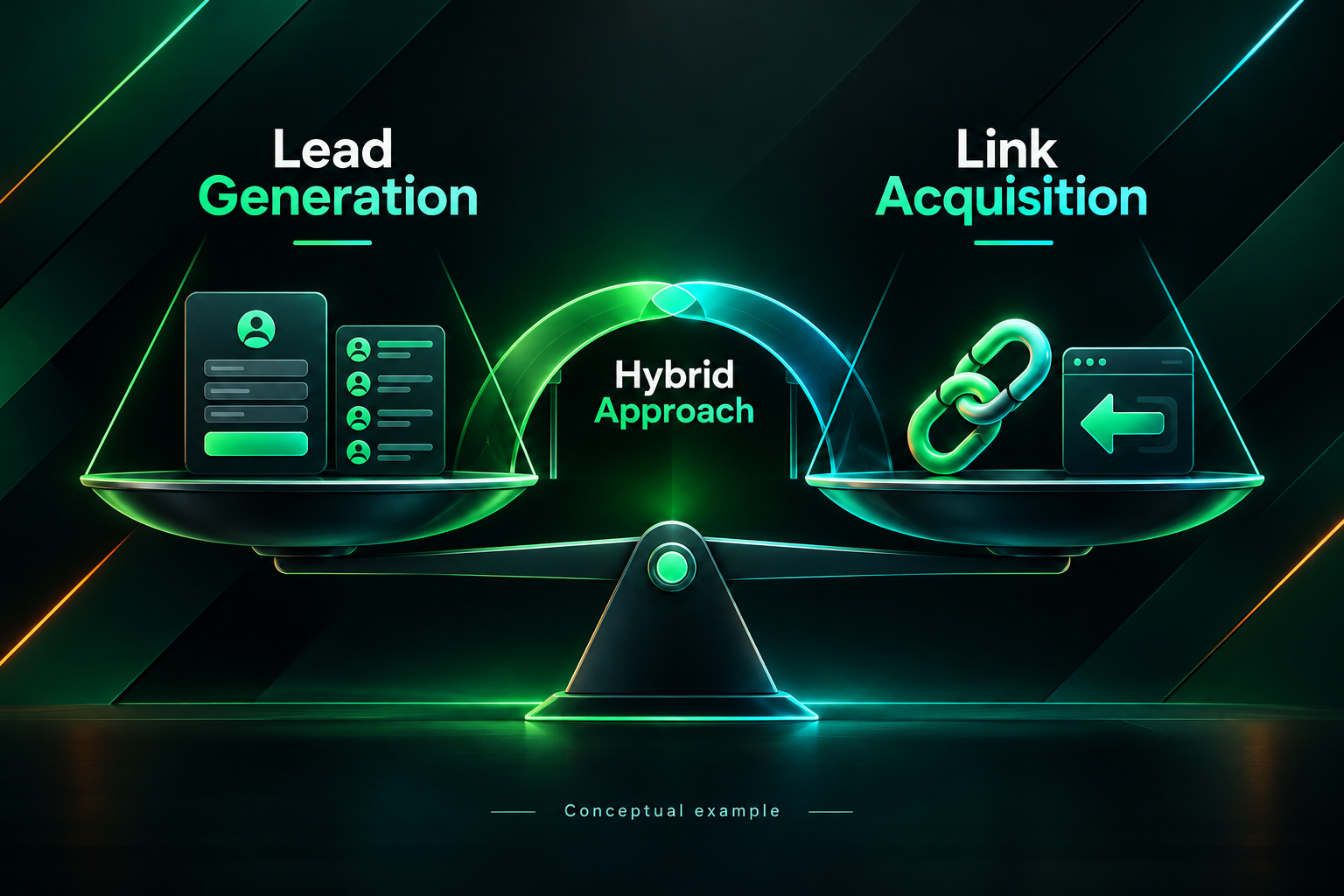
- A hybrid approach — publishing a summary or key findings openly while gating the full asset — can balance lead capture with link acquisition, though it requires careful execution.
- The right choice depends on your primary goal: if backlinks and organic visibility are the priority, ungated content is generally the more effective format for link building campaigns.
- Content quality, topical relevance, and genuine usefulness remain the most important factors regardless of whether the asset is gated or ungated.
What Gated and Ungated Content Actually Mean
Gated content requires a visitor to complete an action — typically submitting a name, email address, or other contact details — before accessing the full asset. Common gated formats include whitepapers, detailed research reports, proprietary data studies, webinar recordings, and extended guides. The gate is usually a landing page with a form, and the content sits behind it, invisible to search engines and to anyone who has not converted.
Ungated content is published openly and accessible to any visitor without friction. Blog posts, publicly available research pages, original data studies, interactive tools, calculators, and long-form guides are typical ungated formats. Search engines can crawl and index ungated content, and any publisher, journalist, or blogger can read, verify, and link to it directly.
The distinction sounds simple, but its implications for link building are substantial. A backlink is a reference from one website to another. For that reference to be useful to a reader, the destination page must be accessible. When a publisher links to gated content, their audience hits a form before seeing anything of value. Many publishers avoid creating that experience for their readers, which is one reason gated assets tend to accumulate far fewer inbound links than comparable ungated content.
Quick Comparison
| Characteristic | Gated Content | Ungated Content |
|---|---|---|
| Access requirement | Form submission or registration | None — open to all visitors |
| Search engine indexability | Landing page indexed; content usually not | Fully crawlable and indexable |
| Organic backlink potential | Low — publishers rarely link to restricted pages | High — anyone can verify and reference it |
| Referral traffic value | Limited by form friction | Full referral traffic passes through |
| Lead generation | Direct — captures contact details | Indirect — requires separate conversion paths |
| Outreach suitability | Difficult — prospects cannot preview content | Strong — prospects can read before linking |
| Digital PR suitability | Poor — journalists need open access | Good — journalists can cite and link freely |
| Long-term link accumulation | Slow or negligible | Can compound over months and years |
| Audience trust signal | May imply high value; may create friction | Signals openness and confidence in the content |
Why Ungated Content Earns More Backlinks
The mechanics of link acquisition explain why ungated content outperforms gated assets in most link building contexts. When a journalist, blogger, or content team wants to cite a statistic or reference a study, they need to read the source, verify its credibility, and confirm it says what they think it says. Gated content blocks that verification step. Even if a publisher is willing to register, the friction introduces doubt: is this source credible enough to send my readers through a form? In most cases, the publisher simply finds an alternative open source and links there instead.
Manual outreach campaigns face a similar challenge. When an outreach specialist contacts a publisher to suggest a link to a resource, the publisher will almost always visit the page before agreeing. If the page presents a lead form rather than the content itself, the outreach conversation typically ends there. Publishers who accept guest posts or niche edits are evaluating whether a linked resource genuinely adds value for their audience. A gated page rarely passes that test.
Digital PR campaigns — where original research, data studies, or expert commentary are pitched to journalists and industry publications — depend almost entirely on open access. Journalists working to a deadline cannot wait for a confirmation email or navigate a multi-step registration process. Original research published openly on a dedicated, indexable page is far more likely to earn press coverage and the editorial backlinks that come with it.
Ungated content also benefits from passive link acquisition over time. A well-structured, genuinely useful resource that ranks in organic search can attract links from authors who discover it independently, without any outreach effort. This compounding effect is essentially unavailable to gated assets, because gated landing pages rarely rank for informational queries and cannot be discovered and linked to in the same organic way.
When Gated Content Can Still Support a Link Strategy
Gated content is not entirely incompatible with link building, but the use cases are narrower and require deliberate planning. The most common scenario is a hybrid model: a brand publishes a publicly accessible summary page — sometimes called a findings page or a data highlights page — that presents the most compelling statistics and insights from a larger gated report. The summary page is fully indexable, linkable, and useful on its own. The full report sits behind a gate for lead capture purposes.
This approach allows outreach and digital PR efforts to point to the open summary page, which journalists and publishers can read and reference freely. The gated report serves the demand generation function separately. The two goals are served by two distinct URLs rather than one page trying to do both jobs simultaneously.
A second scenario involves content that is gated initially and then ungated after a defined period. A brand might gate a research report at launch to capture early-adopter leads, then open access after 60 or 90 days to maximise long-term link acquisition and organic visibility. This staged approach can work well for annual industry reports or benchmark studies, where the freshness of the data is most valuable in the first weeks after publication.
It is worth noting that even in these scenarios, the link building value comes from the ungated portion of the content. The gate itself does not contribute to backlink acquisition; it serves a separate commercial objective. Teams that conflate the two goals often end up with content that underperforms on both dimensions.
The SEO Implications of Gating Your Best Content
Beyond direct link acquisition, gating content has broader SEO consequences that are worth understanding before committing to a format. Search engines can typically crawl a gated landing page, but the content behind the form is not accessible to crawlers and therefore cannot be indexed or ranked. This means that even if a gated asset contains genuinely valuable, original information, it contributes nothing to the website’s organic search visibility in its gated state.
The landing page itself may rank for branded queries or very specific long-tail terms, but it is unlikely to attract significant organic traffic on its own. By contrast, an ungated resource page built around a well-researched topic can rank for multiple informational queries, attract organic visitors, and earn links from authors who discover it through search. The SEO value of ungated content therefore extends well beyond the links it earns directly — it also generates indexable content that can improve topical authority and organic reach over time.
There is also a consideration around referring domain diversity. A strong backlink profile typically includes links from a range of relevant, editorially independent websites. Ungated content is far more likely to attract links from diverse sources — industry publications, niche blogs, resource pages, and news sites — because any of them can access and evaluate the content. Gated content, if it earns links at all, tends to attract them from partners or affiliates who already have a relationship with the brand, which limits the diversity and independence of the resulting backlink profile.
Content Formats and Their Link Building Potential
Not all ungated content earns links equally. The format, depth, and originality of the asset matter considerably. Some content types have a stronger track record as linkable assets than others, and understanding these differences can help teams allocate their content investment more effectively.
Original data and research studies are among the most consistently linkable content formats. When a brand commissions or conducts original research — surveys, proprietary data analysis, industry benchmarks — and publishes the findings openly, journalists and content creators have a reason to cite and link to the source. The key requirement is that the data must be genuinely original; republishing or summarising publicly available statistics rarely earns links because the original source is already available and more authoritative.

Comprehensive reference guides and glossaries can earn links from authors who want to define a term or explain a concept for their readers. These assets work best when they cover a topic more thoroughly or more clearly than existing resources, and when they are maintained and updated over time to remain accurate.
Free tools, calculators, and interactive resources are highly linkable because they provide ongoing utility. A well-built calculator or diagnostic tool gives publishers a reason to link because it genuinely helps their audience, not just because the content is informative. These assets can be resource-intensive to build but tend to accumulate links passively over extended periods.
Expert commentary and opinion pieces can earn links when they offer a distinctive perspective on a timely topic, particularly when pitched as part of a digital PR or thought leadership campaign. These work best when the author or brand has demonstrable expertise in the subject area.
Gated formats — whitepapers, gated reports, locked webinar recordings — can be valuable for lead generation but are rarely the right choice when the primary goal is link acquisition. If the content investment is significant, the hybrid approach described earlier may be the most practical way to serve both objectives.
How Content Gating Affects Outreach and Campaign Execution
For teams running manual outreach campaigns or working with a link building service, the gated versus ungated decision has direct practical consequences for campaign execution. Outreach campaigns typically involve identifying relevant publishers, crafting personalised pitches, and proposing a specific resource as a link target. The success rate of those pitches depends heavily on whether the proposed resource is immediately accessible and clearly valuable.

When outreach specialists pitch a gated asset, they face an immediate credibility problem: the publisher cannot evaluate the content without submitting their details, and most will not do so for an unsolicited pitch. This forces the outreach team to either describe the content in enough detail to substitute for actually reading it — which is rarely convincing — or to offer a preview, which partially defeats the purpose of gating.
Ungated content removes this friction entirely. A publisher who receives an outreach email can click through, read the resource, assess its relevance and quality, and make an informed decision about whether to link. This transparency tends to improve response rates and the quality of the resulting placements, because publishers who link have genuinely evaluated the content rather than taking the outreacher’s word for its value.
For agencies managing link building campaigns on behalf of clients, the content format is often one of the first strategic questions to address during campaign planning. If a client’s most valuable assets are gated, the campaign may need to begin with a content audit and a recommendation to create or repurpose ungated linkable assets before outreach begins. Attempting to build links to gated content without addressing the access problem typically produces poor results regardless of the quality of the outreach itself.
Balancing Lead Generation and Link Acquisition Goals
The tension between gating content for leads and opening it for links is real, but it is not irresolvable. The most effective approach is to treat lead generation and link acquisition as separate objectives that require separate assets or separate versions of the same asset, rather than expecting one piece of content to serve both goals equally well.
Teams that are reluctant to ungate their best content often cite the concern that making research freely available will reduce its perceived value or eliminate the lead capture opportunity. In practice, the opposite is frequently true: openly published research that earns media coverage and backlinks tends to generate more brand awareness and inbound interest than the same research hidden behind a form. The leads generated by brand visibility and organic traffic may be fewer in number but are often better qualified, because they arrive with prior awareness of the brand’s expertise.
A practical framework for making the gating decision might consider the following questions. What is the primary goal of this content asset — lead capture or link acquisition? If both, which is more important to the business at this stage? Is the content genuinely original and valuable enough to earn links if published openly? Does the target audience include journalists, bloggers, or content creators who might link to it? Is there a hybrid format — open summary plus gated full report — that could serve both goals without compromising either?
Answering these questions honestly before publishing can prevent the common mistake of gating content that would have performed better as an open linkable asset, or ungating content that has no realistic link acquisition potential and would have been better used purely for lead generation.
Risks and Limitations to Consider
Neither approach is without limitations, and it is worth being clear about the risks associated with each before committing to a content strategy.
Ungated content requires a genuine investment in quality. Publishing mediocre content openly does not earn links; it simply makes the mediocrity more visible. The bar for linkable content is high — it needs to be more useful, more original, or more clearly presented than what already exists on the topic. Teams that publish ungated content without meeting this standard may find that their assets attract little organic attention and require significant outreach effort to earn any links at all.
Gated content carries the risk of investing heavily in an asset that generates neither leads nor links. If the content is not compelling enough to motivate form submissions, and the gate prevents organic link acquisition, the asset may underperform on both dimensions. This outcome is more common than many teams expect, particularly when the gated content covers a topic that is already well-served by freely available resources.
The hybrid approach introduces its own complexity. Maintaining two versions of the same content — an open summary and a gated full report — requires additional production effort and careful URL management to avoid creating confusing or duplicate content signals for search engines. The open summary must be genuinely useful on its own, not simply a teaser that frustrates readers who want the full picture.
It is also worth noting that link building results depend on many factors beyond content format, including the topical relevance of the linking sites, the authority of the referring domains, the competitive landscape for the target keywords, and the overall technical and content health of the website. Ungating content improves the conditions for link acquisition but does not guarantee links or ranking improvements on its own.
Frequently Asked Questions
Can gated content rank in organic search?
The landing page for gated content can be indexed and may rank for specific queries, but the content behind the form is not accessible to search engine crawlers and cannot be indexed or ranked directly. This significantly limits the organic search value of gated assets compared to fully open content.
Does ungating existing content improve its link acquisition potential?
Ungating previously gated content can improve its link acquisition potential, particularly if the content is high quality and covers a topic that publishers and journalists regularly reference. However, the content will still need to be promoted through outreach or digital PR to earn links; simply removing the gate does not automatically attract backlinks.
Is it possible to earn links to a gated asset through outreach?
It is possible but significantly more difficult. Publishers who receive outreach pitches for gated content cannot easily evaluate the resource, which reduces the likelihood of a positive response. Some outreach teams offer to share the content directly with publishers before asking for a link, but this approach is resource-intensive and does not scale well.
What content formats work best as ungated linkable assets?
Original research and data studies, comprehensive reference guides, free tools and calculators, and expert commentary on timely topics tend to perform well as ungated linkable assets. The common factor is genuine originality or utility — content that gives publishers a clear reason to reference it for their audience.
How long does it take for ungated content to earn backlinks?
Timelines vary considerably depending on the content quality, the promotion strategy, and the competitive landscape. Content promoted through active outreach or digital PR campaigns may earn links within weeks of publication. Passive link acquisition through organic search discovery typically takes longer — often several months — and depends on the content ranking for relevant queries first.
Should we ungate all of our content to maximise link building?
Not necessarily. Content that has no realistic link acquisition potential — for example, highly specific product documentation or content aimed at existing customers — may be better suited to gating for lead capture or access control purposes. The decision should be based on the primary goal of each asset and a realistic assessment of its link earning potential if published openly.
Choosing the Right Format for Your Link Building Goals
The question of whether linkable content should be gated or ungated does not have a single universal answer, but the evidence strongly favours ungated content when link acquisition is the primary objective. Gated assets create friction that most publishers, journalists, and content creators will not work around, which limits both the volume and the diversity of backlinks an asset can earn. Ungated content, by contrast, can be evaluated, cited, and linked to by anyone — and can continue accumulating links passively long after initial publication.
For businesses and marketing teams that need both lead generation and link acquisition from their content investment, the hybrid model — an open summary or findings page paired with a gated full report — offers a practical middle ground. This approach requires more production effort but avoids the common mistake of expecting one piece of content to serve two fundamentally different objectives equally well.
If your team is planning a link building campaign and is uncertain whether your existing content assets are structured to support it, a content audit conducted alongside campaign planning can identify which assets are ready for outreach, which would benefit from being ungated or repurposed, and where new linkable content may need to be created. Working with an experienced link building team can help ensure that your content strategy and your link acquisition strategy are aligned from the outset, rather than working against each other.