Internal linking is one of the most consistently underused elements of on-page SEO. Unlike backlink acquisition, which requires outreach, negotiation, and ongoing investment, internal linking is entirely within your control — yet many websites have poorly structured internal link networks that limit how well search engines can crawl, understand, and rank their content. This guide explains what internal linking is, how it works from an SEO perspective, and what a well-structured internal link strategy looks like in practice.
Key Takeaways
- Internal links connect pages within the same website and help search engines discover, crawl, and understand the relationship between your content.
- A well-structured internal link network distributes link equity (sometimes called PageRank) from authoritative pages to pages that need ranking support.
- Internal linking supports crawlability, indexation, topical authority, and user navigation — all of which can influence organic performance.
- Internal linking works alongside external backlinks, not as a replacement; both contribute to how search engines assess a page’s relevance and authority.
- Improvements to internal link structure can produce measurable changes in crawl coverage and rankings, though results depend on the site’s overall technical condition, content quality, and competitive landscape.
What Is Internal Linking?
An internal link is a hyperlink that points from one page on a website to another page on the same website. When a blog post links to a product page, or a service page links to a related case study on the same domain, those are internal links. They differ from external links, which point to pages on different domains, and from backlinks, which are external links pointing to your site from other websites.
Internal links serve two overlapping purposes. For users, they provide navigation pathways that help people move through a website and find related content. For search engines, they act as signals that communicate the structure of a site, the relative importance of individual pages, and the topical relationships between content. Google’s crawlers follow internal links to discover new pages and revisit existing ones, which means that pages with few or no internal links pointing to them — sometimes called orphan pages — may be crawled infrequently or not at all.
The anchor text used in an internal link also carries meaning. When a page links to another using descriptive anchor text such as “technical SEO audit checklist” rather than “click here,” it gives search engines a clearer signal about what the destination page covers. This is one reason why anchor text choice matters in an internal linking strategy, though it should always read naturally for human visitors.
How Internal Links Work in SEO
Search engines use links — both internal and external — to pass a form of ranking signal between pages. This concept is often referred to as link equity or PageRank, named after the algorithm Google originally used to assess page importance based on the quantity and quality of links pointing to it. While Google’s ranking systems have grown considerably more complex since PageRank was first described, the underlying principle that links transfer authority between pages remains relevant to how SEO practitioners think about link structure.
When a high-authority page on your website links to another page, it passes some of its accumulated link equity to the destination. This means that pages receiving many internal links from well-linked pages tend to be treated as more important by search engines than pages that are isolated within the site’s link graph. A homepage, for example, typically accumulates significant external backlinks over time, making it a strong source of internal link equity. Linking from the homepage or from high-traffic hub pages to deeper content pages can help those pages compete more effectively in search results.
Internal links also influence crawl budget — the amount of crawling activity a search engine allocates to a given website. For large websites with thousands of pages, efficient internal linking helps ensure that important pages are crawled and indexed regularly, while reducing the risk that valuable content remains undiscovered. For smaller websites, crawl budget is rarely a limiting factor, but a clear internal link structure still helps search engines understand which pages matter most.
The Role of Site Architecture in Internal Linking
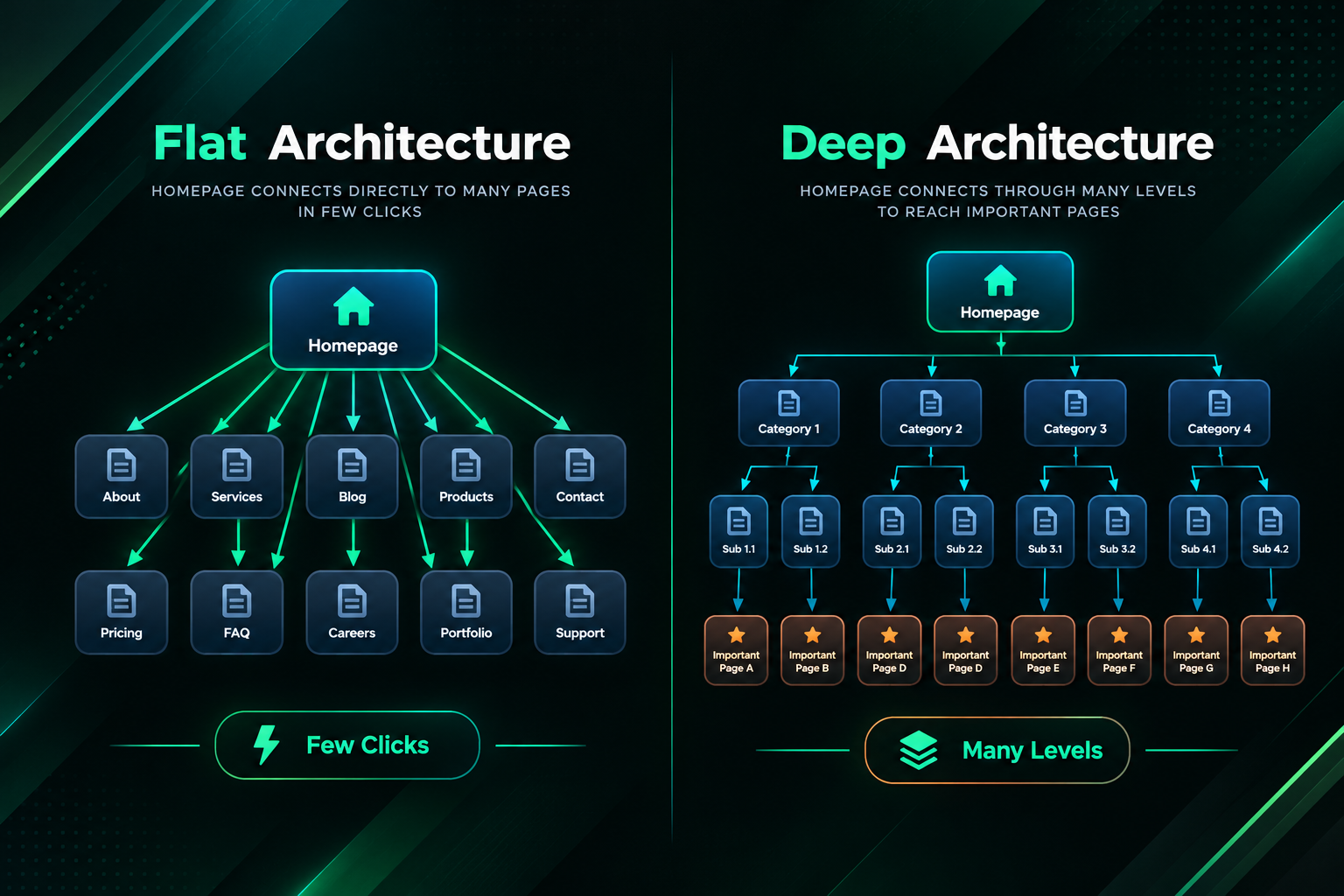
Site architecture refers to how a website’s pages are organised and connected. A flat architecture — where most pages are reachable within a small number of clicks from the homepage — is generally easier for search engines to crawl and tends to distribute link equity more evenly. A deep or siloed architecture, where important pages are buried several levels below the homepage, can limit how much link equity those pages receive and how frequently they are crawled.
A common structural approach in SEO is the topic cluster or hub-and-spoke model. In this model, a central pillar page covers a broad topic comprehensively, while a series of cluster pages cover related subtopics in more depth. Each cluster page links back to the pillar page, and the pillar page links out to the cluster pages. This creates a tightly interconnected group of pages that collectively signal topical authority to search engines. The model also makes it easier for users to navigate between related content, which can support engagement metrics.
Breadcrumb navigation, category pages, and related-content modules are all common mechanisms for building internal links at scale. Each of these contributes to the overall internal link graph, though the SEO value of any individual link depends on factors such as the authority of the linking page, the relevance of the connection, and whether the link is placed in a contextually meaningful location within the page content.
Types of Internal Links
Not all internal links carry the same weight or serve the same purpose. Understanding the different types helps in building a more deliberate internal link strategy.
- Navigational links appear in menus, headers, and footers. They are present on every page of a site and help users move between major sections. Because they appear site-wide, they pass link equity broadly but are not typically used for targeted SEO purposes.
- Contextual links are embedded within the body content of a page and link to related pages using descriptive anchor text. These are generally considered the most valuable type of internal link for SEO because they appear in a relevant context and carry clear topical signals.
- Breadcrumb links show the hierarchical path from the homepage to the current page. They help users understand where they are within a site and provide structured signals to search engines about page hierarchy.
- Related content or recommended article links appear at the bottom of pages or in sidebars and suggest additional reading. They can improve internal link coverage for content that might otherwise receive few contextual links.
- Pagination links connect pages in a series, such as blog archive pages or product listing pages. Proper handling of pagination is important for ensuring that search engines can access all content in a series without confusion.

Internal Linking vs External Backlinks
A common question among business owners and marketers new to SEO is whether internal linking can substitute for external backlinks. The short answer is that they serve related but distinct functions, and neither fully replaces the other.
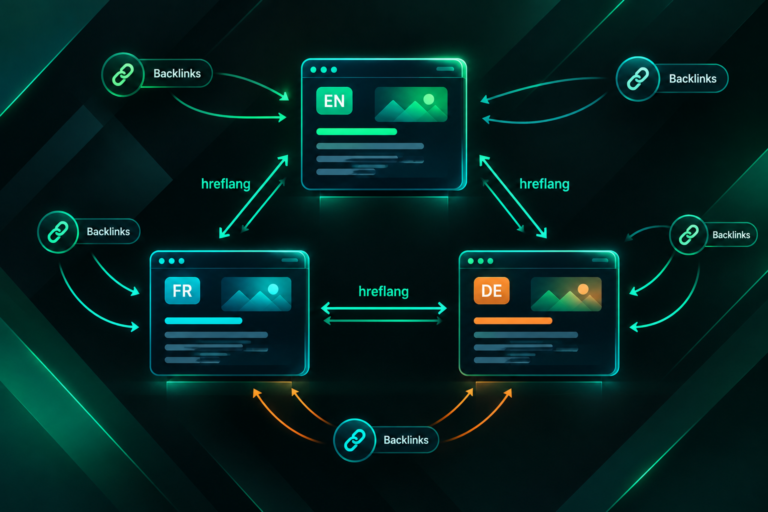
External backlinks from other websites are a primary signal of a page’s authority and trustworthiness in the eyes of search engines. A page with many high-quality backlinks from relevant, authoritative domains is generally treated as more credible than a page with few or none, regardless of how well it is internally linked. This is why link acquisition — through methods such as manual outreach, guest posting, digital PR, and niche edits — remains a significant part of competitive SEO strategies.
Internal links, by contrast, help distribute the authority that external backlinks bring into a site. If a website earns strong backlinks to its homepage or to a popular blog post, internal links can channel some of that authority toward product pages, service pages, or other content that needs ranking support. In this sense, internal linking amplifies the value of external link acquisition rather than competing with it.
A website with a strong backlink profile but a poorly structured internal link network may find that link equity is concentrated on a small number of pages while other important pages remain underserved. Conversely, a website with excellent internal linking but few external backlinks may struggle to rank competitively in markets where authoritative referring domains are a meaningful ranking factor. Both dimensions matter, and a site-specific assessment is usually needed to understand where the greater opportunity lies.
Common Internal Linking Problems and How to Identify Them
Several internal linking issues appear frequently across websites of different sizes and industries. Identifying these problems is a useful starting point before making structural changes.
- Orphan pages are pages that receive no internal links from other pages on the site. Search engines may struggle to discover and index these pages, and they receive no internal link equity. Orphan pages can be identified using crawl tools such as Screaming Frog, Ahrefs Site Audit, or Semrush’s site audit feature.
- Shallow internal link depth for important pages occurs when key pages — such as core service pages or high-value product pages — are only reachable through a long chain of clicks from the homepage. Reducing click depth for priority pages can help them receive more crawl attention and link equity.
- Over-reliance on navigational links means that contextual links within body content are sparse. Navigational links alone may not provide sufficient topical signals or link equity distribution to support competitive rankings.
- Generic or non-descriptive anchor text such as “read more,” “learn more,” or “click here” provides little topical information to search engines. Replacing these with descriptive anchor text that reflects the destination page’s topic is a straightforward improvement.
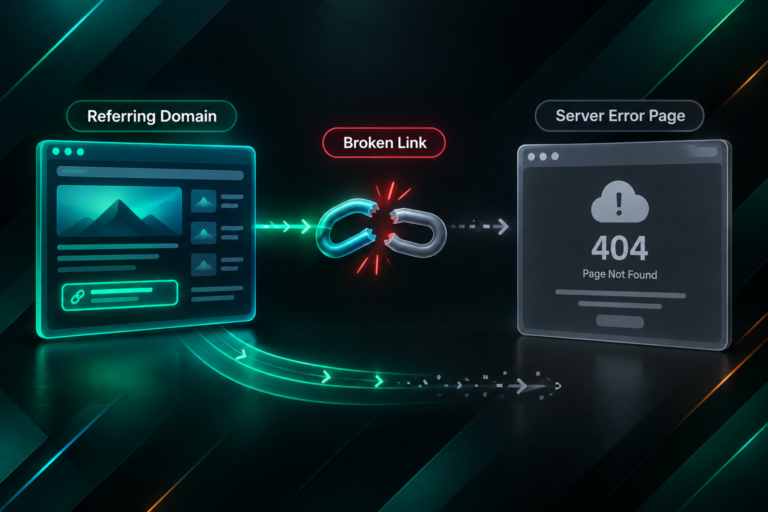
- Broken internal links point to pages that no longer exist or have been moved without a redirect. These waste crawl budget and create a poor user experience. Regular crawl audits can surface broken links for correction.
- Excessive internal links on a single page can dilute the equity passed to each destination. While there is no universally agreed maximum number of links per page, pages with hundreds of internal links may distribute very little equity to any individual destination.
Building an Effective Internal Link Strategy
An effective internal link strategy begins with understanding which pages on a website are most important from a business and SEO perspective. These priority pages — which might include core service pages, product category pages, or high-converting landing pages — should receive internal links from multiple relevant pages across the site, particularly from pages that already have strong external backlink profiles.
A practical starting point is to conduct a content audit that maps existing pages, their current internal link counts, their organic traffic, and their position in the site hierarchy. This audit reveals which important pages are underlinked and which pages have strong authority that could be used to support others. Tools such as Google Search Console, Ahrefs, and Semrush can provide data on internal link counts, crawl coverage, and organic performance that inform these decisions.

When adding contextual internal links, relevance is the primary criterion. A link from a blog post about content marketing to a service page about SEO copywriting is a relevant, useful connection. A link from an unrelated page inserted purely to pass equity is less likely to carry meaningful topical signals and may not serve users well. Search engines have become increasingly capable of assessing whether links appear in a genuinely relevant context.
For websites using a topic cluster model, the internal linking structure should reflect the cluster architecture: pillar pages link to all relevant cluster pages, and each cluster page links back to the pillar. This creates a coherent topical network that can help a website build perceived expertise across a subject area. The approach is particularly useful for content-heavy websites in competitive niches where demonstrating depth of coverage may support rankings across multiple related queries.
Ongoing maintenance is also part of an internal link strategy. As new content is published, it should be linked from existing relevant pages, and existing pages should link to new content where appropriate. Without this ongoing attention, new pages may remain poorly integrated into the site’s link graph and receive limited crawl and ranking support.
Internal Linking and Topical Authority
Topical authority refers to the degree to which a website is perceived by search engines as a credible, comprehensive source on a given subject. Internal linking contributes to topical authority by demonstrating that a website covers a topic from multiple angles and that its pages are meaningfully connected around that topic.
A website that publishes many articles on a subject but links them poorly — or not at all — may not signal topical depth as effectively as a website with fewer articles that are tightly interlinked. Search engines use the internal link graph, alongside content analysis and external backlink signals, to assess how well a website covers a topic. This is one reason why internal linking strategy and content strategy are best developed together rather than in isolation.
It is worth noting that internal linking alone is unlikely to establish topical authority in a competitive market. External backlinks from relevant, authoritative websites remain an important signal of credibility. A well-structured internal link network supports the distribution of that external authority, but it does not generate it independently.
Frequently Asked Questions
How many internal links should a page have?
There is no universally correct number. The appropriate number of internal links on a page depends on the page’s length, its role in the site architecture, and how many relevant connections exist to other pages. A long pillar page covering a broad topic may naturally include many internal links to related cluster pages, while a short product page may have fewer. The priority is relevance and usefulness rather than hitting a specific count.
Does internal linking directly improve rankings?
Internal linking can support rankings indirectly by improving crawlability, distributing link equity to underserved pages, and reinforcing topical relevance signals. However, it is one factor among many. Rankings also depend on content quality, external backlink profile, technical SEO condition, search intent alignment, and competition. Internal linking improvements may produce measurable ranking changes for some pages, particularly those that were previously orphaned or deeply buried in the site structure, but results vary.
What is the difference between internal links and backlinks?
Internal links connect pages within the same website. Backlinks are links from external websites pointing to your site. Both types of links pass signals to search engines, but backlinks are generally considered a stronger indicator of a page’s external authority and trustworthiness. Internal links help distribute the authority that backlinks bring into a site across its pages.
Should I use exact-match anchor text for internal links?
Descriptive anchor text that reflects the destination page’s topic is generally more useful than generic phrases. However, anchor text should read naturally for human visitors and should not be forced or repetitive. Unlike external link anchor text, which requires careful management to avoid over-optimisation signals, internal link anchor text is generally less sensitive, though natural variation is still advisable.
How do I find orphan pages on my website?
Orphan pages can be identified by crawling your website with a tool such as Screaming Frog, Ahrefs Site Audit, or Semrush’s site audit feature, then comparing the list of crawled pages against your sitemap or a full list of published URLs. Pages that appear in your sitemap or CMS but are not reached by the crawler are likely orphaned or very poorly linked.
Can internal linking help with crawl budget?
For large websites with many thousands of pages, internal linking structure can influence how efficiently search engine crawlers allocate their crawl activity. Pages that are well-linked from other pages tend to be crawled more frequently. For smaller websites, crawl budget is rarely a significant constraint, but a clear internal link structure still helps search engines prioritise important pages.
Is internal linking a substitute for building external backlinks?
Internal linking and external backlink acquisition serve complementary but distinct roles. Internal links help distribute existing authority across a site, while external backlinks bring new authority into the site from other domains. In competitive markets, external backlinks are typically necessary for pages to rank well. Internal linking amplifies the value of those backlinks but does not replace them.
Internal Linking as Part of a Broader SEO Strategy
Internal linking is a foundational SEO practice that is worth addressing before or alongside external link acquisition. A website with a clear, well-maintained internal link structure makes better use of every backlink it earns, because link equity can flow efficiently to the pages that need it most. Conversely, investing in external link building for a site with significant internal linking gaps — orphan pages, poor click depth for priority pages, or non-descriptive anchor text — may produce weaker results than the backlink profile alone would suggest.
For businesses and SEO teams evaluating their link strategy, a practical approach is to audit internal link coverage for priority pages before scaling external link acquisition. If key pages are poorly integrated into the site’s link graph, addressing that first can improve the return on subsequent link building investment. Where both internal structure and external authority need attention, working on them in parallel — with content, technical SEO, and link acquisition aligned — tends to produce more consistent results than treating them as separate workstreams.
If your website’s internal link structure is in reasonable shape and you are looking to build external authority through manual outreach, guest posting, or other acquisition methods, speaking with a qualified link building provider about your specific goals and site context is a sensible next step. The most effective campaigns are those where internal and external linking work together, each reinforcing the other’s contribution to organic visibility.