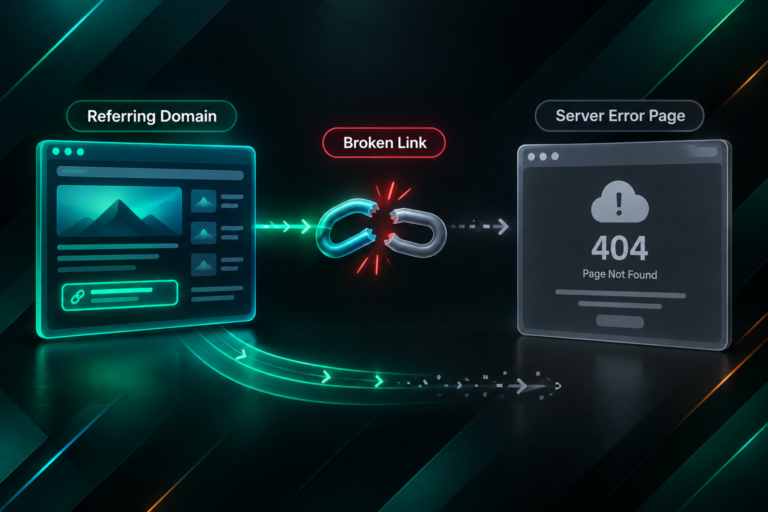
Blog posts often attract the majority of a website’s inbound backlinks, yet the pages that generate revenue — product pages, category pages, and service landing pages — frequently receive far fewer links pointing directly to them. Understanding how to pass link equity from blog posts to product pages through deliberate internal linking is one of the more practical and controllable ways to make better use of the authority your content has already earned. This article explains how link equity flows, what affects it, and how to build an internal linking structure that supports your commercial pages without relying entirely on external link acquisition.
Key Takeaways
- Link equity — sometimes called PageRank or link juice — flows through both external backlinks and internal links, meaning well-linked blog posts can pass authority to product pages via deliberate internal linking.
- The number of links on a page, the position of a link within the content, the relevance of the surrounding text, and the anchor text used all influence how much equity is passed.
- Internal linking is not a substitute for earning external backlinks to commercial pages, but it can meaningfully improve how crawlers discover and evaluate those pages.
- Crawl depth matters: product pages buried several clicks from the homepage may receive less equity even if blog posts link to them, so site architecture should be reviewed alongside internal linking.
- Combining a strong internal linking strategy with targeted external link acquisition to both blog content and product pages tends to produce more durable results than either approach alone.
What Is Link Equity and Why Does It Matter for Product Pages?
Link equity refers to the value or authority that one page passes to another through a hyperlink. The concept originates from Google’s original PageRank algorithm, which treated each link as a vote of confidence and distributed a portion of a page’s authority to the pages it linked to. While the modern ranking system is considerably more complex, the underlying principle — that links carry signals of trust and relevance — remains a documented part of how search engines evaluate pages.
Product pages and category pages are typically the pages a business most wants to rank, because they sit closest to a purchase decision. However, these pages are often difficult to earn external backlinks to directly. Publishers and bloggers are more likely to link to informational content — guides, comparisons, research pieces — than to a product listing or a checkout page. This creates a structural imbalance: the pages with the most external authority are often not the pages with the most commercial value.
Internal linking bridges this gap. When a blog post that has earned several external backlinks contains a well-placed, contextually relevant link to a product page, a portion of that blog post’s accumulated equity flows to the product page. The product page then becomes easier for search engine crawlers to discover, and the signals associated with the linking page — its topical relevance, its authority, its anchor text — contribute to how the product page is evaluated.
How Link Equity Flows Through Internal Links
Link equity does not flow in equal amounts through every link on a page. Several factors influence how much value is passed through any individual internal link, and understanding these factors helps you make more deliberate decisions about your internal linking structure.
Number of Links on the Page
The equity available from a page is distributed across all the links it contains, both internal and external. A blog post with fifty links passes a smaller share of its equity through each individual link than a post with ten links. This does not mean you should artificially restrict links, but it does mean that pages with a focused, purposeful link structure tend to pass more concentrated equity to each destination. Removing unnecessary links — outdated references, redundant navigation links within the body copy — can modestly improve the equity passed to the links that remain.
Link Position and Context
Links placed within the main body of an article, surrounded by relevant text, are generally considered more meaningful than links in footers, sidebars, or boilerplate navigation. A contextual link — one that appears naturally within a paragraph discussing a topic directly related to the destination page — carries stronger relevance signals than a link placed in a generic “related posts” widget. For product pages, this means the most valuable internal links are those embedded in editorial content that genuinely discusses what the product does or the problem it solves.
Anchor Text
The anchor text of an internal link — the visible, clickable words — provides a relevance signal to search engines about the content of the destination page. Using descriptive, topically relevant anchor text when linking to a product page helps search engines understand what that page is about. For example, linking to a project management software page using the anchor text “project management software” is more informative than linking with “click here” or “learn more”. However, internal anchor text should read naturally for users; forcing exact-match phrases into every link can make content feel unnatural and may attract scrutiny if the pattern appears manipulative at scale.
Crawl Depth and Site Architecture
Crawl depth refers to how many clicks it takes to reach a page from the homepage. Pages that are closer to the homepage — reachable in one or two clicks — tend to be crawled more frequently and may receive stronger equity signals than pages buried five or six levels deep. If your product pages are accessible only through a long chain of category and subcategory pages, internal links from blog posts can serve a secondary function: shortening the effective crawl path and making those pages more accessible to both crawlers and users.
Building an Internal Linking Strategy That Supports Product Pages
A deliberate internal linking strategy starts with understanding which pages you want to prioritise and which blog posts are best positioned to support them. This is not a one-time task; it requires periodic review as your content library grows and as your commercial priorities change.
Map Your Commercial Pages First
Before auditing your blog content, identify the product pages, category pages, or service landing pages that matter most to your business. These are the pages you want to rank for competitive, high-intent search queries. Prioritise pages that are close to a purchase decision, have strong conversion potential, or are currently underperforming relative to their commercial importance. Tools such as Google Search Console can show you which pages receive impressions but few clicks, or which pages rank on page two or three for relevant queries — these are often good candidates for additional internal link support.
Identify Relevant Blog Posts
Once you know which product pages to prioritise, audit your existing blog content to find posts that are topically related to each product page. A blog post about “how to choose project management software” is a natural candidate for an internal link to a project management software product page. A post about “common mistakes in remote team communication” might support a collaboration tool page. The relevance of the linking page to the destination page matters; a link from a topically unrelated post carries weaker relevance signals even if that post has strong external backlinks.
Check Which Blog Posts Have External Backlinks
Not all blog posts are equal in terms of the equity they can pass. Posts that have earned external backlinks from other websites carry more accumulated authority and can pass more equity through their internal links. Using an SEO tool such as Ahrefs, Semrush, or Moz, you can identify which blog posts have the strongest backlink profiles. Prioritise adding internal links to product pages from these high-authority posts, as the equity transfer will be more meaningful than links from posts with few or no external backlinks.
Add Contextual Links Within Existing Content
For blog posts that already exist, review the body copy for natural opportunities to add internal links to relevant product pages. Look for paragraphs that mention a problem your product solves, a use case your product addresses, or a comparison your product is relevant to. Insert a contextual link with descriptive anchor text at the point where the reference is most natural. Avoid retrofitting links into positions where they interrupt the flow of the content or feel forced; a link that confuses or distracts a reader is unlikely to serve either the user or the SEO goal well.
Plan Internal Links Into New Content From the Start
When commissioning or writing new blog content, plan the internal linking structure before the content is published. Identify which product pages each new post should support, and brief writers to include natural references to those pages within the body copy. This is more efficient than auditing and retrofitting links after publication, and it ensures that new content contributes to your commercial page authority from the moment it goes live.
The Role of External Link Acquisition in Supporting Product Pages
Internal linking is a powerful tool for distributing equity that already exists within your website, but it cannot create authority from nothing. The total equity available to distribute through internal links depends on how many quality external backlinks your website has earned overall, and how those backlinks are distributed across your pages.
If your blog posts have strong external backlink profiles, internal links to product pages can meaningfully improve those pages’ authority signals. However, if your website has few external backlinks overall, the equity available to pass through internal links will be limited regardless of how well your internal linking is structured. In competitive markets, product pages may also benefit from direct external backlinks — links from other websites pointing specifically to the product or category page rather than to blog content.
Earning direct external backlinks to product pages is generally more difficult than earning links to informational content, but it is not impossible. Tactics that can support direct product page link acquisition include digital PR campaigns that generate coverage of a product launch or feature, resource link building where a product page contains genuinely useful tools or data, and outreach to industry publications that review or compare products in your category. These approaches require more effort and editorial justification than linking to a blog post, but the resulting links can provide a stronger and more direct authority signal to the pages that matter most commercially.
A combined approach — earning external backlinks to blog content and using internal links to pass equity to product pages, while also pursuing selective direct link acquisition to commercial pages — tends to be more effective than relying on either strategy alone. The internal linking structure amplifies the value of external links; the external links provide the raw authority that internal links distribute.
Common Internal Linking Mistakes That Reduce Equity Flow
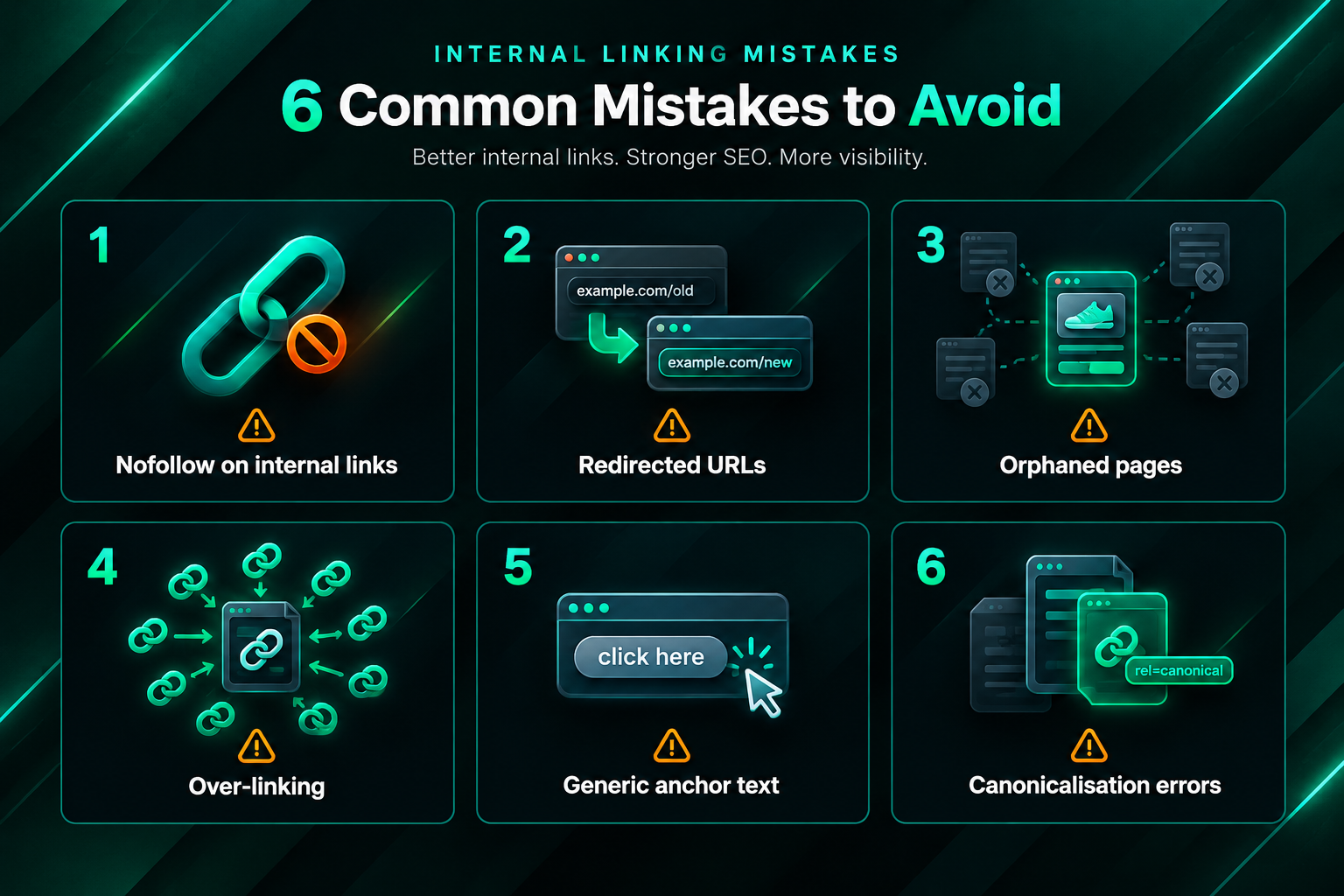
Several common practices can reduce the effectiveness of internal linking as an equity-passing mechanism. Being aware of these issues helps you avoid inadvertently undermining your own strategy.
- Using nofollow attributes on internal links: The rel=”nofollow” attribute instructs search engines not to pass equity through a link. While nofollow is appropriate for certain external links, applying it to internal links to product pages prevents equity from flowing to those pages. Review your internal links to ensure that links to commercial pages do not carry unnecessary nofollow attributes.
- Linking to redirected URLs: If a product page URL has changed and the old URL redirects to the new one, internal links pointing to the old URL pass equity through an additional step. Update internal links to point directly to the current canonical URL to avoid unnecessary equity dilution through redirect chains.
- Orphaned product pages: A product page that receives no internal links from other pages on the site is effectively invisible to crawlers unless it has direct external backlinks. Ensure that every product page is reachable through at least one internal link from a relevant, well-linked page.
- Over-linking from a single post: Adding dozens of internal links to a single blog post in an attempt to pass equity to many product pages simultaneously dilutes the equity passed through each individual link and can make the content feel unnatural. Focus on the most relevant and commercially important links rather than trying to link to every product page from every post.
- Generic anchor text: Using the same generic anchor text — such as “read more” or “find out here” — for all internal links to product pages reduces the relevance signal those links provide. Vary anchor text naturally while keeping it descriptive and relevant to the destination page.
- Ignoring canonicalisation: If a product page has duplicate versions — for example, with and without trailing slashes, or with different URL parameters — and the canonical tag is not correctly set, equity may be split across multiple versions of the same page. Ensure canonical tags are correctly implemented on all product pages before investing heavily in internal linking.
Measuring Whether Internal Linking Is Working
Attributing ranking or traffic changes specifically to internal linking improvements is difficult, because many factors influence search performance simultaneously. However, there are practical signals you can monitor to assess whether your internal linking strategy is having an effect.
Google Search Console provides data on impressions, clicks, and average position for individual pages. After implementing internal linking improvements to support a specific product page, monitor that page’s performance over the following weeks and months. Improvements in average position for relevant queries, or increases in impressions for queries where the page previously had low visibility, may indicate that the page is being evaluated more favourably — though these changes can also result from content updates, algorithm changes, or shifts in competitor behaviour.
Crawl coverage is another useful signal. If a product page was previously not appearing in your crawl tool’s index or was flagged as difficult to reach, an increase in internal links pointing to it should make it more consistently crawlable. Tools such as Screaming Frog or Sitebulb can map your internal link structure and identify pages with few or no internal links, helping you prioritise where to focus your efforts.
Third-party SEO tools that track URL Rating (Ahrefs) or Page Authority (Moz) at the page level can show whether a product page’s estimated authority is increasing over time. These metrics are proprietary estimates rather than direct measures of Google’s evaluation, and they should be treated as directional indicators rather than definitive proof of improved rankings. An increase in a page-level authority metric alongside improvements in Search Console data provides a more meaningful signal than either metric alone.
When Internal Linking Alone May Not Be Sufficient
Internal linking is a valuable and controllable lever, but it operates within the constraints of your website’s overall authority. In highly competitive markets — where the top-ranking product pages belong to websites with thousands of high-quality external backlinks — internal linking improvements alone are unlikely to close the gap. The equity available to distribute through internal links is bounded by the total external authority your website has earned.
Product pages that target high-competition commercial queries may require a combination of strong internal linking, direct external backlink acquisition, and high-quality on-page content to compete effectively. Low organic visibility for a product page may also have causes unrelated to link equity, including thin or poorly structured content, technical crawling or indexing issues, search intent mismatch between the page content and the queries it targets, or a lack of topical authority across the broader website. A site-specific SEO audit is the appropriate starting point for diagnosing why a product page is underperforming before investing heavily in any single tactic.
It is also worth noting that link equity is not the only signal search engines use to evaluate product pages. Structured data, page experience signals, content quality, and the relevance of the page to the specific query all contribute to how a page ranks. Internal linking improvements are most effective when the destination product pages are already well-optimised for their target queries and provide a genuinely useful experience for visitors.
Frequently Asked Questions
Does the position of an internal link on the page affect how much equity it passes?
Link position within the page body is generally considered relevant. Contextual links embedded within the main editorial content of a page tend to carry stronger relevance signals than links in footers, sidebars, or navigation menus. For passing equity to product pages, links placed naturally within the body copy of a blog post are typically more effective than links added to a generic “related posts” section at the bottom of the page.
Should I use exact-match anchor text for all internal links to product pages?
Descriptive, relevant anchor text is helpful for internal links, but using identical exact-match anchor text for every internal link to a product page can appear unnatural and may not serve readers well. Vary the anchor text naturally while keeping it informative and relevant to the destination page. The goal is to help both users and search engines understand what the linked page is about, not to replicate the anchor text patterns associated with aggressive external link building.
How many internal links should a blog post include to product pages?
There is no universally correct number. The appropriate number of internal links depends on the length of the post, the number of relevant product pages, and how naturally those links can be incorporated into the content. A long, detailed guide may naturally support several internal links to related product pages; a short news post may support only one or none. Prioritise relevance and natural placement over hitting a specific link count.
Can internal linking help a product page that has no external backlinks at all?
Internal links can help a product page become more discoverable and may pass some equity from well-linked pages elsewhere on the site. However, if the broader website has limited external authority, the equity available to pass through internal links will also be limited. For product pages targeting competitive queries with no external backlinks, internal linking is a useful foundation but is unlikely to be sufficient on its own. Direct external link acquisition may also be necessary.
Does linking from a blog post to a product page affect the blog post’s own rankings?
Adding internal links to a blog post does reduce the equity that post passes to each individual destination, including itself in the sense that equity is distributed outward. However, the effect on the blog post’s own rankings is generally modest, and the benefit to the product pages typically outweighs any marginal reduction in the blog post’s equity concentration. Well-structured internal linking is broadly considered a positive signal for a website’s overall crawlability and topical organisation.
How long does it take to see results from improving internal linking?
Results timelines vary depending on how frequently search engine crawlers visit your website, how competitive the target queries are, and what other changes are happening on the site simultaneously. Some websites see crawl and indexing improvements within days of adding internal links; ranking changes for competitive queries may take weeks or months to become measurable. Internal linking improvements are generally considered a medium-term investment rather than an immediate ranking fix.
Deciding How to Prioritise Link Equity for Your Product Pages
Passing link equity from blog posts to product pages through deliberate internal linking is one of the most controllable and cost-effective SEO improvements available to most websites. It does not require external outreach, publisher relationships, or significant budget — it requires a clear understanding of which pages matter most commercially, which blog posts are best positioned to support them, and how to place contextual links in a way that serves both readers and search engines.
The practical starting point is an audit: identify your highest-priority product pages, find the blog posts with the strongest external backlink profiles that are topically relevant to those pages, and add or improve contextual internal links with descriptive anchor text. Review your site architecture to ensure product pages are not buried too deep in the crawl path, and check for technical issues such as redirect chains, missing canonical tags, or unintended nofollow attributes that may be reducing equity flow.
Where internal linking alone is insufficient — particularly in competitive markets or for websites with limited overall external authority — a targeted external link acquisition strategy for both blog content and product pages may be worth considering alongside your internal linking work. If you are unsure where to begin or which approach is most appropriate for your website’s current situation, a qualified SEO professional or link building specialist can help you assess your backlink profile, identify the most impactful opportunities, and build a strategy that reflects your specific commercial goals and competitive landscape.