Online course providers operate in a competitive search landscape where strong content alone rarely guarantees visibility. Earning backlinks from credible, topically relevant websites can support organic search performance, but the methods that work for e-commerce or SaaS businesses do not always translate directly to the education sector. This article explains the main approaches course providers use to acquire educational backlinks, what makes those links valuable, and what realistic expectations look like across different campaign types.
Key Takeaways
- Educational backlinks are most valuable when they come from topically relevant, editorially controlled sources rather than from directories or low-quality link networks.
- Course providers can earn links through original research, free resource creation, manual outreach, strategic partnerships, and digital PR — each with different timelines and resource requirements.
- Links from institutional domains such as universities or government agencies can carry strong signals, but acquiring them typically requires genuine value exchange and sustained outreach effort.
- Results from link acquisition campaigns vary depending on existing domain authority, content quality, competition, and technical SEO condition — backlinks alone do not guarantee ranking improvements.
- A site-specific assessment is advisable before committing to any link building strategy, particularly for newer course platforms with limited backlink profiles.
Why Backlinks Matter Differently for Course Providers
Online course providers face a specific challenge: their target audience searches for learning outcomes, not just information. This means course landing pages compete against university programme pages, professional certification bodies, YouTube tutorials, and established e-learning platforms simultaneously. In this environment, backlinks from authoritative educational sources can help signal topical credibility to search engines, potentially supporting rankings for competitive queries. However, the relationship between backlinks and rankings is not linear. A course provider with weak or outdated course content, poor site architecture, or a mismatch between page content and search intent may see limited benefit from additional links until those underlying issues are addressed.
The term educational backlink is used loosely in the SEO industry. It can refer to links from .edu domains, links from websites covering education topics, links from institutional resource pages, or simply links that appear in an educational context. Each type carries different acquisition requirements and different potential value. Understanding this distinction helps course providers allocate outreach effort more effectively.
Main Methods Course Providers Use to Earn Educational Backlinks
Original Research and Data Studies
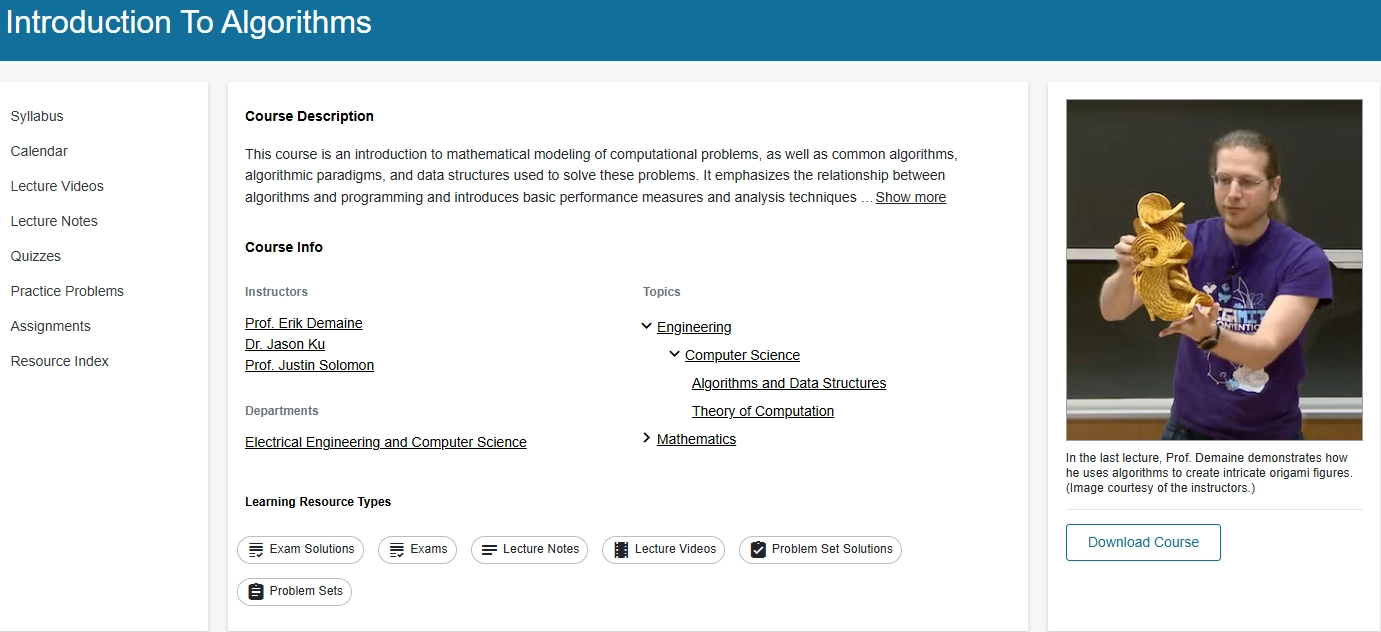
Publishing original research is one of the most reliable ways for course providers to attract editorial backlinks from journalists, bloggers, and institutional websites. When a course platform surveys its learner base and publishes findings on topics such as online learning completion rates, skill gaps in a particular industry, or the career outcomes of certificate holders, that data becomes a citable asset. Education journalists, HR publications, and university blogs frequently link to primary data sources when writing about workforce trends or learning behaviour. The key requirement is that the research must be methodologically credible and the findings must be genuinely useful to an audience beyond the course provider’s own marketing goals.
Original data studies typically require significant upfront investment in survey design, data collection, and presentation. Results are not immediate — a study may take weeks or months to attract meaningful links after publication, and some studies attract very few links despite strong effort. Providers should treat research-led link acquisition as a medium-to-long-term strategy rather than a quick win.
Free Tools, Templates, and Downloadable Resources
Creating genuinely useful free resources — such as curriculum planning templates, skills assessment tools, study schedule generators, or industry glossaries — can attract organic links from educators, bloggers, and resource aggregators. This approach, sometimes called link bait or linkable asset creation, works because other websites naturally reference tools that save their audience time or solve a specific problem. For course providers, a free resource that aligns with the subject matter of their paid courses can simultaneously attract backlinks and introduce potential learners to the brand.
The limitation is that not every free resource earns links. Resources that duplicate what already exists freely online, or that are too narrowly focused on the provider’s own course catalogue, tend to attract little external attention. Effective linkable assets usually require research into what educators, learners, or industry professionals are already searching for and sharing.
Manual Outreach and Guest Posting
Manual outreach involves identifying relevant websites — education blogs, industry publications, professional associations, and subject-matter communities — and proposing content contributions or link placements. Guest posting, where the course provider contributes an original article to a third-party website in exchange for an editorial link, remains a widely used acquisition method. When executed on genuinely relevant, editorially controlled websites, guest posts can deliver topically relevant backlinks that support both domain-level authority metrics and referral traffic from engaged readers.
Quality control is critical in manual outreach for course providers. A link from a respected professional development publication or a well-regarded industry blog carries more potential value than a link from a generic education directory or a low-traffic guest post farm. Outreach teams typically assess prospective publishers using third-party metrics such as Ahrefs Domain Rating, Moz Domain Authority, or Majestic Trust Flow as initial filters, but these proprietary scores are not Google metrics and should not be treated as guarantees of ranking impact. Editorial standards, audience relevance, and organic traffic levels are equally important considerations.
Guest posting at scale on low-quality websites, or using templated outreach that results in thin, keyword-stuffed articles, carries policy risks. Google’s spam policies explicitly address links that are intended to manipulate PageRank, and placements that lack genuine editorial value may be discounted or, in more serious cases, contribute to a manual action. Responsible outreach focuses on publisher quality and content relevance rather than volume alone.
Resource Page Link Building
Many universities, libraries, professional associations, and non-profit organisations maintain curated resource pages that link to external learning materials, tools, and courses. Identifying these pages and proposing a relevant course or free resource as an addition is a legitimate and often effective outreach strategy for course providers. Resource page link building tends to produce links with strong topical context and, in some cases, from institutional domains that carry significant authority signals.
The acquisition process requires careful prospecting. Not every resource page accepts external submissions, and many institutional websites have strict editorial policies about what they will link to. Outreach messages that clearly explain the value of the proposed resource to the page’s existing audience tend to perform better than generic link requests. Response rates vary considerably by niche and institution type, and campaigns often require sustained effort over several months to produce meaningful results.
Broken Link Building
Broken link building involves finding pages on relevant websites that link to resources that no longer exist, then proposing the course provider’s own content as a replacement. This approach offers a genuine value proposition to the publisher — fixing a broken link improves their page quality — while earning a backlink for the course provider. For education-focused websites, broken links often appear on resource pages, course recommendation lists, and reading lists where external URLs have expired or changed.
Broken link building is time-intensive at the prospecting stage and requires a library of existing content that can plausibly replace the broken resource. It is most effective when the course provider already has a range of free educational content, tools, or guides that match the topics covered by the target websites.
Digital PR and Media Coverage
Digital PR involves creating newsworthy content, campaigns, or announcements and distributing them to journalists and media outlets with the goal of earning editorial coverage and backlinks. For course providers, digital PR opportunities include announcing new course partnerships with employers, publishing salary or skills data relevant to a particular industry, or responding to trending education policy discussions with expert commentary. Links earned through genuine media coverage typically appear on high-authority news and industry websites and can deliver strong domain-level signals.
Digital PR campaigns are unpredictable in terms of link volume. A well-executed campaign may earn dozens of links from major publications, while a similar campaign in a different news cycle may earn very few. Course providers should treat digital PR as a complementary strategy rather than a primary link acquisition channel, particularly if consistent monthly link growth is a campaign goal.
Partnerships, Accreditations, and Institutional Relationships
Course providers that hold accreditations from professional bodies, partner with employers or universities, or participate in industry associations often have a natural opportunity to earn backlinks from those organisations’ websites. An accreditation badge page, a partner directory listing, or a case study published by a professional association can all produce relevant, editorially placed links. These links tend to be highly credible because they reflect a genuine institutional relationship rather than a transactional link exchange.
Building these relationships takes time and is not purely an SEO activity. However, course providers that are actively developing their accreditation portfolio or employer partnerships can incorporate link acquisition into that process by ensuring partner organisations link to relevant course pages rather than just the homepage.
Assessing Backlink Quality for Educational Campaigns
Not all backlinks contribute equally to search performance, and this is particularly relevant for course providers targeting competitive educational queries. When evaluating prospective link sources, several factors are worth considering alongside third-party authority metrics.
- Topical relevance: A link from a website covering professional development, skills training, or a subject area directly related to the course content is generally more contextually appropriate than a link from an unrelated niche.
- Editorial placement: Links embedded within substantive, relevant content tend to carry more weight than links in footers, sidebars, or author bios on low-traffic pages.
- Organic traffic: A publisher website with measurable organic traffic is more likely to be indexed and valued by search engines than a website with no visible search presence.
- Link attributes: Followed links pass link equity; nofollowed or sponsored-attributed links do not pass equity in the same way, though they may still contribute to referral traffic and brand visibility.
- Anchor text: Anchor text that is descriptive and contextually appropriate is preferable to over-optimised exact-match anchors, which can appear manipulative at scale.
Third-party metrics such as Domain Rating (Ahrefs), Domain Authority (Moz), Authority Score (Semrush), and Trust Flow (Majestic) can serve as useful initial filters, but they measure different things and are calculated differently. None of them are Google metrics, and a high score on any one platform does not guarantee that a link will improve rankings.
Campaign Timelines and Realistic Expectations
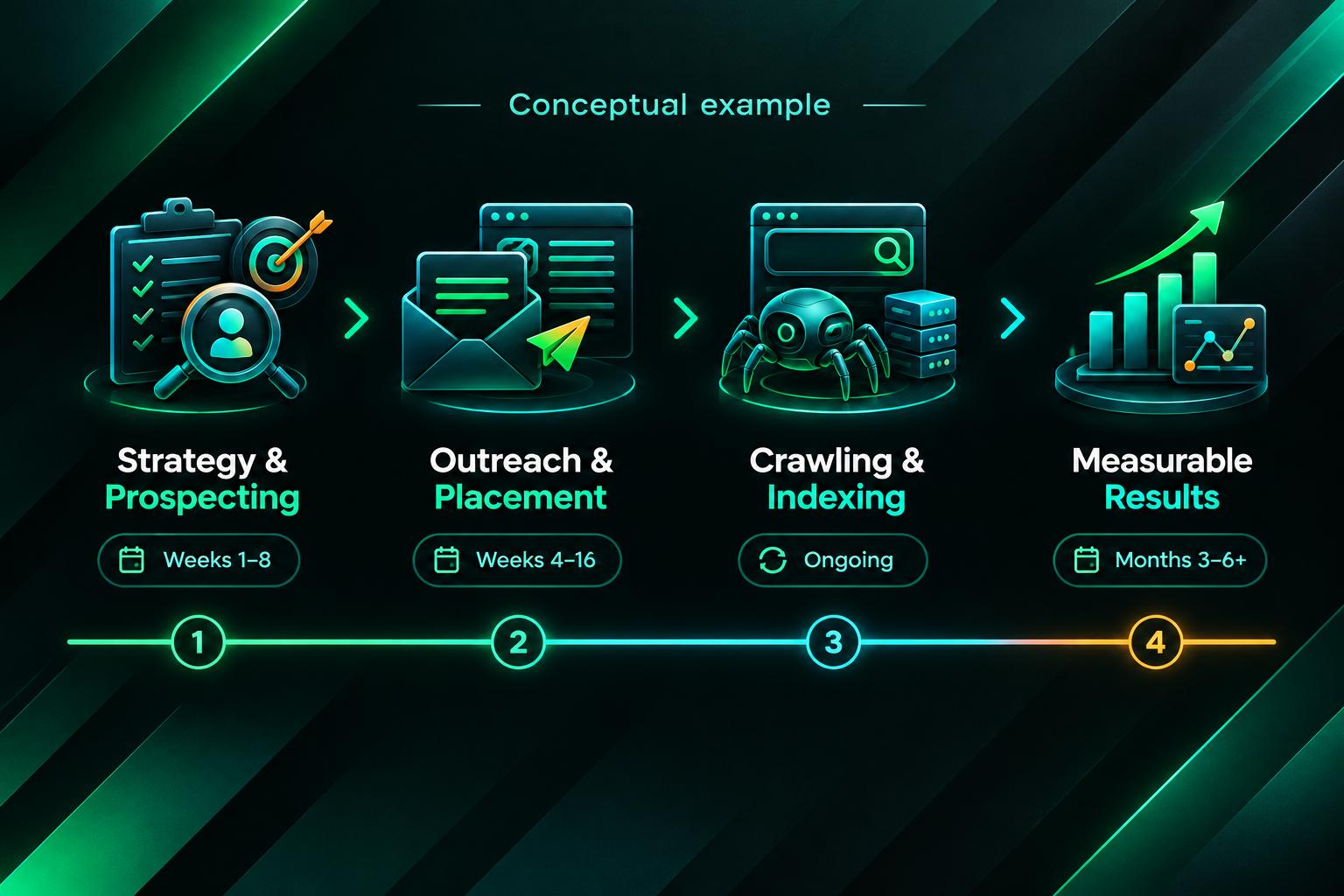
One of the most common misunderstandings in educational link building is the expectation of rapid results. Link acquisition campaigns for course providers typically involve several distinct phases, each with its own timeline.
During the initial phase — usually the first four to eight weeks — the focus is on strategy development, publisher prospecting, content planning, and outreach preparation. No links are placed during this period, but the quality of this groundwork significantly affects campaign outcomes. The outreach and placement phase follows, during which guest posts are pitched, resource page submissions are made, and content is produced and published. Individual placements can take anywhere from two to eight weeks from initial outreach to live publication, depending on the publisher’s editorial schedule and response time.
Once links are live, search engines need to crawl and index the linking pages before any potential ranking effect becomes measurable. This process can take days or several weeks. Ranking and traffic changes, if they occur, typically become observable three to six months after a campaign begins, though this varies considerably depending on the competitiveness of the target keywords, the existing backlink profile, and the overall technical and content condition of the course provider’s website. Some campaigns produce measurable improvements within this window; others require longer sustained effort or reveal that link building alone is insufficient without parallel improvements to content or technical SEO.
Risks and Quality Control Considerations
Educational link building carries risks that course providers should understand before committing to a strategy. The most significant risk is acquiring links from low-quality or manipulative sources that violate Google’s spam policies. This includes paid links that are not properly disclosed, links from private blog networks (PBNs), and links from websites that exist primarily to sell placements rather than serve a genuine audience. Such links may be discounted by search engines or, in cases where a pattern of manipulation is detected, contribute to a manual action that suppresses rankings.
A less dramatic but more common risk is simply wasting budget on links that provide no measurable benefit. Links from irrelevant websites, links buried in low-traffic content, or links from domains with no organic search presence are unlikely to move the needle regardless of how many are acquired. Course providers working with external link building providers should ask for transparency about publisher selection criteria, content quality standards, and how placements are reported and verified.
Link loss is also a realistic consideration. Publishers occasionally remove content, restructure websites, or change editorial policies, causing previously earned links to disappear. Monitoring the backlink profile using tools such as Google Search Console, Ahrefs, or Semrush allows course providers to identify lost links and, where appropriate, follow up with publishers or seek replacement placements.
When to Consider Outsourcing Educational Link Building
Managing a link acquisition campaign in-house requires dedicated time for prospecting, outreach, content production, and reporting. For many course providers — particularly smaller platforms or teams without a dedicated SEO function — the operational overhead of running outreach at scale is a significant constraint. Outsourcing link building to a specialist provider can give course providers access to established publisher relationships, experienced outreach teams, and content production capacity without the need to build those capabilities internally.
The decision to outsource should be based on a realistic assessment of internal capacity, campaign goals, and budget. Outsourced campaigns vary considerably in quality, and course providers should evaluate providers on the basis of their publisher vetting process, content standards, reporting transparency, and willingness to discuss realistic outcomes rather than guaranteed results. A provider that promises a fixed number of links from .edu domains within a short timeframe without explaining their acquisition methodology warrants careful scrutiny.
White-label link building arrangements — where an agency manages link acquisition on behalf of another agency’s clients — are also relevant for SEO agencies that serve the education sector. In these arrangements, the quality of the underlying outreach and publisher network is equally important, since the end client’s website is ultimately affected by the placements made.
Alternatives and Complementary Strategies
Link building is one component of a broader SEO strategy, and course providers should consider whether other activities may deliver more immediate or cost-effective improvements depending on their current situation.
- Content optimisation: Improving existing course pages to better match search intent — including clearer learning outcomes, structured data markup, and updated curriculum information — can improve rankings without additional links.
- Internal linking: Strengthening internal link structures between course pages, blog content, and free resources can distribute existing link equity more effectively across the website.
- Technical SEO: Addressing crawling, indexing, page speed, or mobile usability issues may unlock ranking improvements that link building alone cannot achieve.
- Community and forum participation: Contributing genuinely useful answers in relevant professional communities, forums, or Q&A platforms can build brand visibility and occasionally earn organic links, though this is difficult to scale.
- Social proof and reviews: While review signals are not direct ranking factors in the same way as backlinks, strong learner reviews on third-party platforms can improve click-through rates and brand credibility in search results.
Frequently Asked Questions
Are .edu backlinks more valuable than links from other educational websites?
Links from .edu domains are often cited as particularly valuable because many university and institutional websites carry strong authority signals. However, the value of any link depends on the relevance of the linking page, the editorial context, and whether the link is genuinely placed rather than acquired through a directory or paid scheme. A contextually relevant link from a well-regarded industry publication may be more beneficial than a link from an obscure .edu page with no organic traffic.
How many backlinks does a course provider need to rank competitively?
There is no universal link count that guarantees competitive rankings. The number of referring domains needed depends on the competitiveness of the target keywords, the quality of existing links, the strength of competing websites, and the overall SEO condition of the course provider’s site. A site-specific competitive analysis is a more reliable starting point than any fixed target.
Can course providers earn backlinks without producing new content?
Some link acquisition methods — such as broken link building, resource page outreach, and partnership-based links — can produce results using existing content or course pages. However, most high-quality link acquisition strategies benefit from having strong, linkable content assets. Providers with limited existing content may find that investing in content creation alongside outreach improves campaign outcomes.
How long does it take to see results from an educational link building campaign?
Measurable changes in rankings or organic traffic typically become observable three to six months after a campaign begins, though this varies depending on the competitiveness of target keywords, the existing backlink profile, and the technical condition of the website. Some campaigns produce earlier results; others require longer sustained effort. Link building should be treated as a medium-to-long-term investment rather than a short-term tactic.
What should course providers look for when evaluating a link building provider?
Key considerations include the provider’s publisher vetting criteria, content quality standards, reporting transparency, and how they handle link loss or underperformance. Providers that offer guaranteed placements on specific domain types without explaining their methodology, or that promise ranking improvements within unrealistically short timeframes, should be approached with caution.
Is it possible to earn educational backlinks without paying for them?
Yes. Organic link acquisition through original research, genuinely useful free resources, digital PR, and community engagement can produce editorial links without direct payment for placements. However, these approaches require significant time and content investment. The distinction between paying for content production and outreach versus paying for a link placement itself is important from a search-engine policy perspective.
Choosing the Right Link Acquisition Approach for Your Course Platform
The most effective educational link building strategy for a course provider depends on the platform’s existing authority, content library, target audience, and competitive landscape. Providers with strong original research capabilities may find data-led digital PR and linkable asset creation most productive. Those with established industry relationships may be better positioned to leverage partnerships and accreditation links. Platforms in highly competitive niches — such as professional certification or language learning — may need a sustained, multi-method campaign to make meaningful progress against well-resourced incumbents.
Before committing to a specific approach, it is worth conducting a backlink profile audit to understand the current state of the domain’s link equity, identifying which course pages most need link support, and assessing whether technical or content issues might limit the impact of new links. Link building is most effective when it operates alongside strong on-page content, sound technical SEO, and a clear understanding of the search intent behind target keywords.
For course providers considering outsourced link acquisition, working with a provider that understands the education sector’s specific publisher landscape, editorial standards, and audience expectations can reduce the risk of low-quality placements and improve the relevance of earned links. A transparent discussion about realistic timelines, campaign methodology, and how success will be measured is a reasonable starting point for any provider relationship.