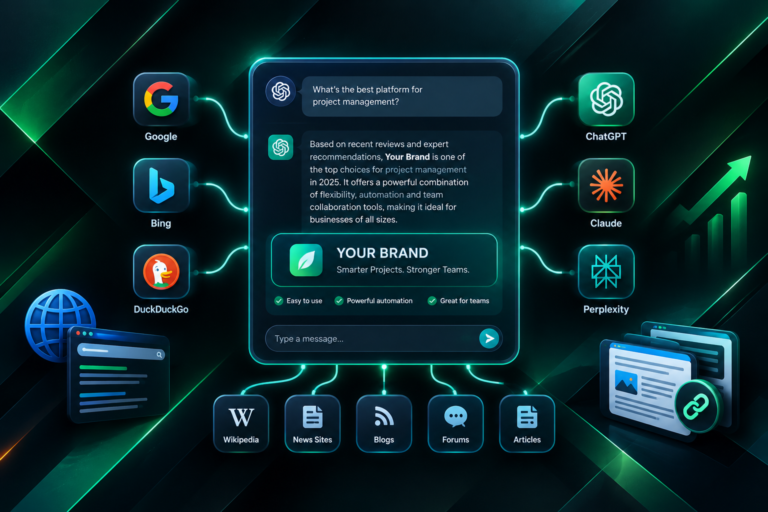
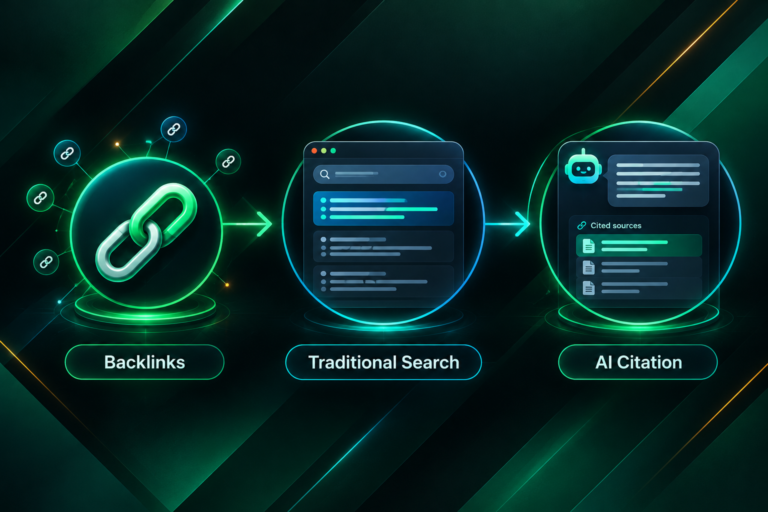
Hardware startups face a link building challenge that software companies rarely encounter: the product must physically exist before most reviewers will cover it, and the window for earning editorial attention is often narrow. Independent reviews — published by tech journalists, specialist bloggers, YouTubers with companion articles, and niche community sites — can generate some of the most credible backlinks available to a hardware brand, because the links are editorially placed within genuine product coverage. Understanding how those links are earned, what reviewers actually need, and where the strategy has real limits is essential before committing budget or time to this approach.
Key Takeaways
- Independent review backlinks are editorially placed links within genuine product coverage, making them among the more credible link types a hardware startup can earn.
- Reviewers link back when they have a working product, clear context, and a reason to publish — not simply because they were asked.
- The strategy works best when combined with a broader link acquisition plan, because review coverage alone rarely produces enough referring domains to move competitive rankings.
- Timing, product readiness, and outreach targeting significantly affect how many review placements convert into live backlinks.
- Not every review will include a followed link, and some high-traffic coverage may use nofollow or sponsored attributes depending on the publisher’s policy.
Why Independent Reviews Are a Valuable Backlink Source for Hardware Brands
An independent review backlink differs from a guest post or a directory listing in one important way: the publisher chose to cover the product on its own editorial terms. Search engines have long treated editorially given links as stronger signals of relevance and authority than links acquired through direct exchange or payment, because they reflect a third party’s genuine assessment. For a hardware startup, a review published on a respected technology site, a specialist hobbyist blog, or a well-regarded consumer electronics publication carries both link equity and referral traffic from an audience that is already interested in the product category.
Beyond the SEO dimension, independent reviews contribute to brand credibility in ways that affect conversion rates and investor perception. A startup with ten published reviews from recognizable independent sources looks meaningfully different from one with only its own marketing content, regardless of the exact domain authority scores involved. The backlinks earned through this coverage tend to be contextually relevant — placed within product descriptions, comparison sections, or recommendation roundups — which aligns with the kind of topical relevance that supports rankings for product and category keywords.
What Reviewers Actually Need Before They Will Cover a Hardware Product
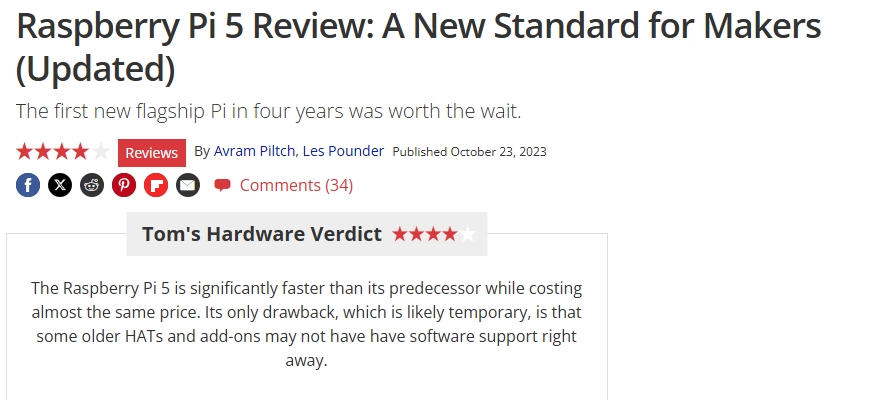
The most common reason a hardware startup fails to earn review backlinks is not poor outreach — it is insufficient product readiness. Independent reviewers, whether they write for a major technology publication or run a specialist blog with a loyal niche audience, need a working unit they can test under realistic conditions. A prototype that requires special handling, a product that only works with specific software not yet publicly available, or a device that crashes during testing will rarely result in a published review, and almost never in a positive one that includes a backlink.
Reviewers also need clear, accurate product information before they can write useful coverage. A concise press kit that includes specifications, intended use cases, pricing, availability, and high-resolution images reduces the friction between receiving a sample and publishing a review. Publications with editorial standards will fact-check claims, so accuracy matters more than marketing language. Providing a dedicated press or media page on the startup’s website — one that is easy to find and contains downloadable assets — signals professionalism and makes it easier for a reviewer to link back to a canonical product page rather than a social media profile or a crowdfunding campaign.
Timing relative to the product launch cycle also shapes reviewer behavior. Sending review units before a public launch, under embargo, gives reviewers time to test thoroughly and publish on or around the launch date, which is when search interest and referral traffic are highest. Reaching out after a product has been publicly available for several months means competing with reviewers who have already moved on to newer releases, and the editorial incentive to cover the product diminishes.
How to Identify the Right Independent Reviewers to Target
Effective reviewer outreach begins with identifying publishers whose audience matches the hardware product’s target buyer, not simply those with the highest domain rating or the largest social following. A reviewer who covers professional audio equipment and has built a loyal readership among recording engineers is a more relevant target for an audio interface startup than a general consumer electronics blog with ten times the traffic but no specialist audience.
Useful signals when assessing a potential reviewer include the topical focus of their recent coverage, whether they regularly include product links in their reviews, the engagement quality of their audience (comments, shares, and community discussion rather than raw page views alone), and whether their existing reviews appear in search results for relevant product category queries. Tools such as Ahrefs or Semrush can help identify which review sites already rank for keywords related to the product category, which indicates both topical authority and the likelihood that a published review will attract organic search traffic and referral clicks.
It is worth distinguishing between three types of independent reviewers that hardware startups commonly encounter. First, editorial journalists at established technology publications operate under formal editorial policies and may require a press sample through an official channel; their links carry significant authority but are harder to earn and may use nofollow attributes depending on the publication’s policy. Second, independent specialist bloggers and content creators often have smaller but highly engaged audiences in a specific niche; they are generally more accessible, more likely to include a followed link, and more willing to cover emerging brands. Third, community-driven platforms — forums, subreddits with companion wikis, or enthusiast sites — may produce organic mentions rather than formal reviews, and the link attributes on these platforms vary widely.
The Outreach Process: From First Contact to Published Review
Review-based link acquisition follows a different workflow from standard guest post outreach. The goal of the initial contact is not to pitch a content idea but to offer a review unit and establish whether the reviewer covers products in the relevant category. A short, direct message that identifies the product, explains what makes it worth reviewing, and offers to send a sample without obligation tends to perform better than a lengthy pitch that reads like a press release.
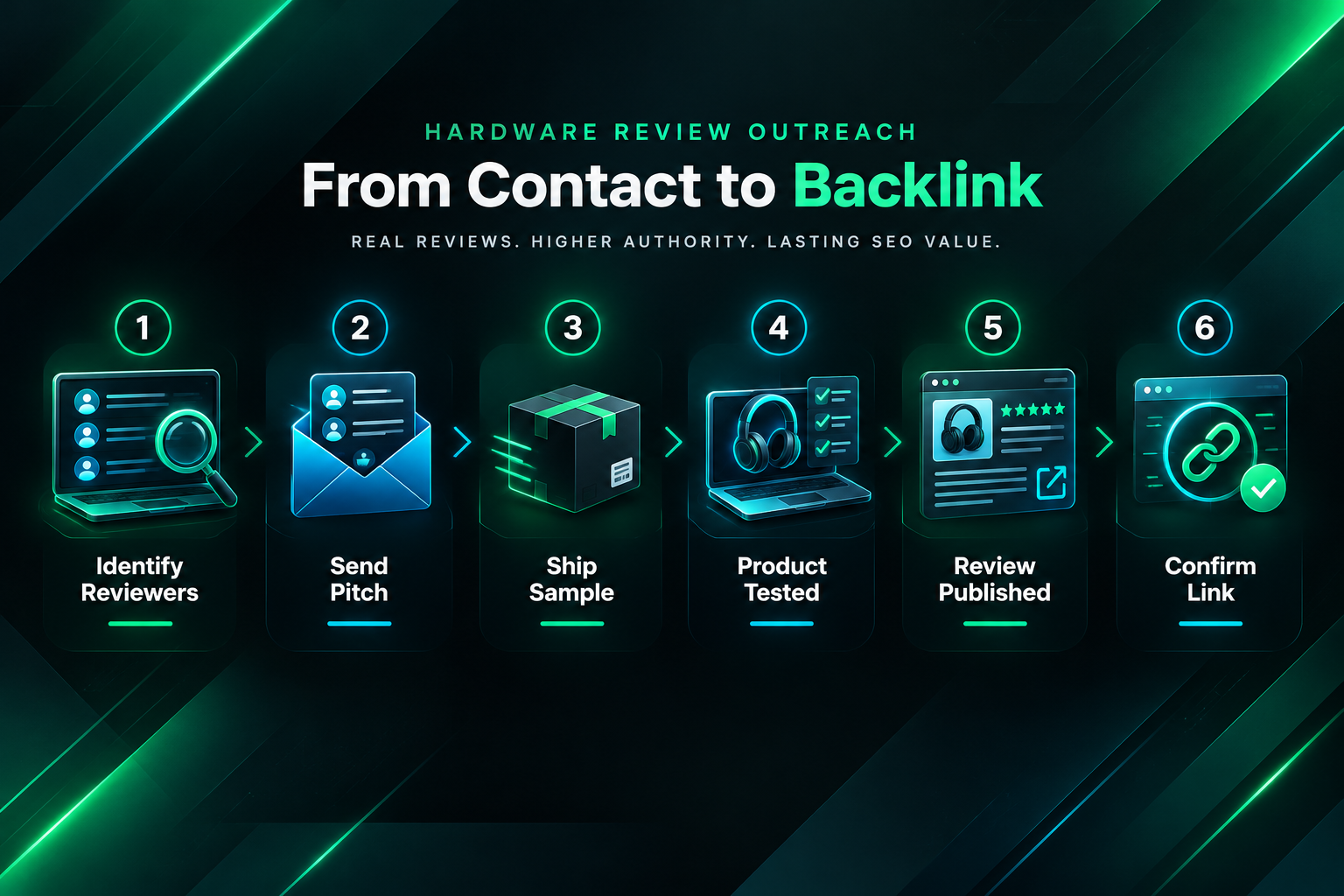
Personalisation matters more in reviewer outreach than in many other link building contexts, because reviewers receive a high volume of generic pitches and can identify templated messages quickly. Referencing a specific review the journalist or blogger has published, explaining why the product fits their existing coverage, and demonstrating familiarity with their audience shows that the outreach is targeted rather than broadcast. This does not require extensive research for every contact, but it does require enough familiarity with the reviewer’s work to write one or two sentences that could not have been sent to anyone else.
After a review unit is sent, a single follow-up after a reasonable testing period — typically two to four weeks depending on the product complexity — is appropriate. Repeated follow-ups or pressure to publish on a specific date are likely to damage the relationship and may result in the reviewer declining to cover the product at all. Some reviewers will test a product and choose not to publish if they do not find it sufficiently interesting or if it does not meet their quality threshold; this is an inherent risk of the strategy and should be factored into planning.
When a review is published, it is worth checking whether the reviewer included a link to the product page, and if so, whether the link uses a followed or nofollow attribute. If no link was included, a polite request to add one — framed as making it easier for readers to find the product — is sometimes successful, particularly with independent bloggers who do not have strict editorial policies about linking. This step is often overlooked but can convert a brand mention into a backlink without requiring additional outreach effort.
Link Attributes, Editorial Policies, and What to Realistically Expect
Not every published review will produce a followed backlink, and hardware startups should plan for this variation rather than assume that every placement will carry full link equity. Large technology publications frequently apply nofollow or sponsored link attributes to product links, either as a blanket editorial policy or because the review involved a provided sample that the publication treats as a form of commercial relationship. Smaller independent blogs are more likely to use followed links, but their domain authority metrics and organic traffic levels vary considerably.
Google’s link spam policies are relevant here. Providing a free product sample in exchange for a review is a common and generally accepted practice in journalism and content creation, but if the arrangement includes an explicit requirement to publish a positive review or to include a specific followed link, it moves into territory that search engine guidelines treat as a link scheme. Responsible review outreach offers samples without conditions attached to the coverage, accepts that some reviews may be negative or mixed, and does not attempt to control the link attributes the publisher uses. This approach protects the startup’s backlink profile from spam-related risk and maintains the editorial independence that makes review links credible in the first place.
Realistically, a hardware startup running a focused review outreach campaign over three to six months might earn between five and twenty published reviews, depending on the product category, the size of the relevant reviewer community, and the quality of the outreach targeting. Not all of these will include followed backlinks, and the domain authority distribution will vary. This is a meaningful contribution to a backlink profile but is unlikely to be sufficient on its own for competitive product category rankings, particularly in markets where established brands have accumulated hundreds of referring domains over several years.
Combining Review Outreach with Other Link Building Methods
Independent review backlinks work best as one component of a broader link acquisition strategy rather than as a standalone approach. The review-based method is well suited to earning topically relevant, editorially placed links from sites that cover the product category, but it is constrained by the size of the relevant reviewer community and the pace at which new reviews can be published. Complementary methods can address gaps in referring domain diversity and target pages that review coverage does not naturally reach.
Manual outreach for guest posts on technology, entrepreneurship, or industry-specific publications can build links to pages that reviewers would not typically cover, such as a startup’s blog content, comparison pages, or resource guides. Niche edits — adding a link to an existing relevant article on a third-party site — can place the startup’s product page within content that already ranks for related queries. Digital PR campaigns that generate news coverage around a product launch, a funding round, or a notable partnership can produce high-authority links from news publications that independent product reviewers do not represent.
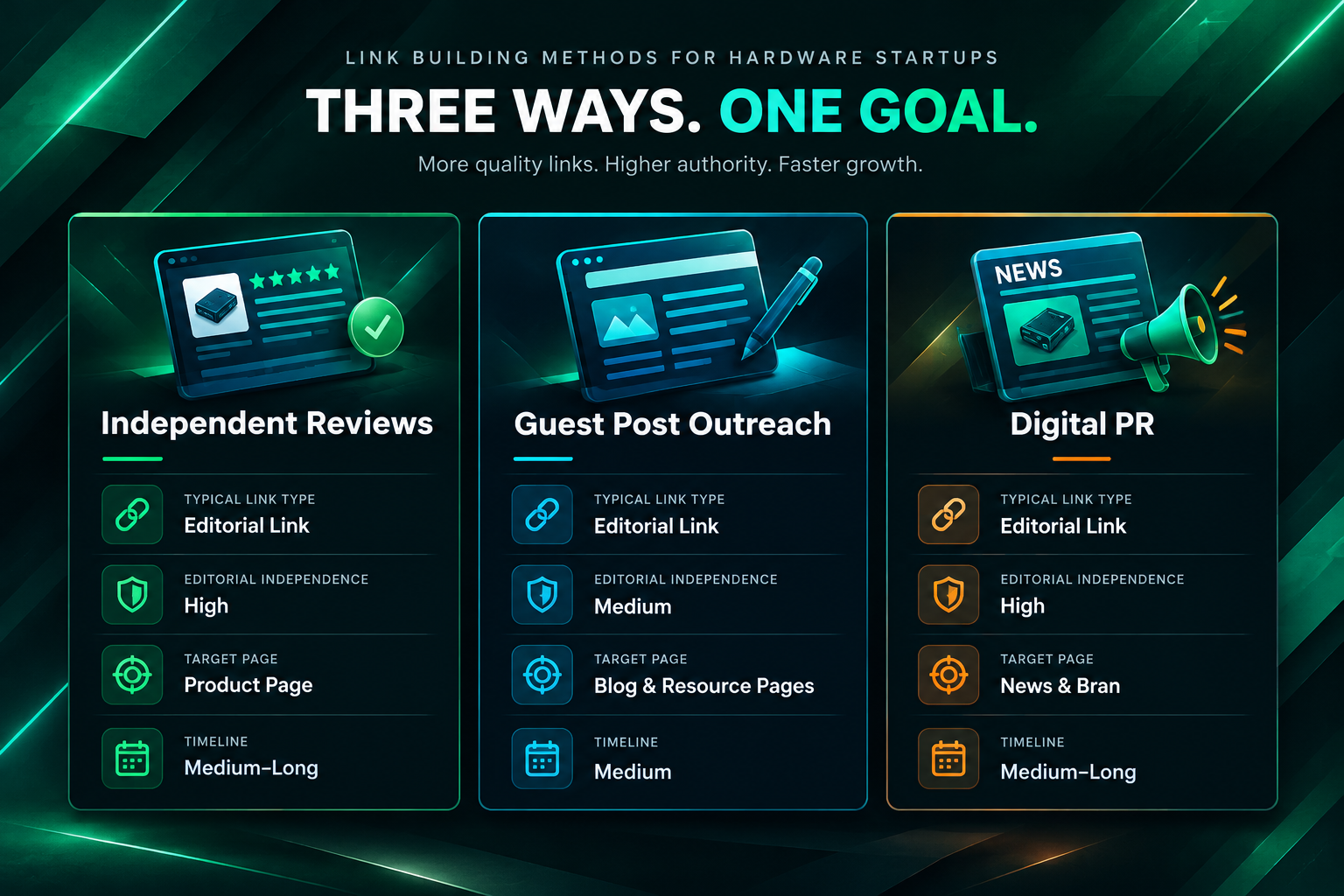
For hardware startups working with an SEO agency or outsourced link building provider, it is worth discussing how review outreach fits within the overall campaign plan. A provider with experience in technology and hardware niches will be able to assess which link types are most likely to move the needle for the specific target pages and competitive landscape, rather than applying a generic approach that may not account for the product-dependent nature of review-based acquisition.
Suitability, Timing, and When This Strategy May Not Be the Right Priority
Review-based link building is most suitable for hardware startups that have a shippable product, a defined target audience, and a product page or website that is technically sound enough to benefit from increased link equity. If the startup’s website has crawling or indexing issues, thin content on key pages, or a significant mismatch between the content and the search intent of target keywords, earning more backlinks is unlikely to produce meaningful ranking improvements until those underlying issues are addressed.
The strategy is less suitable during the pre-launch phase when no physical product is available for testing, in highly commoditised product categories where established brands dominate review coverage and a new entrant is unlikely to attract editorial attention, or when the startup’s budget and internal resources are insufficient to manage sample logistics, outreach, and follow-up consistently over several months. In these situations, alternative link building methods that do not depend on product availability — such as content-led outreach, resource page link building, or digital PR around the founding story or technology — may be more practical in the short term.
Startups operating in regulated product categories, such as medical devices or certain electronics, should also consider whether independent review coverage creates any compliance considerations before sending samples to reviewers who may make claims about product performance or safety.
Frequently Asked Questions
Do hardware review backlinks count as editorial links?
A backlink placed within an independent review is generally considered an editorial link if the reviewer published the coverage based on their own assessment and was not required to include a specific link as a condition of receiving the sample. The editorial nature of the link depends on the reviewer’s independence, not simply on whether a sample was provided. If the arrangement included payment for a positive review or a contractual requirement to link, the link would not be editorially independent and may conflict with search engine link policies.
How long does it take to see SEO results from review backlinks?
The timeline from outreach to measurable SEO impact involves several stages: reviewer response and sample shipment, testing and writing time, publication, crawling and indexing by search engines, and then any ranking or traffic change. The full cycle from initial outreach to a measurable organic search effect can range from two to six months or longer, depending on how quickly reviews are published, how frequently search engines crawl the linking domains, and how competitive the target keywords are. Results vary significantly based on the existing backlink profile, content quality, and competitive landscape.
Should a hardware startup send free samples to every reviewer who asks?
Not necessarily. Sending samples without any assessment of the reviewer’s relevance, audience quality, and publication history can be costly and may not produce useful backlinks or referral traffic. Prioritising reviewers whose existing coverage aligns with the product category, whose audience matches the target buyer, and who have a track record of publishing thorough reviews with product links is generally more efficient than a broad sample distribution approach.
What if a reviewer publishes a negative review?
A negative or mixed review is an inherent risk of offering samples without conditions. Attempting to suppress or remove a negative review is generally counterproductive and may damage the startup’s reputation with the broader reviewer community. A factually inaccurate negative review can be addressed politely by providing correct information, but editorial coverage that reflects a genuine product experience — even an unfavourable one — is part of the independent review process. Startups should ensure the product is genuinely ready for review before sending samples to reduce this risk.
Can a hardware startup earn review backlinks without sending physical samples?
In most cases, physical samples are necessary for hardware product reviews because reviewers need to test the device under real conditions. Some reviewers may cover a product based on a detailed briefing, a video demonstration, or early access to a companion app, but this is less common and typically produces less thorough coverage. For products that are not yet shippable, alternative link building methods that do not depend on product availability are usually more practical.
How does review-based link building fit with white-hat link acquisition principles?
Offering review samples without conditions, accepting editorial independence, and not attempting to control link attributes or review sentiment aligns with white-hat link acquisition principles. The approach earns links through genuine product coverage rather than through manipulation or exchange. However, no link building method is entirely without risk, and the specific link attributes, publisher quality, and outreach practices all affect how a backlink profile is assessed by search engines over time.
Building a Review-Based Link Strategy That Reflects Your Product Stage
Independent reviews can be a genuinely effective source of editorially placed backlinks for hardware startups, but the strategy’s value depends heavily on product readiness, reviewer targeting, and realistic expectations about volume and link attributes. A startup with a well-tested product, a clear target audience, and a structured outreach process is in a reasonable position to earn meaningful review coverage that contributes to both backlink profile development and brand credibility.
The approach works best when it is part of a broader link acquisition plan that accounts for the limitations of review-based outreach — the dependence on physical product availability, the variable link attributes across different publisher types, and the relatively small size of the relevant reviewer community in most hardware niches. Combining review outreach with manual guest post outreach, digital PR, and other link building methods gives a hardware startup a more resilient and diversified backlink profile than any single tactic can produce alone.
If you are assessing how review-based link acquisition fits within a wider SEO and link building strategy for a hardware brand, discussing the approach with an experienced link building provider can help clarify which methods are most appropriate for the current product stage, competitive landscape, and target pages — before committing resources to outreach at scale.