
Vulnerability research is one of the most credible link acquisition assets a cybersecurity company can produce. When a security team discovers a software flaw, documents a threat campaign, or publishes original exploit data, journalists, developers, and security professionals naturally reference that work. This article explains how cybersecurity companies can structure vulnerability research and related original content to attract editorially earned backlinks, what realistic outcomes look like, and where the approach has meaningful limitations.
Key Takeaways
- Original vulnerability disclosures, CVE assignments, and threat intelligence reports are among the strongest link-earning assets available to cybersecurity companies because they provide verifiable, citable data that other publishers need.
- Earning backlinks from research requires a deliberate distribution strategy, not just publication. Coordinated disclosure, press outreach, and community seeding all affect how widely a finding is cited.
- Link quality from vulnerability research tends to be high because citations typically come from news outlets, developer communities, and academic or government sources rather than low-authority directories.
- The strategy suits companies with genuine research capacity. Businesses without an internal security research team may need to invest in original data production before this approach becomes viable.
- Results are not guaranteed and depend on the significance of the finding, the quality of the write-up, the distribution effort, and the competitive landscape of the topic.
Why Vulnerability Research Attracts Backlinks
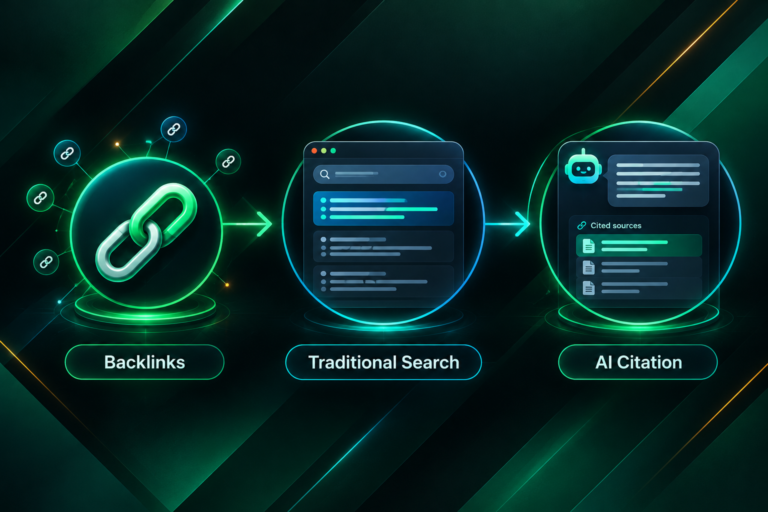
Backlinks earned through original research differ from those acquired through outreach-based guest posting or niche edits. When a cybersecurity company discovers and responsibly discloses a vulnerability, the finding becomes a primary source. Technology journalists covering the story need to link to that source. Security blogs summarising the issue cite the original advisory. Developers patching affected software reference the CVE entry and the researcher’s write-up. This citation behaviour is driven by the nature of the content itself rather than by a link request, which is why vulnerability research can generate backlinks from publishers who would otherwise be difficult to reach through conventional outreach.
The link profile that results from this kind of coverage tends to include referring domains with strong topical authority in technology, security, and software development. These are the types of domains that third-party metrics tools such as Ahrefs, Semrush, and Majestic typically score highly, though it is worth noting that no third-party metric is a direct Google ranking signal. What matters from an SEO perspective is that links from editorially relevant, high-traffic publications in the same or adjacent topic space are generally considered more valuable than links from unrelated or low-quality sites.
Types of Vulnerability Research That Generate Links
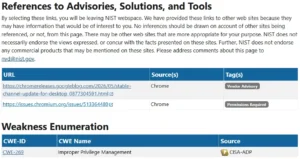
Not all security content earns the same level of external citation. The following categories have a documented history of attracting backlinks from credible sources, though outcomes vary depending on the significance of the finding and the quality of the documentation.
CVE Disclosures and Security Advisories
A Common Vulnerabilities and Exposures (CVE) assignment is one of the most citable outputs a security researcher can produce. Once a CVE identifier is issued by MITRE or a CVE Numbering Authority (CNA), the associated advisory becomes a reference point for patch notes, security bulletins, news articles, and developer documentation. Companies that operate as CNAs or that regularly submit CVE requests are well-positioned to build a body of citable research over time. Each advisory published on the company’s own domain creates a linkable asset that may attract citations for months or years after the initial disclosure.
Original Threat Intelligence Reports
Threat intelligence reports that document a specific malware family, attack campaign, or threat actor group attract citations from security news outlets, government cybersecurity agencies, and academic researchers. The key differentiator is original data: telemetry from the company’s own products, honeypot observations, or reverse-engineering findings that are not available elsewhere. Reports that aggregate publicly known information without adding new analysis are less likely to earn organic citations because they do not give other publishers a reason to link to them specifically.
Proof-of-Concept Exploit Research
Responsibly disclosed proof-of-concept (PoC) code and technical write-ups explaining how a vulnerability can be exploited attract links from developer communities, security forums, and technical blogs. GitHub repositories associated with the research may also accumulate stars and references that drive traffic and brand awareness, though GitHub links themselves are typically nofollow. The accompanying blog post or advisory on the company’s own domain is where the followed editorial links tend to land.
Annual or Periodic Vulnerability Trend Reports
Recurring reports that aggregate vulnerability data across an industry, software category, or time period become reference documents that journalists and analysts cite repeatedly. A well-structured annual report on, for example, the most exploited vulnerabilities in industrial control systems or the most common web application flaws can earn backlinks each year it is updated, compounding the link acquisition value over time. These reports work best when they include proprietary data or methodology that distinguishes them from freely available sources such as the NVD or OWASP Top 10.
Building a Distribution Strategy Around Research
Publishing research on a company blog without a distribution plan significantly limits its link-earning potential. The cybersecurity media landscape is competitive, and even genuinely significant findings can go unnoticed if they are not surfaced to the right audiences at the right time.
Coordinated Disclosure and Embargo Management
Coordinated disclosure, where the researcher notifies the affected vendor before public release and agrees on a disclosure timeline, creates a natural distribution event. When the embargo lifts, the vendor publishes a patch, the researcher publishes the advisory, and security journalists who were briefed under embargo publish their coverage simultaneously. This coordinated moment generates a cluster of citations in a short window. Companies that handle disclosure professionally and maintain relationships with affected vendors are more likely to be cited accurately and prominently in vendor patch notes.
Security Media and Journalist Outreach
Proactive outreach to journalists who cover cybersecurity at publications such as Bleeping Computer, The Register, Wired, Ars Technica, and Dark Reading can significantly increase the number of referring domains a piece of research earns. This outreach is most effective when it is targeted, personalised, and timed to coincide with the public disclosure. A brief, factual pitch that explains the significance of the finding, who is affected, and what the researcher discovered is more likely to result in coverage than a generic press release. Building ongoing relationships with security journalists over time tends to produce better results than one-off contact.
Community Seeding in Security Forums and Platforms
Security communities on platforms such as Reddit’s r/netsec, Hacker News, and specialised forums are influential in amplifying research. A well-received submission on Hacker News can drive significant referral traffic and prompt secondary coverage from bloggers and newsletter authors who then link to the original research. These community links are often nofollow, but the referral traffic and secondary editorial coverage they generate can produce followed backlinks from other publishers who discover the research through these channels.
Conference Presentations and Academic Channels
Presenting research at security conferences such as DEF CON, Black Hat, RSA Conference, or academic venues creates additional citation opportunities. Conference proceedings, speaker pages, and attendee write-ups often link to the researcher’s original publication. Academic papers that cite the work may appear in Google Scholar and other academic databases, and while these links may not always pass PageRank directly, they contribute to the research’s perceived authority and may prompt further editorial coverage.
Content Quality Requirements for Link-Earning Research
The technical quality and presentation of vulnerability research directly affects how many backlinks it earns. Publishers and journalists assess research before citing it, and poorly documented findings are less likely to be referenced even if the underlying discovery is significant.
Effective vulnerability research write-ups typically include a clear description of the affected software or system, the conditions required for exploitation, the potential impact, a timeline of discovery and disclosure, and remediation guidance. Technical accuracy is essential because errors in a security advisory can damage the company’s credibility and reduce the likelihood of future citations. Where possible, including proof-of-concept details, CVSS scores, and CWE classifications makes the advisory more useful to the security community and more likely to be cited in technical contexts.
Presentation also matters. Research published in a format that is easy to read, properly structured with clear headings, and accessible without a paywall or registration requirement is more likely to be linked to than research buried behind a form or published in a format that is difficult to share. A dedicated advisory or research page on the company’s own domain, rather than a PDF or a third-party platform, ensures that the backlinks point to a URL the company controls.
Realistic Expectations and Limitations
Vulnerability research as a link acquisition strategy has genuine strengths, but it also has meaningful constraints that cybersecurity companies should understand before committing resources to it.
Research Capacity Is a Prerequisite
This strategy requires a team capable of conducting original security research. Companies that do not have internal researchers, or that focus primarily on managed services or reselling rather than original discovery, may find it difficult to produce the kind of findings that attract editorial citations. Commissioning research from external researchers is possible but requires careful management of attribution, disclosure, and publication rights.
Not Every Finding Generates Significant Coverage
The volume of backlinks a piece of research earns is closely tied to the significance of the finding. A critical vulnerability in widely used software may generate dozens of referring domains within days of disclosure. A low-severity finding in an obscure application may attract little or no external coverage. Companies should not expect a predictable or consistent volume of backlinks from research output, and they should plan for variability in results across different disclosures.
Timelines Are Unpredictable
Unlike outreach-based link building, where a campaign can be planned and executed within a defined timeframe, research-driven link acquisition depends on when significant findings are made. A company may go several months without a disclosure that attracts meaningful coverage, then publish a finding that generates substantial links in a short period. This unpredictability makes research-based link acquisition difficult to use as the sole link building strategy for a cybersecurity company that needs consistent backlink growth.
SEO Impact Depends on More Than Backlinks
Earning backlinks from high-authority security publications may contribute to improved organic search visibility over time, but backlinks are one factor among many. Technical SEO health, content relevance, search intent alignment, internal linking, and the competitive landscape of target keywords all influence whether a page ranks well. A cybersecurity company that earns strong backlinks but has significant technical SEO issues or thin content on its core service pages may not see the ranking improvements it expects. A site-specific assessment is appropriate before attributing ranking changes to any single factor.
Complementary Link Building Approaches for Cybersecurity Companies
Vulnerability research is a powerful but intermittent link acquisition channel. Most cybersecurity companies benefit from combining it with other strategies that provide more consistent backlink growth.
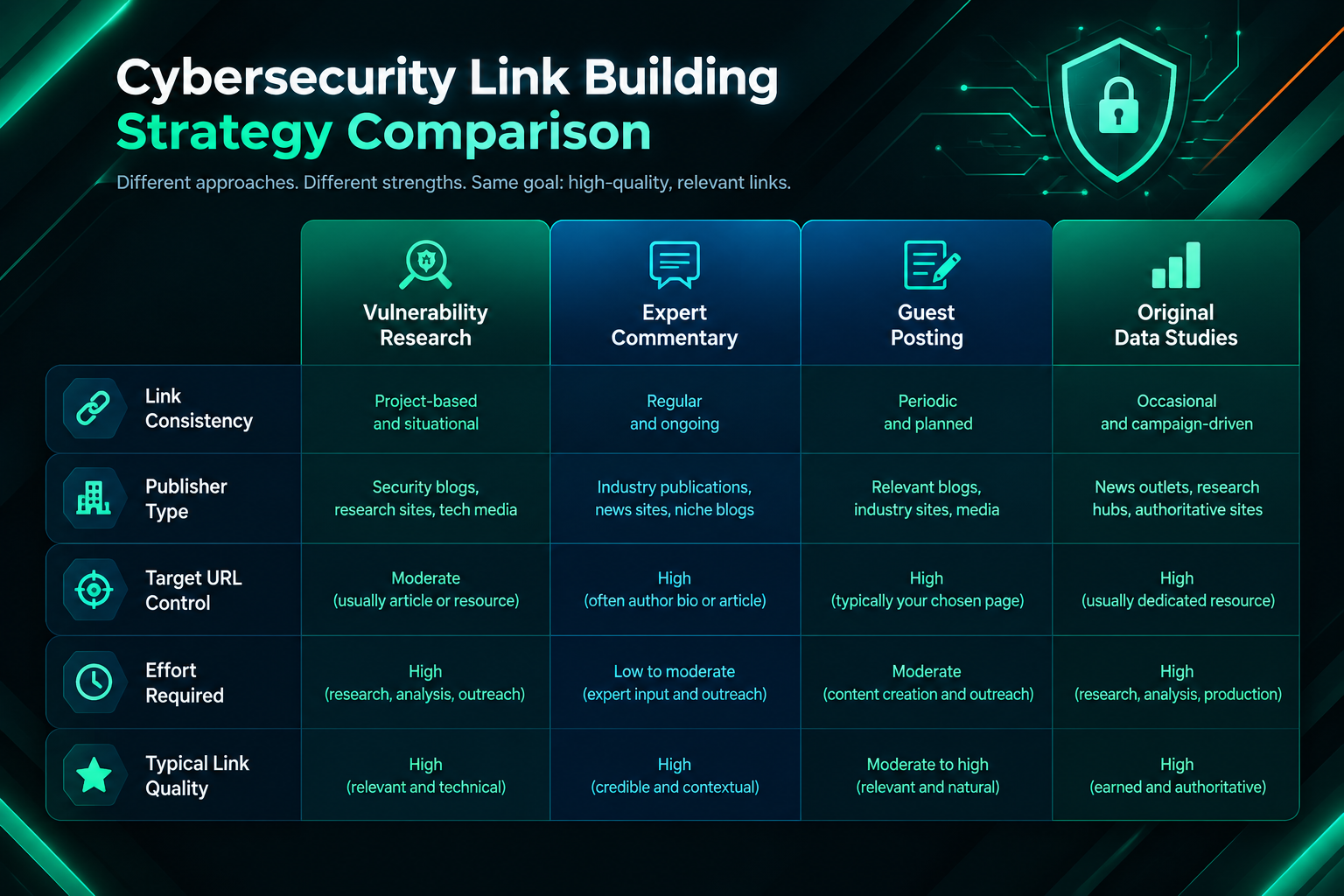
Expert Commentary and Digital PR
Security professionals who provide expert commentary to journalists covering data breaches, regulatory changes, or emerging threats can earn backlinks from news articles without needing to produce original research. Services such as HARO (Help a Reporter Out) and direct journalist relationships are common channels for this type of earned media. The links tend to come from high-authority news domains and are editorially placed, which aligns with the quality standards that make backlinks valuable from an SEO perspective.
Guest Posting on Security and Technology Publications
Manual outreach to relevant security and technology publications for guest post placements allows cybersecurity companies to build backlinks to specific target pages, such as product pages or service landing pages, that may not naturally attract links from research coverage. Guest posting gives the company more control over anchor text, target URL, and publication timing than earned media does. The trade-off is that guest posts require editorial approval and ongoing outreach effort, and the quality of placements varies significantly depending on the publisher.
Original Data Studies and Industry Surveys
Companies that cannot produce vulnerability research can still create linkable assets through original data. Annual surveys of security professionals, analysis of breach disclosure data, or studies of patch adoption rates can attract citations from journalists and analysts who need data to support their reporting. This approach requires investment in survey design, data collection, and professional presentation, but it can generate backlinks from publications that would not cover a company’s products or services directly.
Resource Pages and Security Tools
Free security tools, calculators, or reference resources hosted on the company’s domain can attract passive backlinks over time as other sites link to them as useful references. Examples include free vulnerability scanners, password strength checkers, or compliance checklists. These assets require upfront development investment but can continue earning links long after launch without ongoing outreach effort.
Assessing Backlink Quality from Research Coverage
Not all backlinks earned from security coverage are equally valuable. When evaluating the links generated by a vulnerability disclosure or threat report, it is worth considering the topical relevance of the linking domain, the placement context within the article, the link attribute (followed versus nofollow), and the organic traffic the linking page itself receives.
Links from major security news outlets that cover the story in detail and place the link in the body of the article are generally more valuable than brief mentions in link roundups or automated news aggregators. Nofollow links from high-traffic publications may still contribute referral traffic and brand awareness even if their direct SEO value is debated. A balanced assessment of research-driven link acquisition should account for both the SEO value and the broader business value of appearing in credible security publications.
Third-party metrics from tools such as Ahrefs Domain Rating, Semrush Authority Score, or Majestic Trust Flow can help prioritise which publications are worth targeting with proactive outreach, but these metrics are proprietary estimates rather than Google signals. They are useful as relative indicators of publisher quality, not as guarantees of SEO impact.
Frequently Asked Questions
How long does it take to earn backlinks from a vulnerability disclosure?
Coverage from a significant disclosure can appear within hours of the embargo lifting if journalists were briefed in advance. Secondary coverage from blogs and newsletters may continue for days or weeks. For lower-profile findings, coverage may be minimal or delayed. There is no fixed timeline, and results vary considerably depending on the severity of the vulnerability and the distribution effort.
Do backlinks from GitHub or security forums help with SEO?
Links from GitHub and many security forums are typically nofollow, meaning they do not pass PageRank in the same way that followed editorial links do. However, they can drive referral traffic and increase the visibility of the research among audiences who may then link to it from their own sites. The indirect SEO benefit through secondary editorial coverage can be meaningful even if the direct link value is limited.
Can a cybersecurity company outsource its link building while also running a research programme?
Yes. Research-driven link acquisition and outsourced link building through manual outreach or guest posting are complementary rather than competing strategies. Outsourced campaigns can provide consistent backlink growth to target pages while the research programme generates intermittent high-authority links. Coordinating both approaches requires clear communication about target URLs, anchor text strategy, and link velocity to avoid an unnatural-looking backlink profile.
What makes a vulnerability advisory more likely to be cited?
Advisories that include a CVE identifier, a clear CVSS score, a detailed technical description, a disclosure timeline, and remediation guidance are more likely to be cited by journalists and developers than brief or incomplete write-ups. Publishing the advisory on a stable, accessible URL on the company’s own domain, rather than a third-party platform, ensures that citations point to a URL the company controls.
Is vulnerability research link building suitable for all cybersecurity companies?
It is most suitable for companies with genuine security research capacity, such as those with dedicated threat intelligence teams, penetration testing practices, or product security functions that regularly discover vulnerabilities. Managed service providers, resellers, or companies focused primarily on compliance consulting may find it more practical to focus on expert commentary, original data studies, or guest posting as their primary link acquisition channels.
How should a cybersecurity company measure the SEO impact of research-driven backlinks?
Useful indicators include changes in the number of referring domains pointing to the research page and to the company’s domain overall, changes in organic search impressions and clicks for target keywords in Google Search Console, and referral traffic from the publications that covered the research. It is important to account for other SEO changes happening simultaneously and to allow sufficient time, typically several months, before drawing conclusions about the impact of any individual link acquisition effort.
Is Vulnerability Research the Right Link Building Strategy for Your Cybersecurity Business?
Vulnerability research and original threat intelligence are among the most credible link acquisition assets available to cybersecurity companies. When a finding is significant, well-documented, and distributed effectively, the resulting backlinks tend to come from editorially relevant, high-authority publishers that are difficult to reach through conventional outreach alone. This makes research-driven link acquisition a genuinely valuable component of a cybersecurity company’s SEO strategy.
The approach works best for companies that already have research capacity and can invest in professional documentation and distribution. It is less predictable than outreach-based campaigns and should generally be combined with other link building methods, such as manual guest post outreach, expert commentary placements, or original data studies, to provide more consistent backlink growth across target pages.
If your cybersecurity company is considering how to integrate research-driven link acquisition with a broader link building programme, or if you are evaluating which combination of strategies best fits your current domain profile and business goals, a qualified SEO provider with experience in the cybersecurity sector can help assess your options and design a campaign appropriate to your situation.