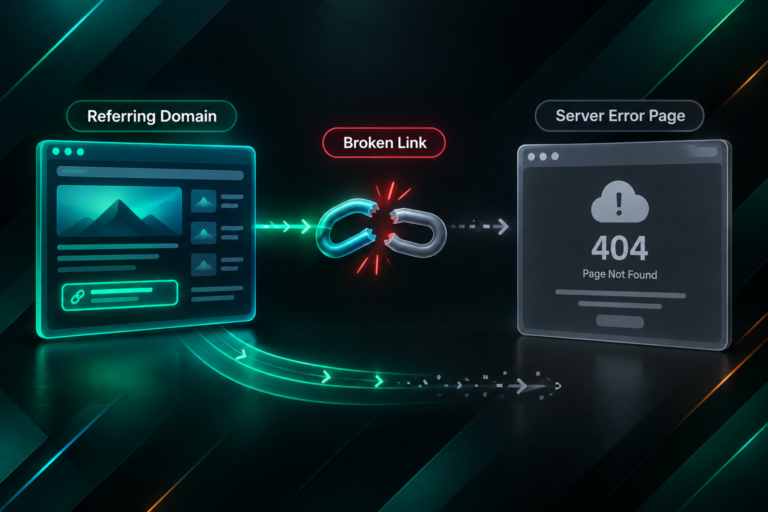
If you have ever built a backlink, checked your analytics a few weeks later, and found no corresponding referral traffic, you are not alone. A significant portion of visits that originate from external links never appear under the referral channel at all — they are instead recorded as direct traffic. Understanding why this happens matters for anyone trying to measure the real impact of a link building campaign, justify investment in backlink acquisition, or make informed decisions about where to focus SEO effort.
Key Takeaways
- Backlink visits are frequently misattributed as direct traffic due to referrer data being stripped or blocked before it reaches your analytics platform.
- HTTPS-to-HTTP transitions, privacy settings, certain browsers, and link redirects are among the most common causes of lost referral attribution.
- UTM parameters added to backlink URLs can preserve source data even when the referrer header is absent, though this requires coordination with the linking publisher.
- Organic search rankings — not referral click volume — are often the primary measurable benefit of a backlink, so referral traffic alone is an incomplete measure of link value.
- Diagnosing attribution gaps requires examining your analytics configuration, the technical setup of linking pages, and the nature of the traffic source itself.
How Web Analytics Platforms Attribute Traffic Sources
Analytics platforms such as Google Analytics 4 and its predecessor Universal Analytics determine a session’s traffic source by reading the HTTP referrer header — a piece of data that a browser sends to the destination server when a user follows a link. When a visitor clicks a link on an external website, the browser is supposed to pass the URL of the referring page to your server. If that referrer header arrives intact, the analytics platform records the visit as referral traffic and attributes it to the linking domain. If the referrer header is absent or empty, the platform has no source information and defaults to classifying the session as direct traffic.
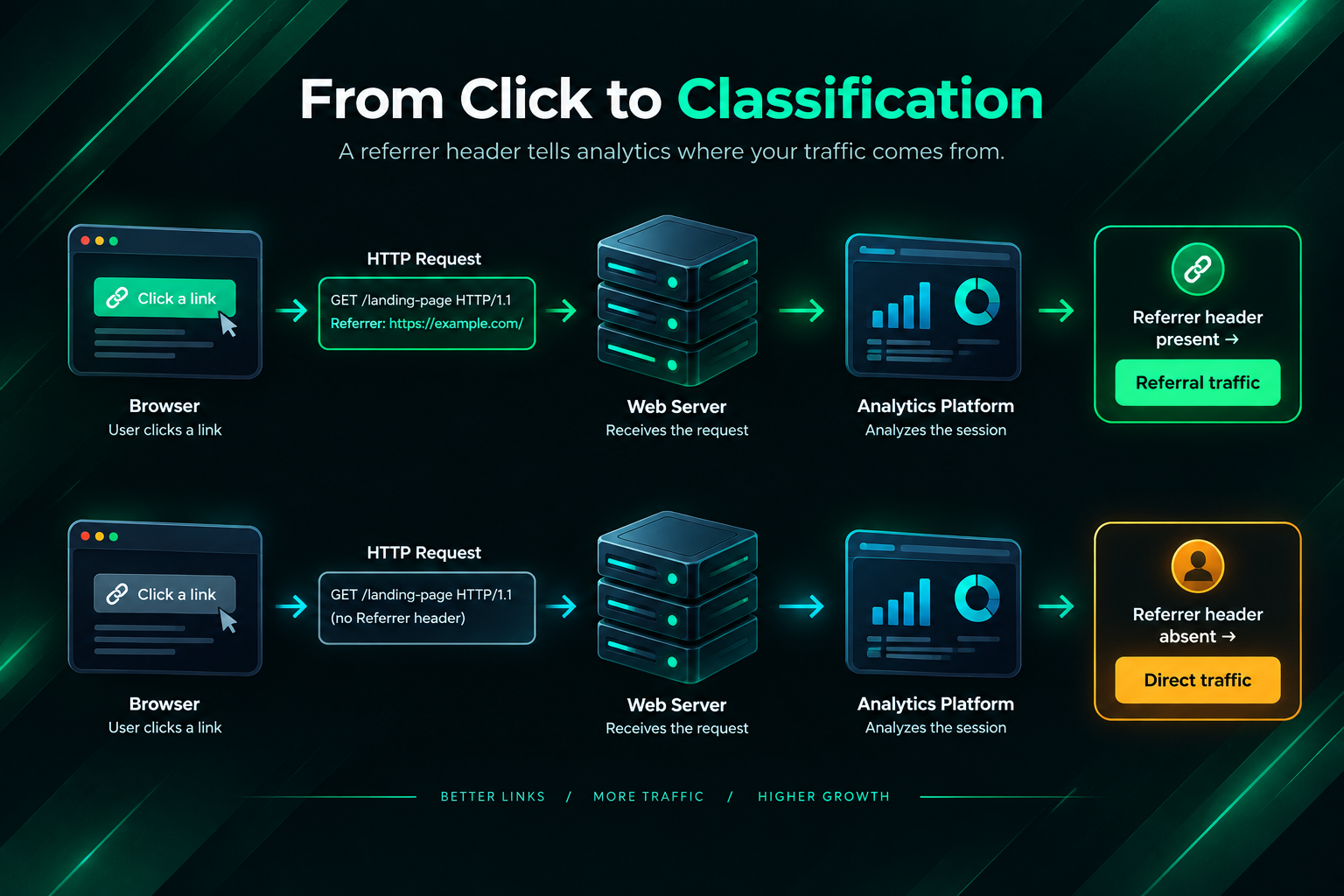
Direct traffic, in analytics terminology, is not simply people who type your URL into a browser. It is a catch-all category for any session where the source cannot be determined. This means that a meaningful share of what appears as direct traffic in most analytics accounts is actually traffic from identifiable sources — including backlinks — where the referrer data was lost in transit. The size of this gap varies considerably depending on your website’s technical setup, the types of sites linking to you, and the browsers and devices your audience uses.
The Most Common Reasons Backlink Visits Lose Their Referrer Data
HTTPS to HTTP Referrer Stripping
One of the most frequently encountered causes of lost referral attribution is the HTTPS-to-HTTP transition. When a user clicks a link on a secure (HTTPS) page and lands on a non-secure (HTTP) destination, most modern browsers deliberately strip the referrer header before sending the request. This behaviour follows a web security standard: browsers do not pass referrer information from a secure origin to a non-secure one, because doing so could expose sensitive URL data. The practical consequence is that any backlink placed on an HTTPS website pointing to an HTTP page on your site will almost certainly appear as direct traffic in your analytics. Ensuring your website uses HTTPS throughout — including correct redirects and canonical configurations — eliminates this specific cause of attribution loss.
Browser Privacy Settings and Extensions
Privacy-focused browsers such as Firefox and Brave, along with browser extensions designed to block tracking, can suppress or spoof the referrer header entirely. As privacy-conscious browsing has grown more common, the proportion of visits where referrer data is unavailable has increased. Some browsers allow users to configure referrer policies manually, and certain default configurations send only the origin domain rather than the full referring URL, which may cause analytics platforms to misclassify the session. This is not a problem you can fully control from your own website, but it is worth understanding when interpreting referral traffic data.
Referrer Meta Tags and Referrer Policy Headers
Website owners and developers can explicitly control referrer behaviour using the HTML referrer meta tag or the Referrer-Policy HTTP header. A publisher who has set a strict referrer policy — such as no-referrer or same-origin — will cause all outbound clicks from their pages to arrive at your site without referrer data, regardless of whether the link is a backlink you acquired through outreach or a naturally placed editorial mention. This is a legitimate privacy and security choice for publishers, but it means that even a high-quality backlink on a well-trafficked website may generate visits that appear as direct traffic in your analytics.
Redirects That Strip Referrer Information
When a backlink passes through one or more redirects before reaching your page, the referrer header can be lost or altered depending on the redirect type and the server configuration involved. JavaScript-based redirects, meta refresh redirects, and certain server-side redirect chains may not preserve the original referrer. If a linking page uses a URL shortener, an affiliate tracking system, or a content delivery network with redirect logic, the referrer your analytics platform receives may be the intermediate URL rather than the original linking domain — or it may be absent entirely. This is particularly relevant for links acquired through content syndication, press release distribution, or platforms that use their own link-wrapping systems.
Mobile Apps, Email Clients, and Messaging Platforms
Links shared in mobile applications, email newsletters, and messaging platforms such as Slack or WhatsApp frequently arrive without referrer data. If a backlink you placed on a website is subsequently shared in a newsletter or a messaging thread, those downstream visits will appear as direct traffic. This is not a flaw in your link building campaign — it reflects how referrer data behaves across different environments. Email clients in particular are well-documented sources of direct traffic misattribution, and some analytics practitioners recommend treating a portion of apparent direct traffic as email or dark social traffic for this reason.
Cached Pages and Preloaded Content
When a browser or a content delivery network serves a cached version of a page, or when a browser preloads a page before the user explicitly clicks a link, the referrer data may not be transmitted in the expected way. Google’s Accelerated Mobile Pages (AMP) framework, for example, historically caused referrer attribution issues because AMP pages were served from Google’s cache rather than the publisher’s own domain. While AMP’s prevalence has declined, similar caching and preloading behaviours can still affect referrer accuracy in specific contexts.
Why This Matters for Measuring Link Building Campaigns
The attribution gap between backlink visits and recorded referral traffic creates a practical measurement problem for anyone running or evaluating a link building campaign. If you are assessing the value of a backlink solely by the referral sessions it generates in Google Analytics or a similar platform, you are likely underestimating its contribution. A link on a high-traffic page may send dozens or hundreds of visitors who are recorded as direct, making the link appear less valuable than it actually is when referral reports are the only measurement tool used.
More importantly, referral click volume is rarely the primary reason to acquire a backlink in the first place. The more significant potential benefit of a quality backlink is its contribution to organic search visibility — the way it may help target pages rank more competitively for relevant queries over time. This ranking effect, if it occurs, would show up as an increase in organic search traffic rather than referral traffic, and it may take weeks or months to become measurable depending on crawl frequency, index updates, and competitive factors. Treating referral traffic as the sole indicator of a backlink’s value conflates two distinct mechanisms: direct click-through from the linking page, and the longer-term influence on search engine rankings.
How to Identify Whether Direct Traffic Contains Backlink Visits
Several analytical approaches can help you assess whether a portion of your direct traffic originates from backlinks rather than from users who navigated directly to your site.
One practical method is to examine which pages receive direct traffic and compare that list against pages that recently acquired new backlinks. If a page that previously received minimal direct traffic shows a noticeable increase shortly after a backlink goes live, the timing correlation is worth investigating further. This is not conclusive evidence — other factors such as brand mentions, social sharing, or email campaigns could explain the change — but it provides a useful starting point.
Segmenting direct traffic by landing page in your analytics platform can also reveal patterns. Deep interior pages — such as specific blog posts, product pages, or resource pages — rarely receive genuine direct navigation from users typing URLs. If such pages show meaningful direct traffic volumes, a proportion of those sessions may originate from backlinks, social shares, or other referral sources where attribution was lost.
Google Search Console provides a complementary data source. While it does not show referral traffic, it does show which queries and pages are receiving organic impressions and clicks. Comparing Search Console data with analytics data for the same pages can help you understand whether a backlink is contributing to ranking improvements that then drive organic traffic, even if the backlink’s direct click contribution is obscured in referral reports.
Using UTM Parameters to Preserve Backlink Attribution
UTM parameters — short tracking codes appended to a URL — allow you to pass source, medium, and campaign information directly in the link itself, bypassing the referrer header entirely. When a user clicks a UTM-tagged link, the analytics platform reads the parameters from the URL rather than relying on the referrer header, which means the visit is attributed correctly regardless of browser privacy settings, redirect chains, or HTTPS-to-HTTP transitions.
For backlinks acquired through manual outreach or guest posting campaigns, it is sometimes possible to request that the publisher use a UTM-tagged version of your URL. This approach works well for links in content you have authored or co-ordinated, such as guest posts or sponsored content. It is less practical for editorially placed links on third-party sites where you have no control over the exact URL format used. UTM parameters also have a limitation: they are visible in the URL, which some users may find off-putting, and they can create duplicate content or tracking issues if not handled carefully in your analytics configuration.
A more scalable approach for ongoing link building campaigns is to establish a consistent UTM naming convention for all outreach-acquired links and to document which placements carry tracking parameters. This allows you to build a clearer picture of which backlinks generate direct click traffic, separate from the broader question of their SEO value.
The Relationship Between Backlinks, Rankings, and Traffic Attribution
Understanding why backlink visits appear as direct traffic requires separating two distinct questions: how much direct click traffic does a backlink generate, and how does a backlink contribute to organic search performance? These are related but different mechanisms, and conflating them leads to inaccurate campaign evaluation.
A backlink placed on a page with high organic traffic and strong topical relevance may generate meaningful referral clicks — but even if those clicks are misattributed as direct traffic, the backlink may still be contributing to improved rankings for the target page. Conversely, a backlink on a low-traffic page may generate almost no direct clicks at all, yet still contribute positively to the target page’s authority signals and search visibility over time. Neither scenario is fully captured by referral traffic reports alone.
Search engines such as Google use backlinks as one of many signals when evaluating the relevance and authority of a page for a given query. The precise weight given to any individual backlink depends on factors including the linking page’s own authority, the topical relevance of the linking content, the anchor text used, the link attribute (followed or nofollowed), and the broader competitive landscape for the target query. These factors influence organic rankings, which in turn influence organic traffic — a channel that is measured separately from referral traffic in analytics platforms.
This distinction matters practically: if you are evaluating a link building campaign by referral traffic alone, you may conclude that a campaign has underperformed when the actual benefit — improved organic rankings and the traffic that follows — is visible in a different analytics channel. A more complete evaluation framework looks at organic traffic trends for target pages, ranking position changes for priority keywords, and referral traffic together, rather than treating any single metric as the definitive measure of link value.
Analytics Configuration Issues That Compound the Problem
Beyond the referrer-stripping causes described above, certain analytics configuration errors can independently cause backlink visits to appear as direct traffic. Self-referrals — where your own domain appears as a referrer — can occur if your analytics tracking code is not present on all pages of your site, causing sessions to restart without source data. Cross-domain tracking gaps, where a user moves between two domains you own without a properly configured cross-domain measurement setup, can also produce sessions that appear as direct.
Spam referral traffic, which was a more significant problem in Universal Analytics than in Google Analytics 4, could artificially inflate referral numbers in ways that made genuine referral traffic harder to interpret. GA4’s measurement model handles some of these issues differently, but configuration errors remain a meaningful source of attribution inaccuracy. If your direct traffic volume seems disproportionately high relative to your site’s brand recognition and the nature of your content, an analytics audit is a reasonable first step before drawing conclusions about backlink performance.
Practical Implications for Link Building Strategy and Reporting
For businesses and SEO teams managing link building campaigns, the attribution gap between backlink visits and recorded referral traffic has several practical implications worth building into your reporting and decision-making processes.
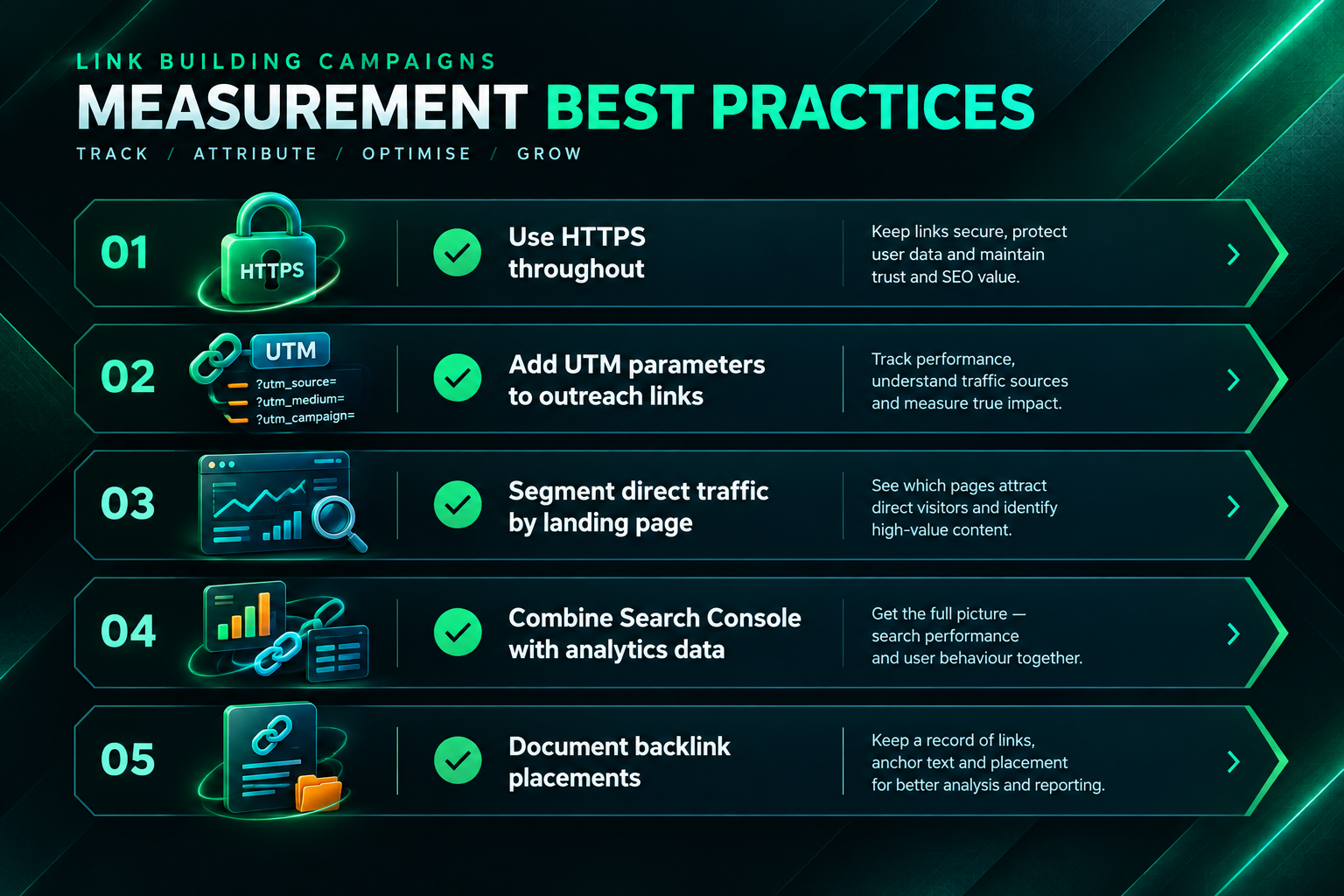
- Do not use referral traffic as the sole measure of a backlink’s value. Referral click volume reflects only one dimension of a link’s contribution. Organic ranking changes for target pages, measured over a meaningful time period, are a more relevant indicator of whether a link building campaign is influencing search performance.
- Ensure your website uses HTTPS throughout. Migrating to HTTPS and maintaining correct redirect configurations eliminates one of the most common and controllable causes of referrer data loss.
- Use UTM parameters for outreach-acquired links where feasible. For guest posts and other placements where you control the URL, UTM tagging provides attribution data that is independent of referrer headers.
- Segment direct traffic by landing page. Reviewing which interior pages receive direct traffic can help identify sessions that are likely misattributed from backlinks or other referral sources.
- Combine Google Search Console data with analytics data. Search Console shows organic impressions and clicks for specific pages and queries, providing a complementary view of whether backlinks are contributing to ranking improvements that then drive measurable organic traffic.
- Document your backlink placements with dates. Knowing when a backlink went live allows you to look for correlated changes in direct traffic, organic traffic, or ranking positions for the target page, even if the referral attribution is absent.
When to Investigate Further
Not every instance of missing referral traffic warrants a detailed investigation. Some referrer data loss is expected and unavoidable given the range of browsers, privacy settings, and technical environments involved. However, certain patterns suggest that a more systematic review may be worthwhile.
If your direct traffic volume is consistently high relative to your site’s brand recognition, or if it spikes in ways that do not correspond to any identifiable direct marketing activity, an analytics configuration audit may reveal tracking gaps or cross-domain measurement issues. If you are running an active link building campaign and see no corresponding change in referral traffic, organic traffic, or rankings over a period of several months, the issue may lie with the quality or relevance of the placements rather than with attribution alone — and a review of the backlink profile and target-page content may be more productive than a purely technical investigation.
It is also worth noting that the time between a backlink going live and any measurable effect on organic rankings can vary considerably. Search engines need to crawl and index the linking page, process the link signal, and factor it into ranking calculations alongside many other signals. For competitive queries, the effect of a single new backlink may be difficult to isolate even with careful measurement. Realistic expectations about timelines — typically weeks to months rather than days — are important when evaluating whether a campaign is performing as intended.
Frequently Asked Questions
Does all referral traffic from backlinks get misattributed as direct?
No. Many backlink visits are recorded correctly as referral traffic. The proportion that is misattributed depends on factors including the linking site’s referrer policy, the browser and device used, whether your site uses HTTPS, and whether any redirects are involved. Some referrer data loss is common, but it is not universal.
Can I fix the attribution problem for existing backlinks?
For most existing backlinks on third-party sites, you cannot retroactively add UTM parameters or change the referrer policy of the linking page. You can, however, ensure your own site uses HTTPS, audit your analytics configuration for tracking gaps, and use UTM parameters for any new placements where you have editorial control over the URL.
If a backlink generates no referral traffic, does it have no SEO value?
Not necessarily. Referral click volume and SEO value are related but distinct. A backlink on a low-traffic page may generate few or no direct clicks yet still contribute to the target page’s authority signals and search visibility. Conversely, a link that generates referral traffic but lacks topical relevance or comes from a low-quality source may contribute less to rankings than its click volume suggests.
How long does it take for a backlink to affect organic rankings?
This varies depending on how quickly search engines crawl and index the linking page, the competitive landscape for the target query, and the overall strength of the backlink profile. Observable ranking changes may take anywhere from a few weeks to several months, and the effect of any individual backlink is difficult to isolate from other ranking factors.
Should I ask publishers to use UTM-tagged URLs in my backlinks?
For placements where you have authored the content — such as guest posts — requesting UTM-tagged URLs is a reasonable practice that improves attribution accuracy. For editorially placed links on third-party sites, this is generally not practical. UTM parameters are most useful for tracking direct click contribution; they do not affect the link’s SEO properties.
Is dark social the same as direct traffic?
Dark social refers specifically to traffic from private sharing channels such as messaging apps, email, and private social media messages, where referrer data is not passed. This traffic typically appears as direct in analytics. It is one component of the broader direct traffic category, which also includes genuine direct navigation, bookmarks, and other unattributed sources including some backlink visits.
What the Attribution Gap Means for Evaluating Your Backlink Campaigns
The misattribution of backlink visits as direct traffic is a structural feature of how web analytics platforms work, not a sign that your link building campaign has failed or that your analytics are broken. Referrer headers were never designed to be a reliable campaign measurement tool, and the increasing prevalence of privacy-focused browsers and referrer policies means that some degree of attribution loss is an expected part of the measurement landscape.
The practical response is to build a measurement framework that does not rely on referral traffic alone. Tracking organic ranking positions for target pages, monitoring organic traffic trends in Google Search Console, documenting backlink placement dates, and using UTM parameters where feasible together provide a more complete picture of how a link building campaign is performing than referral reports can offer on their own. Direct traffic anomalies — particularly on deep interior pages that would not normally attract direct navigation — are worth investigating as a supplementary signal rather than dismissing entirely.
If you are working with an external link building provider or managing outreach campaigns in-house, aligning on a measurement approach before a campaign begins helps avoid the common frustration of expecting referral traffic that may never appear in reports, even when the links are live and functioning as intended. A qualified SEO professional can help you design a reporting framework that accounts for attribution limitations and focuses on the metrics most likely to reflect genuine campaign impact for your specific website and goals.