Soft 404 pages are one of the more quietly damaging technical SEO issues a website can have, particularly when valuable backlinks point to them. Unlike a standard 404 error that clearly signals a missing page, a soft 404 returns a 200 OK HTTP status code while displaying content that is essentially empty, unhelpful, or irrelevant — misleading both search engines and the visitors who follow inbound links to reach it. Understanding how soft 404 pages interact with your backlink profile is important for anyone investing in link acquisition, whether through manual outreach, guest posting, or any other method.
Key Takeaways
- A soft 404 page returns a 200 HTTP status code but serves thin, empty, or irrelevant content, causing search engines to treat it as a low-quality or non-indexable page over time.
- Backlinks pointing to soft 404 pages may fail to pass link equity effectively, reducing the SEO value of otherwise high-quality placements.
- Google Search Console flags soft 404 errors under the Coverage or Indexing report, making them identifiable before they cause lasting damage.
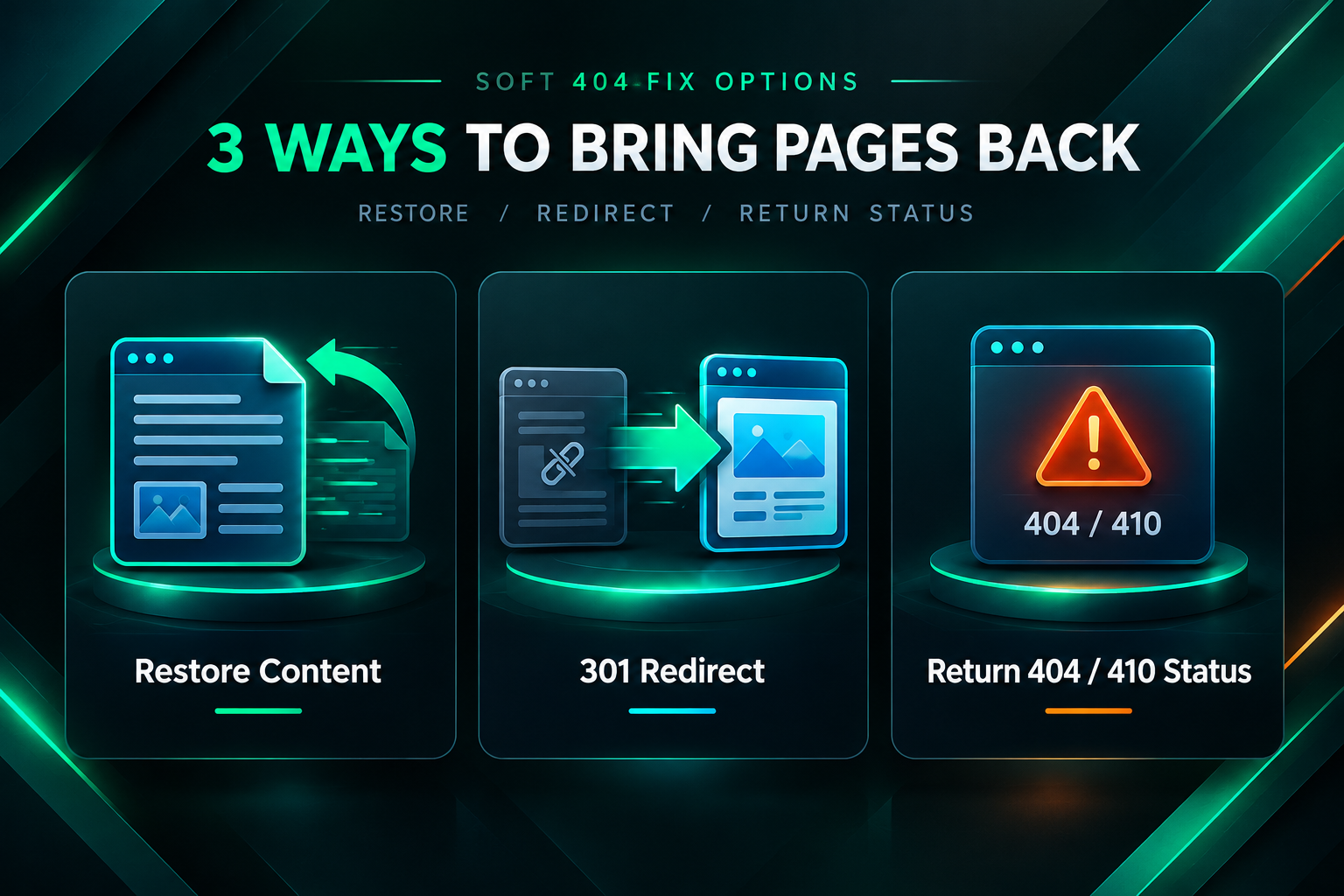
- Fixing soft 404 pages — by restoring content, redirecting to a relevant live page, or returning a proper 404 or 410 status — can help recover link equity that would otherwise be wasted.
- Ongoing backlink profile monitoring is necessary to catch soft 404 issues that arise after link placements go live, especially for pages that may be edited or removed by publishers.
What Is a Soft 404 Page?
A soft 404 occurs when a web server returns an HTTP 200 status code — the standard response for a successfully loaded page — but the page itself contains little or no useful content. Common examples include product pages that show a “this item is no longer available” message without redirecting, search results pages that return no results, user profile pages for deleted accounts, or dynamically generated pages that load a template but populate it with no meaningful data. From a technical standpoint, the server is saying “everything is fine” while the actual page experience tells a different story.
Search engines, particularly Google, have become increasingly capable of detecting soft 404 conditions. Google’s crawlers evaluate page content alongside the HTTP response code. When a page returns a 200 status but its content signals that nothing useful is present — through thin text, boilerplate error messages, or near-duplicate low-value content — Google may classify it as a soft 404 in its internal systems. This classification can lead to the page being excluded from the index or treated as low-quality, even though the server never explicitly declared it missing.
The distinction between a hard 404 (which returns a 404 or 410 HTTP status) and a soft 404 matters significantly for SEO. A hard 404 is unambiguous: the page does not exist, and search engines handle it accordingly. A soft 404 creates ambiguity. The page appears to exist, crawl budget may be spent on it, and backlinks may point to it — but the SEO value delivered is likely minimal or negligible.
How Soft 404 Pages Affect Backlink Value
When a referring domain publishes a backlink pointing to a URL on your website, the expectation is that the destination page is live, relevant, and useful. The link equity — sometimes called PageRank or link juice — that flows through that backlink is intended to support the authority and ranking potential of the destination page. Soft 404 pages disrupt this process in several ways.
If Google determines that a destination URL is a soft 404, it may stop treating that page as a meaningful indexable document. A page that is effectively deindexed or treated as low-quality is unlikely to benefit from the backlinks pointing to it in the same way a healthy, well-indexed page would. The referring domain still carries the link, but the equity transfer to your site’s authority and ranking signals may be significantly reduced or lost entirely. This is particularly damaging when the affected URL has accumulated multiple high-quality backlinks over time.
There is also a user experience dimension. When someone clicks a backlink from a reputable publisher and lands on a page that shows an error message, a blank template, or a “product unavailable” notice, the referral visit ends without value. High bounce rates from referral traffic can be a secondary signal that the destination page is not serving its purpose, though the direct ranking impact of bounce rate as an isolated metric remains a subject of debate among SEO practitioners.
For websites running active link building campaigns, soft 404 pages represent a specific risk: placements that were earned through genuine outreach effort may deliver far less SEO benefit than anticipated if the target page develops a soft 404 condition after the link goes live. This can happen when a page is edited, its content is removed, its URL structure changes without a proper redirect, or a CMS update inadvertently strips the page’s content.
How Search Engines Identify and Handle Soft 404 Pages
Google’s approach to soft 404 detection combines HTTP response analysis with content evaluation. When Googlebot crawls a URL and receives a 200 status code, it does not automatically accept that the page is healthy. The crawler assesses the page’s content volume, its similarity to known error templates, and whether the page provides any meaningful information to a user. Pages that fail this content quality threshold may be flagged as soft 404s in Google Search Console under the Coverage report (now often labeled as the Indexing report in newer versions of the interface).
Google Search Console’s soft 404 report is one of the most practical tools available for identifying these issues at scale. URLs flagged in this report are pages that Google has crawled and assessed as likely soft 404s, even though they returned a 200 status. Reviewing this report regularly — particularly after site migrations, CMS updates, or product catalog changes — can help identify pages that may be silently wasting backlink equity.
Bing and other search engines have their own crawling and indexing logic, and their handling of soft 404 conditions may differ from Google’s. However, the underlying principle is consistent: a page that appears to exist but provides no useful content is unlikely to be treated as a valuable indexable document, regardless of its HTTP status code.
It is worth noting that not every thin page will be classified as a soft 404. Search engines apply judgment, and a page with minimal but genuinely useful content may still be indexed and pass link equity. The concern is specifically with pages where the content is absent, misleading, or clearly non-functional from a user perspective.
Diagnosing Soft 404 Issues in Your Backlink Profile
Identifying soft 404 pages that are receiving backlinks requires combining data from multiple sources. A practical diagnostic workflow typically involves the following steps.
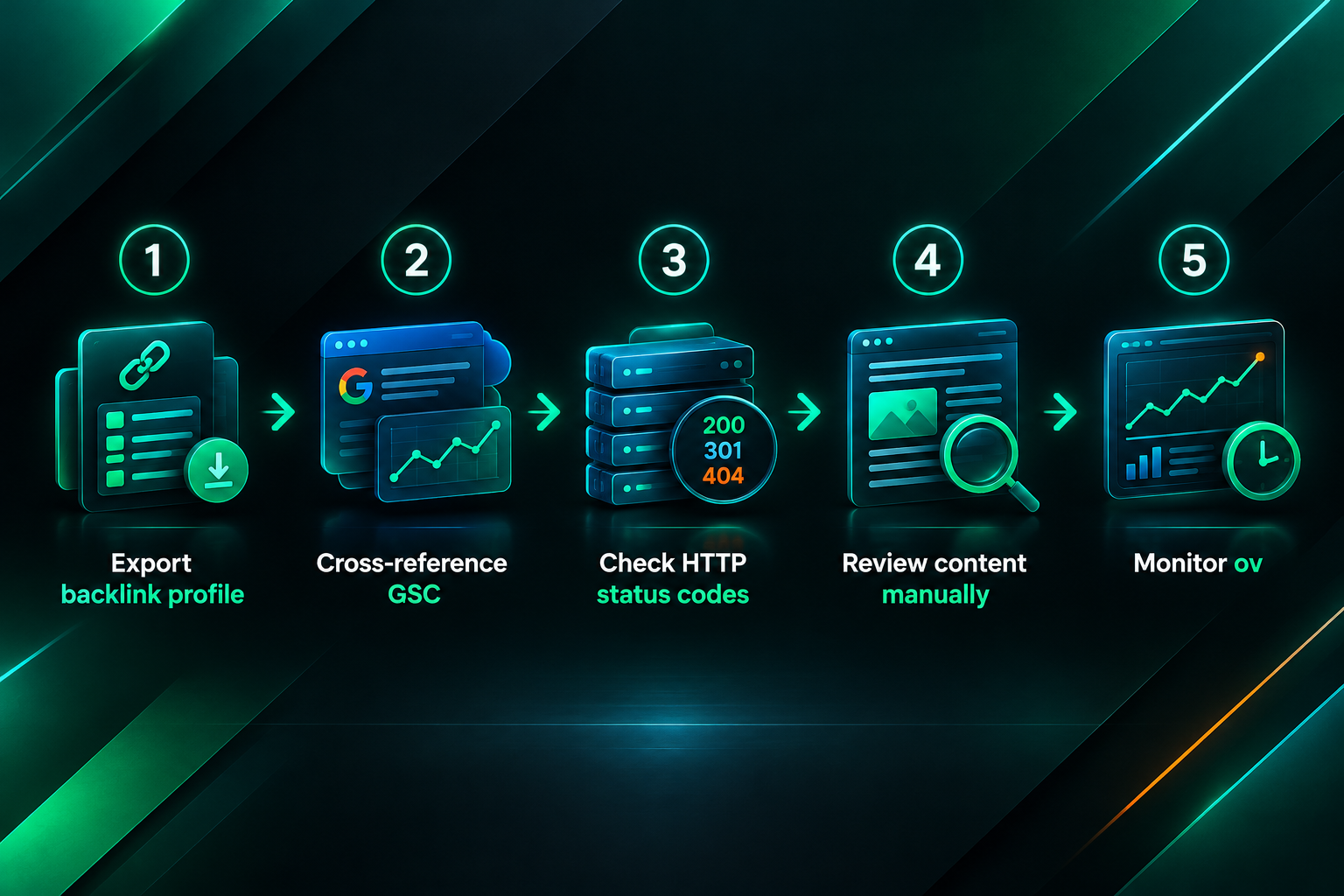
- Export your backlink profile: Use a tool such as Ahrefs, Semrush, or Majestic to export a list of URLs on your domain that are receiving inbound links. Pay attention to the number of referring domains pointing to each URL, as higher-value pages warrant closer attention.
- Cross-reference with Google Search Console: Compare your backlinked URLs against the soft 404 errors flagged in the Coverage or Indexing report. Any URL that appears in both lists — receiving backlinks and flagged as a soft 404 — is a priority for remediation.
- Check HTTP status codes at scale: Tools such as Screaming Frog SEO Spider or similar crawlers can check the HTTP response codes of your backlinked URLs in bulk. URLs returning 200 codes that are also flagged as soft 404s in Search Console confirm the issue.
- Review page content manually: For high-value URLs with multiple referring domains, manually review the page content to assess whether it is genuinely useful or effectively empty. This step catches cases that automated tools may not flag immediately.
- Monitor over time: Soft 404 conditions can develop after a link placement goes live. A page that was healthy when a backlink was published may later become a soft 404 due to content removal, CMS changes, or product discontinuation. Periodic monitoring of your most important backlinked URLs is necessary to catch these changes.
The Impact on Link Building Campaigns
For businesses and agencies running ongoing link acquisition campaigns, soft 404 pages introduce a specific category of campaign risk that is separate from the quality of the outreach itself. A well-executed guest posting campaign or niche edit placement can deliver a backlink from a high-authority, topically relevant publisher — but if the destination page on your own site is a soft 404, the placement may contribute little to your SEO goals.
This risk is particularly relevant for e-commerce websites, where product pages are frequently discontinued, seasonal pages are taken down after campaigns end, and URL structures may change during platform migrations. A product page that received ten high-quality backlinks over the course of a year can become a soft 404 overnight if the product is removed from the catalog without a redirect being implemented. The referring domains still show the links as active in third-party tools, but the equity those links were intended to deliver is effectively stranded.
SaaS websites face a similar challenge with feature pages, pricing pages, and landing pages that are regularly updated or restructured. When a page URL changes and the old URL is not redirected, any backlinks pointing to the original URL may land on a soft 404 if the server returns a 200 status for the old path rather than a proper redirect or 404 response.
For agencies managing white-label link building campaigns on behalf of clients, soft 404 issues on client websites can undermine campaign results in ways that are difficult to explain without a clear technical audit. Reporting an increase in referring domains while organic rankings remain flat may partly reflect link equity being absorbed by soft 404 destination pages rather than healthy, indexable content.
How to Fix Soft 404 Pages and Recover Backlink Value
The appropriate fix for a soft 404 page depends on the nature of the page and the reason it became a soft 404. There is no single universal solution, but the following approaches cover the most common scenarios.
Restore or Improve the Page Content
If the page was originally useful but has become thin due to content removal or CMS issues, restoring meaningful content is the most straightforward fix. A page that returns a 200 status and contains genuinely helpful, relevant content is unlikely to be classified as a soft 404. This approach preserves the original URL, retains all existing backlinks pointing to it, and avoids the complexity of redirect chains. For pages with multiple high-quality referring domains, content restoration is generally the preferred option when feasible.
Implement a 301 Redirect to a Relevant Live Page
When a page cannot be restored — for example, a discontinued product with no equivalent replacement — a 301 permanent redirect to the most relevant live page on the site is the standard recommendation. A 301 redirect signals to search engines that the resource has permanently moved, and the link equity associated with the original URL is generally passed to the destination URL, though some equity loss during the redirect process is possible. The destination page should be as topically relevant to the original URL as possible; redirecting to the homepage as a catch-all is less effective than redirecting to a relevant category page or a closely related product.
Return a Proper 404 or 410 Status Code
If a page has no relevant content and no suitable redirect destination, returning a genuine 404 (not found) or 410 (gone) HTTP status code is more honest than allowing a soft 404 to persist. While this means the backlinks pointing to the URL will no longer pass equity, it at least prevents crawl budget from being wasted on a page that provides no value. A 410 status is particularly useful for pages that have been permanently removed, as it signals to search engines that the page will not return, potentially accelerating deindexing.
Reach Out to Publishers for Link Updates
In cases where a soft 404 page has been fixed or redirected, it may be worth contacting the publishers of high-value backlinks to request that they update the destination URL to point directly to the new or restored page. This eliminates the redirect hop and ensures the link points cleanly to the intended destination. This type of outreach is a standard part of link reclamation work and is generally well-received by publishers who have an interest in maintaining accurate links on their own sites.
Preventing Soft 404 Issues During and After Link Building
Prevention is more efficient than remediation. Several practices can reduce the likelihood of soft 404 pages developing on URLs that are receiving or are intended to receive backlinks.
- Audit target pages before outreach begins: Before building links to a specific URL, confirm that the page is live, indexed, and contains substantive content. A page that is already thin or borderline may be at risk of soft 404 classification even before additional links are acquired.
- Implement redirect protocols for page changes: Establish a clear internal process for handling URL changes, product removals, and page restructuring. Any URL that has received backlinks should be redirected rather than simply removed or left to return a 200 status with empty content.
- Monitor Google Search Console regularly: The Coverage or Indexing report in Google Search Console should be reviewed on a regular schedule, not only when a problem is suspected. Catching soft 404 flags early reduces the period during which backlink equity is being wasted.
- Use backlink monitoring tools: Tools such as Ahrefs and Semrush offer alerts for changes in backlink status, including lost links and changes to destination URLs. Setting up alerts for your most important backlinked pages can surface soft 404 issues before they become entrenched.
- Coordinate link building with content and development teams: Link building campaigns should not operate in isolation from the teams responsible for managing the website’s content and technical infrastructure. A page that is scheduled for removal or restructuring should be flagged before outreach begins, not after placements have been secured.
Soft 404 Pages and Link Equity: What the Evidence Suggests
The relationship between soft 404 pages and link equity is not governed by a single, publicly documented Google algorithm rule with a precise numerical impact. What is well-established is that Google treats soft 404 pages as low-quality or non-indexable documents, and that pages excluded from the index are generally not able to benefit from backlinks in the same way that healthy, indexed pages do. Google’s own documentation and public statements from its Search Relations team have consistently emphasized that pages need to provide genuine value to users in order to be treated as meaningful indexable content.
The practical implication for link building is that the quality of the destination page matters as much as the quality of the referring domain. A backlink from a high-authority publisher pointing to a soft 404 page is unlikely to deliver the ranking benefit that the same link pointing to a well-optimized, content-rich page would provide. This is not a theoretical concern — it is a practical limitation that affects real campaigns and real websites, particularly those with large, dynamically generated page inventories.
It is important to avoid overstating the certainty of any specific impact figure. The degree to which a soft 404 page reduces link equity transfer depends on factors including how Google has classified the page, how long the soft 404 condition has persisted, whether the page has been deindexed, and the overall authority and health of the domain. A site-specific technical audit is necessary to assess the actual impact on any individual website.
Frequently Asked Questions
Can a soft 404 page still rank in search results?
In some cases, a page flagged as a soft 404 may temporarily remain in the index, particularly if it was previously well-established. However, Google’s documentation indicates that pages it classifies as soft 404s are candidates for removal from the index. A page that has been deindexed cannot rank, and even a page that remains indexed but is treated as low-quality is unlikely to rank competitively for meaningful queries.
Does fixing a soft 404 page recover the backlink equity?
Restoring a soft 404 page to a healthy, content-rich state can allow it to be recrawled and reindexed, at which point the backlinks pointing to it may begin passing equity more effectively. The timeline for this recovery depends on how quickly Googlebot recrawls the page and reassesses its quality. There is no guarantee of a specific recovery timeline or outcome, and the extent of recovery will depend on the page’s content quality, the overall domain’s health, and other SEO factors.
How is a soft 404 different from a redirect loop or broken link?
A soft 404 returns a 200 HTTP status with unhelpful content. A redirect loop causes a URL to redirect to itself or to a chain of URLs that never resolves, typically resulting in a browser error. A broken link points to a URL that returns a genuine 404 or similar error status. Each issue affects backlinks differently, but all three represent cases where the intended link equity transfer is disrupted. Soft 404s are often harder to detect because the server response appears normal.
Should I disavow backlinks pointing to soft 404 pages?
Disavowing backlinks is generally not the appropriate response to soft 404 issues. The disavow tool is intended for use when a site has received spammy or manipulative inbound links that may be contributing to a manual action or algorithmic penalty. Backlinks pointing to soft 404 pages are typically legitimate links that have lost their effectiveness due to a technical issue on the destination site. The correct response is to fix the destination page, not to disavow the referring links.
How often should I check for soft 404 pages in my backlink profile?
For most websites, reviewing Google Search Console’s Coverage or Indexing report monthly is a reasonable baseline. Websites with large, dynamic page inventories — such as e-commerce sites with frequently changing product catalogs — may benefit from more frequent checks, particularly after catalog updates, platform migrations, or major content changes. High-value backlinked URLs should be monitored continuously using backlink tracking tools.
Can soft 404 pages affect domain authority metrics?
Third-party domain authority metrics from tools such as Ahrefs (Domain Rating), Semrush (Authority Score), and Moz (Domain Authority) are calculated using their own proprietary methodologies and do not directly reflect Google’s internal assessments. A soft 404 page may still appear to receive backlinks in these tools because the referring links are real. However, if the soft 404 condition means that Google is not treating the destination page as a meaningful indexed document, the practical SEO benefit of those links may be lower than the third-party metrics suggest.
Protecting Your Link Building Investment from Soft 404 Waste
Soft 404 pages represent a technical SEO issue with direct consequences for link building effectiveness. Every backlink that points to a soft 404 destination is a placement whose potential value is at risk — not because the link itself is low quality, but because the destination page is failing to meet the basic standard that search engines require for a page to be treated as a meaningful, indexable document.
For businesses investing in link acquisition through manual outreach, guest posting, or other methods, the practical priority is to ensure that target pages are technically healthy before outreach begins, and to monitor those pages after placements go live. A link building campaign that delivers high-quality placements to soft 404 destination pages may show an increase in referring domains in third-party tools while delivering limited measurable SEO benefit — a disconnect that can be difficult to diagnose without a thorough technical audit.
Fixing soft 404 pages is not a link building strategy in itself, but it is a prerequisite for link building to work as intended. Restoring content, implementing clean 301 redirects, and maintaining a regular review of Google Search Console’s indexing reports are practical steps that protect the value of both existing and future link placements. If your website has a history of page restructuring, product catalog changes, or CMS migrations, a technical SEO audit focused on soft 404 detection and backlink destination health is a reasonable starting point before committing further budget to link acquisition.
If you are working with an external link building provider or considering outsourcing your link acquisition, it is worth discussing how destination page health is assessed as part of campaign planning. A provider that builds links without considering the technical condition of the target pages may deliver placements that underperform relative to their apparent quality. Aligning link building activity with ongoing technical SEO maintenance gives each placement the best opportunity to contribute meaningfully to your organic visibility goals.