Whether to include attachments in outreach emails is a practical question that affects deliverability, response rates, and the overall impression your campaign makes on publishers and webmasters. The short answer is that attachments in cold outreach emails are almost always counterproductive, but the reasoning behind that matters more than the rule itself. Understanding why attachments cause problems, when they might be appropriate in later-stage conversations, and what to use instead will help you run more effective outreach campaigns.
Key Takeaways
- Attachments in cold outreach emails increase the likelihood of spam filtering and reduce deliverability before a publisher even reads your message.
- Most publishers and webmasters are cautious about opening files from unknown senders, so attachments can damage trust at the first point of contact.
- Sharing content via links to Google Docs, Notion pages, or cloud-hosted files is a safer and more effective alternative in almost every outreach scenario.
- Attachments may be appropriate in follow-up conversations once a relationship has been established, but even then, inline links are often preferable.
- Outreach email best practices focus on brevity, relevance, and ease of response — attachments work against all three.
Why Attachments Create Problems in Cold Outreach
Cold outreach emails are sent to recipients who have no prior relationship with the sender. In this context, an attachment introduces several immediate problems that can undermine the entire purpose of the email before the recipient has read a single word of your pitch.
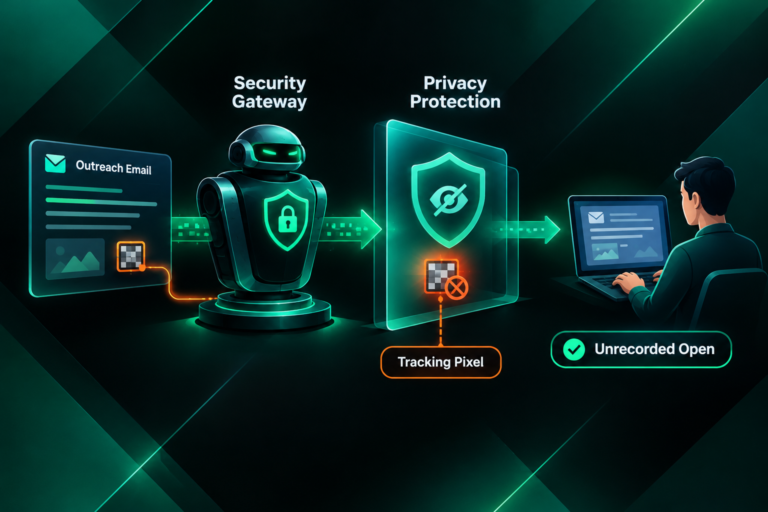
The most significant issue is deliverability. Email service providers and corporate spam filters treat attachments in messages from unknown senders as a risk signal. Files such as PDFs, Word documents, and spreadsheets are commonly used to deliver malware, which means spam filters are specifically trained to flag or quarantine emails containing them. An outreach email that never reaches the inbox has zero chance of generating a response, regardless of how well-crafted the pitch is. This is particularly relevant for link building outreach, where campaigns often involve sending large volumes of personalised emails to publishers across many different domains and hosting environments.
Even when an email with an attachment does reach the inbox, the recipient’s reaction is often one of caution rather than curiosity. Webmasters, editors, and site owners who receive guest post pitches or link placement requests are generally experienced enough to be wary of unsolicited files. Opening an attachment from an unknown sender requires a level of trust that simply has not been established at the cold outreach stage. The attachment signals either a lack of awareness about professional email norms or, worse, an attempt to deliver something unwanted.
There is also a practical friction argument. Attachments require the recipient to download a file, open a separate application, and then return to the email thread to respond. This adds steps to what should be a frictionless first interaction. Outreach emails that are easy to read and easy to respond to consistently outperform those that require additional effort from the recipient.
How Attachments Affect Email Deliverability
Email deliverability in outreach campaigns depends on a combination of sender reputation, domain authentication, email content, and recipient engagement signals. Attachments negatively affect several of these factors simultaneously.
Sender reputation is built over time through consistent sending behaviour, low bounce rates, and positive engagement signals such as opens and replies. When emails containing attachments are flagged as spam by recipients or automatically filtered before reaching the inbox, the sender’s domain and IP reputation can deteriorate. In a link building outreach campaign, where the goal is to build relationships with publishers over time, a damaged sender reputation can reduce the effectiveness of every subsequent email sent from that domain.
File type and file size both influence how spam filters respond to an email. Executable files are almost universally blocked. Compressed archives such as ZIP files are treated with significant suspicion. Even PDFs and Word documents, which are common in professional communication, can trigger filters when they arrive from an unrecognised sender. Larger file sizes also increase the probability of filtering and can cause emails to be deferred or rejected by recipient mail servers with strict size limits.
Domain authentication protocols such as SPF, DKIM, and DMARC help establish that an email genuinely originates from the claimed sender domain. These records are important for outreach campaigns, but they do not override the content-level signals that attachments introduce. A fully authenticated email with a suspicious attachment can still be filtered or flagged.
For agencies and in-house SEO teams running manual outreach at scale, protecting deliverability is a foundational concern. Avoiding attachments in cold emails is one of the simplest and most reliable ways to reduce unnecessary spam risk without sacrificing the quality of the pitch itself.
The Trust Problem: First Impressions in Publisher Outreach
Link building outreach depends on establishing credibility with publishers, editors, and site owners who receive many pitches. The first email in any outreach sequence is effectively a first impression, and attachments can undermine that impression in ways that are difficult to recover from.
Publishers who manage editorial calendars or accept guest contributions are accustomed to receiving pitches. Many of them have explicit or informal policies about how they prefer to receive content proposals. Sending an unsolicited attachment signals that the sender has not considered the recipient’s preferences or workflow. It can also suggest a lack of familiarity with standard outreach practices, which may cause the recipient to question the quality of the content or the professionalism of the team behind the pitch.
There is a meaningful difference between a pitch that says “I have written a draft article on this topic and would be happy to share it if you are interested” and one that arrives with a Word document already attached. The first approach respects the publisher’s time and invites a conversation. The second assumes a level of interest that has not yet been established and places an immediate burden on the recipient. In most cases, the conversational approach generates better response rates because it feels less transactional and more like the beginning of a genuine editorial relationship.
Trust in outreach is built incrementally. A well-written, personalised email that demonstrates familiarity with the publisher’s content and audience is far more likely to open a productive conversation than one that leads with a file the recipient did not ask for.
Effective Alternatives to Attachments in Outreach Emails
The practical solution to the attachment problem is to share content and supporting materials through links rather than files. Several approaches work well in different outreach scenarios.
Google Docs and Google Drive are widely used for sharing draft articles, content briefs, and supporting materials in outreach campaigns. A link to a Google Doc can be set to view-only or comment-enabled, which gives the publisher access to the content without requiring a download. The link can be included naturally in the body of the email, and the recipient can open it in a browser without leaving their inbox environment. This reduces friction and eliminates the deliverability risk associated with file attachments.
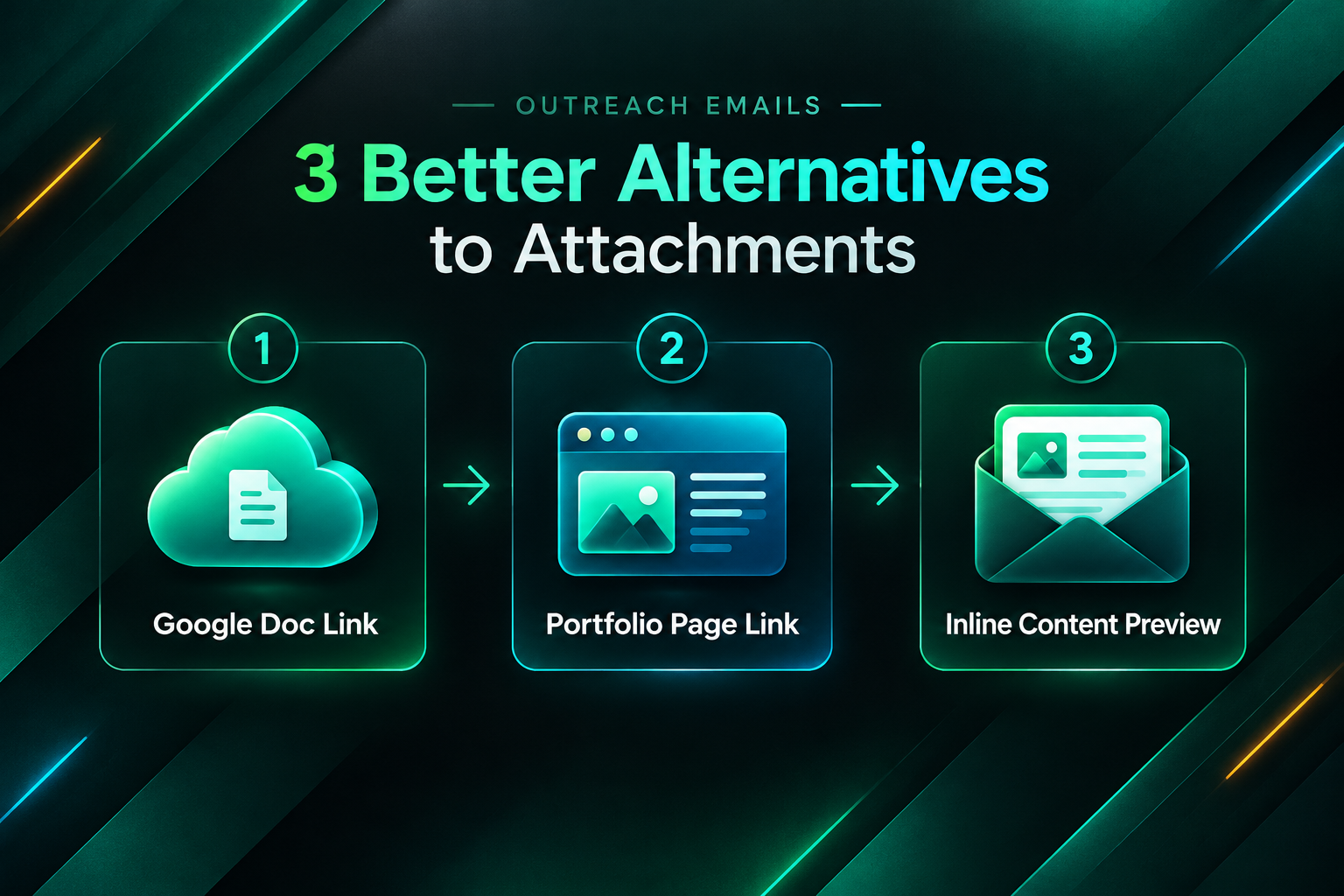
Notion pages and similar collaborative tools serve a similar purpose and may be appropriate depending on the preferences of the team managing the outreach campaign. The key advantage of any cloud-hosted document is that it can be updated after the link has been shared, which is useful if the publisher requests changes to a draft before agreeing to publish.
Portfolio and media kit links are useful when a publisher asks for evidence of previous work or writing samples. Rather than attaching a PDF portfolio, linking to a dedicated page on your website or a curated collection of published articles demonstrates the same information while keeping the email clean and deliverable. A well-maintained online portfolio also signals a level of professionalism that a hastily assembled PDF attachment does not.
Content previews within the email body can be effective for shorter pitches. If the goal is to demonstrate the quality of a proposed article, including a brief excerpt or a clear outline directly in the email body is often more persuasive than asking the publisher to open a separate file. This approach keeps the recipient engaged within the email itself and makes it easier for them to respond quickly.
When sharing any link in an outreach email, it is worth ensuring that the destination is professional, loads quickly, and does not require the recipient to create an account or log in. Unnecessary barriers at the link destination create the same kind of friction that attachments introduce.
When Attachments Might Be Acceptable
The guidance against attachments applies most strongly to cold outreach, where no prior relationship exists between the sender and the recipient. The calculus changes somewhat once a conversation has been established.
If a publisher has responded to an initial pitch and expressed interest in reviewing a draft article, sending the draft as an attachment in a follow-up email is more acceptable. At this stage, the recipient is expecting a file, the relationship has moved beyond the cold contact phase, and the trust barrier has been partially lowered. Even so, a link to a shared document is generally preferable because it avoids deliverability risk and allows for easier collaboration if the publisher wants to suggest edits.
In some industries and markets, formal proposals or media kits are expected as part of a partnership conversation. If a publisher or brand partner has specifically requested a document, sending it as an attachment is appropriate. The key distinction is that the attachment is expected and requested rather than unsolicited.
Certain outreach contexts, such as digital PR campaigns targeting journalists or editors at major publications, may involve sending press releases or supporting data. In these cases, the norms of the industry and the expectations of the recipient should guide the decision. Journalists who cover specific beats often prefer to receive information in a format that is easy to reference, and a well-formatted PDF press release may be acceptable if it accompanies a concise, well-written email pitch. However, even in these contexts, linking to an online press release or a dedicated media page is increasingly common and avoids the deliverability concerns associated with attachments.
Outreach Email Structure: What Actually Improves Response Rates
Understanding the attachment question is easier when it is placed in the context of what makes outreach emails effective overall. Response rates in link building outreach depend on several factors that are worth examining alongside the attachment issue.
Personalisation is consistently cited as one of the most important factors in outreach email performance. A pitch that references a specific article the publisher has written, acknowledges a recent change to their site, or demonstrates genuine familiarity with their audience is more likely to receive a response than a generic template. Personalisation signals that the sender has invested time in understanding the recipient’s work, which builds the credibility necessary for a productive conversation.
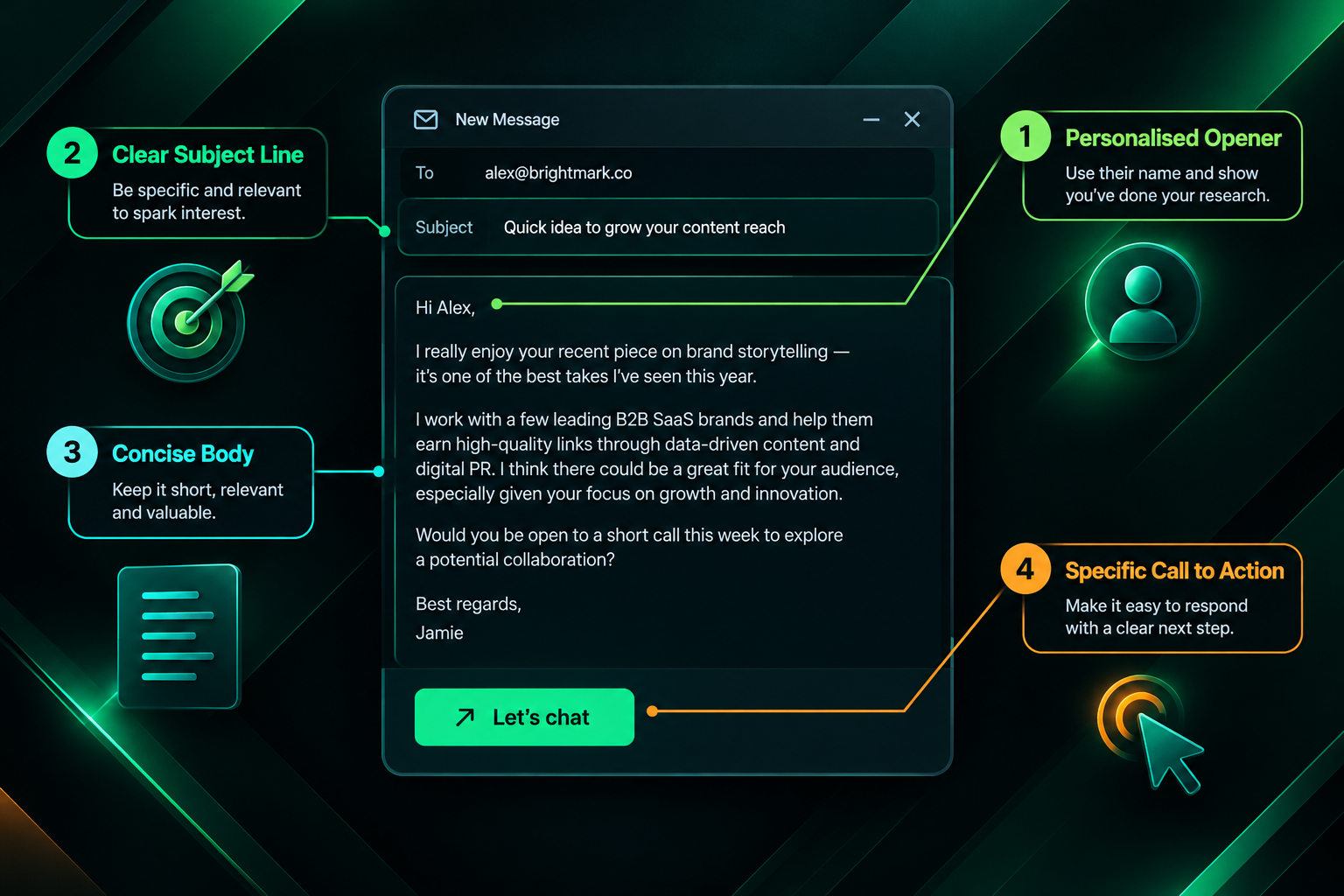
Subject line clarity affects whether the email is opened at all. Subject lines that are specific, relevant, and honest about the purpose of the email tend to perform better than vague or overly clever alternatives. A subject line that accurately describes the pitch — for example, referencing the proposed topic or the publisher’s site — sets appropriate expectations and reduces the likelihood of the email being dismissed as spam.
Email length is another important variable. Cold outreach emails that are concise and focused on a single clear request are generally more effective than long-form pitches that attempt to cover every possible objection before the recipient has expressed any interest. The goal of the first email is to start a conversation, not to close a deal. Keeping the email short enough to read in under a minute reduces the cognitive load on the recipient and makes it easier for them to respond.
A clear and specific call to action helps the recipient understand exactly what response is being requested. Asking whether the publisher would be interested in reviewing a proposed article on a specific topic is more actionable than a vague expression of interest in collaboration. A specific call to action also makes it easier for the recipient to say yes or no quickly, which improves response rates even when the answer is negative.
Attachments work against all of these principles. They add length and complexity to what should be a simple, focused message. They introduce a barrier between the recipient and the content. And they signal a lack of awareness about the norms of professional email communication that can undermine the credibility the rest of the email is trying to establish.
Outreach at Scale: Deliverability and Campaign Management
For agencies managing link building campaigns on behalf of multiple clients, or for in-house SEO teams running outreach across several target pages simultaneously, deliverability is a campaign-level concern rather than an individual email concern. A single email with an attachment that gets filtered is a minor inconvenience. A campaign in which a significant proportion of emails are filtered because of attachments represents a meaningful loss of outreach capacity and a waste of the time invested in prospecting and personalisation.
Outreach campaigns typically involve dedicated sending domains or subdomains that are separate from the main business domain. This protects the primary domain’s email reputation while allowing the outreach team to build a sending history on the dedicated domain. Introducing attachments into emails sent from these domains can damage their reputation before it has been properly established, which reduces the effectiveness of the entire campaign.
Monitoring deliverability metrics such as bounce rates, spam complaint rates, and inbox placement rates is standard practice in well-managed outreach campaigns. If attachments are being used and deliverability metrics are declining, removing attachments is one of the first adjustments worth testing. The impact on deliverability is often measurable within a relatively short period, making it a practical variable to isolate in campaign testing.
White-label link building campaigns, where an agency manages outreach on behalf of another agency’s clients, require particular attention to deliverability because the sending infrastructure and the client’s brand reputation are both at stake. Maintaining clean outreach practices, including avoiding unnecessary attachments, is part of the quality control that distinguishes professional campaign management from lower-quality alternatives.
Frequently Asked Questions
Do attachments always get caught by spam filters?
Not always, but attachments significantly increase the probability of an email being filtered, especially when sent from an unrecognised sender. The risk varies depending on the file type, file size, the recipient’s email provider, and the sender’s domain reputation. Even when an attachment reaches the inbox, it may still reduce the likelihood of a positive response.
Is it ever acceptable to send a guest post draft as an attachment in the first email?
Sending a completed draft in the first email is generally not recommended, regardless of whether it is attached or linked. Most publishers prefer to agree on a topic and outline before reviewing a full draft. Leading with a completed article can also reduce your negotiating flexibility if the publisher wants changes to the angle, length, or focus of the piece.
What file types are most likely to trigger spam filters in outreach emails?
Executable files and compressed archives are almost universally flagged. PDFs and Word documents carry moderate risk when sent from unknown senders. Even image files can contribute to spam scoring when combined with other risk signals. The safest approach is to avoid all attachments in cold outreach and use cloud-hosted links instead.
How should I share writing samples or a portfolio with a publisher?
The most effective approach is to link to published articles or a dedicated portfolio page on your website. If you do not have a public portfolio, a view-only Google Doc or a simple landing page with links to relevant published work is a practical alternative. Avoid sending PDF portfolios as attachments in cold emails.
Does the guidance on attachments apply to digital PR outreach as well as link building outreach?
The core principles apply to both, though the norms in digital PR can differ slightly depending on the target publication and the type of content being pitched. Journalists and editors at major publications may be more accustomed to receiving press releases and supporting data, but even in these contexts, linking to an online press release or a media page is increasingly preferred over file attachments.
Can I include images inline in outreach emails instead of as attachments?
Inline images embedded in HTML emails are handled differently from file attachments, but they can still affect deliverability and rendering depending on the recipient’s email client settings. For outreach emails, plain text or lightly formatted HTML without embedded images is generally the most reliable approach. If visual content is relevant to the pitch, linking to it is preferable to embedding it.
How do I know if attachments are affecting my outreach campaign’s deliverability?
Monitoring bounce rates, spam complaint rates, and inbox placement rates using your email sending platform’s analytics will give you a baseline. If you suspect attachments are causing deliverability issues, running an A/B test with and without attachments over a meaningful sample size can help isolate the variable. Deliverability testing tools can also check whether emails are reaching the inbox or being filtered before they are sent to your full prospect list.
Making the Right Call on Attachments in Your Outreach Strategy
The question of whether outreach emails should include attachments has a clear practical answer for the vast majority of link building and guest post outreach scenarios: they should not, particularly in cold contact situations. The combination of deliverability risk, trust barriers, and added friction makes attachments a net negative in almost every cold outreach context, regardless of how well-crafted the underlying pitch is.
The good news is that the alternatives are straightforward and widely available. Cloud-hosted documents, portfolio links, and content previews within the email body all serve the same informational purpose as attachments without introducing the associated risks. Adopting these alternatives is a low-effort change that can meaningfully improve deliverability and response rates across an outreach campaign.
For businesses and agencies evaluating their outreach processes, the attachment question is worth reviewing alongside other deliverability and personalisation factors. If your outreach campaigns are underperforming, the issue may not be the pitch itself but the technical and structural choices that affect whether the email reaches the inbox and whether the recipient feels comfortable engaging with it. A review of your outreach email templates, sending infrastructure, and follow-up sequences with a qualified SEO or outreach specialist can help identify where improvements are most likely to have an impact.