When you invest time and budget in original research, data studies, or in-depth reports, the format you choose for publishing that content can meaningfully influence how many backlinks it earns. PDF and HTML are both widely used for distributing research online, but they behave very differently from a search engine crawlability, discoverability, and link acquisition perspective. This article compares both formats across the factors that matter most for building a linkable asset that attracts editorial backlinks over time.
Quick Comparison
| Characteristic | HTML (Web Page) | |
|---|---|---|
| Search engine crawlability | Crawlable but with limitations; metadata and internal links often poorly indexed | Fully crawlable; all on-page elements indexed by default |
| Discoverability in organic search | Can rank, but typically competes poorly against HTML pages for informational queries | Strong; benefits from full on-page SEO optimisation |
| Link acquisition potential | Moderate; links within PDFs are often not followed or credited in the same way | High; editorial links point directly to a crawlable, indexable URL |
| Shareability and user experience | Requires download or PDF viewer; friction on mobile devices | Instantly accessible in any browser; mobile-friendly by default |
| Internal linking integration | Isolated from site architecture; does not pass internal link equity | Fully integrated; supports internal linking to and from other pages |
| Analytics and tracking | Limited; download events require additional tracking setup | Full page-level analytics via Google Analytics or equivalent |
| Content update flexibility | Requires re-upload and URL management for updates | Editable in place; URL remains stable |
| Brand and design control | High; fixed layout preserves visual identity | High with CSS; responsive design adapts across devices |
| Outreach and journalist appeal | Familiar for formal reports; some journalists prefer downloadable documents | Easier to link to, embed, and share; preferred for digital PR outreach |
| Typical use case | Whitepapers, formal industry reports, gated content | Data studies, research hubs, statistics pages, linkable assets |
Why Format Choice Matters for Link Acquisition
A linkable asset is only as effective as its ability to be found, accessed, and cited. When a journalist, blogger, or researcher discovers your study and wants to reference it, the format determines how easily they can link to it, whether that link will be crawled and credited by search engines, and whether their audience can access the content without friction. These factors collectively shape the backlink value your research generates over its lifetime.
HTML pages published on your own domain benefit from your site’s existing authority, internal linking structure, and full on-page SEO signals. A well-structured HTML research page can rank for the queries your target audience is already searching, which means it continues attracting organic discovery and new citation opportunities long after the initial outreach campaign ends. PDF files, by contrast, are often hosted at separate URLs, excluded from site navigation, and disconnected from the internal link graph that helps search engines understand a page’s relevance and importance.
The distinction is not merely technical. From a link building campaign perspective, the format you choose affects how many placements you can realistically earn, how much SEO value those placements deliver, and how long the asset remains a productive source of backlinks.
How Search Engines Handle PDF Files
Google has confirmed that its crawlers can read PDF content and index PDF files. In practice, PDFs can and do appear in search results, sometimes for navigational or branded queries and occasionally for informational ones. However, several structural limitations reduce their competitiveness compared to HTML pages for most research-related queries.
PDF files lack many of the on-page SEO elements that HTML pages use to signal relevance: structured heading hierarchies, canonical tags, hreflang attributes, schema markup, and meta descriptions are either absent or not rendered in the same way. Hyperlinks embedded within a PDF may be crawled, but their link equity contribution is less predictable than links on HTML pages. Internal links from a PDF to other pages on your site are unlikely to pass the same navigational and contextual signals that HTML internal links provide.
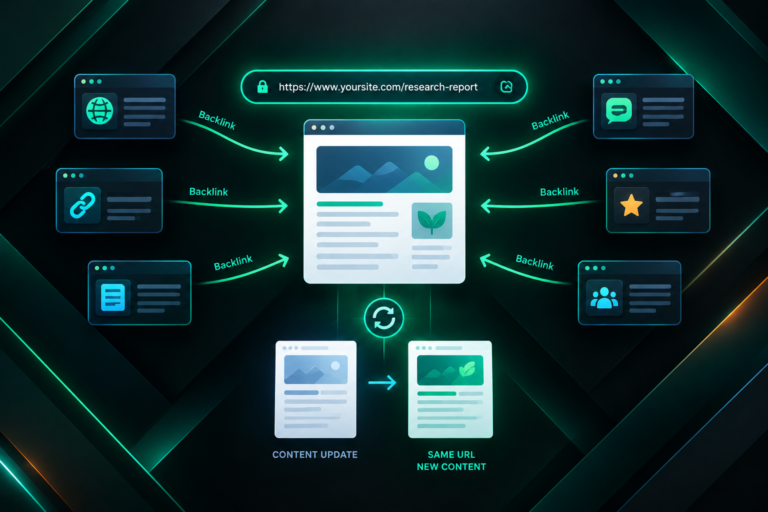
When a third party links to your PDF, that backlink points to the PDF URL rather than to a page within your site’s HTML architecture. If the PDF is later removed, replaced, or moved, the backlink becomes a dead reference unless redirects are carefully managed. HTML pages are easier to maintain at a stable URL, update in place, and redirect if the site structure changes.
Discoverability and Organic Search Performance
For research content to earn backlinks passively over time, it needs to be discoverable by people who are not already aware of it. Organic search is one of the most reliable discovery channels for linkable assets, particularly for data studies, statistics pages, and original research that journalists and content creators search for when looking for sources to cite.
HTML pages can be fully optimised for the queries your target linkers are likely to use. You can include a descriptive title tag, a compelling meta description, structured headings that match search intent, schema markup for research or article content, and internal links from related pages that help search engines understand the page’s topical relevance. These signals collectively improve the page’s ability to rank for relevant queries and appear in featured snippets or knowledge panels where applicable.
PDF files are at a structural disadvantage for most informational queries. Even when a PDF ranks, the search result snippet is often less informative than an HTML page’s meta description, and the click-through experience involves a download or a PDF viewer rather than an immediate web page. On mobile devices in particular, PDF rendering can be slow or require a separate application, which increases the likelihood that a potential linker will abandon the content before citing it.
Link Equity, Crawlability, and Backlink Value
When a publisher links to your research, the backlink’s SEO value depends partly on whether search engines can crawl the destination URL, understand its content, and associate it with your domain’s authority. HTML pages on your own domain receive full credit within your site’s link graph. Backlinks pointing to an HTML research page contribute to that page’s authority, which can then flow to related pages through internal links.
Backlinks pointing to a PDF hosted on your domain do contribute to your domain’s backlink profile, and tools such as Ahrefs, Semrush, and Majestic will typically report them as referring domains. However, the practical SEO benefit depends on whether the PDF is indexed, whether the links within it are followed, and whether the PDF URL is integrated into your site’s crawl path. A PDF that is not linked from any HTML page on your site may not be discovered or indexed at all, which means backlinks pointing to it may not be associated with your domain in the way you intend.
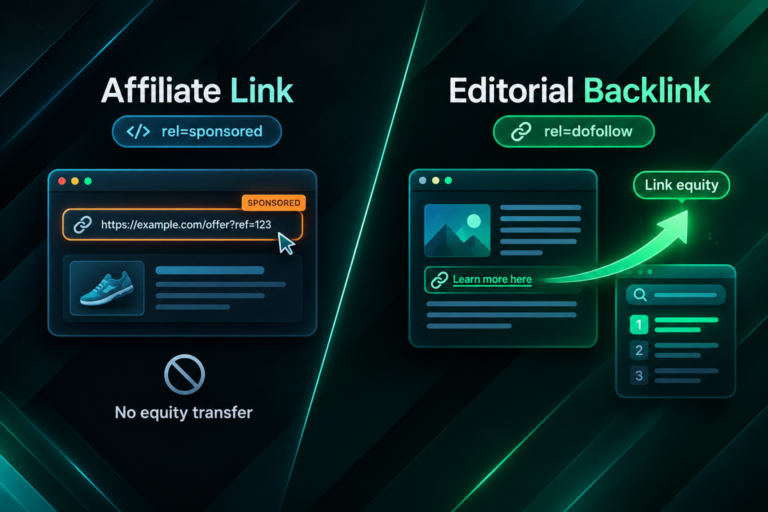
It is also worth noting that some publishers and content management systems automatically add nofollow or ugc attributes to outbound links, and that the link attribute applied to a link pointing to your PDF is determined by the linking site, not by your format choice. Format does not change link attributes, but it does affect whether the destination is crawlable, indexable, and integrated into your site’s authority structure.
Outreach, Digital PR, and Journalist Preferences
Manual outreach campaigns for linkable research assets typically involve contacting journalists, editors, bloggers, and researchers who cover topics related to your study. The format of your research affects how these contacts engage with it and how easily they can link to it in their own content.
HTML research pages are generally easier to link to in editorial content. A journalist writing an article can hyperlink directly to the page, and their readers can access the content immediately without downloading a file. This frictionless access increases the likelihood that the link will be included and that readers will follow it. For digital PR campaigns targeting online publications, news sites, and blogs, an HTML page is typically the preferred destination format.

PDFs retain a role in certain outreach contexts. Formal industry reports, whitepapers, and regulatory or compliance documents are often expected in PDF format by their target audiences, including trade publications, academic researchers, and institutional contacts. In these contexts, a well-designed PDF with clear branding and a professional layout may be more credible than a web page. Some journalists also prefer a downloadable document when they want to review detailed methodology or data tables offline before deciding whether to cite the research.
A practical approach used by some content teams is to publish the research as an HTML page and offer a PDF version as a supplementary download. This gives outreach targets the option they prefer while ensuring that the primary linkable URL is an HTML page that benefits from full SEO optimisation and internal linking.
Content Updates, Link Stability, and Long-Term Value
Linkable research assets often have a longer productive lifespan when they can be updated in place. Annual data studies, industry benchmarks, and statistics pages that are refreshed with new data each year can accumulate backlinks over multiple cycles, with each update providing a new outreach opportunity while preserving the authority built by previous links.
HTML pages support this model naturally. You can update the content, refresh the data, and add new sections without changing the URL, which means all existing backlinks continue pointing to the live, updated page. The page’s accumulated authority and ranking history are preserved, and returning visitors and new outreach targets find current information at the same address.

Updating a PDF is more operationally complex. If you replace the file at the same URL, existing links continue to work, but version control and user communication require additional management. If the URL changes, existing backlinks point to a dead or outdated file unless redirects are implemented. For research that is intended to be updated regularly, the HTML format offers a more sustainable long-term structure.
Analytics, Measurement, and Campaign Reporting
Understanding how your linkable asset performs requires reliable analytics. For an HTML page, standard web analytics platforms such as Google Analytics provide page-level data including sessions, unique visitors, average engagement time, referral sources, and conversion events. This data helps you assess which outreach channels are driving traffic, which referring domains are sending the most visitors, and whether the research is generating the business outcomes you intended.
Tracking PDF engagement requires additional configuration. A PDF download can be tracked as an event in Google Analytics using Google Tag Manager, but this captures the download action rather than the reading behaviour. You cannot easily measure how far into the document a reader progressed, which sections they engaged with, or whether they returned to the document later. For campaign reporting purposes, HTML pages provide substantially more actionable data.
When reporting on a link building campaign built around original research, the ability to show referral traffic from earned placements, organic traffic growth to the research page, and changes in the page’s search visibility adds meaningful context to the backlink count. This level of reporting is straightforward for HTML pages and considerably more difficult for PDFs.
When PDF May Still Be the Right Choice
Despite the SEO and link acquisition advantages of HTML, there are genuine use cases where PDF remains appropriate or even preferable. Understanding these cases helps you make a format decision that matches your actual goals rather than defaulting to one format for all research content.
- Gated content and lead generation: If the primary goal is to capture contact details in exchange for access to a detailed report, a PDF download behind a form is a common and effective approach. In this context, link acquisition is a secondary objective, and the PDF format supports the lead generation workflow.
- Formal institutional or regulatory reports: Research intended for academic, government, or regulatory audiences is often expected in PDF format. These audiences may cite the document in formal references rather than linking to a web page, and the citation value may be more important than the SEO backlink value.
- Print-ready design and brand presentation: If the research will be distributed at events, printed for clients, or shared in contexts where visual design and layout consistency matter, PDF preserves formatting across all environments in a way that HTML cannot guarantee.
- Supplementary detail for complex data: Large data tables, appendices, and methodology sections that would be unwieldy on a web page can be offered as PDF downloads linked from the main HTML research page, combining the SEO benefits of HTML with the presentation advantages of PDF for detailed supporting material.

Practical Considerations for Linkable Asset Campaigns
If your primary goal is to earn editorial backlinks that improve your site’s authority and organic search visibility, the format decision should be made before the research is produced, not after. Building a link acquisition campaign around a PDF that was originally created for internal distribution or client reporting is possible but typically requires additional work to make the content accessible and discoverable.
For an HTML-based linkable asset, the page should be planned with outreach in mind from the start. This means choosing a topic with genuine citation potential, structuring the findings so that individual statistics or conclusions can be easily quoted and linked, including clear methodology information that increases credibility with journalists and researchers, and integrating the page into your site’s navigation and internal linking structure so that search engines can discover and index it efficiently.
Outreach for HTML research pages can begin as soon as the page is live and indexed. For PDF-based research, it is worth confirming that the file is accessible at a stable URL, that the URL is included in your sitemap, and that the PDF is linked from at least one HTML page on your site before beginning outreach. These steps improve the likelihood that backlinks earned during the campaign will be crawled and associated with your domain.
The timeline for seeing measurable SEO effects from a linkable asset campaign varies depending on the number and quality of placements earned, the crawl frequency of linking sites, and how quickly search engines process the new backlinks. In general, meaningful changes in organic search visibility may take several months to become apparent, and the full benefit of a well-executed research campaign often accumulates over a longer period as the asset continues to attract citations organically.
Frequently Asked Questions
Can a PDF rank in Google search results?
Yes, Google can crawl and index PDF files, and PDFs do appear in search results. However, PDFs lack many of the on-page SEO elements available to HTML pages, such as meta descriptions, canonical tags, and schema markup, which typically makes them less competitive for informational queries where an HTML page with equivalent content is also available.
Do backlinks to a PDF count toward my domain’s authority?
Backlinks pointing to a PDF hosted on your domain are generally reported as referring domains by tools such as Ahrefs and Semrush and can contribute to your domain’s backlink profile. The practical SEO benefit depends on whether the PDF is indexed and integrated into your site’s crawl path. A PDF that is not linked from any HTML page on your site may not be discovered or indexed reliably.
Is it possible to publish both a PDF and an HTML version of the same research?
Yes, and this is a common approach. Publishing the research as an HTML page and offering a PDF download as a supplementary option allows you to optimise the primary URL for search and link acquisition while giving outreach targets and readers the option to download a formatted document. Outreach should direct contacts to the HTML page URL rather than the PDF download link.
How does format affect digital PR outreach for research?
HTML pages are generally easier for journalists and bloggers to link to in editorial content, as readers can access the content immediately without downloading a file. PDFs may be preferred by some contacts for formal reports or detailed methodology review. For most digital PR campaigns targeting online publications, an HTML research page is the more practical primary format.
What makes a research page a strong linkable asset regardless of format?
The most important factors are original data or findings that are not available elsewhere, clear and credible methodology, findings that are genuinely useful or surprising to the target audience, and a topic with sufficient citation demand among journalists, bloggers, or researchers in the relevant industry. Format affects discoverability and link equity, but the underlying research quality determines whether outreach targets will choose to cite it.
Can I convert an existing PDF report into an HTML linkable asset?
Yes. Converting a PDF report into an HTML page involves restructuring the content for web presentation, adding appropriate on-page SEO elements, integrating the page into your site’s navigation and internal linking, and submitting the URL for indexing. If the PDF has already earned backlinks, implementing a redirect from the PDF URL to the new HTML page can help preserve some of the existing link equity, though the effectiveness of this approach depends on how search engines process the redirect.
Choosing the Right Format for Your Research Goals
For most link building campaigns built around original research, HTML is the more practical primary format. It offers full search engine crawlability, supports complete on-page SEO optimisation, integrates with your site’s internal linking structure, provides reliable analytics, and creates a stable URL that can be updated and outreached repeatedly over time. These characteristics make HTML research pages better suited to earning editorial backlinks that contribute measurable SEO value to your domain.
PDF remains a legitimate choice for specific use cases: gated lead generation, formal institutional reports, print-ready documents, and supplementary data that would be unwieldy on a web page. In many cases, the most effective approach is to publish an HTML page as the primary linkable asset and offer a PDF download as an optional supplement, combining the SEO and link acquisition advantages of HTML with the presentation and distribution benefits of PDF.
The format decision is one part of a broader linkable asset strategy. The research topic, data quality, outreach approach, and the relevance of the content to your target linkers all have a significant influence on how many backlinks the asset earns and how much SEO value those backlinks deliver. If you are planning a research-based link acquisition campaign and want guidance on format, topic selection, or outreach strategy, discussing your goals with an experienced link building team before production begins can help you avoid format choices that limit the campaign’s effectiveness.