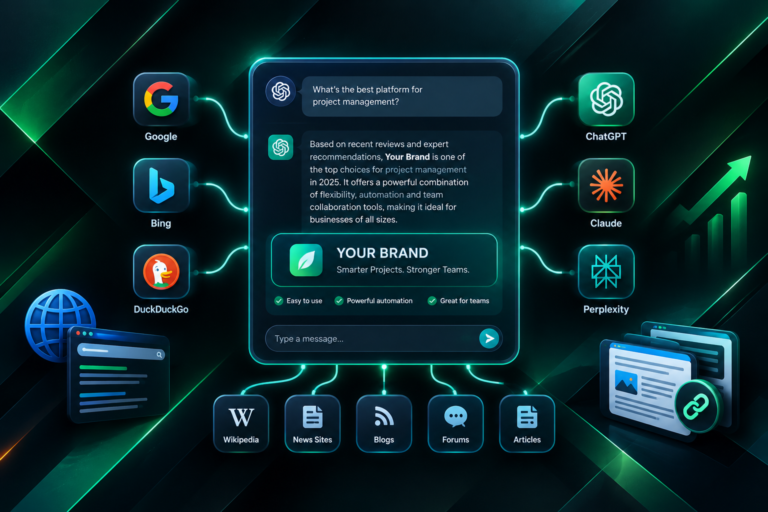
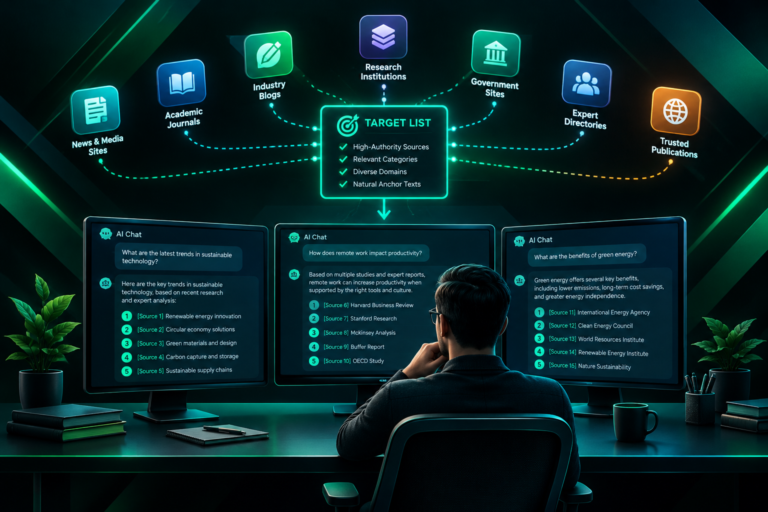
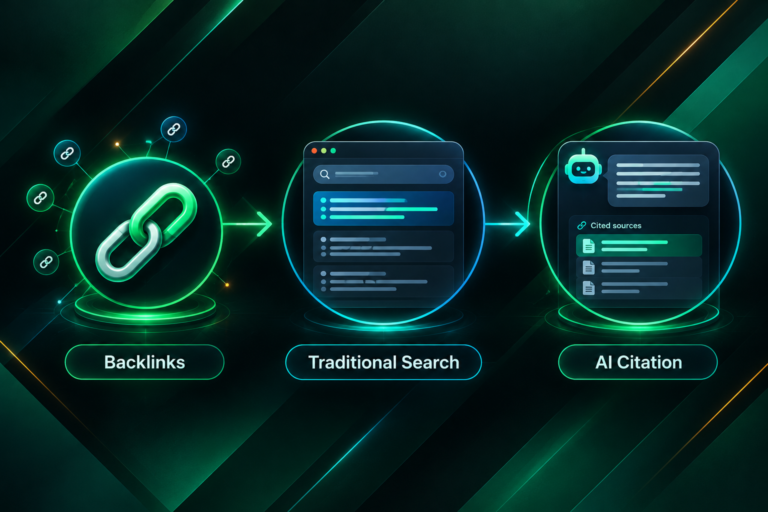
Building backlinks for a mobile app website presents a distinct set of challenges compared to a standard content site or e-commerce store. App-focused pages often have thin on-site content, highly competitive niches, and audiences spread across app stores, review platforms, and tech media rather than a single search-driven funnel. Understanding which link acquisition methods are realistic, what quality looks like in this context, and what results you can reasonably expect will help you plan a campaign that supports long-term organic visibility rather than short-term metric gains.
Key Takeaways
- Mobile app websites benefit most from backlinks that are topically relevant to the app’s category, target audience, and use case rather than generic high-volume placements.
- Several link acquisition methods are available, including digital PR, guest posting, resource page outreach, app review site placements, and partnership-based link building, each with different timelines and suitability factors.
- Backlinks alone are unlikely to resolve ranking problems caused by thin content, poor technical SEO, or a mismatch between the page and search intent.
- Quality assessment should consider topical relevance, editorial context, referring domain diversity, and link attributes rather than relying solely on third-party authority metrics.
- Results timelines vary considerably depending on competition, existing backlink profile, content quality, and how well the site satisfies user intent for its target queries.
Why Link Building for Mobile App Websites Is Different
A mobile app website typically serves two overlapping purposes: converting visitors into app downloads and ranking for queries related to the app’s core function. This dual goal creates a content challenge. Many app landing pages are intentionally minimal, prioritising conversion over depth, which can make it harder to attract editorial links naturally. Unlike a blog or an e-commerce category page, a stripped-down app homepage gives other publishers little reason to reference it unless the app itself is genuinely newsworthy or solves a well-documented problem.
The competitive landscape also differs by category. A productivity app competes for backlinks and rankings against established SaaS platforms, review aggregators, and tech publications that already have strong referring domain profiles. A gaming app faces a different set of competitors, including gaming media, influencer content, and community-driven sites. Understanding the specific competitive environment for your app’s category is a necessary first step before selecting a link acquisition approach.
App store presence does not directly substitute for organic search visibility. Ranking well in the Apple App Store or Google Play Store depends on app store optimisation signals rather than web backlinks, so a link building campaign for a mobile app website is specifically aimed at improving the visibility of the web-based presence in search engines such as Google, not the app store listing itself.
Assessing Your Starting Point Before Building Links
Before planning any outreach or link acquisition activity, it is worth auditing the current state of the website. Low organic visibility for a mobile app website can have several causes that backlinks alone cannot fix. These include crawling or indexing problems, content that does not match the search intent of target queries, weak internal linking between the app’s landing page and any supporting content, or a technical SEO issue such as slow page speed or poor mobile usability. Addressing these factors first means that any links you acquire are more likely to contribute to measurable ranking improvements.
Reviewing the existing backlink profile using a tool such as Ahrefs, Semrush, or Majestic can reveal whether the site already has referring domains, what anchor text distribution looks like, and whether any low-quality or spammy links may be creating a negative signal. This baseline assessment also helps identify which pages are worth targeting with new links. For most mobile app websites, the primary target pages are the homepage, a dedicated features or use-case page, and any blog content that targets informational queries related to the app’s category.
Link Acquisition Methods for Mobile App Websites
Several link building approaches may be suitable for a mobile app website, depending on the app’s category, the site’s existing content, and the available budget and timeline. No single method is universally appropriate, and most effective campaigns use a combination of tactics over time.
Digital PR and App Launch Coverage
Digital PR involves creating a story, data asset, or announcement that is genuinely interesting to journalists and publishers, then pitching it to relevant media. For a mobile app, this might include a significant product update, original research conducted using anonymised app data, a notable milestone such as a user count or market expansion, or a timely angle tied to a broader industry trend. When successful, digital PR can generate editorial backlinks from technology publications, business media, and niche industry sites that would be difficult to reach through standard outreach. These placements tend to carry strong topical relevance and editorial credibility. The limitation is that digital PR requires a genuinely compelling story and a well-executed pitch; without a newsworthy angle, the response rate from journalists is typically low.
Guest Posting on Relevant Blogs and Publications
Guest posting involves contributing original content to a third-party website in exchange for a contextual backlink to your site. For a mobile app website, the most relevant guest post targets are publications covering the app’s subject area rather than generic technology or SEO blogs. A personal finance app, for example, would benefit more from a guest post on a personal finance or fintech publication than from a placement on a general marketing blog. The backlink’s topical relevance to the app’s category is an important quality factor. When evaluating potential guest post targets, consider the site’s editorial standards, whether it publishes content for a genuine audience, the relevance of its existing content to your app’s niche, and the quality of its existing referring domain profile. Third-party metrics such as Ahrefs Domain Rating or Moz Domain Authority can provide a rough indication of a site’s link profile strength, but these are proprietary estimates rather than Google signals, and they should not be the sole basis for placement decisions.
App Review and Roundup Placements
Many technology and niche publications regularly publish app roundups, best-of lists, and individual app reviews. Securing a placement in one of these articles can generate a relevant backlink alongside referral traffic from readers who are actively looking for apps in your category. Outreach for this type of placement involves identifying publications that already cover similar apps, assessing whether their audience matches your target user, and pitching the app with clear information about its features and differentiation. Some publications charge for sponsored review placements, which would typically require a sponsored or nofollow link attribute under Google’s link spam policies. Editorial reviews that result from genuine outreach and product evaluation are a different category. Understanding the distinction matters for both policy compliance and the likely SEO value of the placement.
Resource Page and Tool Directory Link Building
Resource pages and curated tool directories list useful apps, tools, or services for a specific audience. A project management app might be listed on a resource page maintained by a productivity blog; a language learning app might appear in a directory curated for educators. Identifying relevant resource pages and directories, then reaching out to request inclusion, is a relatively straightforward outreach method. The quality of these placements varies considerably. A well-maintained resource page on an authoritative niche site is a meaningful addition to a backlink profile. A low-quality directory that accepts any submission without editorial review is unlikely to provide meaningful SEO value and may carry reputational risk. Selective targeting and manual quality assessment are important for this method.
Partnership and Integration-Based Link Building
If your mobile app integrates with other platforms, tools, or services, those integration partners may be willing to reference your app on their own website. Similarly, if your app is used by businesses or organisations in a specific sector, those organisations may be willing to mention it in their own content. This type of relationship-based link building tends to produce highly relevant placements because the linking site has a genuine reason to reference your app. The outreach process is typically more collaborative than cold email pitching, and the resulting links often appear in contextually appropriate positions within existing content rather than in a dedicated links section.
Content-Led Link Attraction
Creating genuinely useful content on the app’s website can attract backlinks over time without active outreach for every placement. This might include original research relevant to the app’s category, a free tool or calculator that complements the app’s core function, a comprehensive guide addressing a problem the app solves, or data-driven content that other publishers find worth referencing. Content-led link attraction is a slower process than direct outreach, but the links it generates tend to be editorially motivated and contextually relevant. For this approach to work, the content needs to be substantially more useful or distinctive than what already exists on competing sites, and it needs to be discoverable by the publishers and audiences most likely to link to it.
Evaluating Backlink Quality for App Websites
Not all backlinks contribute equally to a site’s organic visibility, and some may carry risk if they appear manipulative or come from low-quality sources. When assessing the quality of a potential or existing backlink for a mobile app website, several factors are worth considering beyond a single authority metric.
-
- Topical relevance: Does the linking page and the broader linking site cover topics related to your app’s category and target audience? A link from a site covering the same subject area as your app is generally more meaningful than a link from an unrelated niche.
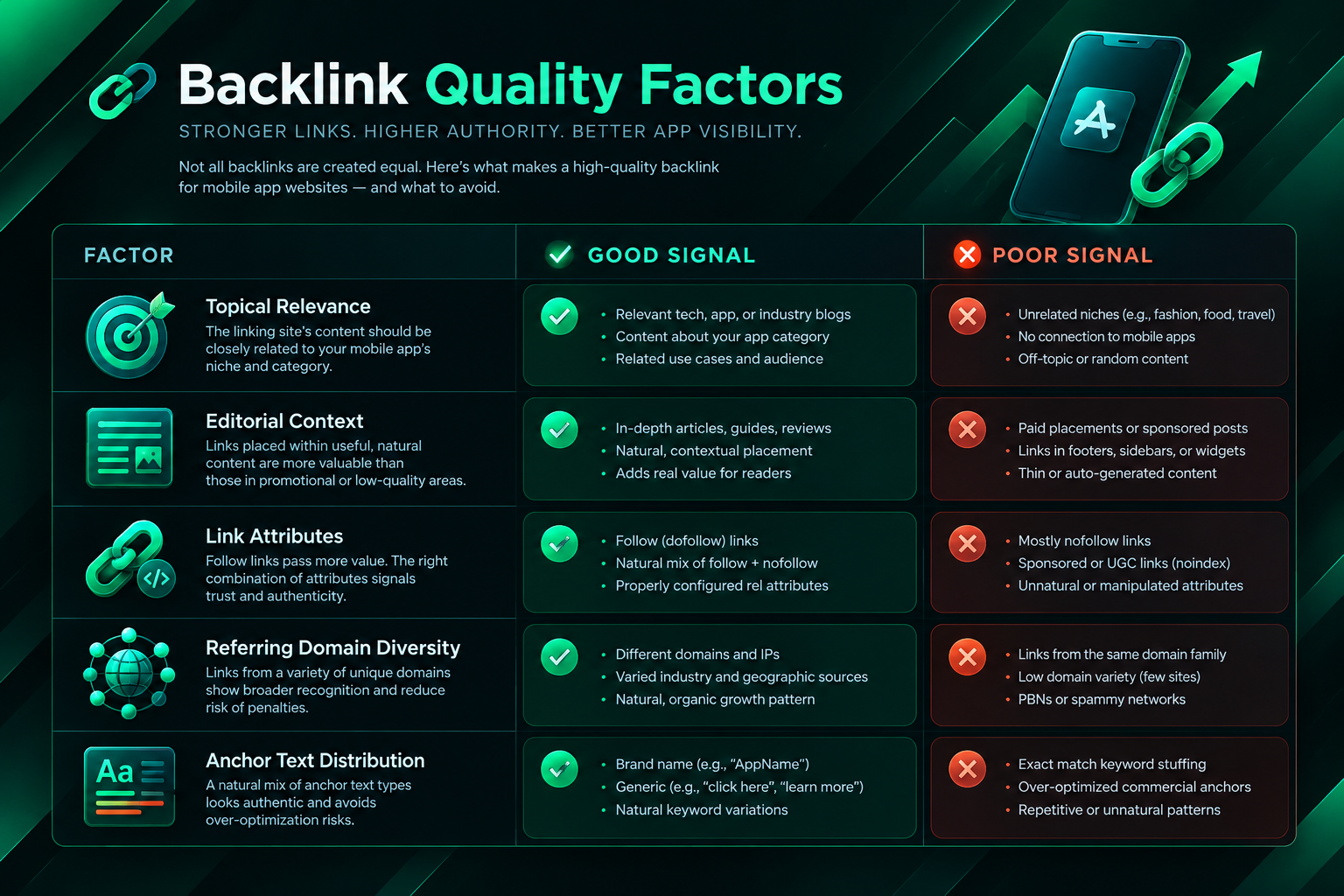
- Editorial context: Is the link placed within content that a real audience reads, or does it appear in a footer, sidebar, or low-quality link list? Contextual links within relevant editorial content tend to carry more weight.
- Link attributes: Is the link followed or nofollowed? Sponsored or UGC-attributed? Google’s documentation distinguishes between these attributes, and paid or sponsored links should carry the appropriate attribute to comply with its link spam policies.
- Referring domain diversity: A backlink profile with links from many distinct, relevant domains is generally more robust than one with many links from a small number of sources.
- Anchor text distribution: Anchor text that is overly optimised with exact-match commercial keywords across many placements can appear manipulative. A natural anchor text profile includes branded, generic, and partial-match variations.
Third-party metrics such as Domain Rating from Ahrefs, Domain Authority from Moz, Authority Score from Semrush, and Trust Flow from Majestic are useful reference points during prospecting, but they are proprietary estimates that do not directly reflect how Google evaluates a link. Treating any single metric as a guarantee of ranking improvement would be an oversimplification.
Outreach Process and Campaign Workflow
A structured outreach campaign for a mobile app website typically follows a sequence of stages, each of which affects the quality and pace of link acquisition.
-
- Target identification: Prospecting for relevant publishers, blogs, directories, and media outlets that cover the app’s category and have an audience likely to find the app useful or interesting.
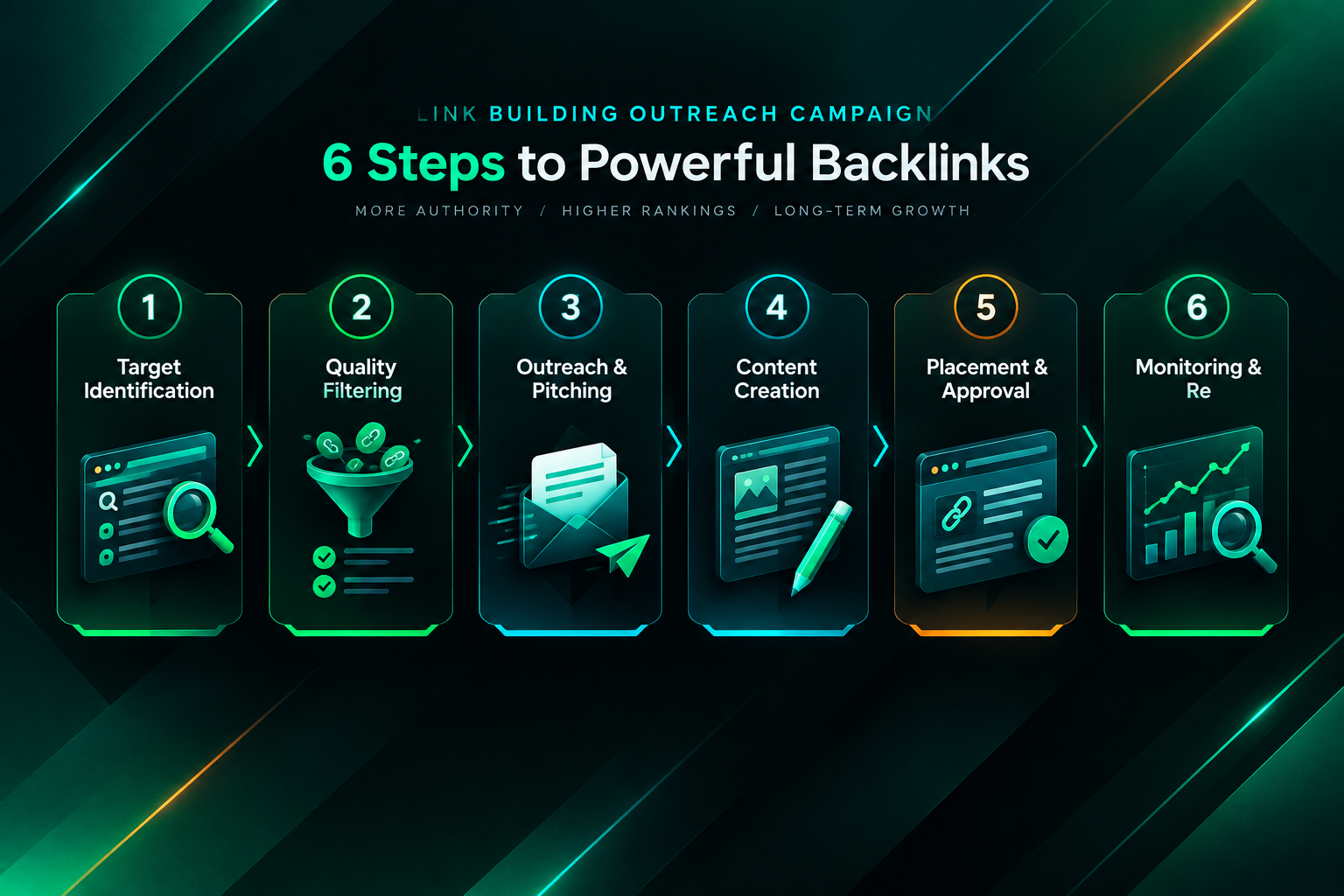
- Quality filtering: Manually reviewing prospects to remove low-quality, irrelevant, or potentially harmful sites before outreach begins.
- Outreach and pitching: Contacting editors, writers, or site owners with a personalised pitch that explains the relevance of the app or content to their audience. Generic mass outreach typically produces poor results.
- Content creation or asset preparation: For guest posts, this involves writing original content that meets the publisher’s editorial standards. For digital PR, it involves preparing the story, data, or announcement in a format suitable for media pitching.
- Placement and approval: The publisher reviews and approves the content or listing. This stage can take days to several weeks depending on the publication’s editorial schedule.
- Monitoring and reporting: Tracking which placements go live, verifying link attributes, and monitoring whether the links are indexed by search engines over time.
The client’s workload during a campaign typically includes providing access to the app, approving content briefs and drafts, supplying brand assets, and reviewing placements before they go live. The level of involvement varies depending on whether the campaign is managed in-house or by an external provider.
Timelines and Realistic Expectations
Link building for a mobile app website is not a fast process, and the relationship between acquiring backlinks and observing measurable ranking or traffic changes involves several delays. After a link goes live, search engine crawlers need to discover and index the linking page. The indexed link then needs to be evaluated as part of the broader ranking calculation for the target page. Depending on the site’s crawl frequency and the competitiveness of the target queries, this process can take weeks to several months before any ranking movement becomes visible in tools such as Google Search Console.
The number of links required to produce a measurable effect depends heavily on the competitive landscape for the specific queries being targeted. In a low-competition niche, a modest number of high-quality, relevant backlinks may contribute to noticeable ranking improvements. In a highly competitive category such as productivity apps, fitness tracking, or mobile gaming, the existing backlink profiles of ranking competitors may be substantially larger, and a longer-term, sustained campaign may be necessary before results become apparent.
It is also worth noting that backlinks are one of several factors that influence organic rankings. Content quality, technical SEO health, user engagement signals, and the overall relevance of the page to the target query all play a role. A link building campaign that runs alongside weak or mismatched content is unlikely to produce the same results as one that supports a well-optimised, content-rich website.
Risks and Quality Control Considerations
Link building carries risks that are worth understanding before committing to a campaign approach. Google’s link spam policies identify certain link acquisition practices as manipulative, including paid links without appropriate attributes, large-scale guest posting primarily for link purposes, and links from low-quality or irrelevant sites. Websites found to be in violation of these policies may receive a manual action or be subject to algorithmic adjustments that reduce their organic visibility.
For mobile app websites, the risks associated with low-quality link building can be particularly damaging because app-related queries are often competitive and the sites involved may already have limited organic authority. Acquiring a large volume of links from irrelevant or low-quality sources in a short period can create an unnatural pattern that attracts scrutiny. A more measured approach that prioritises relevance, editorial quality, and a natural acquisition pace is generally more sustainable.
If outsourcing link building to an agency or freelancer, it is worth asking how they assess publisher quality, what their process is for verifying that placements meet editorial standards, and whether they provide transparent reporting on the sites where links are placed. Campaigns that rely on private blog networks, link exchanges, or automated placement tools carry a higher risk profile than those based on genuine editorial outreach.
When Outsourcing Link Building May Be Worth Considering
Managing a link building campaign for a mobile app website in-house requires time, outreach expertise, content production capacity, and established relationships with relevant publishers. For many app development teams and small marketing departments, these resources are not readily available alongside the core work of product development and user acquisition. Outsourcing link acquisition to a specialist provider can allow the internal team to focus on product and content while experienced outreach professionals handle prospecting, pitching, and placement management.
The suitability of outsourcing depends on the provider’s familiarity with the app’s category, their approach to publisher quality assessment, and the transparency of their reporting. A provider that specialises in technology or SaaS link building may have existing relationships with relevant publishers and a more refined prospecting process for app-related niches than a generalist provider. Before engaging any external provider, it is reasonable to ask for examples of relevant placements, a clear explanation of their outreach methodology, and details of how they handle quality control and link monitoring.
Alternatives and Complementary Strategies
Link building is not always the most urgent priority for a mobile app website. If the site has significant technical SEO issues, thin or poorly structured content, or pages that do not clearly match the intent of target queries, addressing those factors first is likely to produce a better return than investing in link acquisition. An SEO audit can help identify which issues are most likely to be limiting organic visibility before a link building budget is committed.
Complementary strategies that can support link building efforts include creating genuinely useful blog content that targets informational queries in the app’s category, building a presence on relevant community platforms such as Reddit, Product Hunt, or niche forums where the app’s target audience is active, and developing relationships with influencers or content creators who cover the app’s subject area. These activities can generate referral traffic and brand awareness that supports the broader goal of organic growth, even when they do not directly produce followed backlinks.
App store optimisation, paid user acquisition, and social media marketing operate through different channels and are not substitutes for organic search visibility, but they can contribute to overall download volume and brand recognition in ways that may indirectly support link acquisition by increasing the app’s public profile.
Frequently Asked Questions
How many backlinks does a mobile app website need to rank?
There is no fixed number that applies universally. The number of referring domains and the quality of those links needed to rank for a given query depends on the competitiveness of that query and the backlink profiles of the pages currently ranking for it. Analysing the top-ranking competitors for your target queries using a tool such as Ahrefs or Semrush can give a rough indication of the scale of link acquisition that may be required, though other factors including content quality and technical SEO also influence rankings.
Should I build links to my app’s homepage or to inner pages?
Both can be appropriate depending on the goal. Links to the homepage can support overall domain authority and brand-related queries. Links to specific feature pages, use-case pages, or blog content can help those pages rank for more specific queries. The choice should be guided by which pages you want to rank for which queries, and whether those pages have sufficient content quality to compete for those positions.
Are links from app review sites valuable for SEO?
Links from genuine app review publications that have real editorial audiences and relevant content can be valuable, particularly if the review site covers your app’s category. The SEO value depends on the quality and relevance of the linking site, the link attribute used, and whether the placement is editorial or paid. Paid or sponsored placements should carry the appropriate link attribute in line with Google’s link spam policies.
How long does it take to see results from link building for an app website?
Results timelines vary considerably. After a link is published, it may take several weeks for search engine crawlers to discover and index it. Ranking changes, if they occur, may become visible in Google Search Console over a period of weeks to several months. In competitive niches, sustained link acquisition over a longer period is typically required before measurable organic traffic improvements become apparent.
Can I build backlinks to my app’s page on the App Store or Google Play?
Backlinks to app store listing pages may generate referral traffic but are unlikely to improve the organic search rankings of your own website. App store rankings are determined by app store optimisation signals rather than web backlinks. A link building campaign aimed at improving organic search visibility should target the pages on your own domain.
What is the risk of using a link building service for a mobile app website?
The main risks include acquiring links from low-quality or irrelevant sites, links with manipulative anchor text patterns, or placements that violate Google’s link spam policies. These risks can be reduced by working with providers who use genuine editorial outreach, apply manual quality assessment to publisher prospects, and provide transparent reporting on placements. No link building approach is entirely without risk, and results are never guaranteed.
Choosing a Link Building Approach That Fits Your App’s Goals
Building backlinks for a mobile app website is a longer-term investment that works best when it is aligned with a clear understanding of the target queries, the competitive landscape, and the current state of the site’s content and technical SEO. The most effective campaigns tend to combine topically relevant placements from genuine editorial outreach with supporting content that gives publishers a reason to link and gives search engines a clear signal of the page’s relevance and authority.
No single link acquisition method is universally appropriate for every app or every stage of growth. Digital PR, guest posting, app review placements, resource page outreach, and partnership-based link building each have different timelines, resource requirements, and suitability factors. A realistic campaign plan accounts for these differences and sets expectations around timelines and outcomes that reflect the actual competitive environment rather than optimistic projections.
If you are considering outsourcing link building for a mobile app website, a qualified provider should be able to explain their approach to publisher quality assessment, their experience with relevant niches, and how they report on placements and monitor link retention over time. A site-specific assessment is the most reliable basis for deciding which approach may be most appropriate for your app’s current position and goals.