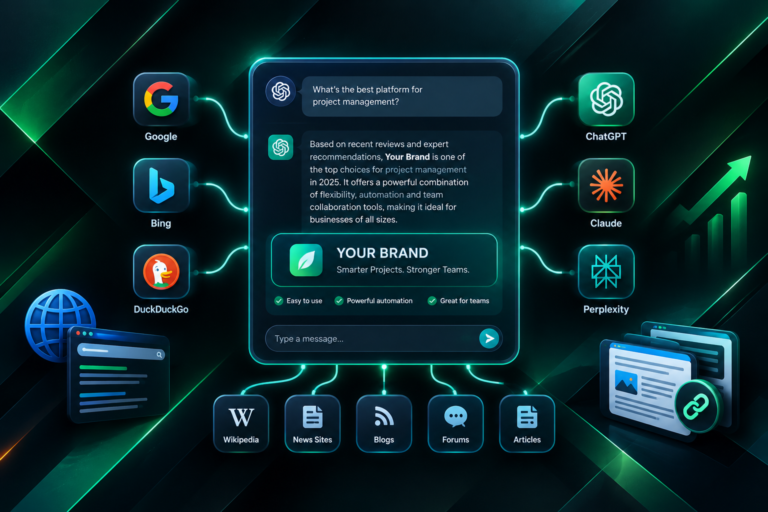
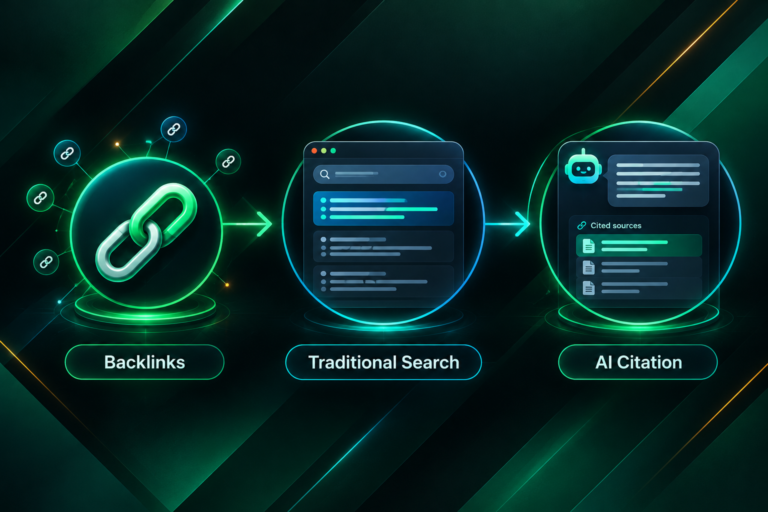
PR and SEO teams often pursue goals that overlap significantly, yet they frequently operate in separate silos with different metrics, timelines, and definitions of success. When both functions are working on link acquisition without a shared framework, the result is duplicated outreach, inconsistent messaging, and missed opportunities for high-quality editorial placements. Coordinating these two disciplines effectively can improve the quality and relevance of acquired links, reduce internal friction, and make campaigns more sustainable over time.
Key Takeaways
- PR and SEO teams approach link acquisition from different angles, but their goals are complementary when aligned around shared quality standards and target pages.
- Effective coordination requires agreed definitions of link value, clear ownership of outreach relationships, and a shared editorial calendar.
- Without structured communication, teams risk duplicating publisher contacts, sending conflicting messages, and diluting the authority of earned placements.
- Realistic timelines for editorial link acquisition through coordinated PR and SEO efforts typically span several months before measurable ranking or traffic changes may appear.
- Coordination does not guarantee results; outcomes depend on content quality, publisher standards, competitive landscape, and the existing backlink profile of target pages.
Why PR and SEO Teams Approach Links Differently
Public relations professionals typically measure success through brand visibility, media coverage, share of voice, and sentiment. When a PR campaign earns a placement in a national publication, the primary win is audience reach and reputation. Whether that placement includes a followed link to a specific product page is often secondary. SEO teams, by contrast, evaluate placements primarily through the lens of link equity: the topical relevance of the referring domain, the link attribute (followed or nofollowed), the anchor text, and the authority signals of the linking page. These different success criteria create friction when both teams are pursuing the same publishers without a shared brief.
This divergence also affects how each team qualifies publishers. A PR team may prioritise high-circulation outlets regardless of their topical alignment with the client’s niche, while an SEO team may prefer a smaller, highly relevant industry publication that passes stronger contextual signals. Neither approach is wrong in isolation, but without coordination, campaigns can produce a backlink profile that is either too broad to support topical authority or too narrow to generate meaningful brand awareness. A coordinated strategy accounts for both dimensions.
Building a Shared Definition of Link Value
The first practical step in coordinating PR and SEO teams is agreeing on what constitutes a valuable link acquisition. This shared definition should cover several dimensions that both teams can reference when evaluating a potential placement opportunity.
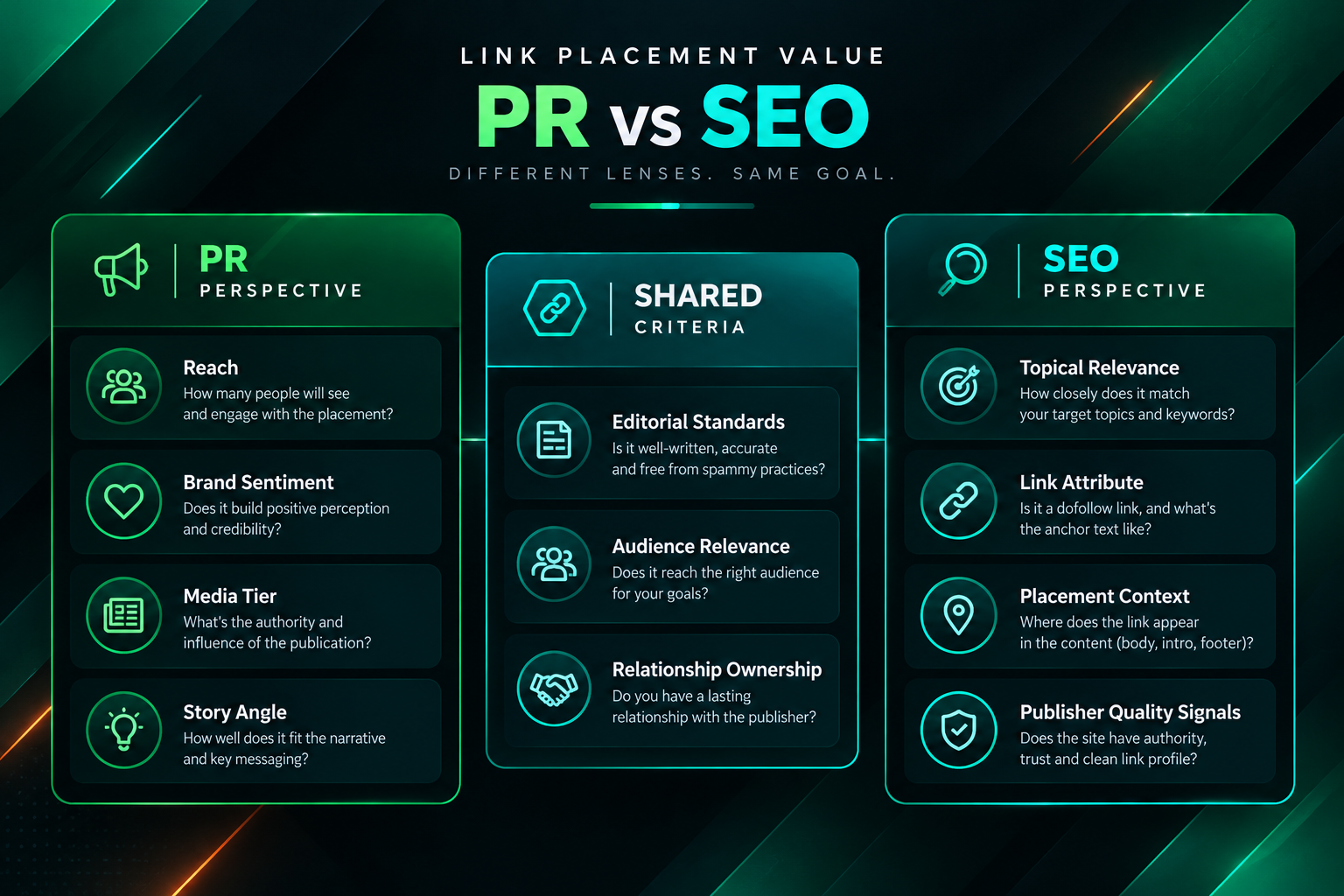
Topical relevance refers to how closely the referring domain’s content aligns with the target website’s subject matter. A link from a publication that consistently covers topics adjacent to the client’s industry is generally more useful for building topical authority than a link from a general-interest outlet, even if the latter has higher overall traffic. Both teams should agree on which topic clusters are in scope for a given campaign.
Link attribute matters because followed links pass link equity while nofollowed or sponsored-attributed links do not, at least not in the same way. PR teams accustomed to securing brand mentions may not distinguish between these attributes. SEO teams should explain the difference clearly and agree on which placements count toward link acquisition targets versus brand awareness targets.
Placement context covers where within a page the link appears and how naturally it is integrated into the surrounding content. A link embedded in a relevant paragraph of an editorial article carries different signals than a link in a footer, author bio, or press release aggregator. Agreeing on minimum placement standards prevents both teams from counting low-context placements as equivalent to genuine editorial links.
Publisher quality signals include factors such as editorial standards, organic traffic estimates, existing backlink profile, and whether the site has a history of selling links. Third-party metrics from tools such as Ahrefs, Semrush, or Moz can inform this assessment, but these proprietary scores are not Google metrics and should not be treated as guarantees of ranking impact. They are useful proxies for relative quality comparison, not absolute measures of link value.
Establishing Clear Ownership of Outreach Relationships
One of the most common coordination failures occurs when both PR and SEO teams contact the same journalist, editor, or publisher independently. This creates confusion for the recipient, can damage the relationship, and may result in the client appearing disorganised. Establishing clear ownership of outreach relationships is essential before any campaign begins.
A practical approach is to maintain a shared contact database that both teams can access and update. This database should record which team owns the relationship with each publication or journalist, the current status of any outreach, and any agreed exclusivity periods. When a PR team has an established relationship with a specific editor, the SEO team should route link-relevant pitches through that relationship rather than initiating separate contact. Conversely, when the SEO team has developed a publisher relationship through previous guest post placements, the PR team should be aware before pitching the same outlet for coverage.
Ownership does not need to be permanent. Some publications are better suited to PR-led relationship management because they respond to news hooks and story angles, while others are more receptive to SEO-led outreach because they actively accept contributor content or resource additions. Mapping publishers to the appropriate outreach owner based on their editorial model is more effective than assigning ownership by team function alone.
Creating a Coordinated Editorial Calendar
A shared editorial calendar is the operational backbone of coordinated PR and SEO link acquisition. Without one, campaigns run reactively, with each team responding to opportunities as they arise rather than building a coherent placement strategy around target pages and content assets.
The editorial calendar should map planned content assets, PR campaign moments, and SEO target pages against a timeline. When a PR team is planning a product launch or a research report release, the SEO team should be involved early enough to identify which pages would benefit most from inbound links generated by that campaign. If the PR campaign will produce a linkable asset such as original data, an interactive tool, or a comprehensive industry report, the SEO team can advise on how to structure and host that asset to maximise its link acquisition potential.
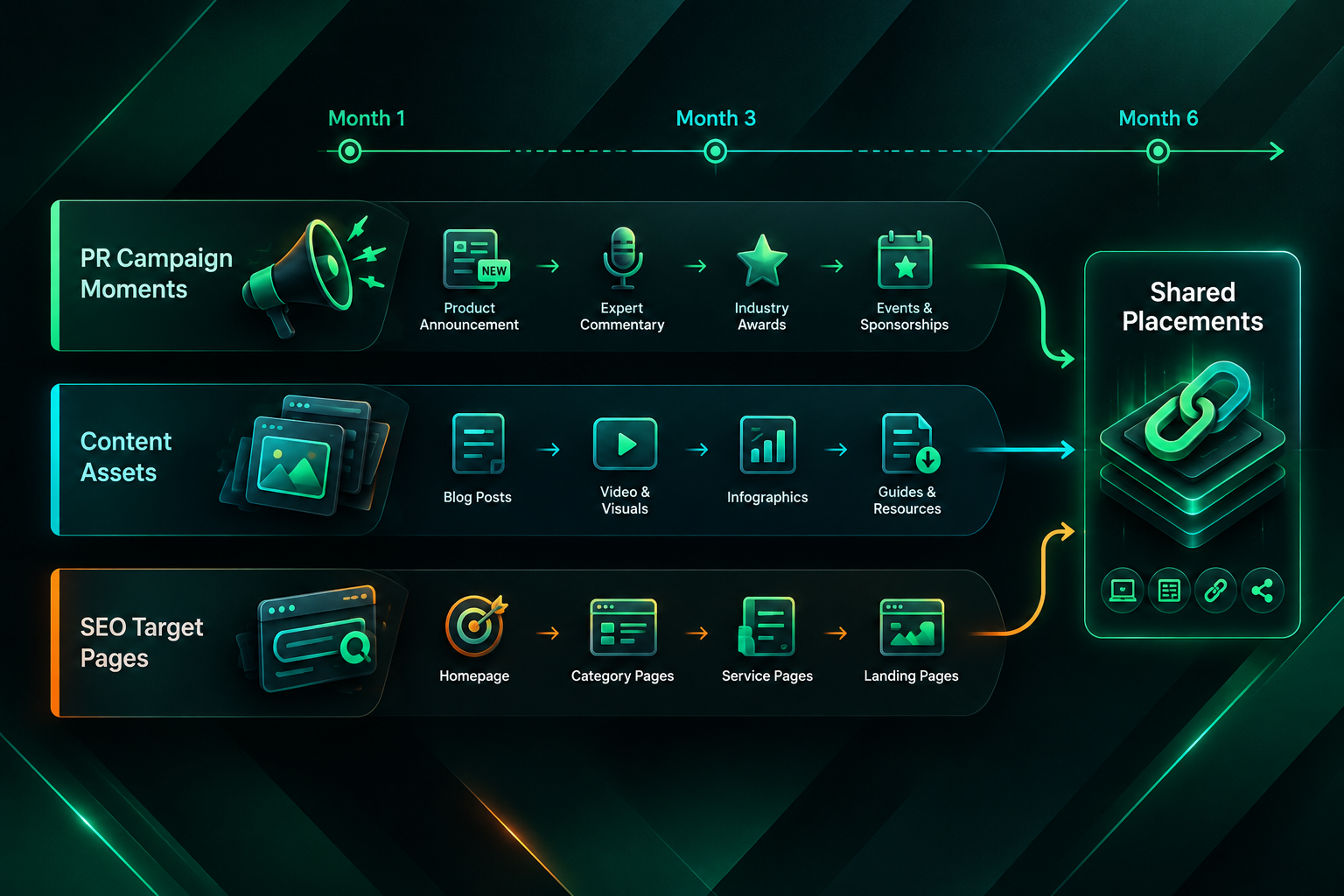
Similarly, when the SEO team identifies a target page that needs additional referring domains to compete in a specific keyword cluster, the PR team can be briefed to look for placement opportunities that naturally reference that page’s topic. This does not mean forcing irrelevant links into editorial content; it means ensuring that when a relevant placement opportunity arises, both teams know which pages are the current priority.
The calendar should also account for realistic publication timelines. Editorial placements in quality publications often take four to twelve weeks from initial pitch to live link, and sometimes longer. PR teams familiar with news cycles may underestimate this timeline for SEO-relevant placements, while SEO teams may not account for the lead time required to develop a compelling story angle. Building realistic timelines into the shared calendar prevents both teams from overpromising on delivery.
Aligning Outreach Messaging and Brand Voice
Inconsistent messaging is a practical risk when PR and SEO teams pitch the same publishers independently. A journalist who receives two different pitches from the same brand within a short period, each with a different angle or contact name, is likely to disengage from both. Coordinated outreach requires a shared messaging framework that both teams use as a foundation, even when adapting the pitch for different publication types.
The messaging framework should define the brand’s core narrative, the key claims it can substantiate, the tone appropriate for different publication tiers, and any topics or angles that are off-limits for editorial reasons. PR teams typically develop this kind of framework as part of their standard practice; the SEO team’s role is to ensure that link acquisition pitches are consistent with it rather than creating separate outreach templates that diverge from the brand’s established voice.
Anchor text strategy is a related consideration that is primarily an SEO concern but should be communicated to the PR team. When a PR professional secures a placement and has some influence over how the link is worded, knowing the preferred anchor text for a given target page can improve the SEO value of that placement. This does not mean demanding exact-match anchor text in every placement, which can appear unnatural and may attract scrutiny. It means providing guidance on the range of anchor text variations that would be useful, so that the PR team can make an informed choice when the opportunity arises.
Handling Link Quality Assessment and Rejection
Not every placement that a PR team secures will meet the SEO team’s quality standards, and not every link acquisition opportunity that the SEO team identifies will align with the PR team’s brand standards. A coordination framework needs a clear process for evaluating and, where necessary, declining placements before they go live.
The SEO team should provide the PR team with a simple set of quality criteria that can be applied without specialist knowledge. These might include minimum organic traffic thresholds for the referring domain, a requirement that the placement appear in the main editorial body of the page, and a check that the publication does not appear on known link scheme lists or show obvious signs of selling links at scale. These criteria should be practical enough for a PR professional to apply during initial publisher assessment, with escalation to the SEO team for borderline cases.
Equally, the PR team should have a clear channel to flag placements that raise brand concerns, even if they meet the SEO team’s technical criteria. A publication that has strong topical relevance and good authority signals may still be unsuitable if its editorial stance conflicts with the brand’s values or if it has recently published content that the client would not want to be associated with. Both teams need veto rights within their respective domains, with a shared escalation process for disagreements.
Reporting, Metrics, and Shared Accountability
One of the most persistent sources of tension between PR and SEO teams is the difference in how each function reports results. PR teams typically report on coverage volume, reach, sentiment, and share of voice. SEO teams report on referring domains, domain-level authority metrics, keyword rankings, and organic traffic. When these reports are produced separately and presented to different stakeholders, it becomes difficult to assess the combined impact of coordinated link acquisition efforts.
A shared reporting framework does not require both teams to abandon their existing metrics. It requires an additional layer that captures the link acquisition outcomes of PR activity alongside the brand awareness outcomes of SEO-adjacent content. This might include a monthly summary that records new referring domains acquired through PR-led placements, the target pages those links point to, the link attributes, and any observable changes in the ranking positions of those pages over the following weeks and months.
It is important to be realistic about attribution. Ranking changes are influenced by many factors beyond link acquisition, including content updates, competitor activity, algorithm changes, and technical SEO improvements. A coordinated PR and SEO campaign may contribute to improved rankings for target pages, but isolating the specific contribution of individual links is rarely straightforward. Reporting should reflect this uncertainty rather than claiming direct causation between specific placements and ranking movements.
Shared accountability also means agreeing on what success looks like before a campaign begins. If the PR team is measured solely on coverage volume and the SEO team is measured solely on domain authority growth, neither metric captures the full value of coordinated link acquisition. Agreeing on a small number of shared indicators, such as the number of followed editorial links acquired to priority pages from topically relevant publishers, gives both teams a common goal to work toward.
When to Involve an External Link Building Partner
Some organisations find that coordinating PR and SEO link acquisition internally is resource-intensive, particularly when both teams are already operating at capacity on their core responsibilities. In these situations, working with an external link building partner can provide additional outreach capacity, publisher relationships, and campaign management without requiring either internal team to take on work outside their primary function.
An external partner can be most useful when the internal SEO team has identified target pages and link quality criteria but lacks the outreach bandwidth to pursue placements consistently. The partner handles prospecting, personalised outreach, and placement management, while the internal teams retain approval rights over target pages, anchor text guidance, and publisher quality standards. This arrangement works best when the brief is clearly defined and the internal teams remain actively involved in reviewing placements before they go live.
It is worth noting that outsourcing link acquisition does not remove the need for internal coordination between PR and SEO. An external partner working on link building should be briefed on the PR team’s active campaigns and publisher relationships to avoid duplicate outreach. The shared contact database and editorial calendar described earlier become even more important when an external party is involved, because the risk of conflicting outreach increases when more parties are contacting the same publishers.
Suitability for external link building support depends on factors including the existing backlink profile of target pages, the competitiveness of the target keyword landscape, the quality of existing on-site content, and the budget available for ongoing campaign management. A site-specific assessment is generally needed before committing to a particular approach or volume of link acquisition activity.
Realistic Timelines and Expectations
Coordinated PR and SEO link acquisition is not a short-term tactic. Editorial placements in quality publications take time to secure, and the SEO effects of new links typically take additional weeks or months to become measurable in ranking or traffic data. Teams that expect immediate results from coordinated campaigns are likely to be disappointed and may abandon the approach before it has had time to produce observable outcomes.
A realistic expectation for a coordinated campaign might look like this: the first four to eight weeks are spent establishing the shared framework, agreeing on target pages, building the publisher list, and developing content assets. The following two to four months involve active outreach, pitch development, and placement negotiation, with the first editorial links going live toward the end of this period. Measurable changes in ranking positions for target pages, if they occur, may not be visible until three to six months after the first links are indexed, and even then, the relationship between specific placements and ranking changes is difficult to isolate.
These timelines vary considerably depending on the competitiveness of the target keyword landscape, the quality and relevance of the content assets being promoted, the responsiveness of target publishers, and the existing authority of the referring domains. In highly competitive niches, coordinated link acquisition may need to be sustained over a year or more before meaningful ranking improvements become apparent. In less competitive spaces, results may be visible sooner, though this cannot be guaranteed.
Frequently Asked Questions
Who should own the link acquisition process when both PR and SEO teams are involved?
Ownership typically depends on the type of placement. PR-led outreach is usually more effective for news-driven placements in high-circulation media, while SEO-led outreach tends to work better for contributor content, resource placements, and niche industry publications. A shared coordination layer, rather than exclusive ownership by either team, generally produces better outcomes than assigning the entire process to one function.
How do we prevent both teams from contacting the same publisher independently?
A shared contact database with clear ownership records and status updates is the most practical solution. Before any outreach is sent, both teams should check the database to confirm that no active relationship or recent contact exists with that publisher. This requires discipline from both teams and a nominated person responsible for keeping the database current.
Should PR-secured placements always include a followed link to a target page?
Not necessarily. Some high-value PR placements in major publications may use nofollowed or sponsored link attributes, or may not include a direct link at all. These placements still have brand awareness value and may contribute to indirect SEO benefits such as increased branded search volume. The decision about whether to pursue a followed link in every placement should be based on the publication’s editorial policies and the relationship with the contact, not a rigid rule applied regardless of context.
How do we measure the SEO impact of links acquired through PR campaigns?
Tracking the ranking positions of target pages over time, using tools such as Google Search Console, Ahrefs, or Semrush, can provide useful data. However, attributing ranking changes specifically to individual links is difficult because many factors influence rankings simultaneously. A more practical approach is to monitor trends in organic visibility for target pages over a three-to-six-month window following a cluster of new placements, while acknowledging that other factors may also be contributing to any observed changes.
What content assets are most useful for coordinated PR and SEO link acquisition?
Original research, industry surveys, data-driven reports, and practical tools tend to attract editorial links more reliably than promotional content. These assets give journalists and editors a reason to reference the source, and they give the SEO team a specific URL to promote and build links toward. The asset should be genuinely useful to the target publication’s audience, not primarily designed to serve the brand’s commercial interests.
Is it worth coordinating PR and SEO for link acquisition if our budget is limited?
Coordination itself does not require significant additional budget; it primarily requires time, clear communication, and shared processes. The main cost is the internal resource needed to establish and maintain the shared framework. For organisations with limited budgets, starting with a small number of high-priority target pages and a focused publisher list is more sustainable than attempting a broad campaign across many topics simultaneously. Quality and relevance of placements generally matter more than volume, particularly for sites with smaller existing backlink profiles.
Making Coordinated Link Acquisition Work in Practice
Coordinating PR and SEO teams for link acquisition is fundamentally an organisational challenge as much as a technical one. The strategies, tools, and quality criteria involved are well understood; the difficulty lies in getting two teams with different success metrics, different timelines, and different stakeholder relationships to operate from a shared brief. The practical steps that make the most difference are establishing a shared definition of link value early, maintaining a single source of truth for publisher relationships, and building realistic timelines into the shared editorial calendar from the outset.
Neither team needs to abandon its existing priorities to make coordination work. PR teams can continue to pursue brand awareness and media coverage while flagging placement opportunities that meet the SEO team’s quality criteria. SEO teams can continue to manage technical link quality standards while providing the PR team with the context needed to make informed decisions about anchor text and target pages. The coordination layer sits between these two functions, not above them.
For organisations that find internal coordination difficult to sustain at scale, working with an experienced external link building partner can provide additional capacity without disrupting either team’s core workflow. In either case, the most important factor is clarity: clear target pages, clear quality standards, clear ownership of publisher relationships, and clear expectations about what coordinated link acquisition can and cannot achieve within a given timeframe. If you are considering how to structure a link acquisition programme that bridges PR and SEO activity, a conversation with a specialist provider can help clarify which approach may be most suitable for your specific situation.