Link building decisions are often made on instinct, industry convention, or anecdotal case studies rather than direct evidence from your own website. A controlled link building experiment gives you a structured way to test whether acquiring backlinks to specific pages actually moves the metrics you care about, under conditions you can observe and document. This guide explains how to design, run, and interpret such an experiment responsibly, including the practical limitations that make link building one of the harder SEO variables to isolate.
Key Takeaways
- A controlled link building experiment requires a clear hypothesis, a defined test group of pages, a comparable control group, and consistent measurement before and after link acquisition.
- Isolating the effect of backlinks from other ranking factors is genuinely difficult; confounding variables such as content changes, algorithm updates, and seasonal traffic shifts can distort results.
- Experiment design matters as much as link quality; poorly structured tests produce misleading conclusions even when the links themselves are strong.
- Results timelines vary considerably depending on crawl frequency, indexation speed, competition, and the authority of the linking domains.
- A single experiment rarely produces definitive proof; patterns across multiple tests on comparable pages are more reliable than any individual result.
What a Controlled Link Building Experiment Actually Tests
A controlled link building experiment is a structured test in which you acquire backlinks to a defined set of pages while keeping a comparable set of pages unchanged, then measure whether the pages that received links performed differently in organic search. The goal is to move beyond correlation — the observation that pages with more backlinks tend to rank higher — toward a more direct understanding of whether adding links to your specific pages, in your specific niche, produces a measurable ranking or traffic change.
This matters because the SEO industry relies heavily on aggregate studies and general principles. Those studies are useful for forming hypotheses, but they describe averages across large datasets. Your website operates in a specific competitive environment, targets specific queries, and has a particular content and technical baseline. An experiment grounded in your own data is more directly applicable to your decisions than a general industry finding, even if it comes with its own limitations.
It is important to be clear about what a link building experiment cannot reliably prove. Because search engines evaluate hundreds of signals simultaneously, and because you cannot freeze all other variables while you build links, you are rarely able to attribute a ranking change exclusively to the links you acquired. What you can do is design a test that makes a causal relationship more plausible and a coincidental one less likely, then interpret the results with appropriate caution.
Forming a Testable Hypothesis
Every useful experiment begins with a specific, falsifiable hypothesis rather than a vague expectation that links will help. A testable hypothesis names the pages you will target, the type of links you plan to acquire, the metric you expect to change, and the direction and approximate magnitude of that change. For example: acquiring five to eight editorially placed backlinks from topically relevant domains to a set of mid-funnel comparison pages will produce a measurable improvement in average ranking position for their primary target keywords within twelve weeks.
Specificity matters for two reasons. First, it forces you to commit to a measurement approach before you see the results, which reduces the temptation to reframe the outcome after the fact. Second, it makes the experiment replicable. If your hypothesis is simply that links improve rankings, almost any result can be interpreted as partial confirmation. A precise hypothesis produces a clearer pass or fail signal, even if the signal is noisy.
When forming your hypothesis, consider what you already know about the pages you plan to test. Pages that have indexation problems, thin content, a significant mismatch between their content and the search intent of their target keywords, or existing manual actions are unlikely to respond to link acquisition in a predictable way. A link building experiment is most informative when the pages being tested are technically sound and have content that genuinely competes for the target queries. If those conditions are not met, a poor result may reflect content or technical issues rather than the absence of a link effect.
Selecting Test and Control Pages
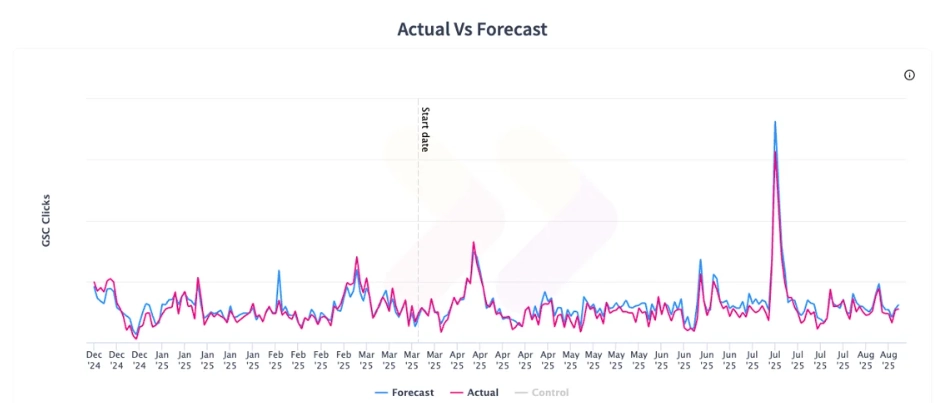
The most important structural decision in a link building experiment is choosing pages that are genuinely comparable. Your test group — the pages that will receive new backlinks — and your control group — the pages that will not — should be as similar as possible across every dimension except the links you are about to add.
Relevant comparability factors include current ranking position and organic traffic volume, content length and format, topical focus and keyword difficulty of the target queries, existing backlink profile at the page level, internal linking structure, and the age of the page. Pages that are already ranking in positions one through three are unlikely to show dramatic movement regardless of new links. Pages that are ranking outside the top fifty may have content or technical problems that links alone will not resolve. Pages ranking between positions eight and thirty are often the most informative test subjects because they are close enough to the top of the results to move with a meaningful link acquisition effort, but not so close that ceiling effects obscure the signal.
Aim for a test group of at least three to five pages and a control group of similar size. A single-page test is rarely conclusive because individual page performance is affected by too many idiosyncratic factors. Larger groups produce more reliable patterns, though they also require more link acquisition budget and more careful management to ensure the control group genuinely remains unchanged.
Document the baseline state of every page in both groups before the experiment begins. Record keyword rankings for each target query, organic traffic from Google Search Console or a comparable analytics source, the number of referring domains at the page level, and any recent content or technical changes. This baseline documentation is what allows you to interpret changes later with any confidence.
Designing the Link Acquisition Phase
Once your pages and hypothesis are defined, you need to specify the type of links you will acquire, the pace of acquisition, and the quality criteria you will apply. Consistency within the experiment matters: if you acquire links through manual outreach and guest posting for some test pages and through a different method for others, you introduce a variable that makes it harder to interpret the results.
For most controlled experiments, manually acquired editorial links from topically relevant publishers are the most informative choice. These links are more likely to be indexed and to carry meaningful signals than links from low-quality directories or automated sources. Topical relevance — the degree to which the linking page and domain cover subject matter related to your target page — is widely considered an important quality dimension, though the precise weight search engines assign to it is not publicly documented.
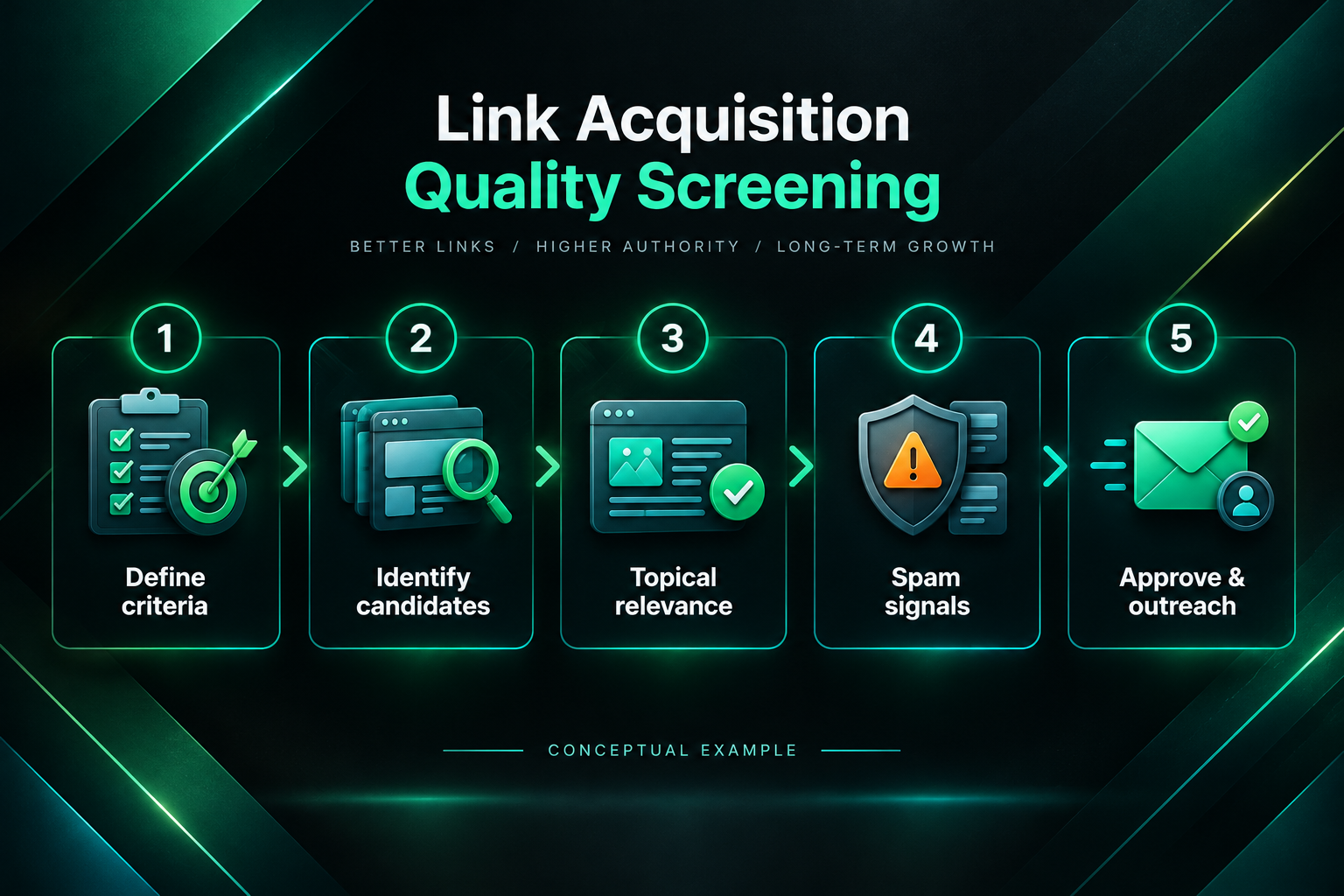
Define minimum quality criteria before outreach begins. Useful criteria might include a minimum number of referring domains to the linking domain, evidence of organic traffic to the linking page, topical alignment between the linking content and your target page, and the absence of obvious spam signals such as excessive outbound links or thin auto-generated content. Third-party metrics from tools such as Ahrefs, Semrush, or Moz — including Domain Rating, Authority Score, and Domain Authority — can help filter candidates, but these are proprietary estimates rather than Google signals. Use them as screening tools, not as guarantees of link value.
Decide on a realistic acquisition pace. Acquiring a large number of links to previously low-authority pages in a very short period can look unnatural and may attract scrutiny. A gradual, consistent acquisition pace over several weeks is generally more defensible and also more realistic given the timelines involved in manual outreach and editorial placement. Most manual outreach campaigns require several weeks from initial contact to published placement, so plan your experiment timeline accordingly.
Controlling for Confounding Variables
Confounding variables are the central challenge of any link building experiment. During the weeks or months your experiment runs, many other things will change: search engine algorithm updates may shift rankings across your entire site, competitors may acquire links or publish new content, seasonal demand patterns may affect traffic to certain queries, and your own team may make content or technical changes that affect the pages being tested.
You cannot eliminate confounding variables, but you can reduce their impact on your interpretation. The most important control is to avoid making other deliberate changes to the test pages during the experiment. Do not update their content, change their internal linking, or alter their metadata while the link acquisition phase is active. If you must make changes, document them precisely so you can account for them when reviewing results.
The control group serves as your baseline for detecting site-wide or market-wide effects. If your control pages and test pages both show ranking improvements during the experiment period, the improvement is more likely attributable to a broader factor — an algorithm update, a seasonal trend, or a general improvement in your site’s authority — than to the specific links you acquired. If only the test pages improve, the link acquisition becomes a more plausible contributing factor, though still not a proven cause.
Keep a log of external events during the experiment. Note the dates of any confirmed or suspected algorithm updates, any significant competitor activity you observe, and any changes to your own site that affect pages outside the test group. This log will be essential when you review results and try to distinguish genuine link effects from background noise.
Measurement: What to Track and How
Decide on your primary and secondary metrics before the experiment begins, and commit to measuring them consistently throughout. Changing your measurement approach mid-experiment to capture a more favorable result undermines the value of the test.
Useful primary metrics for a link building experiment typically include average ranking position for the target keywords of each test page, measured at consistent intervals using a rank tracking tool or Google Search Console data. Organic click-through rate and organic sessions from Google Search Console are also valuable because they reflect actual user behavior rather than a tool’s position estimate, which can vary by location, device, and personalization.
Secondary metrics might include the number of indexed referring domains pointing to each test page, changes in the pages’ visibility for related or secondary keywords, and any measurable changes in referral traffic from the linking pages themselves. Referral traffic is worth tracking separately because it represents a direct business benefit from the links that is independent of any ranking effect.
Establish a measurement cadence before the experiment starts. Weekly ranking checks are common, but daily checks can introduce noise from normal ranking fluctuations that obscures the underlying trend. A weekly or fortnightly snapshot, combined with a monthly review of Google Search Console data, is usually sufficient for most experiments. Record every measurement in a shared document so the data is available for review regardless of who runs the analysis.
Interpreting Results Without Overstating Them
When the experiment period ends, compare the performance of your test pages against your control pages and against their own pre-experiment baselines. Look for patterns rather than individual data points. A single page that improved significantly while others did not may reflect a page-specific factor rather than a link effect. A consistent pattern of improvement across multiple test pages, with the control group remaining relatively stable, is more informative.
Be cautious about attributing causation. Even a well-designed experiment with a clear positive result does not prove that the links caused the improvement. It demonstrates that the improvement is consistent with the hypothesis and that obvious alternative explanations are less likely. That is a meaningful finding, but it is not the same as proof. State your conclusions accordingly: the results are consistent with a positive link effect, or the data does not support the hypothesis, rather than the links definitely caused the ranking improvement.
Consider the practical significance of the result alongside its statistical pattern. A movement from position fourteen to position eleven across your test pages may be statistically detectable but may not translate into a meaningful change in organic traffic or business outcomes, depending on the click-through rate curve for those queries. Conversely, a movement from position eight to position four can produce a substantial traffic increase even if the absolute ranking change is small. Interpret results in the context of what actually matters for your business goals.
If the experiment produces a null result — no detectable difference between test and control pages — consider whether the absence of effect reflects the links, the pages, the measurement period, or the competitive environment. A null result from a well-designed experiment is genuinely informative: it suggests that link acquisition alone may not be sufficient to move these pages, and that content quality, technical factors, or the competitive difficulty of the target queries may need to be addressed first.
Timelines: When to Expect Measurable Effects
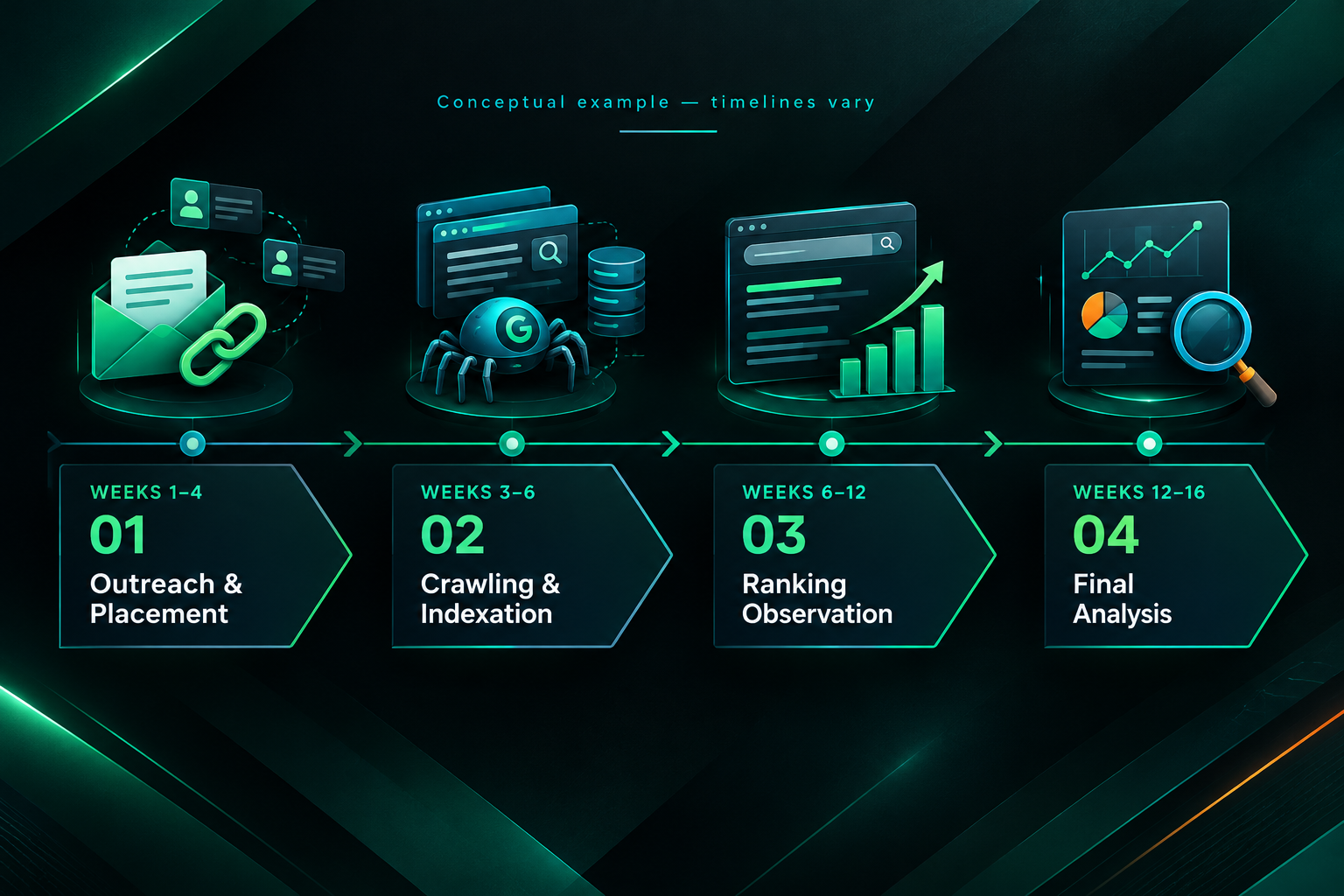
Link building experiments require patience. After a link is published, it must be crawled and indexed by search engines before it can influence rankings. For links on well-crawled, high-traffic domains, this may happen within days. For links on smaller or less frequently crawled sites, indexation may take several weeks. You cannot control this timeline, but you can monitor it by checking whether the linking pages appear in search results and whether the links are visible in Google Search Console’s link report.
Once links are indexed, ranking effects — if they occur — typically take additional weeks to become measurable. The commonly cited range in the SEO community is six to twelve weeks from link acquisition to detectable ranking movement, though this varies considerably depending on the competitiveness of the target queries, the authority of the linking domains, and the existing strength of the target pages. Experiments with timelines shorter than eight weeks often produce inconclusive results simply because the measurement window is too narrow to capture the full effect.
Plan for a total experiment duration of twelve to sixteen weeks from the start of link acquisition to final analysis. This allows time for outreach and placement, indexation, and a sufficient observation window to distinguish a genuine trend from normal ranking volatility.
Risks and Limitations to Acknowledge
Running a link building experiment carries the same risks as any link acquisition activity. Links acquired through methods that violate search engine guidelines — including paid placements that are not properly disclosed, links from low-quality or irrelevant sites, and links acquired through deceptive practices — can attract manual actions or algorithmic penalties regardless of whether they were acquired as part of an experiment. The experimental framing does not change the nature of the links or the policies that apply to them.
There is also a risk of drawing incorrect conclusions from a well-intentioned but underpowered experiment. Small page groups, short timelines, inconsistent measurement, and uncontrolled confounding variables can all produce results that appear meaningful but do not replicate. Treat the findings of any single experiment as a hypothesis to be tested further rather than a definitive answer.
Finally, consider the opportunity cost. The budget and time invested in a controlled experiment could alternatively be spent on a broader link acquisition campaign, content development, or technical SEO improvements. An experiment is most valuable when you genuinely need evidence to make a significant strategic decision — for example, whether to invest heavily in link building for a particular content type or whether links are likely to move pages that have stalled despite good content. If you already have reasonable evidence that link building is appropriate for your situation, a full experiment may be less efficient than a well-managed campaign with careful monitoring.
When Outsourcing Link Acquisition for an Experiment Makes Sense
Running a controlled experiment requires consistent, quality-controlled link acquisition over a defined period. For teams without established outreach relationships or the capacity to manage publisher vetting and content placement in-house, outsourcing the link acquisition component to a specialist provider can improve the consistency and quality of the links acquired during the test.
When working with an external provider for an experimental campaign, be explicit about the requirements: the specific pages to be targeted, the quality criteria for linking domains, the acquisition pace, and the documentation you need to track which links were placed and when. Detailed placement records — including the URL of each linking page, the date of publication, and the anchor text used — are essential for correlating link acquisition events with ranking changes during analysis.
Outsourcing link acquisition does not remove the need for careful experiment design on your side. The hypothesis, page selection, control group, measurement approach, and result interpretation remain your responsibility. A provider can deliver consistent, documented link placements; the analytical framework that makes those placements informative is something you need to establish before the campaign begins.
Frequently Asked Questions
How many pages do I need in a link building experiment to get reliable results?
There is no universally correct number, but experiments with fewer than three pages in each group are generally too small to distinguish a genuine link effect from page-specific variation. Groups of five to ten comparable pages produce more reliable patterns. Larger groups require more links and more careful management but reduce the risk of drawing conclusions from noise.
Can I run a link building experiment on a new website?
New websites present additional challenges for controlled experiments because their baseline rankings are unstable and their pages may not yet be indexed or competitive for target queries. Experiments are generally more informative on established websites with a documented ranking history. For new websites, the priority is usually establishing a baseline of indexed, ranking content before attempting to isolate the effect of link acquisition.
What should I do if an algorithm update happens during my experiment?
Document the update date and assess whether it appears to have affected your control pages. If both test and control pages shift significantly around the same time, the update is a likely confounding factor and the experiment results for that period should be interpreted with caution. In some cases, it may be necessary to extend the measurement window or repeat the experiment after rankings stabilize.
Does anchor text choice affect the experiment results?
Anchor text is one of many signals associated with a backlink, and varying anchor text across placements introduces an additional variable into the experiment. For a cleaner test, use consistent anchor text strategies across the test group — for example, a mix of branded, partial-match, and natural phrase anchors — and document what was used for each placement. Avoid over-optimized exact-match anchor text, which carries its own risks regardless of the experimental context.
How do I know if a link has been indexed?
You can check whether a linking page is indexed by searching for its URL in Google Search. Google Search Console’s Links report will show links that Google has discovered and associated with your site, though there is typically a delay between publication and appearance in the report. Third-party tools such as Ahrefs and Semrush also crawl and index links independently, which can provide an earlier signal, though their coverage is not identical to Google’s.
Is a controlled link building experiment worth the effort for a small business?
For most small businesses, a formal controlled experiment is a significant investment of time and budget relative to the strategic insight it produces. A more practical approach may be to run a carefully monitored link acquisition campaign with documented baselines and consistent measurement, then review the results over time. A formal experiment structure is most valuable when you are making a significant strategic or budget decision that depends on understanding whether link building is likely to move specific pages in your competitive environment.
Deciding Whether a Controlled Experiment Is the Right Next Step
A controlled link building experiment is a useful tool for teams that need direct evidence to inform a significant SEO investment decision, that have the patience to run a properly structured test over twelve to sixteen weeks, and that have pages in a suitable ranking range with a stable technical and content baseline. It is not a shortcut to better rankings, and it is not a substitute for the broader SEO work — content quality, technical health, internal linking — that determines whether links can have a meaningful effect in the first place.
If your pages have unresolved technical issues, content that does not match search intent, or existing spam-related concerns, addressing those factors before running a link experiment will produce more informative results and reduce the risk of misattributing a null result to the links rather than to the underlying page problems. A site-specific assessment is the most reliable way to determine whether your pages are in a position to respond to link acquisition.
For teams considering a structured link acquisition campaign — whether as part of a formal experiment or as an ongoing strategy — working with a provider that offers transparent placement documentation, consistent quality criteria, and clear reporting makes the measurement process considerably more manageable. If you are at the stage of evaluating whether a controlled approach makes sense for your website and goals, a conversation with an experienced link building specialist can help you assess the realistic scope and likely value of the test before committing resources.