Blockchain projects face a distinctive challenge in link building: the technology is complex, the audience is technically sophisticated, and many conventional outreach tactics produce low-quality placements on sites that carry little weight with search engines. Developer education offers a more sustainable path. By creating genuinely useful technical resources—tutorials, documentation, code examples, and learning pathways—blockchain projects can attract editorially given backlinks from developer communities, academic institutions, technical publishers, and industry aggregators. This article explains how that process works, which content formats tend to earn the most links, what realistic timelines and limitations look like, and how to decide whether this approach fits your project’s goals.
Key Takeaways
- Developer education content—tutorials, API documentation, SDKs, and interactive tools—can attract editorially given backlinks from high-authority technical publishers, developer communities, and academic sources.
- The quality of the educational resource matters more than its volume; a single comprehensive, well-maintained guide tends to earn more durable links than a large number of thin articles.
- Link acquisition through developer education is a medium-to-long-term strategy; meaningful backlink accumulation typically requires months of consistent content investment and community engagement.
- This approach works best when the blockchain project has genuine technical depth to share and a target audience of developers, researchers, or technical decision-makers.
- Developer education link building can complement manual outreach and guest posting campaigns, but it is not a substitute for a broader, well-planned link acquisition strategy.
Why Developer Education Attracts Backlinks
Backlinks earned through educational content tend to be editorially given, meaning a publisher or community member chose to link because the resource was genuinely useful rather than because a payment or reciprocal arrangement was involved. Search engines generally treat editorially given links as stronger signals of authority and relevance than links acquired through paid placements or link exchanges, though the actual ranking impact of any individual link depends on many factors including the linking site’s own authority, topical relevance, and the broader competitive landscape.
Developer communities have a strong culture of sharing and citing useful resources. When a blockchain project publishes a well-structured tutorial explaining how to interact with its smart contracts, a clear SDK reference, or an accessible explainer on a complex protocol concept, developers who find it useful will reference it in forum answers, GitHub repositories, technical blog posts, and course materials. Each of those references is a potential backlink. The mechanism is straightforward: useful technical content solves real problems, and people who solve problems using a resource tend to credit it.
The blockchain and Web3 space also has a relatively high concentration of technically literate publishers—developer-focused media outlets, open-source project documentation sites, university blockchain clubs, and research aggregators—that actively curate and link to quality educational material. This creates a more receptive environment for education-driven link acquisition than many other industries where linking behaviour is less consistent.
Content Formats That Tend to Generate the Most Links
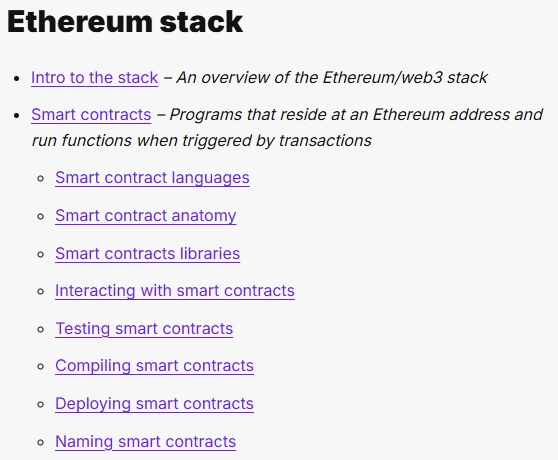
Not all educational content attracts backlinks equally. The formats that consistently earn the most links in developer-focused niches share a common characteristic: they reduce friction for someone trying to accomplish a specific technical task or understand a specific concept.
Comprehensive Technical Documentation
Well-structured API documentation, protocol specifications, and SDK reference guides are among the most reliably linked resources in the blockchain space. When a project’s documentation is clear, accurate, and kept up to date, it becomes the canonical reference that developers cite when writing tutorials, answering questions on Stack Overflow or developer Discord servers, or building integrations. Documentation that is difficult to navigate, incomplete, or outdated tends not to attract organic links and may actively discourage adoption. Investing in documentation quality is therefore both a developer experience decision and a link acquisition decision.
Step-by-Step Tutorials and Code Walkthroughs
Tutorials that walk a developer through a complete, working implementation—deploying a smart contract, integrating a wallet, querying on-chain data—tend to earn links from other tutorial authors, course creators, and community members who recommend them as prerequisites or supplementary reading. The key quality signal is that the tutorial must actually work: code examples should be tested, dependencies should be specified, and common errors should be addressed. Tutorials that produce errors or rely on deprecated libraries quickly lose credibility and stop attracting links.
Conceptual Explainers and Glossaries
Blockchain technology involves a large number of concepts—consensus mechanisms, gas fees, layer-2 scaling, zero-knowledge proofs, tokenomics—that are poorly explained across much of the web. A project that publishes genuinely clear, accurate, and well-sourced explainers on these topics can attract links from journalists, educators, and other developers who need a reliable reference to point readers toward. Glossaries and concept libraries are particularly effective because they serve as persistent reference points rather than time-sensitive news items.
Interactive Tools and Developer Utilities
Tools such as testnet faucets, transaction decoders, ABI encoders, gas estimators, and smart contract auditing checklists attract links because they provide ongoing utility rather than a one-time read. A developer who uses a tool regularly is more likely to mention it in a blog post, recommend it in a community thread, or include it in a curated resource list. Interactive tools also tend to attract links from resource aggregators and developer newsletter curators, which can provide referral traffic alongside the SEO benefit of the backlink.
Research Reports and Original Data
Original research—on-chain data analysis, developer survey results, ecosystem growth metrics, or security vulnerability reports—attracts links from journalists, analysts, and other researchers who cite primary sources. This format requires more investment than a tutorial but can generate a larger number of high-authority backlinks from media outlets and academic sources that would not typically link to a product page or a standard blog post. The research must be methodologically transparent and the data must be verifiable; fabricated or misleading statistics will damage credibility and may attract negative coverage rather than positive links.
Where Blockchain Education Links Come From
Understanding the likely sources of education-driven backlinks helps a project prioritise its content investment and outreach efforts. The most common linking sources in the blockchain developer education space include:
- Developer Q&A platforms: Stack Overflow, Stack Exchange, and Ethereum Stack Exchange threads frequently link to external tutorials and documentation when a community member provides a detailed answer. These links are typically nofollow but contribute to referral traffic and brand visibility.
- GitHub repositories: README files, wiki pages, and issue threads in open-source repositories often link to external documentation and tutorials. Links from GitHub itself are nofollow, but links from project documentation sites hosted on GitHub Pages or similar platforms may carry different attributes.
- Developer blogs and technical media: Publications such as Hacker News, Dev.to, Hashnode, and specialist blockchain media regularly feature or link to high-quality tutorials and research. These placements can carry meaningful authority depending on the specific publisher.
- University and research institution pages: Blockchain courses, reading lists, and research group pages at universities frequently link to accessible technical resources. These links tend to carry strong topical authority signals.
- Curated resource lists and newsletters: Developer newsletters and community-maintained awesome lists on GitHub aggregate the best resources in a given technology area. Inclusion in these lists can generate both backlinks and sustained referral traffic.
- Course platforms and bootcamps: Online learning platforms and coding bootcamps that cover blockchain development often link to supplementary reading material. A well-placed tutorial recommendation from a course with a large student base can produce a meaningful number of secondary links as students share the resource.
Combining Education Content with Manual Outreach
Producing high-quality educational content is a necessary condition for this strategy, but it is rarely sufficient on its own. Most content, even genuinely excellent content, does not attract links passively without some degree of active promotion. Manual outreach—contacting relevant publishers, community managers, course creators, and newsletter editors to make them aware of a new resource—significantly accelerates the link acquisition process.
Effective outreach for developer education content differs from standard guest post outreach. The pitch is not a request to publish content on someone else’s site; it is a notification that a useful resource exists and an explanation of why it would be relevant to the recipient’s audience. This approach tends to be better received in developer communities, where unsolicited content pitches are often viewed with scepticism. The outreach message should be specific about what the resource covers, why it is more useful than existing alternatives, and how it relates to the recipient’s existing content or community interests.
Guest posting on developer-focused publications remains a complementary tactic. A guest article on a respected blockchain or Web3 media outlet that references and links back to a project’s own educational resource can accelerate discovery and provide an additional authoritative backlink. The guest article itself should provide genuine value to the publication’s readers rather than serving primarily as a vehicle for a link; editorial standards at quality developer publications are high, and thin or promotional content is typically rejected.
For blockchain projects that lack the internal capacity to manage both content production and outreach simultaneously, working with a specialist link building service that understands the developer education space can help maintain campaign momentum. A provider experienced in technical niches can identify relevant publishers, manage outreach at scale, and assess placement quality in a way that aligns with the project’s SEO goals.
Assessing Backlink Quality in the Blockchain Space
Not all backlinks earned through developer education carry equal SEO value. Assessing placement quality requires looking beyond a single metric. Third-party domain authority metrics from tools such as Ahrefs (Domain Rating), Semrush (Authority Score), and Moz (Domain Authority) provide a rough indication of a linking site’s overall link profile strength, but they are proprietary estimates rather than Google ranking signals and should not be treated as guarantees of SEO impact.
More meaningful quality indicators for blockchain education backlinks include topical relevance—whether the linking site covers blockchain, Web3, software development, or adjacent technical topics—and editorial context, meaning whether the link appears within a substantive piece of content that genuinely references the linked resource rather than in a sidebar, footer, or unrelated article. The link attribute matters too: a followed link from a relevant technical publisher carries a different signal than a nofollow link from a forum thread, though nofollow links can still contribute to referral traffic and brand awareness.
Backlinks from sites with very low organic visibility, thin content, or patterns suggesting link scheme participation are unlikely to provide meaningful SEO benefit and may carry risk if they form a disproportionate part of a project’s backlink profile. A site-specific backlink audit using tools such as Google Search Console, Ahrefs, or Semrush can help identify whether an existing profile has quality issues that should be addressed before or alongside a new link acquisition campaign.
Realistic Timelines and What to Expect
Developer education link building is a medium-to-long-term strategy. The timeline from content publication to measurable SEO impact involves several stages, each with its own variable duration.
Content production and initial publication typically takes weeks to months depending on the complexity of the resource and the project’s internal capacity. A comprehensive tutorial series or a well-structured documentation site requires meaningful investment before it is ready to attract links. Rushing this stage tends to produce content that does not meet the quality threshold required to earn editorial links from respected publishers.
After publication, outreach and community seeding can begin immediately, but link acquisition is rarely instantaneous. Publishers need time to review a resource, decide whether to reference it, and publish or update their own content. Organic discovery through search and community sharing adds further delay. In practice, a well-executed developer education campaign might begin generating a consistent flow of new backlinks within three to six months of launch, with the backlink profile continuing to grow as the resource gains visibility and reputation.
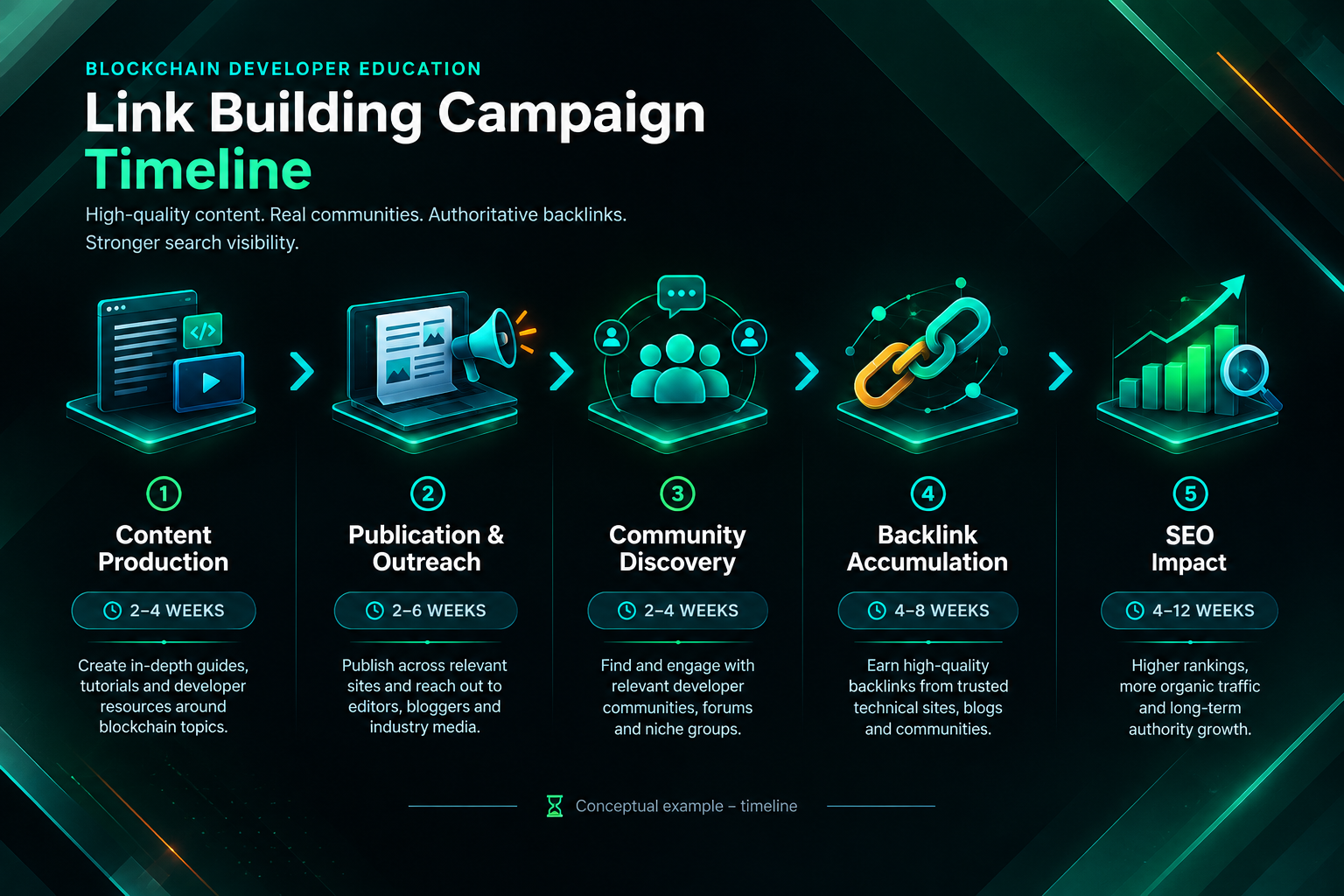
The point at which new backlinks translate into measurable changes in search rankings or organic traffic varies considerably depending on the project’s existing backlink profile, the competitiveness of its target keywords, the technical SEO condition of its website, and the quality and relevance of the content itself. Low organic visibility may have causes unrelated to backlinks—crawling or indexing problems, weak on-page content, search intent mismatches, or strong competition—and link building alone cannot correct every ranking issue. A technical SEO audit is advisable before committing significant resources to a link acquisition campaign.
Limitations and Risks
Developer education link building has genuine strengths, but it also has limitations that are worth understanding before committing to the strategy.
The most significant limitation is resource intensity. Producing high-quality technical content requires subject matter expertise, time, and ongoing maintenance. Blockchain protocols evolve rapidly; tutorials and documentation that are accurate at publication can become misleading or non-functional within months if they are not updated. A resource that stops working or becomes outdated will stop attracting links and may begin attracting negative mentions, which can harm rather than help a project’s reputation.
The strategy is also less predictable than some other link acquisition methods. Manual outreach to a defined list of publishers produces a more foreseeable number of placements within a given timeframe. Education-driven link acquisition depends partly on organic discovery and community behaviour, which are harder to control or forecast. Projects that need a specific number of backlinks within a short timeframe may find that a combination of manual outreach, guest posting, and education content works better than education content alone.
There is also a risk of producing content that is technically accurate but not differentiated enough to attract links. The blockchain developer education space already contains a large volume of tutorials, explainers, and documentation. Content that covers the same ground as existing resources without adding meaningful depth, clarity, or utility is unlikely to earn editorial links regardless of how well it is promoted. Identifying genuine content gaps—topics that are poorly covered, outdated, or explained in ways that do not serve the actual needs of developers—is an important step before investing in content production.
Who This Strategy May Suit
Developer education link building is most likely to be a productive investment for blockchain projects that meet several conditions. The project should have genuine technical depth and a development community or ecosystem that benefits from educational resources. Layer-1 and layer-2 blockchain protocols, smart contract development frameworks, decentralised application platforms, and developer tooling projects are natural fits because their target audiences are developers who actively seek and share technical learning resources.
The strategy is less immediately suitable for blockchain projects whose primary audience is non-technical—retail investors, general consumers, or business decision-makers with no development background—because the content formats that attract developer community links are unlikely to resonate with or be shared by those audiences. Projects in this category may find that digital PR, thought leadership content, or targeted guest posting on business and finance publications provides a better-aligned link acquisition approach.
Projects at an early stage with limited content resources should consider starting with a focused set of high-quality resources—a single well-maintained tutorial series or a clear getting-started guide—rather than attempting to produce a large volume of content simultaneously. A smaller number of genuinely excellent resources tends to attract more links than a larger number of mediocre ones, and the maintenance burden is more manageable.
Frequently Asked Questions
Do nofollow links from developer forums and GitHub provide any SEO value?
Nofollow links do not pass link equity in the same way that followed links do, but they are not entirely without value. They contribute to referral traffic, brand visibility, and the natural diversity of a backlink profile. A backlink profile composed entirely of followed links from a narrow range of sources can appear unnatural; a mix that includes nofollow links from genuine community engagement tends to look more organic. The primary value of forum and GitHub links for most blockchain projects is referral traffic and community credibility rather than direct ranking impact.
How many backlinks does a blockchain project need to rank competitively?
There is no universal answer. The number of referring domains needed to compete for a given keyword depends on the strength of existing competitors’ backlink profiles, the quality and relevance of those links, the on-page content quality, and many other factors. Prescribing a fixed link count without a site-specific competitive analysis would be misleading. A keyword gap analysis using tools such as Ahrefs or Semrush can provide a more grounded estimate of the backlink gap for specific target pages.
Can a blockchain project earn backlinks without producing original content?
Some link acquisition methods—niche edits, link insertions into existing articles, and certain types of manual outreach—do not require the project to produce new content. However, these methods typically require outreach to publishers and may involve editorial review. For developer-focused audiences, original educational content tends to produce more durable and topically relevant links than placement-based methods alone. A combined approach often produces better results than either method in isolation.
How should a blockchain project measure the success of an education-driven link campaign?
Useful metrics include the number of new referring domains acquired over a defined period, the topical relevance and estimated authority of linking sites, changes in organic search visibility for target keywords, and referral traffic from educational content. Changes in third-party domain authority metrics can be tracked but should not be treated as the primary success indicator, as these metrics are proprietary estimates rather than direct ranking signals. Google Search Console provides data on impressions, clicks, and average position that is more directly relevant to actual search performance.
Is it possible to outsource developer education content production?
Yes, but quality control is critical. Technical content for developer audiences requires writers with genuine blockchain development knowledge; content produced by generalist writers without that background tends to contain inaccuracies that damage credibility and fail to attract links from technically literate communities. If outsourcing content production, it is worth establishing a review process involving a subject matter expert who can verify technical accuracy before publication.
How long should a blockchain project maintain its educational resources?
Educational resources should be maintained for as long as the project is active and the underlying technology continues to evolve. Outdated tutorials and documentation not only stop attracting new links but can actively harm a project’s reputation if developers follow instructions that no longer work. Building a content maintenance schedule into the initial planning process—with defined review intervals tied to protocol update cycles—helps prevent this problem.
Deciding Whether Developer Education Link Building Fits Your Blockchain Project
Developer education is one of the most sustainable link acquisition approaches available to blockchain projects with a genuine technical audience. The backlinks it can generate tend to be editorially given, topically relevant, and durable—characteristics that align well with the kind of backlink profile that supports long-term organic search visibility. The strategy also produces compounding benefits beyond SEO: better documentation improves developer experience, reduces support burden, and strengthens community trust.
The honest limitation is that this approach requires sustained investment in content quality and maintenance, and results accumulate over months rather than weeks. Projects that need faster link acquisition—for a new product launch, a competitive keyword push, or a site that has recently lost rankings—may need to combine education content with more direct outreach methods such as manual guest posting or targeted link placement campaigns to achieve their goals within a shorter timeframe.
Before committing to any link building strategy, it is worth assessing the project’s existing backlink profile, technical SEO condition, and content quality to ensure that link acquisition is the right priority and that the approach chosen is well-matched to the project’s audience, goals, and resources. A qualified SEO provider with experience in technical and blockchain niches can help identify the most productive combination of tactics for a specific project’s situation.