Widget backlinks are one of the older link acquisition tactics in SEO, and they remain a source of genuine confusion. Some site owners discover them in their backlink profile without having requested them. Others have used widgets deliberately as a distribution strategy. Either way, the question of whether widget backlinks can cause SEO problems deserves a careful, evidence-based answer rather than a simple yes or no. The risks are real but depend heavily on how the links were created, how they are attributed, and how search engines interpret them at scale.
Key Takeaways
- Widget backlinks can violate Google’s spam policies when they pass PageRank at scale without a rel=”nofollow” or rel=”sponsored” attribute, particularly if the widget was distributed specifically to generate links.
- The SEO risk from widget links depends on the volume, anchor text, link attributes, and whether the pattern looks manipulative to a search engine’s algorithms.
- Discovering widget backlinks in your profile does not automatically mean a penalty is imminent, but a site-specific audit is needed to assess the actual risk level.
- Proactive steps such as requesting attribute changes, removing widgets, or using the Google Disavow Tool may reduce risk, though outcomes vary by situation.
- Editorial link building through manual outreach, guest posting, and digital PR generally carries a more sustainable risk profile than widget-based link distribution.
What Are Widget Backlinks?
A widget backlink is a hyperlink embedded inside a piece of embeddable content — typically a JavaScript widget, badge, calculator, map embed, review plugin, or similar tool — that a website owner installs on their site. When the widget is embedded, the link pointing back to the widget creator’s domain is automatically included in the page’s HTML. The link may point to the creator’s homepage, a product page, or a specific landing page, and it often uses keyword-rich anchor text chosen by the widget creator rather than the embedding site.
Widget links became popular because they offered a seemingly scalable way to earn backlinks passively. A business would create a useful tool — a mortgage calculator, a weather widget, an industry statistics badge — and distribute it freely. Every site that embedded the widget would, in theory, add a backlink to the creator’s domain. At their best, these links were a natural byproduct of a genuinely useful resource. At their worst, they were a deliberate attempt to manufacture backlinks at scale using templated anchor text across hundreds or thousands of unrelated domains.
How Google and Search Engines View Widget Links
Google’s link spam policies draw a clear distinction between links that editorially reflect a genuine recommendation and links that exist primarily to manipulate PageRank. Widget backlinks occupy an ambiguous position because the embedding site may not have consciously chosen to link to the widget creator — the link was simply part of the package they installed.
Google’s documentation on link spam explicitly identifies links embedded in widgets that are distributed across many sites as a practice that can violate its policies, particularly when those links pass PageRank and use optimised anchor text. The concern is not the widget itself but the intent and effect: if a widget is distributed primarily to generate followed links with keyword-rich anchor text pointing to specific pages, that pattern resembles a link scheme rather than an organic editorial endorsement.
Google’s algorithms, including the Penguin update and its successors now integrated into the core algorithm, were designed to identify and devalue unnatural link patterns. A large cluster of identical or near-identical links from diverse, unrelated domains — all using the same anchor text and pointing to the same destination — is precisely the kind of footprint these systems look for. Whether a specific widget link profile triggers algorithmic devaluation or a manual action depends on the scale, the anchor text distribution, the quality of the embedding sites, and the overall composition of the target site’s backlink profile.
Can Widget Backlinks Cause SEO Problems?
Widget backlinks can cause SEO problems under certain conditions, and understanding those conditions is more useful than a blanket warning. The risk level is not uniform across all widget link scenarios.
When Widget Backlinks Are More Likely to Create Problems
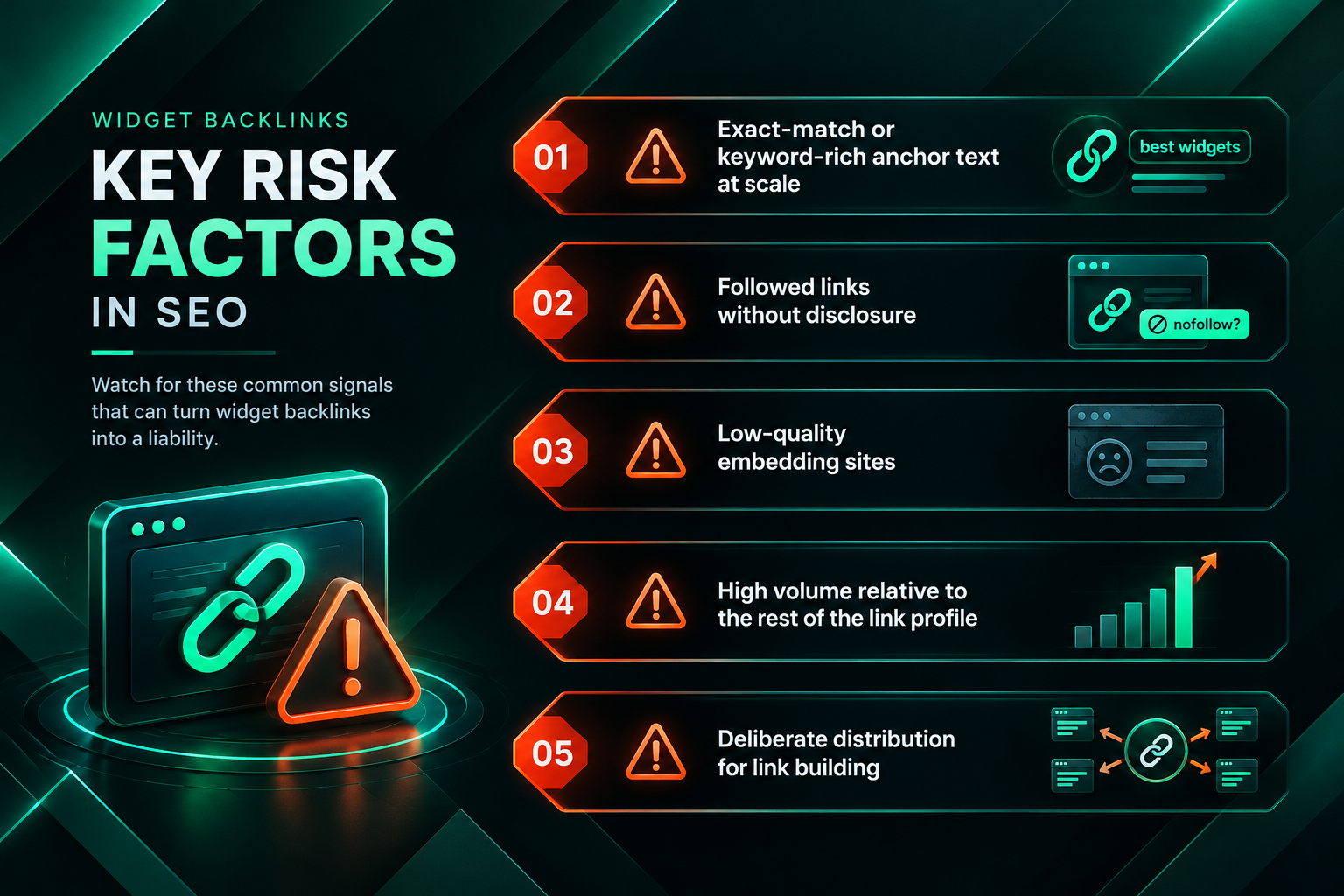
- Exact-match or keyword-rich anchor text at scale: If hundreds of sites embed a widget and every instance uses the same commercial anchor text — for example, “best mortgage rates” or “cheap web hosting” — the resulting anchor text distribution looks unnatural. An over-optimised anchor text profile is one of the clearest signals of a manipulative link pattern.
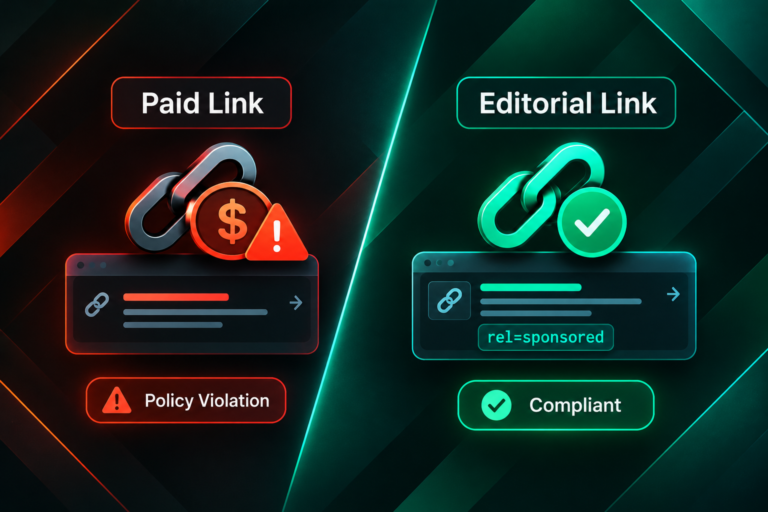
- Followed links without disclosure: Widget links that pass PageRank without a rel=”nofollow” or rel=”sponsored” attribute, and without any editorial intent from the embedding site, are more likely to be treated as manipulative under Google’s current policies.
- Low-quality embedding sites: If the widget has been embedded primarily on thin-content sites, spam blogs, or irrelevant domains, the links may actively harm the target site’s perceived link quality rather than help it.
- High volume relative to the rest of the link profile: A site with 50 editorial backlinks and 800 widget links from a single distribution campaign has a profile that looks disproportionate. The widget links dominate the profile in a way that may attract algorithmic scrutiny.
- Deliberate distribution for link building purposes: If the widget was created and distributed specifically to generate backlinks rather than to provide genuine utility, and this intent is apparent from the pattern, the risk of a policy violation is higher.
When Widget Backlinks Are Less Likely to Create Problems
- Properly attributed links: Widget links that carry a rel=”nofollow” or rel=”sponsored” attribute do not pass PageRank and are therefore less likely to trigger spam-related concerns. Google’s guidance has long recommended that widget creators use these attributes.
- Genuinely useful tools with organic adoption: A widget that became widely embedded because it offered real value — and where the link back to the creator is incidental rather than the primary purpose — is less likely to be treated as manipulative, particularly if the embedding sites are relevant and authoritative.
- Branded anchor text: Widget links that use the creator’s brand name rather than commercial keyword phrases are less likely to create an over-optimised anchor text profile.
- Small volume within a diverse profile: A handful of widget links within a large, diverse backlink profile built primarily through editorial means is unlikely to cause measurable harm on its own.
Assessing the Risk in Your Own Backlink Profile
If you suspect widget backlinks are present in your profile, the first step is to identify and evaluate them before drawing conclusions about their impact. A backlink audit using tools such as Ahrefs, Semrush, or Google Search Console can help you identify the sources, volume, anchor text distribution, and link attributes associated with widget-originated links.
During an audit, look for clusters of links that share identical or near-identical anchor text, originate from a wide range of unrelated domains, and point to the same destination page. Cross-reference the embedding sites against basic quality indicators: do they have real content, genuine traffic, and topical relevance to your industry? Are the links followed or attributed with a nofollow or sponsored tag? How do the widget links compare in volume to the rest of your referring domain profile?
It is worth noting that third-party metrics such as Domain Rating (Ahrefs), Domain Authority (Moz), or Authority Score (Semrush) are proprietary estimates and not direct signals used by Google. They can be useful for a rough quality assessment but should not be treated as definitive indicators of whether a link is safe or harmful. A site-specific audit that considers the full context of your backlink profile, your site’s history, and any existing manual actions in Google Search Console will provide a more reliable picture than any single metric.
If your site has received a manual action notification in Google Search Console related to unnatural links, that is a more definitive signal that action is required. In the absence of a manual action, algorithmic devaluation is harder to confirm, and correlation between a traffic drop and a widget link profile does not prove causation without careful analysis.
What to Do If You Have Problematic Widget Backlinks
If an audit identifies widget backlinks that appear to carry meaningful risk, there are several practical responses. The appropriate course of action depends on the scale of the problem, whether the links are followed, and whether you have any control over the widget or the embedding sites.
Request Attribute Changes or Link Removal
If you created and distributed the widget, the most direct solution is to update the widget code to include a rel=”nofollow” or rel=”sponsored” attribute on the embedded link. Sites that update to the new version of the widget will then serve attributed links. For sites that do not update, you may need to contact webmasters individually to request removal or attribute changes, though response rates for outreach of this kind are typically low.
If the widget links point to your site from a widget you did not create — for example, a third-party plugin that links back to its developer — you can remove the widget from your own site to eliminate the outbound link, but you cannot control links pointing to your domain from other sites that have embedded the same widget.
Use the Google Disavow Tool Carefully
Google’s Disavow Tool allows site owners to request that specific links or domains be ignored when Google assesses their backlink profile. Google recommends using the disavow tool only when you have a significant number of spammy or low-quality links that you cannot have removed, and particularly when you have received or are concerned about a manual action for unnatural links.
Using the disavow tool incorrectly — for example, disavowing high-quality editorial links by mistake — can remove signals that are helping your rankings. The tool should be used with care, ideally after a thorough audit and, where possible, with input from an experienced SEO professional. Disavowing links does not guarantee an immediate or measurable improvement in rankings; outcomes vary depending on the overall profile and the nature of the issue.
Build a Stronger Editorial Link Profile
One of the most sustainable responses to a backlink profile that is disproportionately weighted toward widget or other low-quality links is to invest in building a stronger foundation of editorial links. Links acquired through manual outreach, guest posting on relevant and authoritative publications, digital PR, and niche edits within existing content tend to carry a more credible signal because they reflect a genuine editorial decision by the linking site. Over time, a growing base of high-quality editorial links can improve the overall composition of your profile and reduce the relative weight of any lower-quality links.
Widget Backlinks vs. Editorial Link Building: A Practical Comparison
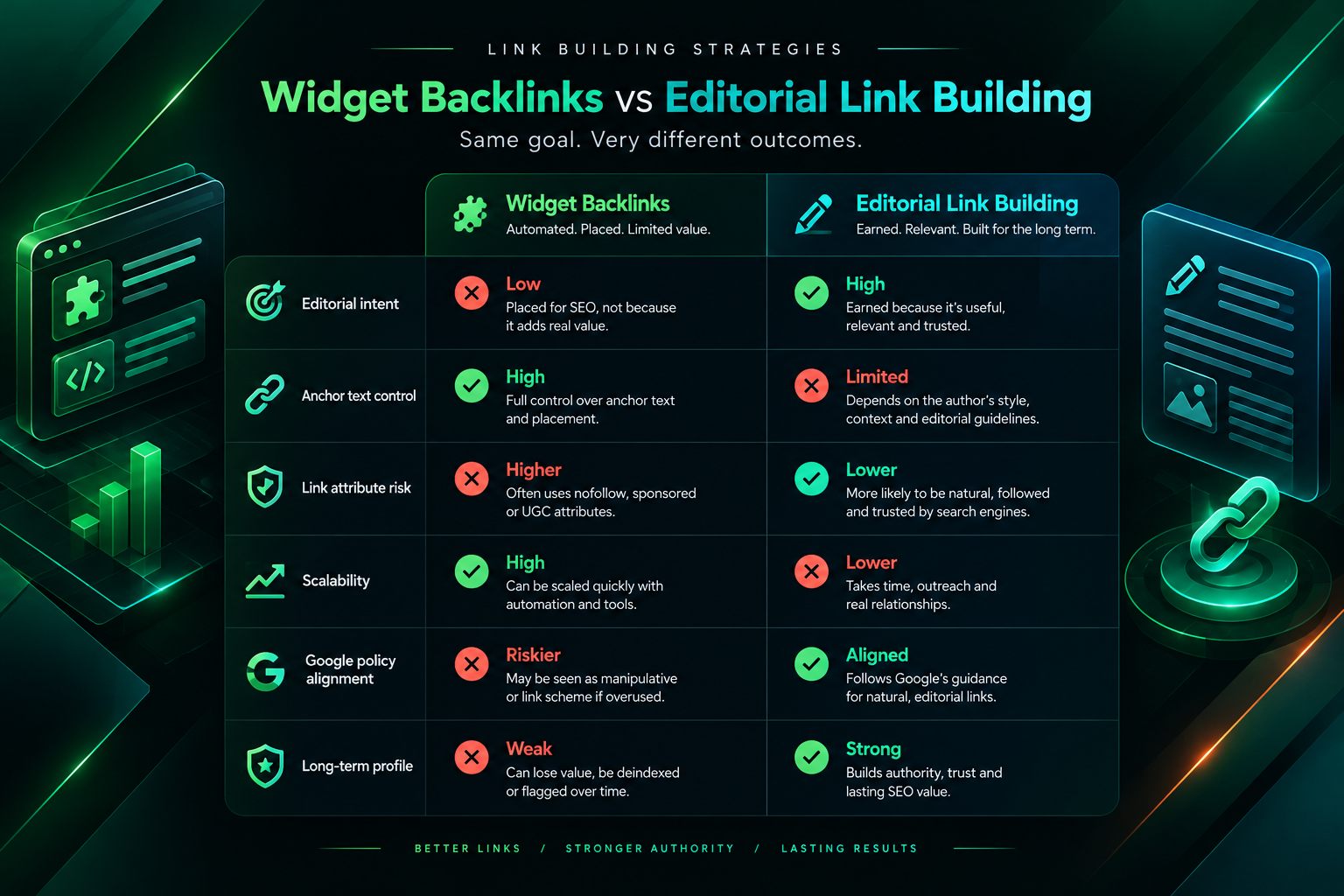
| Factor | Widget Backlinks | Editorial Link Building |
|---|---|---|
| Acquisition method | Embedded automatically via widget installation | Earned through outreach, content, or PR |
| Editorial intent | Absent or incidental | Present — linking site makes a deliberate choice |
| Anchor text control | Controlled by widget creator, often keyword-rich | Negotiated or naturally chosen by publisher |
| Link attribute risk | Higher if followed links at scale | Lower when acquired through genuine editorial process |
| Scalability | High, but risk increases with scale | Moderate — requires ongoing outreach effort |
| Google policy alignment | Potentially problematic without proper attributes | Generally aligned when acquired editorially |
| Long-term profile health | Can create footprint and anchor text issues | Contributes to a diverse, natural-looking profile |
| Topical relevance | Often low — widget embedded on unrelated sites | Can be targeted to relevant publishers and pages |
The Role of Anchor Text in Widget Link Risk
Anchor text is one of the most important factors in assessing whether a widget link profile creates SEO risk. When a widget creator embeds a link with a fixed anchor text — particularly a commercial phrase targeting a specific keyword — and that widget is installed on hundreds or thousands of sites, the result is an anchor text distribution that is highly concentrated around a single phrase. This concentration is one of the clearest footprints of a link scheme.
A natural backlink profile typically contains a mix of branded anchors, generic phrases such as “click here” or “read more”, partial-match variations, and some exact-match commercial terms. When exact-match commercial anchors make up a disproportionate share of a site’s referring link text — particularly from a single source type like widgets — it can attract algorithmic scrutiny. This does not mean that any exact-match anchor is harmful, but the pattern at scale is what creates the risk.
Widget creators who want to use embedded links without creating policy concerns should consider using branded anchor text or a URL rather than keyword-optimised phrases, and should ensure the link carries an appropriate attribute. Sites that discover they have accumulated widget links with problematic anchor text should factor this into their disavow or outreach strategy.
Alternatives to Widget-Based Link Acquisition
For businesses and SEO teams looking to build a sustainable backlink profile, several alternatives to widget-based link distribution offer a more defensible approach under current search engine policies.
Manual outreach and guest posting involve identifying relevant, authoritative publishers in your industry and pitching original content or collaboration opportunities. The resulting links are editorially placed within content that the publisher has chosen to publish, which aligns more closely with what search engines describe as a natural link. The process requires more effort per link than widget distribution, but the links tend to be more topically relevant and carry a clearer editorial signal.
Digital PR focuses on creating newsworthy content, data studies, or resources that journalists and bloggers choose to reference and link to. When successful, digital PR can generate links from high-authority news and media sites that would be difficult to acquire through direct outreach. The approach is less predictable in terms of volume and timing but can produce links with strong topical and authority signals.
Niche edits — also called link insertions — involve placing a link within existing published content on a relevant site. When done through genuine outreach and with the publisher’s editorial involvement, niche edits can be an efficient way to acquire contextually relevant links. The quality and policy alignment of niche edits varies significantly depending on how they are acquired, so the process and publisher selection matter considerably.
Resource link building involves creating genuinely useful content — guides, tools, datasets, or industry references — that other sites choose to link to because the resource adds value for their readers. This approach shares some surface similarity with widget distribution in that a useful asset drives links, but the key difference is that the linking site makes an independent editorial decision to reference the resource rather than having a link embedded automatically.
Frequently Asked Questions
Do all widget backlinks violate Google’s policies?
No. Widget links that carry a rel=”nofollow” or rel=”sponsored” attribute do not pass PageRank and are less likely to be treated as policy violations. The concern arises primarily with followed widget links distributed at scale with keyword-rich anchor text, where the intent appears to be PageRank manipulation rather than providing a useful resource.
Will widget backlinks definitely cause a Google penalty?
Not necessarily. Whether widget links result in a manual action or algorithmic devaluation depends on the volume, anchor text, link attributes, quality of embedding sites, and the overall composition of the target site’s backlink profile. A small number of widget links within a diverse, high-quality profile is unlikely to cause measurable harm. Large-scale widget link campaigns with followed, keyword-rich links carry a higher risk.
How can I tell if widget links are hurting my rankings?
Establishing a direct causal link between widget backlinks and a ranking decline requires careful analysis. A sudden drop in organic visibility coinciding with a Google algorithm update, combined with a backlink profile dominated by widget links with over-optimised anchor text, may suggest a connection — but correlation is not proof of causation. A thorough backlink audit and, where relevant, a review of Google Search Console for manual action notifications will provide more reliable information than traffic trends alone.
Should I disavow all widget backlinks?
Disavowing all widget links indiscriminately is not recommended. Some widget links may be harmless or even beneficial, particularly if they are properly attributed, come from relevant sites, or use branded anchor text. A targeted disavow strategy based on a careful audit — focusing on followed links with problematic anchor text from low-quality or irrelevant domains — is more appropriate than a blanket disavow. Incorrectly disavowing good links can remove positive signals from your profile.
Can I fix widget link issues without the disavow tool?
If you control the widget, updating the code to include appropriate link attributes is the most direct fix. For widgets you do not control, contacting embedding sites to request removal is an option, though response rates are typically low. In cases where removal or attribute changes are not achievable at scale, the disavow tool may be the most practical remaining option, used carefully and selectively.
How long does it take for Google to process disavow requests?
Google does not publish a fixed processing timeline for disavow files. The effect of a disavow submission may take weeks or months to be reflected in how Google assesses a site’s link profile, and any resulting ranking changes — if they occur — may take additional time to become measurable. Results vary and are not guaranteed.
Are widget links ever a legitimate SEO strategy today?
Widget links with proper rel=”nofollow” or rel=”sponsored” attributes can be a legitimate way to drive referral traffic and brand awareness without creating link spam concerns. As a strategy for building PageRank-passing backlinks at scale, however, widget distribution is widely considered high-risk under current search engine policies and is not a recommended approach for sustainable SEO.
Deciding How to Handle Widget Backlinks in Your SEO Strategy
Widget backlinks occupy a genuinely complicated position in SEO. They are not automatically harmful, but the conditions under which they become problematic — followed links, keyword-rich anchor text, large-scale distribution, low-quality embedding sites — are common enough that they warrant careful attention rather than dismissal. If your site has accumulated widget links through a past campaign or through a third-party tool, a structured backlink audit is the appropriate starting point before deciding on any remediation steps.
For businesses and SEO teams building a link acquisition strategy going forward, the clearer path is to invest in editorial link building methods that align with how search engines describe natural, valuable links: links that reflect a genuine decision by the linking site to reference your content, product, or resource. Manual outreach, guest posting, digital PR, and resource-based link building require more sustained effort than widget distribution, but they produce a backlink profile that is more defensible, more topically relevant, and less likely to create the kind of footprint that attracts algorithmic or manual scrutiny.
If you are uncertain about the composition of your current backlink profile or want to discuss a link acquisition approach that is better suited to your site’s goals and risk tolerance, speaking with an experienced link building specialist who can assess your specific situation is a reasonable next step. A site-specific review will always provide more reliable guidance than any general framework, including this one.