

When a publisher asks to be removed from your outreach list, how you respond matters far more than most link builders realise. A poorly handled unsubscribe request can damage your sender reputation, trigger spam complaints, or permanently close the door to a site that might have been a valuable placement in the future. Handled correctly, the same request becomes an opportunity to demonstrate professionalism and protect the long-term health of your outreach programme.
Key Takeaways
- Every unsubscribe request from a publisher must be honoured promptly and completely, both for legal compliance and to protect your outreach sender reputation.
- A clear internal suppression list prevents accidental re-contact and is one of the most practical tools in any outreach workflow.
- How you respond to an opt-out request can preserve a professional relationship even when the publisher does not want further contact right now.
- Unsubscribe management is not just an administrative task — it directly affects deliverability, domain health, and the quality of your active publisher network.
- Agencies running white-label or outsourced link building campaigns need clear processes so that client outreach and their own prospecting lists remain separate and compliant.
Why Publisher Unsubscribe Requests Deserve Serious Attention
Link building outreach operates in a competitive and often crowded email environment. Publishers who manage editorial or guest post enquiries receive a high volume of pitches, and many will eventually ask to be removed from contact lists. Treating these requests as minor administrative tasks is a mistake. Each unhandled or delayed opt-out increases the risk that a publisher marks your email as spam, which can affect deliverability for your entire outreach domain — not just future messages to that one contact.
Beyond deliverability, there are legal considerations. Email marketing and commercial outreach are regulated in many jurisdictions. Regulations such as the CAN-SPAM Act in the United States, GDPR in the European Union, and CASL in Canada each impose obligations around honouring opt-out requests within defined timeframes. While the precise rules vary by jurisdiction and the nature of the communication, the general principle is consistent: once someone asks not to be contacted, continuing to send messages creates legal exposure. Link building outreach that crosses into commercial territory — particularly where a financial arrangement is involved — may fall within the scope of these frameworks depending on how the communication is structured.
For agencies managing outreach on behalf of clients, the stakes are higher still. A suppression failure that results in a spam complaint against a client’s domain can affect that client’s email deliverability across all their business communications, not just their SEO campaigns. This is why professional outreach operations treat unsubscribe management as a core workflow function rather than an afterthought.
What a Publisher Unsubscribe Request Actually Means
Publishers opt out of outreach contact for a range of reasons. Some have a blanket policy against accepting guest posts or paid placements. Others may have received too many low-quality pitches and decided to close their inbox to new enquiries. Some are simply too busy, and others may have had a negative experience with a previous outreach contact. Understanding the likely reason — where it is apparent from the message — can help you respond appropriately and decide whether any follow-up is warranted at all.
An unsubscribe request is not always a permanent rejection of the idea of collaboration. A publisher who says “please remove me from your list” may simply mean they do not want to receive further cold outreach. If a genuine editorial relationship develops through other channels later, that is a different situation. However, this distinction should never be used as a justification for continued contact. The default response to any opt-out must be immediate removal and no further outreach unless the publisher initiates contact themselves.
It is also worth distinguishing between different types of opt-out signals. A direct reply asking to be removed is the clearest form. A bounce-back or auto-reply stating that the address does not accept unsolicited pitches is a functional equivalent. A social media message asking to stop contact should be treated with the same seriousness. Any signal that a publisher does not want further outreach should trigger the same suppression process.
Building and Maintaining a Publisher Suppression List
A suppression list — sometimes called a do-not-contact list or opt-out list — is the practical foundation of compliant outreach management. Every outreach operation, whether run in-house or through an outsourced provider, should maintain one. The suppression list records every domain, email address, or contact that has asked not to be contacted, along with the date of the request and the channel through which it was received.
The suppression list must be checked before any new outreach sequence is launched. This sounds straightforward, but it requires discipline in practice, particularly when outreach is managed across multiple campaigns, clients, or team members. A publisher who opted out of one campaign six months ago should not receive a fresh pitch for a different client’s campaign today. If your outreach tool or CRM does not automatically cross-reference the suppression list before sending, that check needs to happen manually as part of campaign setup.
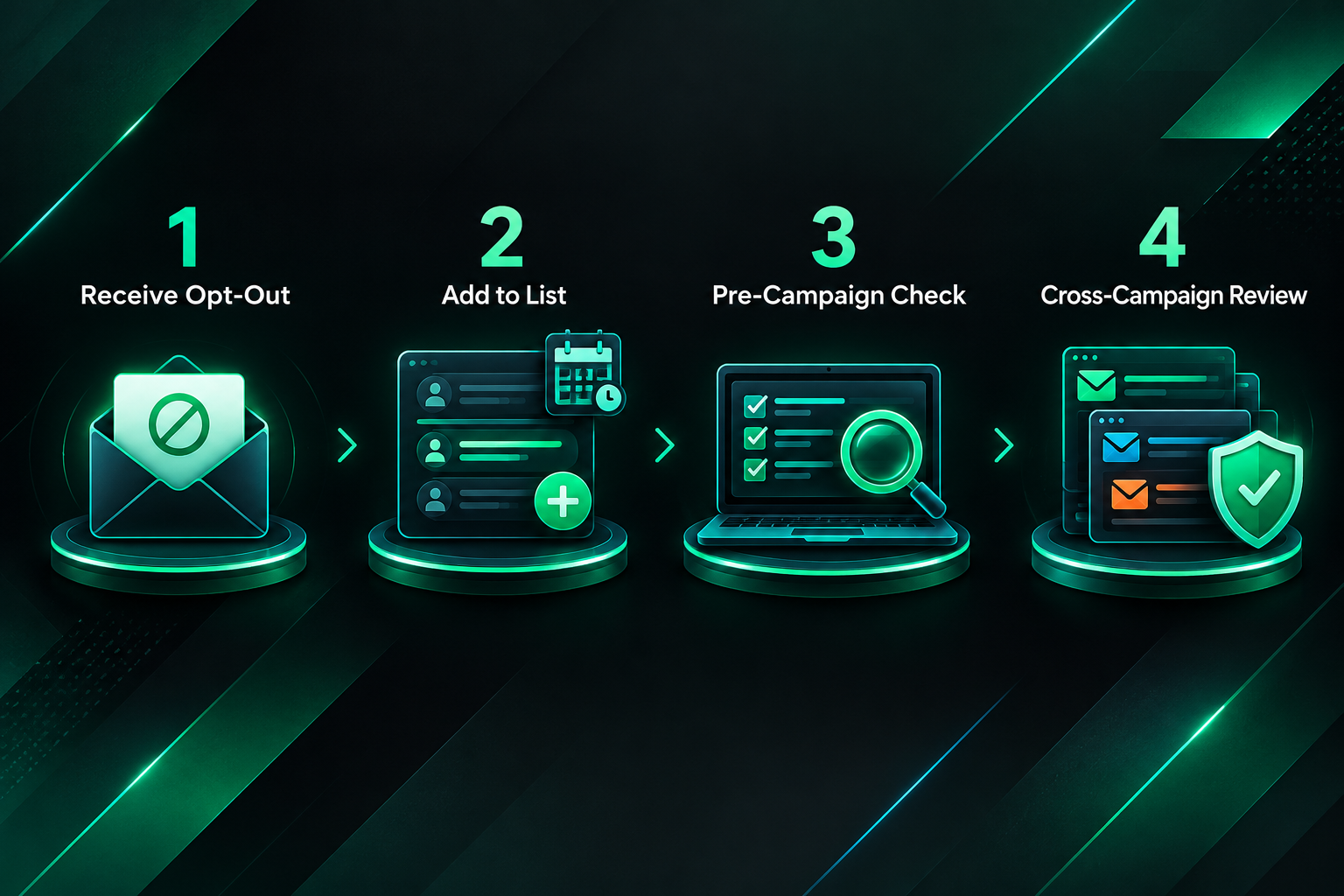
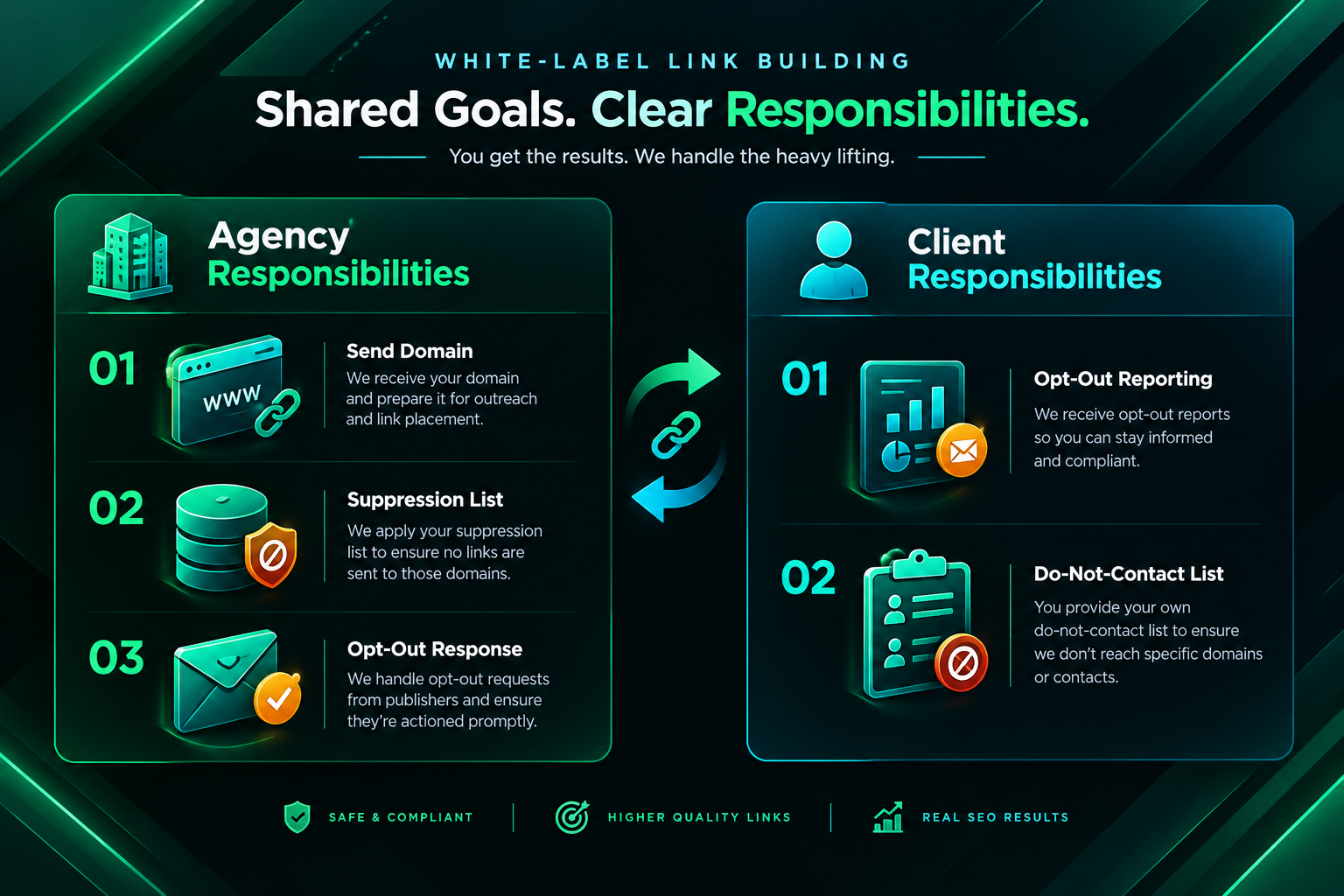
For agencies running outsourced link building campaigns, it is worth clarifying with clients whether their own internal do-not-contact lists should be imported before outreach begins. Some clients have existing relationships with publishers that they want to protect, and cold outreach to those contacts — even if well-intentioned — can create friction. Importing client-supplied suppression data at the start of a campaign is a straightforward way to avoid this problem.
The suppression list should be treated as a living document. New opt-outs are added as they arrive. Periodically reviewing the list for duplicates or outdated entries keeps it manageable. If your outreach operation grows to cover multiple niches or geographies, consider whether a single unified list or separate lists per campaign type better suits your workflow — the important thing is that no opted-out contact falls through the gaps.
How to Respond to an Unsubscribe Request Professionally
The response to a publisher opt-out request should be prompt, courteous, and unambiguous. A brief acknowledgement that confirms the removal and thanks the publisher for their time is usually sufficient. There is no need for a lengthy explanation or an attempt to re-pitch the collaboration. The goal of the response is to close the interaction professionally, not to reopen a conversation the publisher has chosen to end.
A suitable response might confirm that the contact has been removed from the outreach list, that no further messages will be sent, and that you appreciate them taking the time to reply. Keeping the tone neutral and respectful leaves the interaction on a positive note. Publishers talk to each other, and a professional response to an opt-out is a small but meaningful signal of how your outreach operation conducts itself.
What you should avoid in your response is equally important. Do not ask the publisher to reconsider. Do not offer an alternative pitch in the same message. Do not ask for a reason unless the publisher has volunteered one and you are genuinely using the feedback to improve your targeting. Do not send a follow-up message a few days later to check whether they received your removal confirmation. One clear, professional acknowledgement is enough.
If the opt-out request arrives mid-sequence — meaning the publisher has already received one or two messages in an automated outreach sequence — pause or cancel the remaining messages immediately. Allowing a scheduled follow-up to send after an opt-out has been received is one of the most common and damaging mistakes in outreach management. Most outreach platforms allow you to cancel a sequence for a specific contact; this should be done as soon as the opt-out is identified, not at the end of the working day.
Outreach Tool Settings and Automation Considerations
Many outreach platforms include built-in opt-out or unsubscribe functionality. When a recipient clicks an unsubscribe link or replies with a recognised opt-out phrase, the platform can automatically pause or stop further messages to that contact. Understanding how your specific tool handles these signals — and whether the suppression applies only to the current campaign or to all future campaigns within the same account — is essential before you rely on automation to manage compliance.
Automated opt-out detection is a useful safeguard, but it should not replace a human review process. Opt-out signals do not always arrive in a format that automation can reliably detect. A publisher might reply with a polite but informal message that does not contain a standard opt-out phrase. A reply might come from a different email address than the one you contacted. These edge cases require a team member to review replies regularly and apply suppression manually where the automated system has not caught the signal.
When using outreach tools that support multiple workspaces or client accounts, check whether suppression lists are shared across workspaces or siloed within each one. If a publisher opts out of outreach sent from one client’s campaign, that suppression may not automatically carry over to another client’s campaign running in a separate workspace. Establishing a cross-campaign suppression protocol — even if it requires a manual export and import step — prevents the same publisher from receiving outreach from multiple campaigns managed by the same agency.
The Impact of Unsubscribe Management on Sender Reputation and Deliverability
Sender reputation is the aggregate assessment that email providers assign to a sending domain and IP address based on engagement signals, complaint rates, bounce rates, and other factors. A high complaint rate — driven by recipients marking messages as spam rather than replying to opt out — is one of the most damaging signals for sender reputation. Publishers who do not receive a timely response to an opt-out request are more likely to mark subsequent messages as spam, which directly harms deliverability for all outreach sent from that domain.
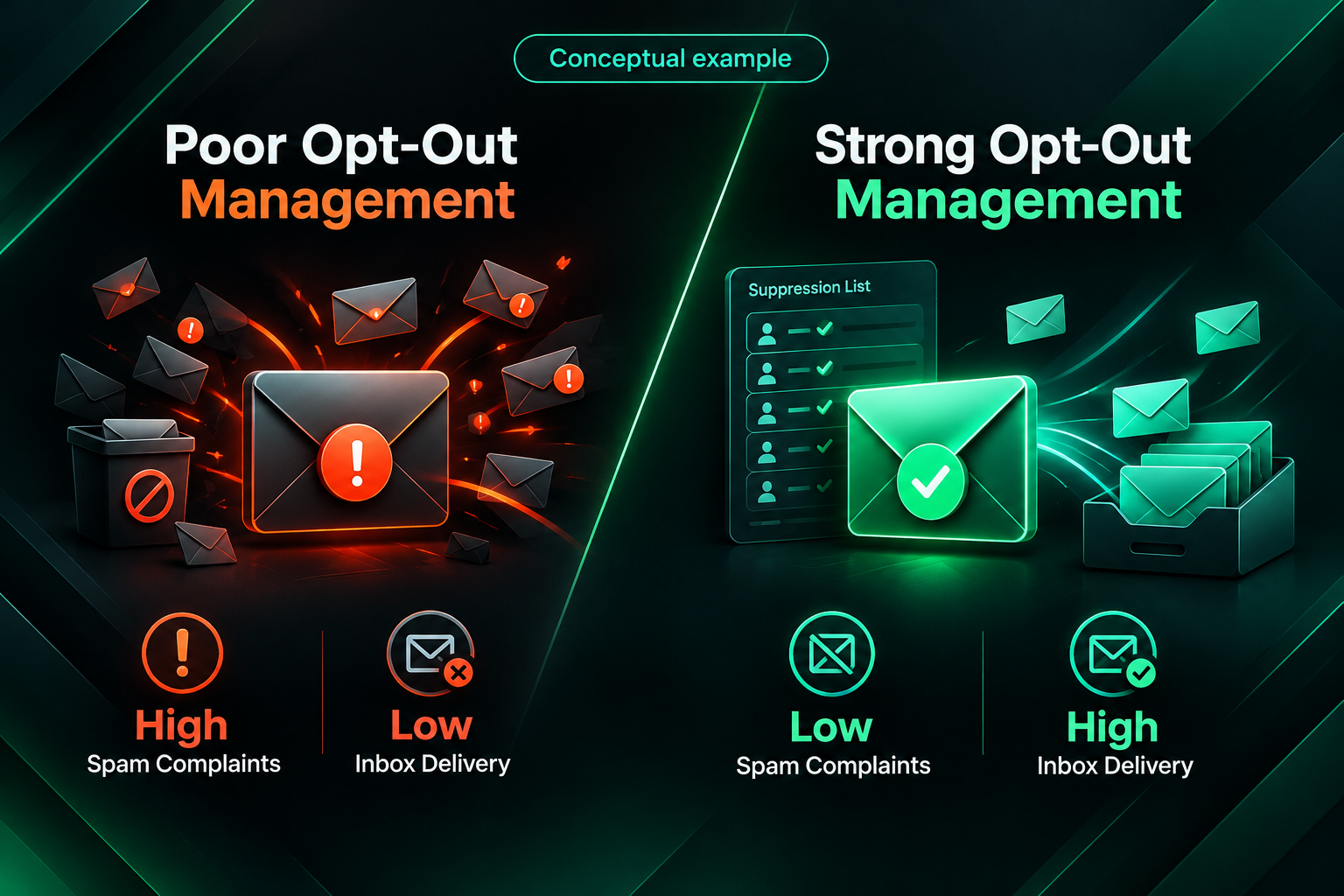
Maintaining a clean, actively managed suppression list reduces complaint rates by ensuring that opted-out contacts do not receive further messages. This has a measurable effect on deliverability over time. Outreach domains with low complaint rates and healthy engagement signals are more likely to reach the primary inbox rather than spam or promotions folders, which improves the overall effectiveness of the outreach programme.
For link building campaigns specifically, deliverability matters because outreach volume is typically modest compared to mass email marketing. Each message represents a targeted pitch to a specific publisher, and a message that lands in spam is effectively wasted. Protecting sender reputation through disciplined opt-out management is therefore not just a compliance measure — it is a practical investment in the efficiency of the entire outreach operation.
Opt-Out Management in White-Label and Outsourced Link Building Campaigns
When link building outreach is outsourced to an agency or managed under a white-label arrangement, the responsibility for opt-out compliance needs to be clearly defined in the working agreement. The agency conducting the outreach is typically the party with direct control over the sending domain, the outreach tool, and the publisher contact list. This means the agency bears primary operational responsibility for honouring opt-out requests promptly and maintaining the suppression list.
However, the client whose brand or domain is associated with the campaign also has an interest in how opt-outs are handled. A publisher who receives a poorly managed opt-out experience may form a negative impression of the client’s brand, even if the outreach was conducted entirely by the agency. For this reason, white-label outreach agreements should specify the opt-out response timeframe, the suppression list management process, and how opt-out data is reported to the client.
Agencies managing multiple client campaigns simultaneously need robust internal processes to prevent suppression failures. A publisher who opts out of outreach for one client should not receive a pitch for a different client managed by the same agency, particularly if the outreach is sent from a shared domain or uses a shared contact database. Separating client outreach infrastructure — including sending domains, contact lists, and suppression records — reduces this risk, though it adds operational complexity that needs to be factored into campaign planning.
Using Opt-Out Feedback to Improve Outreach Quality
Opt-out requests, while requiring immediate action, also carry useful information about the quality and targeting of your outreach. A high opt-out rate from a particular publisher segment may indicate that your targeting criteria are too broad, that your pitch is not relevant to the publishers you are contacting, or that your outreach frequency is higher than the audience expects. Tracking opt-out rates by campaign, niche, or outreach sequence can help identify patterns that inform future targeting decisions.
Publishers who take the time to explain why they are opting out — even briefly — are providing direct feedback that is worth recording. Common reasons include receiving too many pitches, not accepting guest posts, having a policy against paid placements, or finding the pitch irrelevant to their editorial focus. Each of these signals points to a specific improvement in prospecting or pitch personalisation. Logging this feedback alongside the suppression record creates a useful reference for future campaign planning.
It is important to use this feedback constructively rather than defensively. The goal is not to argue with the publisher’s decision but to understand whether the outreach process can be refined to reduce opt-outs from genuinely relevant publishers. A well-targeted outreach programme that reaches publishers whose editorial focus genuinely aligns with the content being pitched will naturally generate fewer opt-outs than a broad, volume-driven approach.
Frequently Asked Questions
How quickly should I honour a publisher’s unsubscribe request?
The general best practice is to process opt-out requests within one to two business days. Some regulations, such as CAN-SPAM, specify a maximum timeframe of ten business days, but acting faster than the legal minimum is both more professional and more protective of your sender reputation. If you use an outreach platform with automated opt-out detection, the suppression can often be applied immediately upon receipt of the request.
Do I need to keep a record of unsubscribe requests?
Yes. Maintaining a dated record of each opt-out request — including the contact details, the date received, and the channel — is important for both compliance and operational purposes. If a publisher later claims they were contacted after opting out, a clear suppression record demonstrates that the request was received and acted upon. Most outreach platforms log this automatically, but it is worth verifying that the log is accessible and exportable.
What if a publisher who previously opted out contacts me first?
If a publisher initiates contact after previously opting out, you may respond to their enquiry. The opt-out request applies to unsolicited outreach from your side; it does not prevent a publisher from choosing to reach out to you. However, treat this as a fresh interaction and do not assume that the publisher’s inbound contact means they want to be re-added to your outreach list for future campaigns.
Should I remove the publisher’s entire domain or just the specific email address?
Where possible, suppress the entire domain rather than just the individual email address. A publisher who opts out is typically expressing a preference on behalf of their site, not just their personal inbox. Contacting a different email address at the same domain after an opt-out has been received is likely to be perceived as circumventing the request, which can damage the relationship and increase the risk of a spam complaint.
How do I handle opt-outs when running outreach for multiple clients?
Establish a clear protocol that specifies whether suppression applies per client campaign or across all campaigns managed by your agency. The safest approach is to apply suppression across all campaigns when a publisher opts out, particularly if your outreach uses shared infrastructure. Document this protocol in your client agreements so that expectations are aligned from the start of the engagement.
Can a publisher who opted out ever be re-contacted?
Generally, no — not through unsolicited outreach. The only appropriate scenario for re-contact is if the publisher explicitly invites further communication, for example by reaching out to you directly or by publicly announcing that they are accepting pitches again. Even then, proceed cautiously and ensure the re-contact is clearly relevant and respectful of the publisher’s previous experience with your outreach.
Making Unsubscribe Management a Strength of Your Outreach Programme
Handling publisher unsubscribe requests well is not simply about avoiding complaints or staying on the right side of email regulations. It is a reflection of how seriously an outreach operation takes the quality of its publisher relationships. Link building depends on trust — publishers need to trust that the people pitching them are professional, relevant, and respectful of their editorial standards. An outreach programme that handles opt-outs promptly, maintains a clean suppression list, and responds to removal requests with courtesy signals exactly that kind of professionalism.
For businesses and agencies evaluating how to structure their outreach operations, opt-out management is worth treating as a first-class workflow concern rather than a compliance checkbox. The practical benefits — better deliverability, lower complaint rates, a cleaner and more accurate publisher database, and a stronger professional reputation in the niche — compound over time and contribute directly to the effectiveness of the link acquisition programme as a whole.
If your current outreach process does not have a clearly documented suppression list protocol, a defined response timeframe for opt-out requests, or a cross-campaign suppression check built into campaign setup, these are practical improvements worth implementing before scaling outreach volume. A well-managed publisher relationship, even one that begins with an opt-out, is more valuable in the long run than a high-volume outreach programme that erodes trust through poor contact management.


