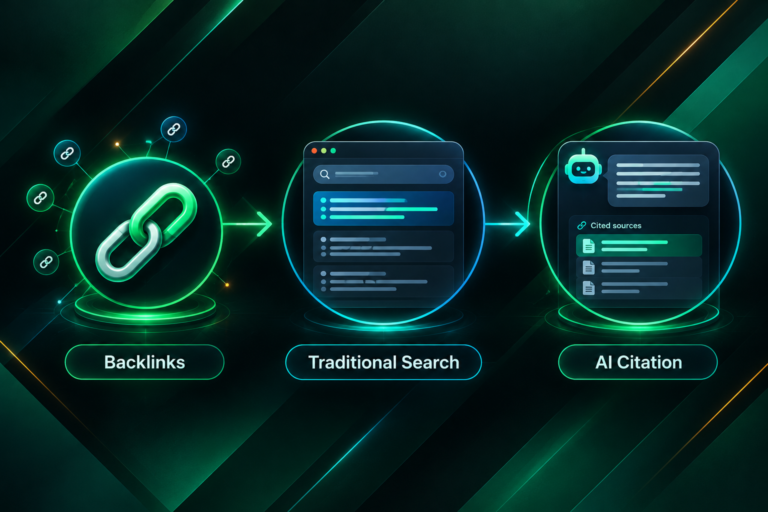
When you have a long list of pages that need updating, backlink data gives you one of the most reliable signals for deciding where to start. Pages that have earned referring domains carry accumulated link equity that can be lost, diluted, or wasted if the content becomes outdated, misaligned with search intent, or technically broken. Knowing how to read that data and act on it systematically can help you protect existing authority while improving the organic performance of pages that already have a head start.
Key Takeaways
- Pages with meaningful backlink profiles should generally be refreshed before pages with no external links, because the link equity they carry amplifies the impact of improved content.
- Backlink data alone is not enough — you also need to assess organic traffic trends, keyword rankings, content quality, and search intent alignment before deciding which pages to prioritize.
- A content refresh does not automatically improve rankings; technical issues, crawling problems, or a fundamental mismatch with search intent may need to be resolved first.
- Protecting existing backlinks during a refresh requires careful URL management, internal linking, and redirect planning to avoid losing the equity those links pass.
- Refreshing linked pages and building new links to them are complementary strategies — improving content quality can make a page more worthy of the links it already has and more likely to attract new ones.
Why Backlinks Should Influence Your Refresh Priority
Not all pages on a website are equal from a link equity perspective. Some pages have accumulated backlinks from multiple referring domains over months or years, while others have never attracted a single external link. When you refresh a page that already has a meaningful backlink profile, you are working with an asset that search engines have already recognized to some degree. Improving the content on that page can help it make better use of the authority those links may be passing, whereas refreshing a page with no backlinks starts from a weaker position regardless of how good the updated content becomes.
This does not mean pages without backlinks should be ignored. It means that when resources are limited — which they almost always are — backlink data provides a practical filter for identifying which refresh projects are likely to deliver the most measurable SEO benefit in the shortest time. A page ranking on page two or three with a solid referring domain count is often a better candidate for a refresh than a page with no links that has never ranked at all.
It is also worth noting that backlinks pointing to a page that has deteriorated in quality or relevance may be underperforming their potential. If a page once ranked well, attracted links, and has since declined in traffic, the backlinks have not necessarily lost their value — the content may simply no longer be earning the rankings those links could support. Refreshing that content is one way to attempt to recover that performance, though results will depend on competition, search intent, and other factors specific to the website and market.
How to Audit Your Backlink Profile Before Prioritizing
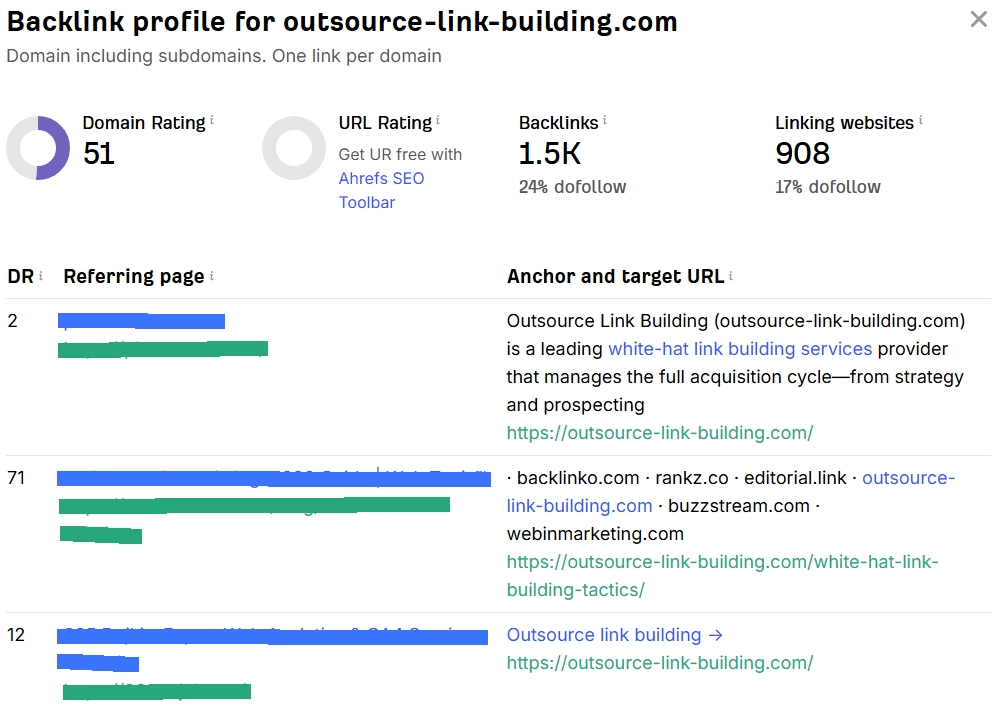
Before you can prioritize effectively, you need a clear picture of which pages have backlinks, how many referring domains point to each page, and what the quality of those links looks like. Tools such as Ahrefs, Semrush, and Majestic can export referring domain data at the page level, which is the starting point for any backlink-informed refresh prioritization process.
When reviewing this data, focus on referring domains rather than raw backlink counts. A single domain linking to a page multiple times counts as one referring domain, and the number of unique referring domains is generally a more stable signal of a page’s link equity than the total number of backlinks. That said, proprietary metrics such as Ahrefs’ Domain Rating, Semrush’s Authority Score, and Majestic’s Trust Flow are tool-specific estimates, not Google-provided signals. They can be useful for relative comparisons within your own site, but they should not be treated as direct measures of how Google values a given page or domain.
Once you have a page-level export of referring domains, cross-reference it with organic traffic data from Google Search Console or Google Analytics. This comparison reveals several useful patterns:
- High referring domains, declining traffic: These pages have link equity but may have content that has become outdated, been overtaken by competitors, or drifted from current search intent. They are strong candidates for a refresh.
- High referring domains, stable or growing traffic: These pages are performing well. A lighter update to keep content current may be appropriate, but a major overhaul carries risk of disrupting what is already working.
- Low referring domains, declining traffic: These pages may need both a content refresh and a link building effort, but the refresh alone is unlikely to produce significant ranking improvements without additional authority.
- High referring domains, never ranked well: These pages may have a search intent problem, a content quality issue, or a technical barrier that backlinks alone cannot overcome. A refresh should address the root cause, not just update statistics or dates.
Building a Prioritization Framework Using Backlink and Performance Data
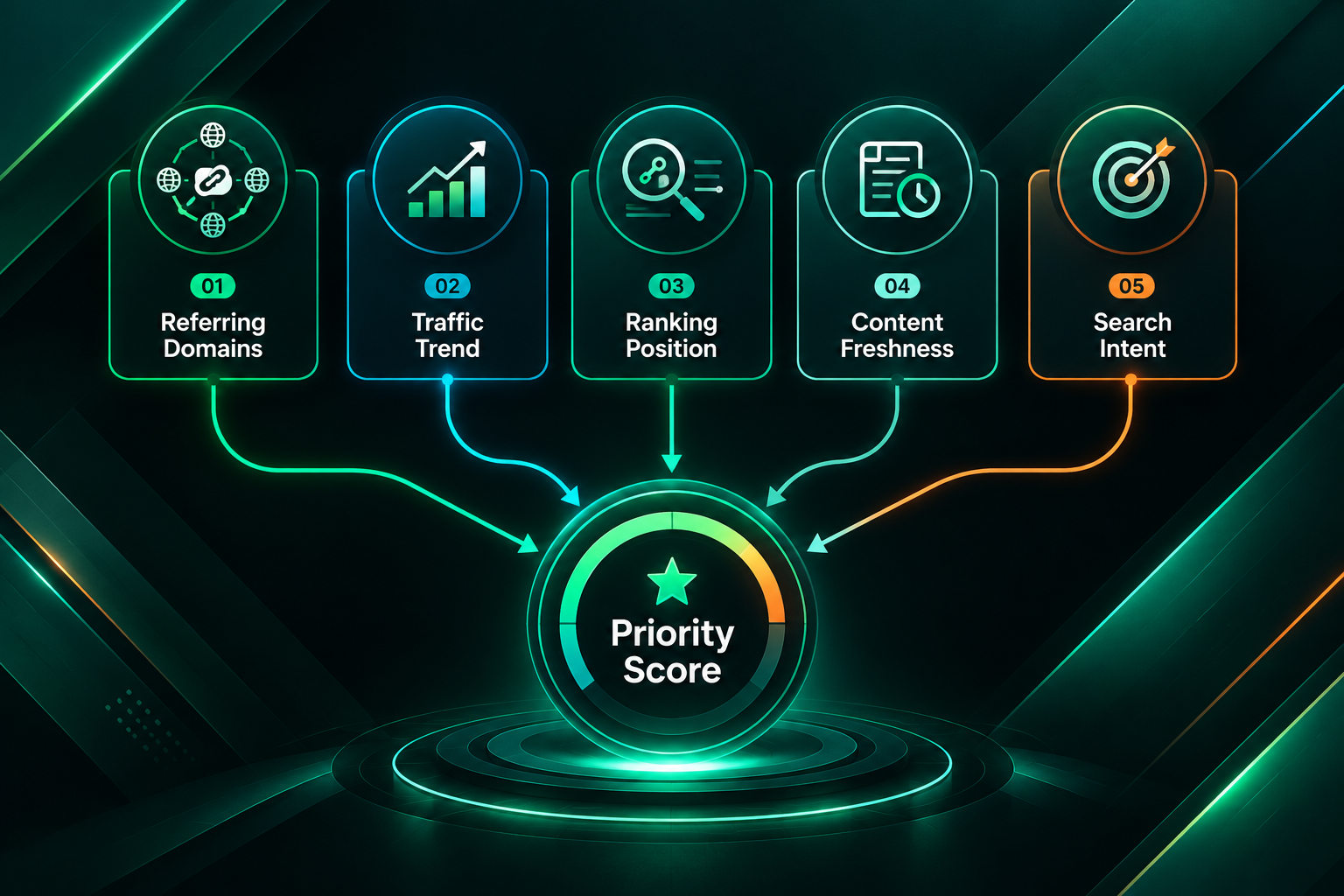
A practical prioritization framework combines backlink data with at least two or three additional signals so that decisions are based on a fuller picture of each page’s situation. The following factors are worth including in any scoring or ranking system you use to sort refresh candidates.
Referring Domain Count
The number of unique referring domains pointing to a page is the primary backlink signal for prioritization. Pages with more referring domains from editorially relevant sources carry more potential link equity. When comparing pages within the same website, a higher referring domain count generally means a refresh will have more to work with in terms of existing authority.
Organic Traffic Trend
A page that has lost significant organic traffic over the past six to twelve months is a stronger refresh candidate than one that has been stable. Traffic decline combined with a meaningful backlink profile suggests the content is underperforming relative to its link equity, which is exactly the situation where a refresh may help close the gap. Use Google Search Console’s performance report to identify pages where impressions or clicks have dropped without a corresponding loss of referring domains.
Keyword Ranking Position
Pages ranking between positions six and twenty for their primary keyword are often described as being in a range where content improvements may have a measurable impact on rankings. Pages already in the top three may need only minor updates, while pages ranking below position thirty may have deeper issues that a refresh alone will not resolve. Backlink data helps you identify which of these mid-range pages already have the authority to move up if the content improves.
Content Freshness and Accuracy
Some topics require regular updates to remain accurate — industry statistics, software features, regulatory information, pricing, and best-practice guidance all change over time. A page covering a time-sensitive topic that has not been updated in two or more years is likely to have lost relevance even if its backlink profile remains intact. Prioritize pages where the content gap between what is published and what is currently accurate is widest, particularly when those pages also have referring domains that could amplify the benefit of an update.
Search Intent Alignment
A page may have backlinks and reasonable traffic but still be misaligned with the dominant search intent for its target keyword. If the keyword now returns mostly comparison pages and your page is a product landing page, or if the keyword now returns how-to guides and your page is a listicle, a refresh may need to go beyond updating facts and actually restructure the content format. Misalignment with search intent is one of the most common reasons a well-linked page underperforms, and it is worth assessing before committing to a refresh strategy.
Internal Linking and Page Architecture
Pages that receive backlinks but are poorly integrated into the site’s internal linking structure may not be passing link equity effectively to related pages. As part of a refresh, reviewing and improving internal links from and to the target page can help distribute authority more efficiently across the site. This is a relatively low-effort improvement that is easy to overlook when focusing only on the content itself.
Protecting Link Equity During a Content Refresh
One of the most important technical considerations when refreshing a page that has backlinks is ensuring that the link equity those backlinks pass is not accidentally lost during the update process. Several common mistakes can undermine the value of a refresh even when the content improvements are substantial.
The most significant risk is changing the URL of the page without implementing a permanent 301 redirect from the old URL to the new one. If external websites are linking to a specific URL and that URL changes without a redirect, those backlinks effectively stop passing equity to the updated page. Before refreshing any page with referring domains, confirm that the URL will remain the same or that a redirect plan is in place and tested.
Consolidating multiple related pages into a single refreshed page is sometimes the right approach when several thin or overlapping pages each have some backlinks. In this case, 301 redirects from the consolidated pages to the primary URL can help combine the link equity that was previously spread across multiple pages. This approach requires careful planning to avoid losing content that may be serving different search intents, but when done correctly it can strengthen a single page’s authority meaningfully.
Removing content sections, changing headings significantly, or altering the primary topic of a page can also affect how search engines interpret the page’s relevance to the keywords that attracted its backlinks in the first place. A refresh should improve and update the existing content rather than replace it with something fundamentally different, unless the original content was genuinely misaligned with the page’s intended purpose.
When a Content Refresh Is Not Enough
Refreshing content on a page that has backlinks can improve its performance, but it is not a solution to every ranking or traffic problem. Several situations exist where a refresh alone is unlikely to produce meaningful results, and understanding these limitations helps set realistic expectations.
If a page has technical issues such as slow load times, crawling errors, or indexing problems, those issues need to be resolved before or alongside a content refresh. A well-written, up-to-date page that search engines cannot crawl or index properly will not benefit from the link equity pointing to it. Google Search Console’s coverage and core web vitals reports are useful starting points for identifying technical barriers.
Pages in highly competitive niches where the top-ranking results come from websites with substantially larger and more authoritative backlink profiles may not move significantly from a content refresh alone. In these cases, a refresh is still worthwhile for maintaining the quality of existing content, but it may need to be combined with an ongoing link acquisition effort to close the authority gap with competitors.
If a page’s backlinks come primarily from low-quality, irrelevant, or spammy sources, the referring domain count may be misleading. A large number of referring domains from low-quality websites does not carry the same potential benefit as a smaller number from editorially relevant, authoritative sources. In this situation, a disavow review may be appropriate before or alongside a refresh, though disavow decisions should be made carefully and ideally with input from an experienced SEO professional, as incorrect disavow files can cause unintended harm.
Combining Content Refreshes With Link Building
A content refresh and a link building campaign are most effective when they work together rather than in isolation. Refreshing a page improves its quality and relevance, which can make it a more compelling target for new backlinks. At the same time, building new referring domains to a refreshed page can amplify the ranking benefit of the content improvements by increasing the authority signals the page receives.
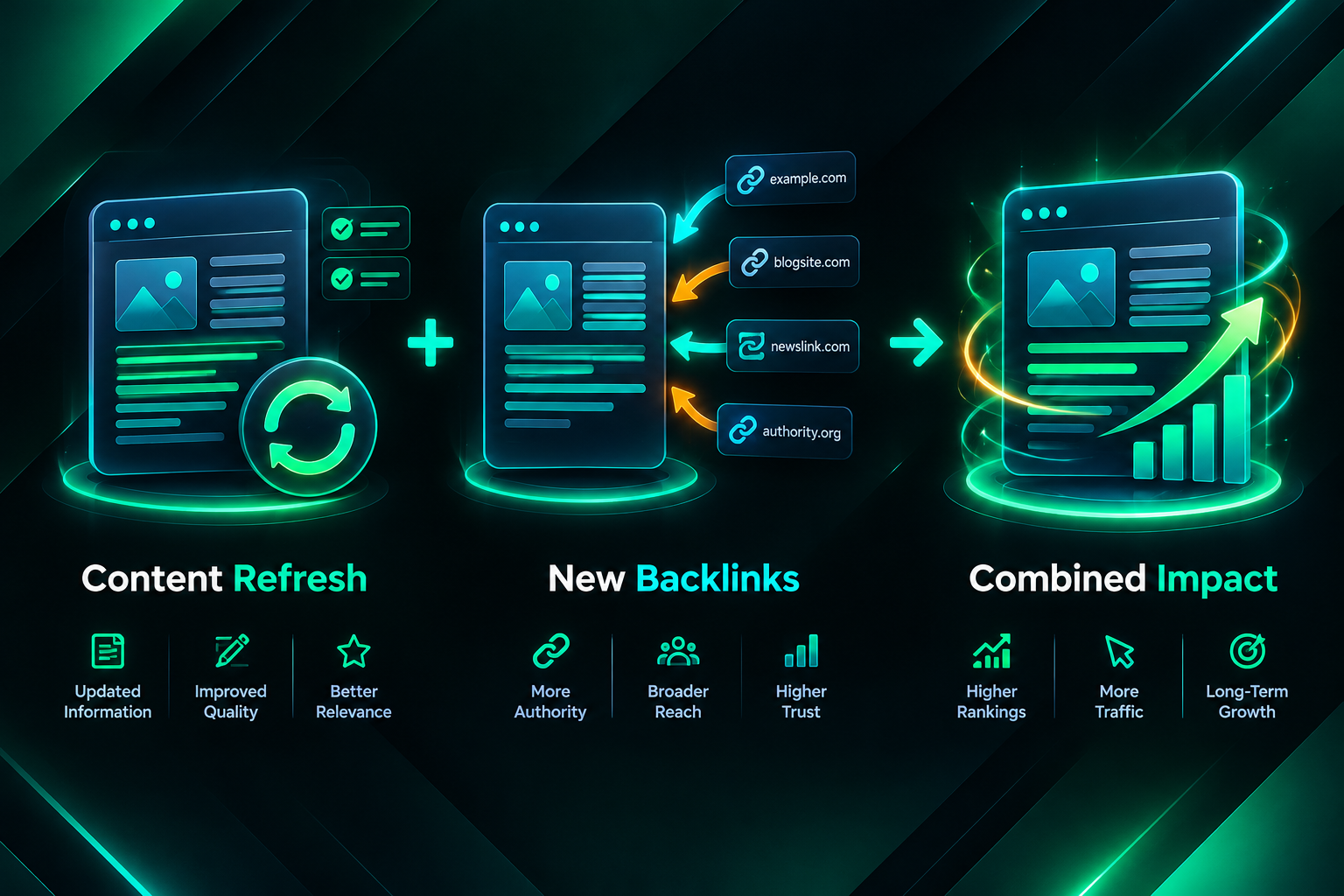
For pages that have backlinks but have declined in performance, a refresh followed by a targeted outreach campaign is a logical sequence. The refreshed content gives outreach a stronger asset to promote — a genuinely useful, current, and well-structured page is easier to earn links for than an outdated one. Manual outreach to relevant publishers, guest posting on topically relevant websites, and digital PR campaigns that generate coverage of updated research or data are all methods that can complement a content refresh strategy.
For pages that have strong content but a thin backlink profile, the refresh may be less urgent than the link building effort. In this case, prioritizing link acquisition to pages that are already performing well from a content perspective may deliver more measurable impact than refreshing pages that are already current and well-structured.
When managing refresh and link building priorities across a larger website or for a client, it can be helpful to segment pages into tiers based on their backlink profile and content status. Pages with strong backlinks and outdated content form the highest-priority refresh tier. Pages with strong content and weak backlinks form the highest-priority link building tier. Pages that need both improvements can be addressed in sequence, starting with the refresh to ensure the page is worth linking to before investing in outreach.
Tracking the Impact of a Backlink-Informed Refresh
Measuring the results of a content refresh requires patience and a clear baseline. Ranking and traffic changes after a refresh may take several weeks to become visible, as search engines need time to recrawl and reindex the updated page and for any ranking adjustments to stabilize. Submitting the updated URL through Google Search Console’s URL inspection tool can help prompt a faster recrawl, though it does not guarantee immediate ranking changes.
Useful metrics to track after a refresh include organic impressions and clicks from Google Search Console, keyword ranking positions for the page’s primary and secondary target keywords, referring domain count to confirm no links have been lost, and organic traffic from Google Analytics. Comparing these metrics against the pre-refresh baseline over a period of at least sixty to ninety days gives a more reliable picture of whether the refresh has had a measurable effect.
It is important to account for other variables that may affect performance during the measurement period, including algorithm updates, seasonal traffic patterns, and changes in competitor content or backlink profiles. A ranking improvement after a refresh may be partly or entirely attributable to factors other than the content update, and a lack of improvement does not necessarily mean the refresh was ineffective — it may mean that other barriers, such as competition or technical issues, are limiting the page’s potential.
Frequently Asked Questions
How many referring domains does a page need before a refresh becomes a priority?
There is no universal threshold. The relevant question is whether a page has more referring domains than comparable pages on your site that are performing better. Even a handful of referring domains from editorially relevant sources can make a page worth prioritizing for a refresh if it is also showing signs of declining traffic or ranking position.
Should I refresh a page before or after building new links to it?
In most cases, refreshing the content first makes sense. A well-updated page is a stronger asset for outreach and is more likely to retain new links over time. Building links to outdated or low-quality content can result in placements that provide less long-term value if the page is later overhauled significantly.
Can a content refresh cause a page to lose its existing backlinks?
The content refresh itself does not affect existing backlinks as long as the URL remains the same. However, if the refresh changes the page’s topic significantly, some linking websites may eventually update or remove their links if the page no longer matches the context in which they linked to it. Keeping the core topic and purpose of the page consistent while improving its depth and accuracy reduces this risk.
What is the difference between a content refresh and a content rewrite?
A content refresh typically involves updating existing information, improving accuracy, adding new sections, and improving readability without changing the fundamental structure or purpose of the page. A rewrite replaces most or all of the existing content with new material. For pages with backlinks, a refresh is generally lower risk than a full rewrite, as it preserves the topical signals that may have contributed to the page earning links in the first place.
How do I identify which backlinks to a page are worth protecting?
Focus on backlinks from referring domains that are topically relevant to your page’s subject matter, have their own organic traffic, and appear to be editorially placed rather than paid or automatically generated. Tools such as Ahrefs, Semrush, and Majestic can help you assess the quality of individual referring domains, though their proprietary metrics should be used as relative indicators rather than absolute measures of link value.
Is it worth refreshing a page that has backlinks but has never ranked well?
It depends on why the page has not ranked. If the issue is content quality or outdated information, a refresh may help. If the issue is a fundamental mismatch with search intent, a technical barrier, or competition from much stronger pages, a refresh alone is unlikely to produce significant ranking improvements. A site-specific assessment is needed to identify the root cause before investing in a refresh.
Making Backlink Data Work for Your Content Refresh Strategy
Using backlink data to prioritize content refreshes is a practical way to allocate limited time and resources toward the pages most likely to benefit from an update. Pages with meaningful referring domain profiles, declining organic traffic, and content that has become outdated or misaligned with search intent represent the clearest opportunities — they already have some of the authority needed to rank, and improving the content gives that authority a better chance of translating into measurable performance gains.
The process works best when backlink data is combined with organic traffic trends, keyword ranking positions, search intent analysis, and a technical review of each candidate page. No single signal is sufficient on its own, and a page that scores well on all of these dimensions is a stronger refresh priority than one that has backlinks but no other indicators of underperformance or opportunity.
For websites managing large content libraries or running link building campaigns alongside content updates, a tiered prioritization system — separating pages by backlink strength and content status — can make the process more manageable and help ensure that refresh efforts and link acquisition efforts reinforce each other rather than competing for the same resources. If you are working with an outsourced link building partner or an SEO agency, sharing this prioritization framework with them can help align link acquisition targets with the pages most likely to benefit from additional authority.