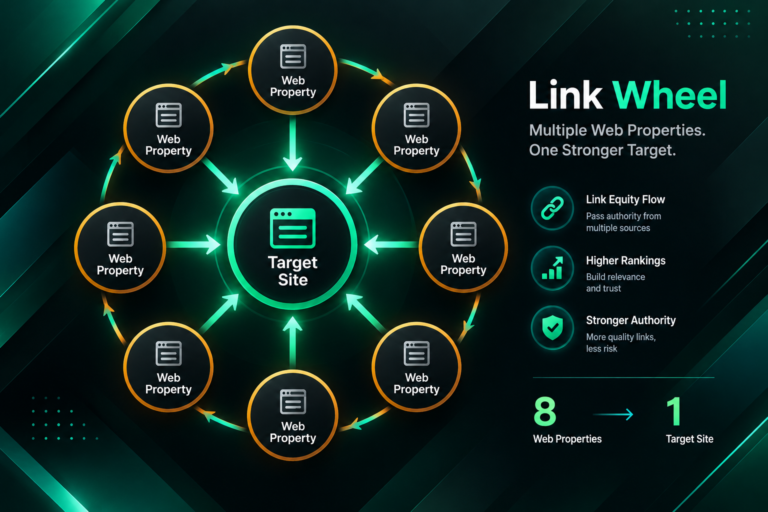
Web 2.0 backlinks are links created on user-generated content platforms such as WordPress.com, Blogger, Tumblr, or Weebly, where anyone can publish content and include links back to their own website. They were once a popular and relatively straightforward link building tactic, but their role in modern SEO is more nuanced than many guides suggest. This article explains what web 2.0 backlinks are, how they are built, what realistic value they may offer, and what risks and limitations you should understand before deciding whether they belong in your link building strategy.
Key Takeaways
- Web 2.0 backlinks are links placed on free, user-generated publishing platforms; their SEO value depends heavily on content quality, platform authority, and how they are used.
- Low-effort or mass-produced web 2.0 links carry a meaningful risk of being treated as manipulative by search engines, particularly under Google’s spam policies.
- High-quality web 2.0 properties with genuine, regularly updated content may contribute modest supporting value within a broader, diversified backlink profile.
- For most competitive niches, web 2.0 backlinks are unlikely to replace editorial links from independent, authoritative websites.
- Suitability depends on your existing backlink profile, niche, competition level, and overall SEO strategy; a site-specific assessment is advisable before committing to this tactic.
What Are Web 2.0 Backlinks?
Web 2.0 refers to the second generation of the internet, characterized by platforms that allow users to create and publish their own content rather than simply consuming it. In an SEO context, web 2.0 backlinks are links that point from pages created on these free publishing platforms back to a target website. Common platforms used for this purpose include WordPress.com, Blogger, Tumblr, Weebly, Wix (free subdomains), Medium, and similar sites that allow anyone to create a subdomain or profile page and publish articles, blog posts, or other content.
The appeal of web 2.0 backlinks historically came from the fact that these platforms often carry relatively high domain-level authority metrics, as measured by third-party tools such as Ahrefs’ Domain Rating or Moz’s Domain Authority. A link from a subdomain on WordPress.com, for example, technically originates from a domain with a strong backlink profile. However, it is important to understand that search engines evaluate individual pages and the context of links, not just the root domain. A thin, low-quality page on a high-authority platform does not automatically pass the same value as a well-established, editorially relevant page on the same platform.
How Web 2.0 Backlinks Are Built
Building web 2.0 backlinks typically involves creating accounts on free publishing platforms, setting up a blog or profile page, publishing content that includes a link to the target website, and then maintaining or updating that content over time. The process can be done manually or, in lower-quality implementations, through automated tools that create large numbers of these properties at scale.
A manual, quality-focused approach involves writing original, relevant content on the web 2.0 property, treating it as a genuine secondary blog or resource rather than a thin placeholder. This might include publishing multiple posts, using relevant images, and linking out to other authoritative sources in addition to the target website. The goal is to create a property that appears credible and provides genuine value to any reader who lands on it.
In contrast, a low-quality or automated approach involves spinning existing content, publishing minimal text, and creating dozens or hundreds of these properties in a short period. This type of implementation is where the majority of the risk associated with web 2.0 backlinks originates. Search engines have become increasingly effective at identifying patterns associated with manipulative link schemes, and mass-produced web 2.0 networks are a well-documented target of algorithmic and manual spam actions.
The SEO Value of Web 2.0 Backlinks
The SEO value of web 2.0 backlinks is a genuinely contested topic, and honest assessments require distinguishing between different quality levels and use cases. At their best, carefully maintained web 2.0 properties with original, topically relevant content may contribute some supporting link equity to a target page. They can also help diversify a backlink profile, particularly for newer websites that are still building their first editorial links.
However, several important limitations apply. First, links from subdomains on shared platforms are generally considered less authoritative than links from independent, editorially controlled websites. A link from a dedicated industry blog with its own domain and an established readership carries different signals than a link from a subdomain created specifically to host that link. Second, the topical relevance of the web 2.0 property matters. A link from a web 2.0 blog that covers the same subject area as the target website is more likely to be treated as contextually meaningful than a link from an unrelated or generic property. Third, the anchor text used in web 2.0 links should be varied and natural; over-optimized exact-match anchor text across multiple self-created properties is a pattern that search engines may flag.
It is also worth noting that third-party domain authority metrics, such as Domain Rating from Ahrefs or Domain Authority from Moz, reflect the strength of the root domain’s backlink profile rather than the quality or trustworthiness of an individual page. These metrics are useful reference points but are not Google-provided signals and should not be treated as guarantees of ranking improvement. A high Domain Rating on a shared platform does not mean that a link from a thin page on that platform will meaningfully improve your rankings.
Risks and Quality Considerations
The risks associated with web 2.0 backlinks are real and should be understood before using this tactic. Google’s spam policies explicitly address link schemes, which include links created primarily to manipulate PageRank or search rankings. A network of self-created web 2.0 properties built for the purpose of passing link equity to a target site fits the description of a link scheme, regardless of whether the links were placed manually or automatically.
The practical risk level depends significantly on implementation quality. A small number of well-maintained, content-rich web 2.0 properties that are updated regularly and link naturally within relevant content are unlikely to attract the same level of scrutiny as hundreds of thin, duplicate-content properties created in a short period. However, no implementation of self-created links is entirely without risk, and the line between a legitimate secondary blog and a manipulative link property is not always clear-cut.
Algorithmic updates, particularly those targeting low-quality links and content, have historically reduced the effectiveness of web 2.0 link building at scale. Websites that relied heavily on this tactic in the past have in some cases experienced ranking declines following algorithm updates. While it is not possible to predict future algorithm changes, the general direction of search engine development has been toward rewarding genuine editorial endorsement and penalizing artificial link patterns.
There is also a practical maintenance risk. Web 2.0 properties on free platforms can be deleted by the platform, suspended for policy violations, or simply become inaccessible over time. Unlike editorial links on established independent websites, web 2.0 links are inherently less stable, and link loss from these properties is a realistic possibility.
Web 2.0 Backlinks vs. Editorial Links
Understanding the difference between web 2.0 backlinks and editorial links from independent websites is important for making informed decisions about your link building strategy. Editorial links are earned through outreach, content quality, or digital PR, and they appear on websites that the publisher controls independently. The editorial decision to link to your website is made by someone other than you, which is the core signal that search engines are designed to reward.
Web 2.0 backlinks, by contrast, are self-created. Even when the content surrounding them is high quality, the fundamental nature of the link is that you placed it yourself. This distinction matters because search engines are specifically designed to identify and discount self-created links that exist primarily to manipulate rankings. The value of an editorial link comes partly from the fact that it represents a third-party endorsement; a self-created link cannot replicate that signal in the same way.
For competitive niches, editorial links from relevant, authoritative independent websites are generally considered more valuable and more durable than web 2.0 backlinks. Guest posting on established industry publications, earning coverage through digital PR, or acquiring niche edits within existing content on relevant websites are all approaches that involve genuine editorial involvement and are more likely to contribute meaningfully to ranking improvements over time. Web 2.0 backlinks may play a supplementary role in some strategies, but they are rarely a substitute for editorial link acquisition in competitive environments.
When Web 2.0 Backlinks May Be Considered
There are specific contexts in which web 2.0 backlinks may be considered as part of a broader strategy, though suitability always depends on a site-specific assessment. New websites with very limited backlink profiles may use carefully maintained web 2.0 properties to begin establishing some link diversity while pursuing editorial links through outreach. In very low-competition niches, a small number of quality web 2.0 links may contribute to visibility for less contested search terms. Some SEO practitioners also use web 2.0 properties as part of a tiered link building approach, where they build links to the web 2.0 properties themselves rather than directly to the target website, though this approach carries its own risks and complexity.
Web 2.0 backlinks are generally less suitable for websites in competitive niches, websites that have previously received manual actions or algorithmic penalties related to unnatural links, or websites where the primary goal is to build long-term, sustainable organic visibility. In these cases, the risk-to-benefit ratio of self-created links is less favorable, and investment in editorial link acquisition is likely to produce more durable results.
Before incorporating web 2.0 backlinks into any campaign, it is worth reviewing your existing backlink profile using tools such as Google Search Console, Ahrefs, or Semrush to understand your current link diversity, anchor text distribution, and the proportion of self-created versus editorial links already present. A profile that already contains a high proportion of low-quality or self-created links may be better served by focusing on editorial link acquisition rather than adding more self-created properties.
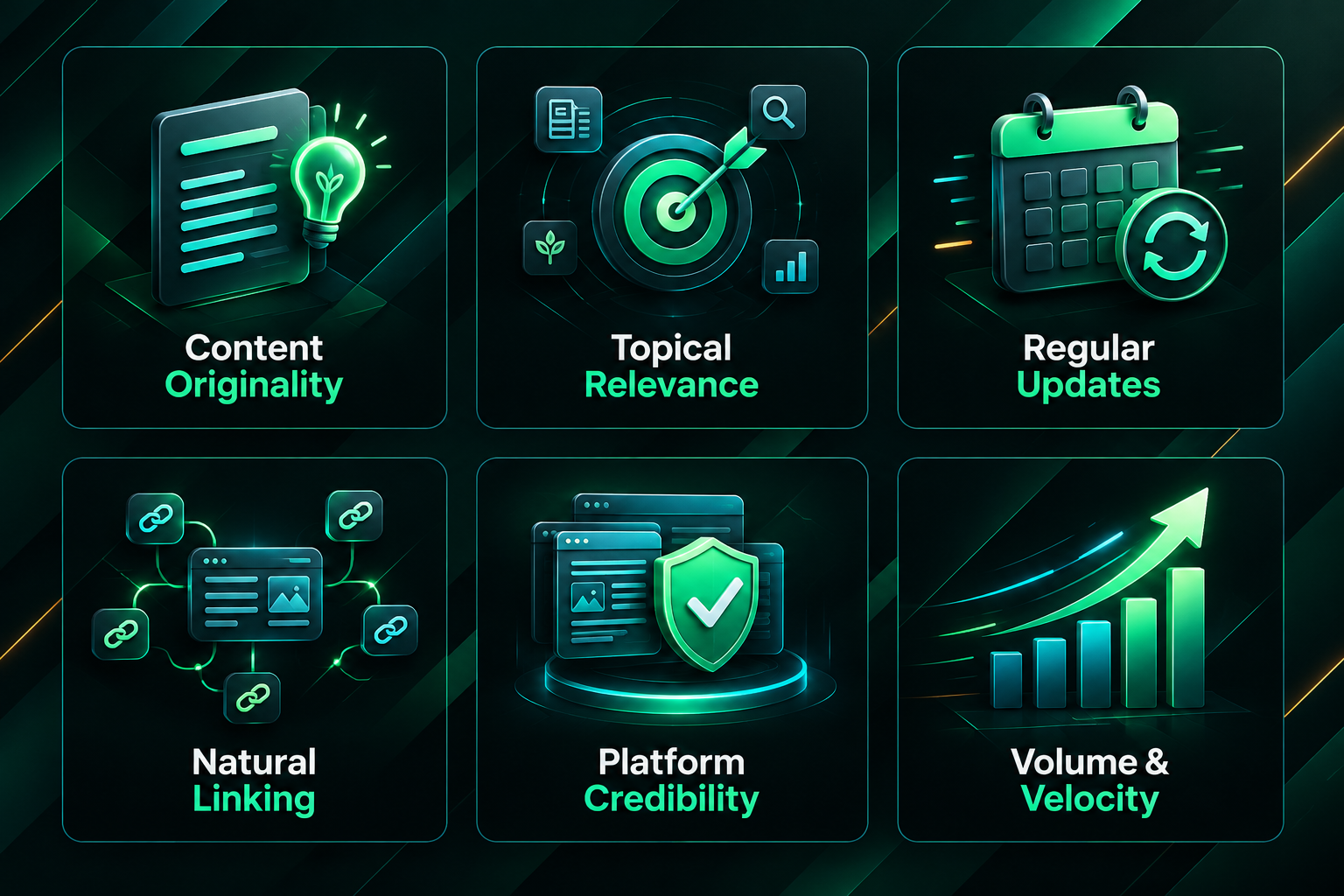
Quality Signals That Affect Web 2.0 Link Value
If web 2.0 backlinks are part of a considered strategy, several quality factors may influence whether they contribute positively or negatively to a backlink profile. These are not guarantees of value, but they reflect the characteristics that distinguish higher-quality implementations from lower-quality ones.
- Content originality and depth: Original, well-written content that provides genuine value to a reader is more credible than spun or thin content. Each web 2.0 property should read as a legitimate resource, not a placeholder.
- Topical relevance: The subject matter of the web 2.0 property should be relevant to the target website’s niche. A link from a topically aligned property is more contextually meaningful than a link from an unrelated blog.
- Regular updates: Properties that are updated with new content over time appear more credible than those that are created once and abandoned. Abandoned properties are also more likely to be deleted by the platform.
- Natural linking patterns: Links within the content should appear naturally, with varied anchor text and links to other relevant sources, not just to the target website.
- Platform credibility: Some platforms are more credible than others. A well-maintained blog on a reputable platform is different from a profile page on a low-quality directory site.
- Volume and velocity: Creating a large number of web 2.0 properties in a short period is a pattern associated with manipulative link building. A small number of quality properties built gradually is a lower-risk approach.
Alternatives to Web 2.0 Backlinks
For businesses and SEO teams evaluating their link building options, several alternatives to web 2.0 backlinks offer different risk and value profiles. The most appropriate alternative depends on your budget, niche, competition level, and existing backlink profile.
Guest posting involves publishing original articles on independent, editorially controlled websites in exchange for an author byline and a contextual link. When done on relevant, quality publications through genuine outreach, guest posting produces editorial links that carry stronger signals than self-created links. The process requires more effort and typically involves pitching, writing, and editorial approval, but the resulting links are more durable and more likely to contribute to ranking improvements in competitive niches.
Niche edits, also known as curated links or link insertions, involve placing a link within existing content on an established website. This approach can be effective when the host page is topically relevant and has its own organic traffic and backlink profile. Like guest posting, niche edits require outreach and editorial involvement from the host website.
Digital PR involves earning coverage and links through newsworthy content, data-driven research, or creative campaigns that attract attention from journalists and publishers. Digital PR links tend to be highly editorial and can appear on high-authority news and media websites, though campaigns require significant planning and are not guaranteed to generate coverage.
Resource link building involves creating genuinely useful resources, tools, or guides that other websites in your niche may naturally link to. This approach requires investment in content quality but can generate editorial links over time without ongoing outreach costs.
Each of these alternatives involves genuine editorial involvement from third parties, which is the fundamental characteristic that distinguishes them from self-created web 2.0 links. For most websites operating in competitive niches, a combination of these editorial link acquisition methods is likely to produce more sustainable results than a strategy centered on web 2.0 backlinks.
Frequently Asked Questions
Are web 2.0 backlinks still effective in SEO?
Web 2.0 backlinks can still contribute some value when implemented with high-quality, original content and used as a small part of a diversified backlink profile. However, their effectiveness has diminished significantly compared to earlier periods of SEO, and they are generally less valuable than editorial links from independent, authoritative websites. Mass-produced or low-quality web 2.0 links carry a meaningful risk of being discounted or treated as manipulative by search engines.
Can web 2.0 backlinks cause a Google penalty?
A large volume of low-quality, thin, or obviously self-created web 2.0 links could attract algorithmic filtering or, in more severe cases, a manual action under Google’s spam policies. The risk is higher when web 2.0 properties are created at scale, contain spun or duplicate content, or use over-optimized anchor text. A small number of well-maintained, content-rich web 2.0 properties is generally lower risk, though no self-created link strategy is entirely without risk.
How do web 2.0 backlinks differ from PBN links?
Both web 2.0 backlinks and private blog network (PBN) links are self-created and intended to pass link equity to a target website. PBNs typically involve purchasing expired domains with existing backlink profiles and rebuilding them as link-passing properties, which generally carries higher risk and cost. Web 2.0 backlinks use free publishing platforms rather than owned domains. Both tactics are considered manipulative link schemes under Google’s policies when used primarily to influence rankings.
How many web 2.0 backlinks do I need to see results?
There is no reliable fixed number of web 2.0 backlinks that produces a predictable result. Ranking outcomes depend on many factors including competition level, content quality, technical SEO, existing backlink profile, and the overall authority of competing pages. Prescribing a specific link count as a formula for ranking improvement is not supported by reliable evidence, and any provider making such guarantees should be approached with caution.
Should I use web 2.0 backlinks alongside other link building tactics?
If web 2.0 backlinks are used at all, they are generally more appropriate as a minor supplementary element within a broader strategy that prioritizes editorial link acquisition. Relying on web 2.0 backlinks as a primary tactic is unlikely to produce competitive results in most niches and carries more risk than a strategy centered on guest posting, niche edits, or digital PR.
How long does it take for web 2.0 backlinks to have an effect?
As with any backlinks, web 2.0 links need to be crawled and indexed by search engines before they can have any effect. This can take anywhere from a few days to several weeks depending on the platform and how frequently search engine crawlers visit it. Any measurable impact on rankings or traffic may take additional weeks or months to become apparent, and results vary considerably depending on the website, niche, and competitive landscape.
Are Web 2.0 Backlinks Worth Including in Your Strategy?
Web 2.0 backlinks occupy a specific and limited position in the modern link building landscape. At their best, carefully maintained web 2.0 properties with original, relevant content may contribute modest supporting value within a diversified backlink profile, particularly for newer websites or very low-competition niches. At their worst, mass-produced web 2.0 link networks represent a meaningful risk of algorithmic filtering or manual action, with limited long-term benefit to offset that risk.
For most businesses and SEO teams operating in competitive markets, the investment required to build and maintain genuinely high-quality web 2.0 properties is often better directed toward editorial link acquisition through guest posting, niche edits, or digital PR. These approaches involve genuine third-party editorial involvement, produce more durable links, and are more clearly aligned with the signals that search engines are designed to reward.
Whether web 2.0 backlinks are appropriate for your specific situation depends on your existing backlink profile, niche, competition level, and overall SEO strategy. If you are unsure how this tactic fits within your broader link building approach, discussing your goals and current profile with an experienced link building specialist can help you make a more informed decision before committing resources to any particular tactic.