When multiple agencies or teams run link building campaigns for the same client simultaneously, the same publisher can receive identical or near-identical outreach emails from different senders within days of each other. This damages publisher relationships, reduces response rates, and can signal to editors that a brand lacks internal coordination. Preventing duplicate outreach is not simply a matter of good manners — it is a practical campaign management problem that affects placement quality, outreach efficiency, and the long-term health of a client’s link acquisition programme.
Key Takeaways
- Duplicate outreach happens when two or more agencies or internal teams contact the same publisher without a shared record of prior contact, and it is one of the most common coordination failures in multi-agency link building.
- A centralised prospect tracking system — whether a shared spreadsheet, CRM, or dedicated outreach platform — is the most reliable structural solution.
- Clear contractual scope definitions, regular inter-agency communication, and a single point of contact for outreach approvals significantly reduce duplication risk.
- Publisher relationships are a long-term asset; repeated or contradictory outreach from the same brand can result in permanent blacklisting by editors and site owners.
- Preventing duplication requires both technical systems and human process discipline — neither alone is sufficient.
Why Duplicate Outreach Is a Serious Campaign Risk
Duplicate outreach is easy to dismiss as a minor administrative inconvenience, but its consequences for a link building campaign can be significant and lasting. When a publisher receives two separate pitches from different agencies representing the same brand, the most common outcomes are confusion, irritation, and a loss of trust in the brand itself. Editors and site owners talk to each other, and a reputation for disorganised or spammy outreach can spread within a niche. Some publishers maintain internal blacklists and will decline all future contact from a brand that has contacted them multiple times without acknowledgement.
Beyond publisher relationships, duplicate outreach wastes prospecting and copywriting resources. If two agencies have independently researched, qualified, and pitched the same set of target sites, a significant portion of that work is redundant. In competitive niches where the pool of high-quality, topically relevant publishers is limited, burning prospects through duplication can meaningfully reduce the total number of placements achievable within a campaign period. The practical effect is a lower return on the outreach investment for the client, even if neither agency is individually at fault.
There is also a subtler risk related to anchor text and placement context. If two agencies independently secure placements on the same domain — or even the same page — without coordination, the resulting backlink profile may contain redundant or contradictory anchor text signals. While a single duplicate placement is unlikely to cause a significant problem, a pattern of uncoordinated placements across a large campaign can make the backlink profile appear less natural to a careful reviewer.
The Root Causes of Duplicate Outreach
Understanding why duplicate outreach happens is the first step toward preventing it. The most common cause is the absence of a shared prospect database. When each agency builds its own target list independently, overlap is almost inevitable, particularly in niches where the number of genuinely authoritative, topically relevant publishers is limited. Each team may use the same prospecting tools — such as Ahrefs, Semrush, or Moz — and apply similar filters, arriving at largely the same list of candidate sites.
A second common cause is unclear scope definition in agency contracts. If two agencies have been briefed to build links in the same topical area without explicit geographic, publisher-type, or domain-range boundaries, they will naturally pursue similar targets. Vague briefs such as “build links in the health and wellness space” give no guidance about which publishers each agency should approach, making duplication almost certain.
Poor inter-agency communication is a third contributing factor. In multi-agency arrangements, agencies often have no direct channel to each other and communicate only through the client. If the client does not actively relay outreach status updates between agencies, each team operates in an information vacuum. A publisher that one agency has already approached — or even already secured a placement with — may be actively pitched by the second agency weeks later.
Finally, staff turnover and campaign handovers within a single agency can also create internal duplication. If outreach records are stored in individual email accounts or personal spreadsheets rather than a shared system, a new team member may re-contact publishers that a previous colleague already approached, sometimes with contradictory messaging.
Building a Centralised Prospect Tracking System
The most effective structural solution to duplicate outreach is a centralised prospect tracking system that all agencies and internal teams can access and update in real time. The specific tool matters less than the discipline of using it consistently. Options range from a shared Google Sheet with clearly defined columns to dedicated outreach platforms such as Pitchbox, BuzzStream, or Hunter.io, which offer built-in contact history, status tracking, and team collaboration features.
A functional shared tracking system should record, at minimum, the target domain, the specific contact or editor approached, the date of first contact, the agency or team member responsible, the current status of the outreach (such as contacted, replied, negotiating, placed, or declined), and any notes about the publisher’s preferences or previous responses. When every agency updates this record before sending any new outreach, the risk of a second team contacting the same publisher drops substantially.
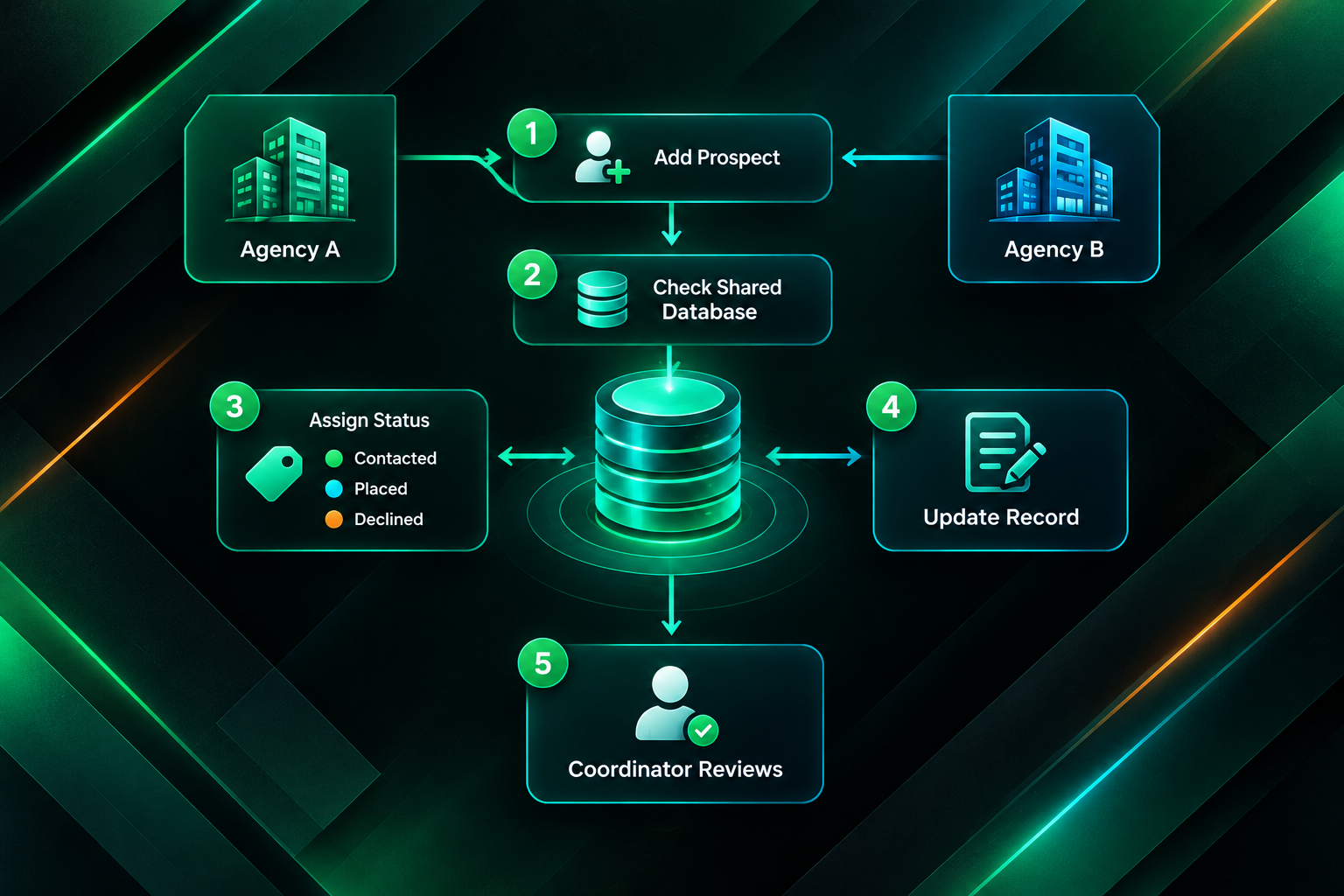
For multi-agency arrangements, access permissions matter. Each agency should be able to view the full prospect list and add new entries, but ideally should not be able to delete or overwrite another agency’s records without a clear audit trail. Some outreach platforms support role-based permissions that make this straightforward. If a shared spreadsheet is used instead, version history and protected ranges can provide a basic level of record integrity.
The tracking system should also include a “do not contact” or “hold” status for publishers that one agency is actively negotiating with. This prevents a second agency from approaching the same publisher during a sensitive negotiation period, which could undermine the placement or create an awkward situation for the editor.
Defining Outreach Scope in Agency Contracts and Briefs
Contractual scope definition is the preventive layer that reduces duplication before outreach even begins. When a client works with more than one link building agency, each agency’s brief should specify not only the target topics and link types but also the boundaries of their outreach territory. Practical scope boundaries can be defined by publisher type (for example, one agency handles industry trade publications while another handles general business blogs), by domain authority or metric range, by geographic market, or by a pre-agreed list of domains that each agency is exclusively responsible for approaching.
Exclusive domain lists require upfront coordination but offer the clearest protection against duplication. Before campaigns begin, the client or a designated campaign coordinator compiles a master list of target publishers and assigns each domain to a specific agency. Neither agency contacts a domain assigned to the other without explicit approval. This approach works well when the client has a clear view of the publisher landscape and can make informed assignment decisions, but it requires more initial planning time than a topic-based division.
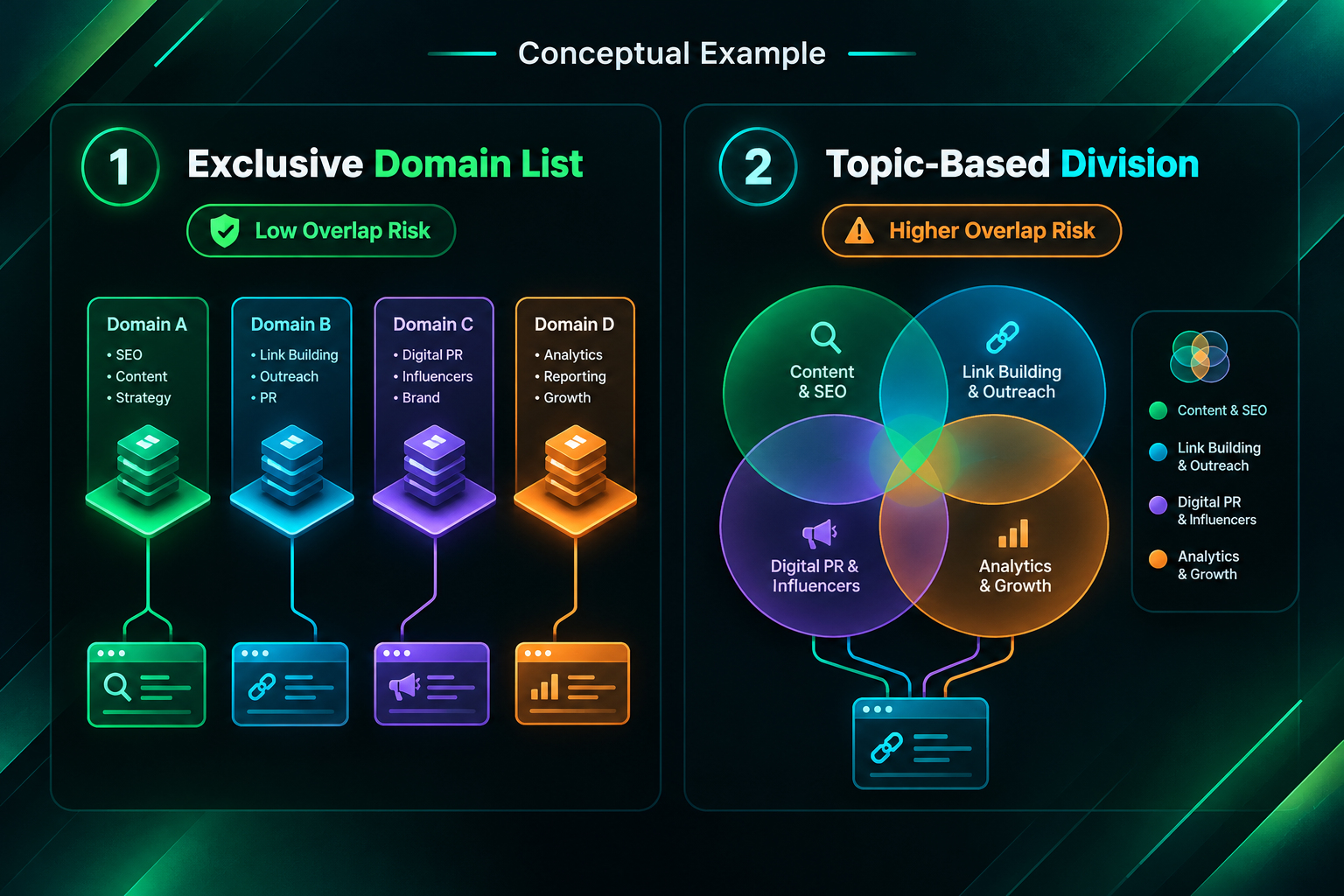
Topic-based or publisher-type divisions are easier to implement quickly but carry a higher residual risk of overlap, particularly at the boundaries. A clear escalation process — where an agency flags a potential overlap to the client before proceeding — helps manage edge cases without creating bottlenecks in the outreach workflow.
Contracts should also specify what happens when an agency discovers that a target publisher has already been contacted by another party representing the same brand. A clear protocol — such as flagging the contact in the shared system and pausing outreach to that domain pending client guidance — prevents unilateral decisions that could worsen the situation.
Communication Protocols Between Agencies and Clients
Even with a shared tracking system and well-defined scope, duplicate outreach can still occur if communication between agencies and the client is infrequent or informal. Regular structured reporting reduces this risk. A practical minimum is a weekly outreach status update from each agency that lists newly contacted publishers, placements secured, and any publishers that have declined or requested a follow-up. The client or campaign coordinator reviews these updates and flags any overlaps before the next outreach cycle begins.
For larger campaigns involving three or more agencies, a monthly inter-agency coordination call can be valuable. These calls do not need to be long — thirty minutes is often sufficient — but they provide an opportunity for each team to share prospecting priorities for the coming period, identify potential overlaps before outreach is sent, and align on messaging tone and brand positioning. Consistent brand messaging across agencies also reduces the risk of a publisher receiving contradictory pitches that create confusion about what the brand is actually offering.
A single designated point of contact on the client side — someone with authority to make outreach approval decisions quickly — significantly reduces delays and miscommunications. When agencies must route every query through multiple stakeholders, response times slow, outreach windows are missed, and the temptation to proceed without confirmation increases. A clear decision-maker with a defined response time commitment keeps the coordination process functional without creating excessive overhead.
Using Outreach Platforms and CRM Tools Effectively
Dedicated outreach platforms offer features specifically designed to prevent duplicate contact, and they are worth considering for any campaign involving more than one team. Most platforms maintain a contact history that flags when a domain or email address has been approached before, either within the current campaign or in a previous one. This automated duplicate detection reduces reliance on manual checking and catches overlaps that a shared spreadsheet might miss, particularly when team members forget to update records promptly.
When selecting a platform for a multi-agency arrangement, look for features such as shared campaign workspaces, team-level activity logs, contact status synchronisation, and the ability to import and export prospect lists in a standard format. Platforms that allow multiple agencies to work within a single shared workspace — rather than requiring each agency to maintain a separate account — provide the most reliable duplicate prevention, because all contact history is visible to all parties in real time.
CRM tools not specifically designed for outreach can also be adapted for this purpose, though they typically require more configuration. The key requirement is that every outreach contact is logged against the publisher domain as soon as it is sent, not retrospectively. Retrospective logging creates gaps in the record that allow duplicates to slip through during the delay between sending and recording.
Some agencies use email domain monitoring tools to detect whether a target publisher’s domain has appeared in another agency’s outreach history. While this approach can catch some overlaps, it is less reliable than a shared prospecting database because it depends on each agency sharing their full contact history, which not all agencies are willing to do for competitive reasons. A shared system agreed upon at the campaign outset is more robust than retrospective monitoring.
Managing Publisher Relationships After a Duplicate Outreach Incident
Despite the best systems and processes, duplicate outreach incidents will occasionally occur. How a client and their agencies respond to these incidents matters as much as the prevention measures themselves. When a publisher reports receiving duplicate pitches, the appropriate response is a prompt, honest acknowledgement from the client — not from the agency — that explains the coordination error and apologises for the confusion. A brief, professional apology that takes responsibility without over-explaining the internal agency structure is usually sufficient to preserve the relationship.
Following the incident, the affected publisher’s domain should be flagged in the shared tracking system with a note about the duplicate contact and the response received. If the publisher has indicated they are still open to a placement, a single designated agency should be assigned to manage the relationship going forward, with the other agency explicitly excluded from further contact with that domain. This prevents a second incident and demonstrates to the publisher that the coordination problem has been addressed.
Publishers who have been contacted in duplicate and have not responded should be placed in a cooling-off period — typically at least three to six months — before any further outreach is attempted. Contacting a publisher again too soon after a duplicate incident, even with a single agency, risks confirming the impression of disorganisation and may result in a permanent decline.
Special Considerations for White-Label Link Building Arrangements
White-label link building arrangements introduce an additional layer of complexity for duplicate outreach prevention. In a white-label setup, an agency resells link building services delivered by a specialist provider, often without the end client being aware of the provider’s involvement. If the reselling agency also runs its own outreach campaigns — or works with additional white-label providers — the risk of the same publisher being approached by multiple parties representing the same brand increases significantly.
In white-label arrangements, the reselling agency typically acts as the single point of coordination between the end client and the delivery provider. This means the reselling agency is responsible for ensuring that the delivery provider’s prospect list does not overlap with any other outreach being conducted on the client’s behalf. Before a white-label campaign begins, the reselling agency should share a list of domains that are already in active outreach or have been recently contacted, and the delivery provider should cross-reference their prospect list against this before sending any pitches.
Transparency about the scope of each party’s outreach — even without disclosing the white-label relationship to the end client — is essential for preventing duplication in these arrangements. A clear written agreement between the reselling agency and the delivery provider, specifying which domains each party is responsible for and how conflicts will be resolved, provides a practical framework for coordination.
Frequently Asked Questions
How common is duplicate outreach in multi-agency link building campaigns?
Duplicate outreach is a frequent problem in campaigns where two or more agencies operate without a shared prospect database or clear scope boundaries. It tends to be most common in competitive niches where the pool of high-quality publishers is limited, because independent prospecting by multiple teams naturally converges on the same targets. The problem is often not discovered until a publisher complains or declines future contact.
Can outreach platforms automatically prevent all duplicate contact?
Outreach platforms can flag previously contacted domains and email addresses within a shared workspace, which significantly reduces duplication. However, they cannot prevent duplication that occurs across separate platform accounts or when agencies use different tools. Automated detection works best when all agencies operate within a single shared system from the start of the campaign.
What should I do if a publisher tells me they have already been contacted by another agency on my behalf?
Acknowledge the error promptly and professionally, ideally with a direct response from the brand rather than the agency. Apologise for the confusion, assign a single agency to manage the relationship going forward, and update your shared tracking system to prevent further duplication. A cooling-off period before any further outreach to that publisher is advisable.
Is it possible to prevent duplicate outreach without using a paid outreach platform?
Yes. A well-maintained shared spreadsheet with clearly defined columns, consistent update discipline, and a designated coordinator can prevent most duplicate outreach incidents. Paid platforms offer automation and audit trails that reduce the risk of human error, but the underlying requirement is a shared, consistently updated record of all outreach contacts — the tool used to maintain that record is secondary.
How should scope be divided between two agencies to minimise overlap?
The most reliable approach is an exclusive domain assignment list, where each publisher domain is assigned to a specific agency before outreach begins. Topic-based or publisher-type divisions are easier to implement but carry a higher risk of overlap at the boundaries. Whichever approach is used, a clear escalation process for edge cases and regular status updates between agencies are essential.
Does duplicate outreach affect a website’s backlink profile or SEO?
Duplicate outreach primarily affects publisher relationships and outreach efficiency rather than the backlink profile directly. However, if duplication leads to multiple placements on the same domain or contradictory anchor text patterns, this can reduce the diversity and naturalness of the backlink profile. The more immediate risk is damage to publisher relationships and a reduction in the total number of placements achievable within the campaign.
Choosing the Right Coordination Approach for Your Campaign
Preventing duplicate outreach across agencies is ultimately a coordination and process discipline problem, not a technology problem. The right approach depends on the scale of the campaign, the number of agencies involved, and the client’s internal capacity to manage inter-agency communication. For smaller campaigns with two agencies, a shared spreadsheet and a weekly status update may be entirely sufficient. For larger campaigns involving multiple agencies, white-label providers, and in-house teams operating simultaneously, a dedicated outreach platform with a shared workspace and role-based permissions is likely to provide more reliable protection.
Regardless of the tools used, the foundational requirements are the same: a single shared record of all outreach contacts, clearly defined scope boundaries for each agency, a designated coordination point on the client side, and a consistent process for flagging and resolving potential overlaps before outreach is sent. These requirements should be established before any agency begins prospecting, not after the first duplicate incident has already occurred.
If you are planning a multi-agency link building campaign or reviewing an existing arrangement where coordination has been inconsistent, discussing the outreach management structure with a specialist provider before expanding the campaign is a practical first step. A well-coordinated campaign protects publisher relationships, reduces wasted prospecting effort, and gives each agency the best possible conditions to deliver quality placements on your behalf.