Backlink indexing services promise to solve a frustrating problem: you acquire a new link, but weeks pass and Google still hasn’t discovered it. These tools claim to accelerate the process by pinging URLs, submitting sitemaps, or using other signals to prompt crawlers. Whether they are safe, however, depends on how they work, what links they are applied to, and what risks they introduce — questions that deserve a careful answer before you commit to using one.
Key Takeaways
- Backlink indexing services vary widely in method; some use low-risk approaches while others rely on tactics that may conflict with search engine guidelines.
- Indexing a link does not improve its quality — a low-quality or spammy backlink that gets indexed can harm rather than help a site.
- Google does not guarantee indexing of any URL, and no third-party tool can override that editorial discretion.
- The safety of an indexing service depends heavily on the quality of the underlying links and the methods the tool uses to trigger crawling.
- For most link building campaigns, focusing on acquiring high-quality, editorially placed links is a more reliable long-term strategy than trying to force indexation of marginal placements.
What Backlink Indexing Services Do
A backlink indexing service is a tool or platform designed to help search engine crawlers discover and process URLs more quickly than they might through natural crawling. When a new backlink is placed on a third-party website, Google’s crawlers need to visit that page, parse the link, and add it to the index before any potential ranking signal can be passed. This process can take days, weeks, or in some cases never happen at all — particularly for pages on lower-authority or infrequently crawled domains.
Indexing services attempt to accelerate this by submitting URLs through methods such as pinging services, RSS feed submissions, social bookmarking, creating secondary links pointing to the linking page, or using Google’s own URL Inspection tool via the Search Console API. Some services combine several of these approaches simultaneously. The underlying logic is that by creating additional signals pointing to the linking page, crawlers will be prompted to visit it sooner and register the backlink.
It is important to understand what these services do not do. They do not improve the quality of a link. They do not change the link’s attributes, such as whether it is followed or nofollowed. They do not guarantee that Google will index the page or pass any ranking value from the link. Indexing a URL simply means a crawler has visited and processed it — whether that results in any measurable SEO benefit depends entirely on the quality and relevance of the link itself.
The Core Safety Question
The question of whether backlink indexing services are safe does not have a single yes or no answer. Safety depends on three intersecting factors: the methods the indexing service uses, the quality of the links being indexed, and the overall backlink profile of the target website.
Some indexing approaches carry minimal risk. Submitting a URL through Google Search Console’s URL Inspection tool, for example, is an officially supported method for requesting a crawl. Similarly, ensuring that a linking page is included in the publisher’s sitemap and that the sitemap is submitted to Search Console is a standard, low-risk practice. These approaches work within documented search engine processes and are unlikely to create compliance problems.
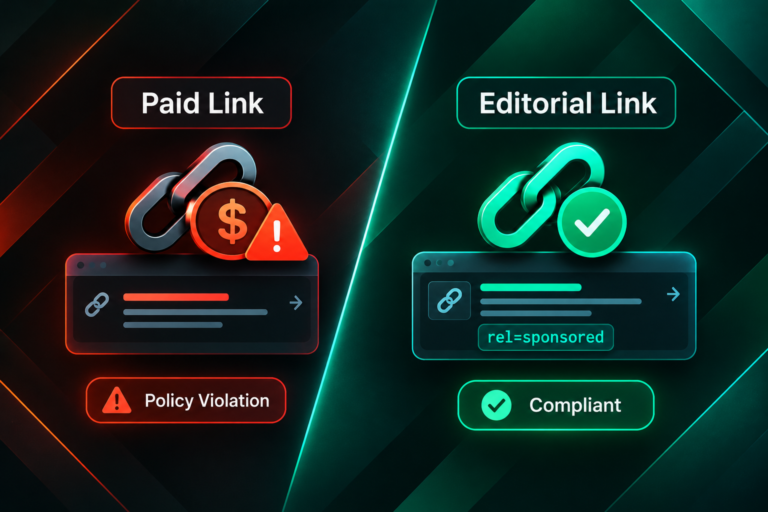
Other methods are more ambiguous. Creating large volumes of secondary links — sometimes called tier-two links — pointing to the page that hosts your backlink is a common indexing tactic. The intent is to make the linking page appear more crawlable. However, if those secondary links come from low-quality sources, link networks, or automated submissions, they may themselves constitute manipulative link building. Google’s spam policies address link schemes broadly, and building artificial links to a page — even if the goal is indexation rather than ranking — can still attract scrutiny if the pattern is detected.
Automated pinging services, which notify aggregators and RSS readers that a URL has been updated, are generally considered low-risk but also low-effectiveness. Their ability to reliably trigger Googlebot crawls is limited, and their value has diminished as Google’s crawling infrastructure has become more sophisticated.
Risks Associated with Backlink Indexing Services
Understanding the specific risks helps you make a proportionate assessment rather than treating all indexing tools as equally dangerous or equally harmless.
Indexing Low-Quality Links
One of the most significant risks is not the indexing service itself but what it indexes. If your link building campaign has produced placements on low-quality, irrelevant, or spammy websites, using an indexing service to ensure those links are discovered may accelerate harm rather than benefit. Google’s algorithms assess the quality of linking pages and domains. A link from a thin-content site, a link farm, or an irrelevant directory that gets indexed is more likely to be discounted or flagged than one that remains undiscovered. In this scenario, the indexing service has effectively made a problem more visible.
Tier-Two Link Building Risks
Services that build secondary links to your linking pages introduce a separate layer of risk. If those tier-two links are created through automated tools, private blog networks, or low-quality directories, they may violate Google’s link spam policies independently of your primary link building activity. While the direct target of those links is a third-party page rather than your own site, the association can still be problematic if the pattern is identified during a manual review or algorithmic assessment.
Wasted Budget on Non-Indexable Pages
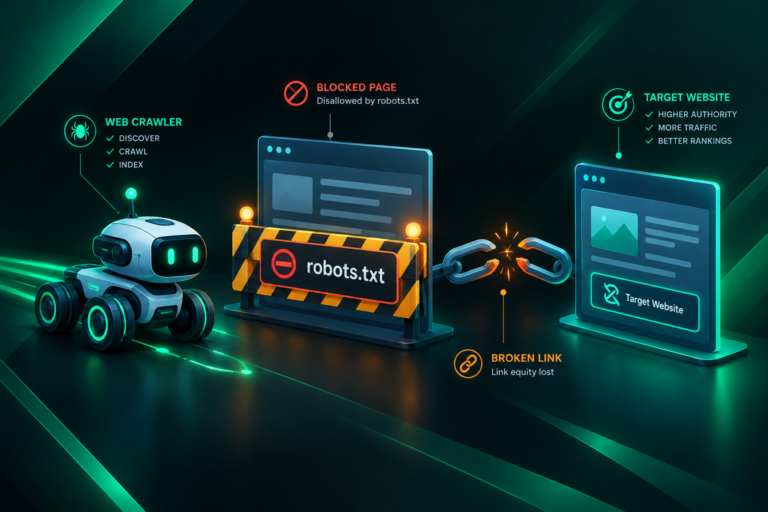
Some pages will not be indexed regardless of what an indexing service does. If a publisher has set a page to noindex, blocked it in robots.txt, or if the page has thin or duplicate content that Google chooses not to index, no external tool can override that decision. Spending budget on indexing services for links on pages that Google has editorially excluded from its index is unlikely to produce any return.
False Confidence in Link Quality
A subtler risk is the false confidence that comes from seeing a link appear as indexed. Confirmation that a URL has been crawled and added to Google’s index does not confirm that the link is passing value, that it is being treated as a genuine editorial signal, or that it is contributing positively to rankings. Relying on indexed status as a proxy for link quality can lead to poor campaign decisions.
Terms of Service Considerations
Some indexing services use methods that interact with Google’s systems in ways that may not align with Google’s terms of service, particularly if they involve automated requests to the Search Console API at scale or simulate user behavior. The risk here is generally low for individual campaigns but worth understanding if you are managing indexing at high volume.
When Indexing Services May Be Reasonable to Use
Despite the risks outlined above, there are circumstances where a carefully chosen indexing approach may be a reasonable part of a link building workflow — provided the underlying links are high quality and the methods used are low-risk.
If you have acquired a genuine editorial backlink on a real, content-rich website but the linking page is infrequently crawled because the domain has low crawl frequency, using Google Search Console’s URL Inspection tool to request indexing is a straightforward and supported option. This is particularly relevant for links placed on newer or smaller publishers that may not be crawled as regularly as established domains.
Ensuring that the linking page is included in the publisher’s XML sitemap and that the sitemap is actively submitted to Search Console is another low-risk step that can improve crawl frequency over time. This is a standard technical SEO practice rather than a manipulation tactic.
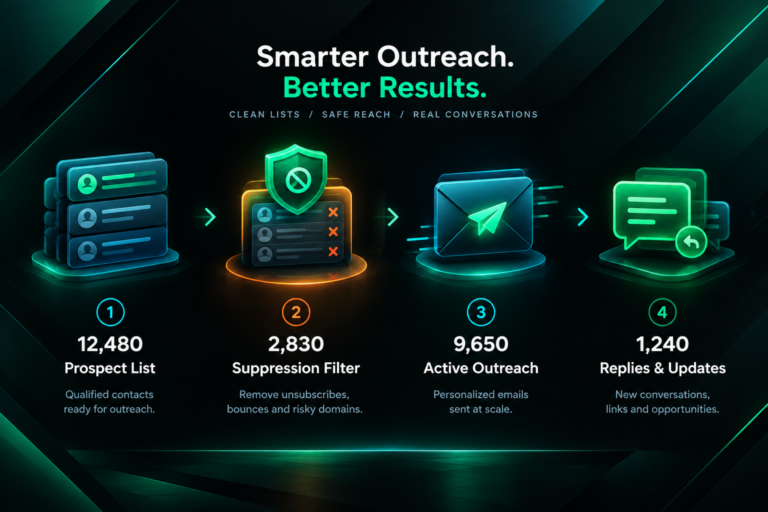
For agencies managing large-scale outreach campaigns, monitoring which acquired links have been indexed is a legitimate quality control activity. Identifying links that remain unindexed after a reasonable period — typically four to eight weeks — can inform decisions about whether to follow up with the publisher, request a sitemap update, or reassess the value of the placement.
The Relationship Between Link Quality and Indexation
Google’s crawling and indexing decisions are not random. Pages with strong internal linking, regular content updates, and links from other well-crawled domains tend to be discovered and indexed more reliably. This means that the best long-term solution to indexation problems is often improving the quality of the links being acquired rather than relying on external tools to force discovery of marginal placements.
A backlink placed on a well-established, regularly updated website with genuine organic traffic is far more likely to be crawled and indexed naturally — and to pass meaningful ranking signals — than a link on a dormant or low-authority page that requires an indexing service to be discovered at all. If a significant proportion of your acquired links require external intervention to be indexed, that pattern may indicate a quality issue with the placements themselves rather than a crawling problem that tools can solve.
This is a useful diagnostic signal for link building campaigns. High-quality editorial placements on active, well-maintained websites typically do not require aggressive indexing intervention. When indexation rates are consistently low across a campaign, reviewing the publisher selection criteria and outreach targeting is often more productive than investing in indexing tools.
How Backlink Indexing Fits Into a Broader Link Building Campaign
For businesses and agencies running structured link building campaigns, indexation monitoring is a reasonable part of campaign reporting rather than a standalone service to be purchased separately. Tracking which acquired links have been indexed, which remain unindexed after a defined period, and which linking pages have been removed or changed is standard quality control practice.
The workflow typically looks like this: a link is acquired through manual outreach, guest posting, digital PR, or another editorial method; the placement is verified and recorded; the linking page is checked for indexation after a defined waiting period using tools such as Google Search Console, Ahrefs, or Semrush; and if the page remains unindexed after a reasonable interval, low-risk steps such as a Search Console crawl request or a sitemap check are taken before deciding whether the placement has value.
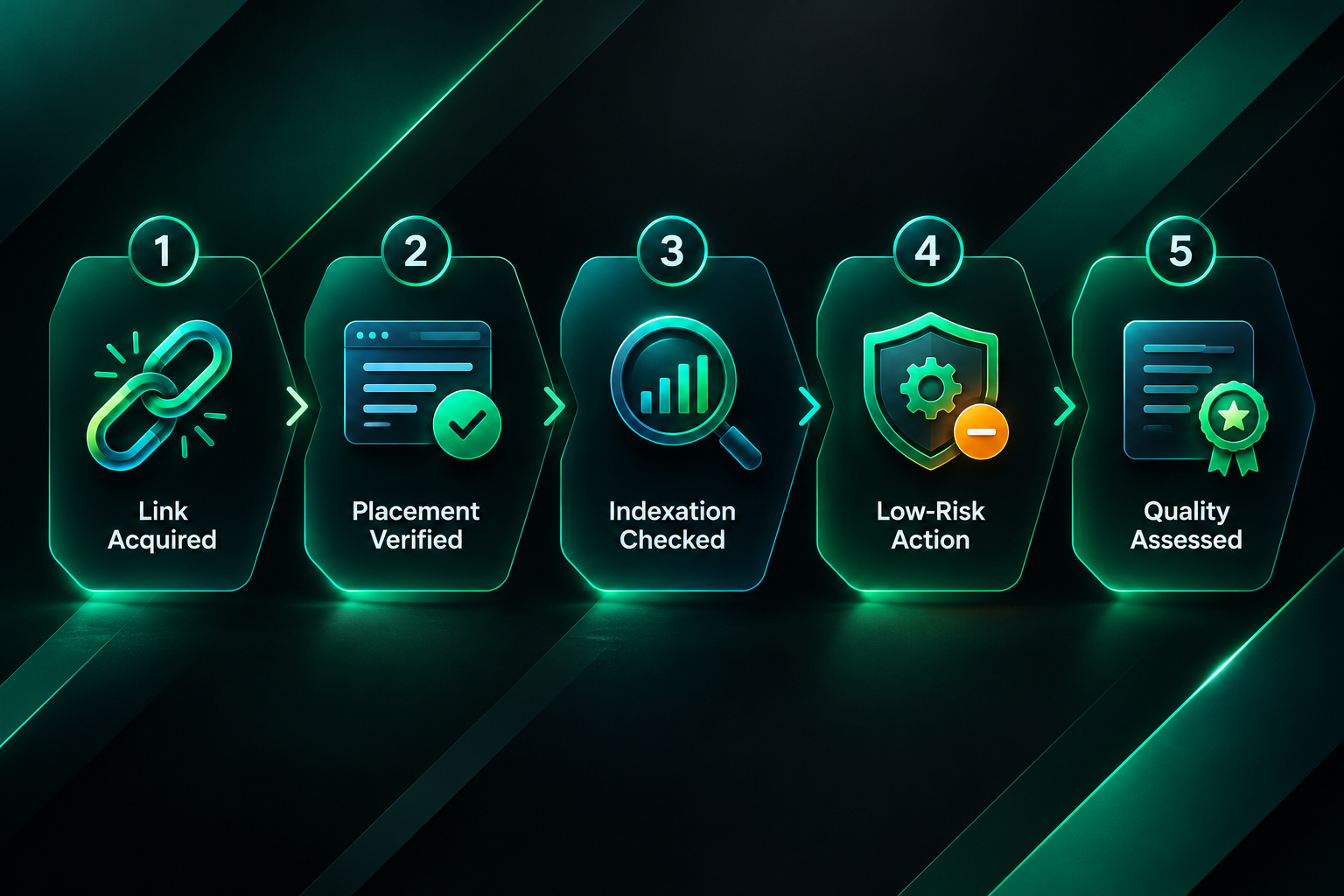
This approach treats indexation as one quality signal among several rather than as the primary goal. It avoids the risk of investing in aggressive indexing tactics for links that may not warrant the effort, and it keeps the focus on the factors that most reliably influence whether a backlink contributes to organic visibility: the authority and relevance of the linking domain, the topical alignment of the linking page, the placement context, and the link attributes.
Alternatives to Third-Party Indexing Services
If your concern is ensuring that acquired links are discovered and processed by search engines, several alternatives to commercial indexing services are worth considering.
- Google Search Console URL Inspection: Requesting a crawl directly through Search Console is the most straightforward and officially supported method. It is limited in scale but appropriate for high-priority placements.
- Publisher sitemap inclusion: Confirming with the publisher that the linking page is included in their sitemap and that the sitemap is submitted to Search Console is a low-risk, sustainable approach.
- Internal linking by the publisher: Asking the publisher to add an internal link from a well-crawled page to the page hosting your backlink can improve crawl frequency without any external tool involvement.
- Social sharing: Sharing the linking page through social channels can prompt crawlers to visit it, though the effect is inconsistent and should not be relied upon as a primary indexation strategy.
- Focusing on higher-authority publishers: Prioritizing link placements on domains that are crawled frequently reduces the indexation problem at its source. Links on active, well-maintained websites with genuine traffic are typically indexed without intervention.
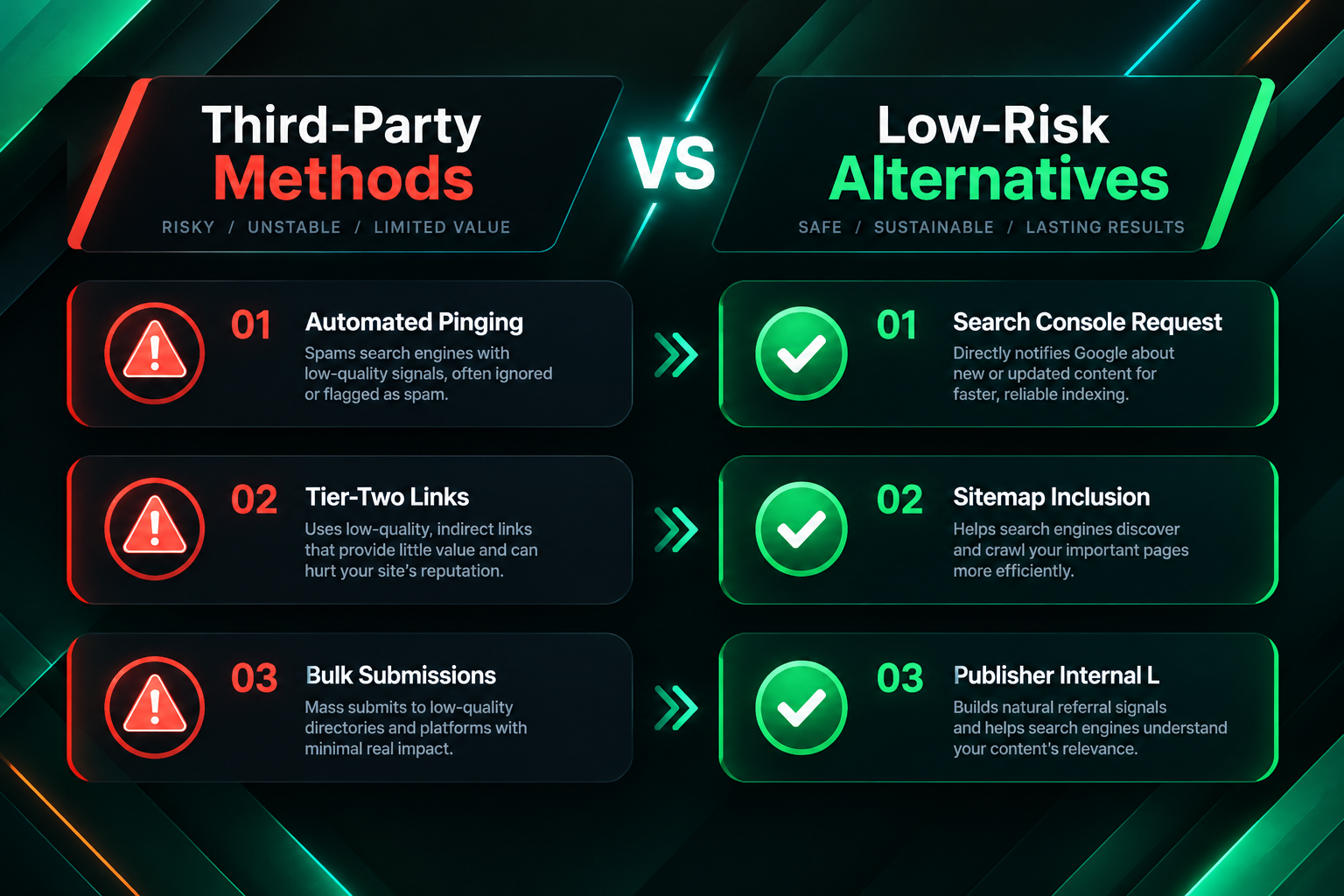
These alternatives address the indexation question without introducing the risks associated with automated link building, tier-two link schemes, or tools that interact with search engine systems in potentially non-compliant ways.
What to Ask Before Using a Backlink Indexing Service
If you are evaluating a commercial indexing service, the following questions can help you assess whether the approach is appropriate for your campaign.
- What specific methods does the service use to trigger crawling? Does it rely on pinging, tier-two link building, sitemap submissions, or Search Console API requests?
- Does the service build any links as part of its indexing process? If so, what types of sites are used, and how are they selected?
- What is the service’s track record for indexation rates, and how does it define and measure success?
- Does the service apply the same methods regardless of the quality of the links being indexed, or does it assess suitability on a case-by-case basis?
- How does the service handle pages that Google has chosen not to index for editorial reasons?
- Is the service’s approach consistent with Google’s documented guidelines on crawling, indexing, and link schemes?
A provider that cannot clearly explain its methods or that makes guarantees about indexation rates and ranking improvements should be approached with caution. No tool can guarantee that Google will index a URL or that an indexed link will improve rankings.
Frequently Asked Questions
Can a backlink indexing service get my site penalized?
Direct penalties from using an indexing service are uncommon, but the risk is not zero. If the service builds low-quality tier-two links as part of its process, those links could contribute to a manipulative link pattern that attracts algorithmic filtering or a manual action. The greater risk is usually indirect: indexing low-quality links makes them more visible to Google’s quality assessment systems, which may result in those links being discounted or flagged rather than contributing positively.
How long does it normally take for a backlink to be indexed naturally?
Indexation timelines vary considerably depending on the crawl frequency of the linking domain, the freshness of the linking page, and how the page is internally linked within the publisher’s site. Links on high-authority, frequently updated websites may be indexed within days. Links on lower-traffic or infrequently updated sites may take several weeks or may not be indexed at all without intervention. A waiting period of four to eight weeks before taking action is a reasonable starting point for most campaigns.
Does an indexed backlink always pass ranking value?
No. Indexation confirms that Google has crawled and processed the page, but it does not confirm that the link is being treated as a positive ranking signal. Google may choose to discount links it considers low-quality, irrelevant, or manipulative regardless of whether the linking page is indexed. The quality, relevance, and placement context of the link are more important determinants of its value than its indexed status.
Are there indexing methods that Google explicitly supports?
Google’s URL Inspection tool in Search Console allows site owners and authorized users to request a crawl of specific URLs. This is an officially documented method. Submitting XML sitemaps through Search Console is also a supported practice. Beyond these, Google does not endorse or certify third-party indexing services, and the effectiveness and compliance of other methods vary.
Should I use an indexing service for every link I acquire?
Applying an indexing service indiscriminately to every acquired link is unlikely to be cost-effective and may introduce unnecessary risk. A more proportionate approach is to monitor indexation as part of standard campaign reporting, prioritize high-value placements for any manual indexation requests, and focus acquisition efforts on publishers whose pages are crawled reliably. If a large proportion of your links require external indexing intervention, reviewing your publisher selection criteria is likely to be more productive than scaling up indexing tool usage.
Can I check whether my backlinks are indexed without a paid tool?
Yes. The site: search operator in Google — for example, site:publisherdomain.com/specific-page — can give a rough indication of whether a page is indexed, though this method is not perfectly reliable. Google Search Console provides more accurate indexation data for pages on your own domain. For third-party linking pages, tools such as Ahrefs, Semrush, and Majestic can provide indexation status as part of their backlink reporting features, though these are paid platforms.
Deciding Whether a Backlink Indexing Service Is Right for Your Campaign
The safety of a backlink indexing service is not a fixed property of the tool category — it depends on the methods used, the quality of the links being indexed, and how the service fits into your broader link building strategy. Low-risk approaches such as Search Console crawl requests and sitemap submissions are reasonable tools for ensuring high-quality placements are discovered. More aggressive methods, particularly those involving automated tier-two link building or bulk submissions through non-compliant channels, introduce risks that may outweigh the benefit of faster indexation.
For most link building campaigns, the most reliable path to consistent indexation is acquiring links from well-maintained, actively crawled websites through genuine editorial outreach. When links are placed on real, content-rich publishers with organic traffic, indexation tends to follow without external intervention. Investing in the quality of link acquisition — through careful publisher assessment, topically relevant placements, and manual outreach — typically produces more durable results than attempting to accelerate the indexation of marginal placements through third-party tools.
If you are managing a link building campaign and have concerns about indexation rates or link quality, a review of your acquisition strategy and publisher criteria is often the most productive starting point. A qualified SEO provider can assess your current backlink profile, identify patterns that may be affecting indexation or link value, and recommend an approach suited to your website’s specific situation and goals.