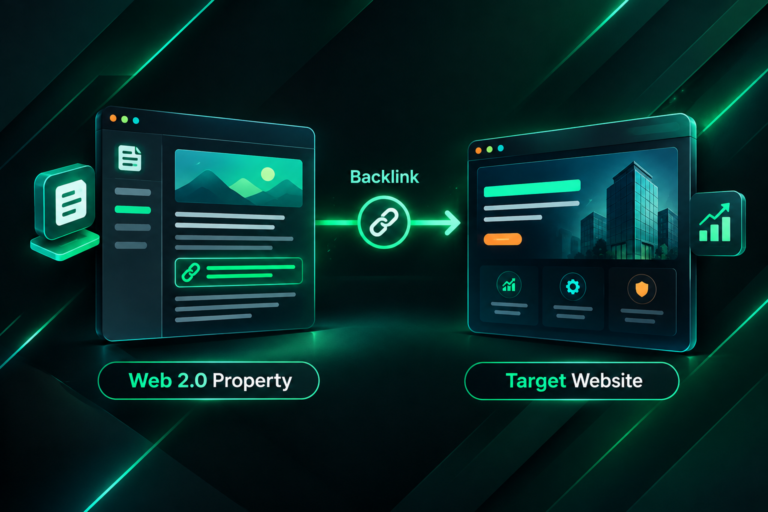
A link wheel is a structured network of interconnected web properties designed to funnel link equity toward a central target website. Once promoted as a shortcut to higher search rankings, link wheels became popular during an era when search engines were less sophisticated at detecting manipulative link patterns. Understanding what a link wheel is, how it was built, and why it carries serious risks today can help you make more informed decisions about your link acquisition strategy.
Key Takeaways
- A link wheel is a network of web properties linked in a circular or hub-and-spoke pattern, intended to pass link equity to a target site — a practice that conflicts with Google’s link spam policies.
- Search engines have become significantly better at identifying artificial link networks, making link wheels a high-risk tactic that can result in manual actions or algorithmic penalties.
- The underlying goal of a link wheel — building authority for a target page — can be pursued through lower-risk methods such as manual outreach, guest posting, and digital PR.
- If you have inherited a backlink profile that includes link wheel structures, a professional audit is advisable before starting any new link acquisition campaign.
- No link building strategy eliminates ranking risk entirely, and outcomes depend on many factors beyond the backlink profile alone.
What Is a Link Wheel?
A link wheel is a deliberate arrangement of web properties — typically blogs, Web 2.0 platforms, article directories, or microsites — connected in a pattern that channels link signals toward a primary target website. In its classic form, each property in the wheel links to the next property in the sequence and also links directly to the money site, the term commonly used for the target domain the builder wants to rank. The result is a circular structure where link equity theoretically circulates through the network before concentrating on the target.
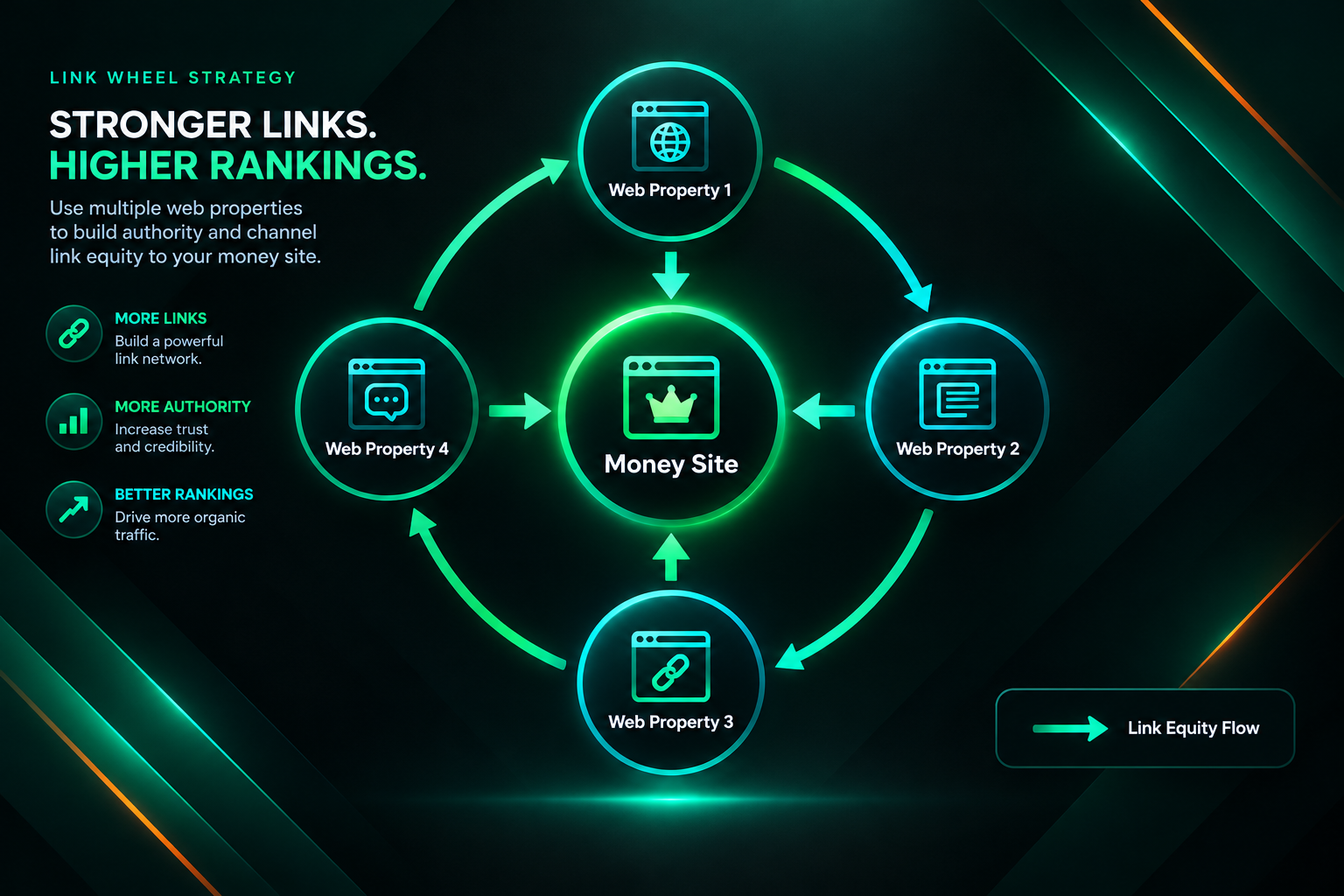
Variations on the basic design include hub-and-spoke arrangements, tiered link wheels, and multi-layered networks where a second tier of lower-quality links points to the first tier. The intention behind these variations is to dilute the footprint of the network and amplify the apparent authority flowing to the target site. In practice, the more complex the structure, the more difficult it becomes to manage and the more signals it may leave for search engine detection systems.
Link wheels emerged as a tactic during a period when search engines relied heavily on raw link counts and basic anchor text signals to assess page authority. Practitioners believed that creating a self-reinforcing network of links would simulate the kind of organic endorsement that search engines rewarded. The logic was superficially plausible, but it depended on search engines being unable to distinguish manufactured link patterns from genuine editorial endorsements — an assumption that has not held up over time.
How a Link Wheel Was Typically Built
Building a link wheel historically involved creating multiple web properties on free or low-cost platforms such as Blogger, WordPress.com, Tumblr, Squidoo, HubPages, and similar sites. Each property would be populated with thin or spun content — often low-quality text generated by software — and then linked to the next property in the sequence. The final property in the chain would link back to the first, completing the wheel, while every property also linked directly to the target website.
More sophisticated practitioners added a second tier of links pointing to the wheel properties themselves, using social bookmarks, forum profiles, blog comments, or additional article directories. This tiered approach was intended to boost the apparent authority of the wheel properties before that authority passed through to the target site. The entire structure could be built quickly using automation tools, which made it attractive to those looking for fast, low-cost link volume.
The content on wheel properties was rarely written for human readers. Its purpose was to provide enough text to avoid immediate removal by platform administrators and to give search engine crawlers something to index. Anchor text was often heavily optimized with exact-match keywords pointing to the target site, which was itself a signal that search engines later learned to treat with suspicion when appearing at scale.
Why Link Wheels Became Popular — and Why That Changed
Link wheels gained traction in the late 2000s and early 2010s when search engine algorithms were less capable of evaluating link quality at scale. During that period, acquiring a large number of links — regardless of their source or context — could produce measurable ranking improvements for competitive keywords. SEO forums and early link building communities documented case studies showing rapid ranking gains, which encouraged wider adoption.
The landscape changed substantially as Google introduced and refined its Penguin algorithm, first released in 2012, which specifically targeted manipulative link patterns including artificial networks, over-optimized anchor text, and low-quality link sources. Penguin was later incorporated into Google’s core ranking systems and began running in real time from 2016 onward, meaning that link quality assessments became continuous rather than periodic. Sites that had benefited from link wheel structures saw rankings decline, and some received manual actions from Google’s spam team.
Google’s publicly available spam policies describe link schemes as a violation of its guidelines. These policies explicitly include links intended to manipulate PageRank, links from automated programs, and links from low-quality directories or bookmark sites — all of which are characteristic of link wheel construction. While Google’s policies are not a guarantee of how any individual site will be treated, they provide a clear statement of intent regarding the kinds of link patterns the search engine aims to discount or penalize.
The Risks of Link Wheels Today
The primary risk of a link wheel in the current search environment is that the network may be identified as a link scheme, resulting in the links being discounted, a site-wide algorithmic demotion, or a manual action applied by a human reviewer at Google. Manual actions are documented in Google Search Console and require a reconsideration request after the problematic links have been removed or disavowed. Recovery from a manual action can take months and is not guaranteed to restore previous rankings.
Beyond direct penalties, link wheels carry several practical risks that are worth understanding before evaluating any network-based link building approach:
- Platform instability: Web 2.0 properties and free blogging platforms can be deleted, suspended, or de-indexed at any time, removing the links they contain without warning.
- Footprint detection: Shared IP addresses, similar content patterns, identical anchor text distributions, and registration details can connect wheel properties to each other and to the target site, making the network easier to identify algorithmically.
- Thin content penalties: Properties built with spun or low-quality content may themselves attract quality-related algorithmic signals, reducing the value of any links they pass.
- Anchor text over-optimisation: Heavy use of exact-match anchor text across a network is a documented signal associated with manipulative link building and may contribute to ranking suppression.
- Long-term profile damage: A backlink profile containing link wheel structures can complicate future legitimate link building campaigns and may require a disavow process before new outreach is effective.
It is worth noting that search engine detection capabilities continue to develop, and a link pattern that avoids detection today may not do so indefinitely. The risk profile of network-based link building is therefore not static.
Link Wheels vs. Private Blog Networks
Link wheels and private blog networks (PBNs) are related concepts that are sometimes confused. A PBN is a collection of websites, typically built on expired domains with existing authority, that are controlled by a single operator and used to pass links to target sites. A link wheel is a specific structural arrangement — the circular or hub-and-spoke pattern — that can be implemented using either free web properties or PBN-style sites.
The key distinction is that PBNs typically involve more investment in domain acquisition and content, with the goal of making each property appear to be an independent, legitimate website. Link wheels built on free platforms are generally less sophisticated and more easily identified. Both approaches conflict with Google’s link scheme policies, and both carry the risk of algorithmic or manual action. PBNs may produce more durable short-term results in some competitive niches, but they also require ongoing maintenance and carry the additional risk of the entire network being devalued if Google identifies the controlling relationship between properties.
Assessing a Backlink Profile for Link Wheel Patterns
If you have acquired a website, taken over an SEO campaign, or are reviewing a backlink profile that may have been built using older tactics, identifying link wheel structures is a useful step before planning new link acquisition. Tools such as Ahrefs, Semrush, and Majestic can be used to export referring domain data and examine patterns in anchor text distribution, the types of platforms linking to the site, and whether clusters of linking domains share similar characteristics.
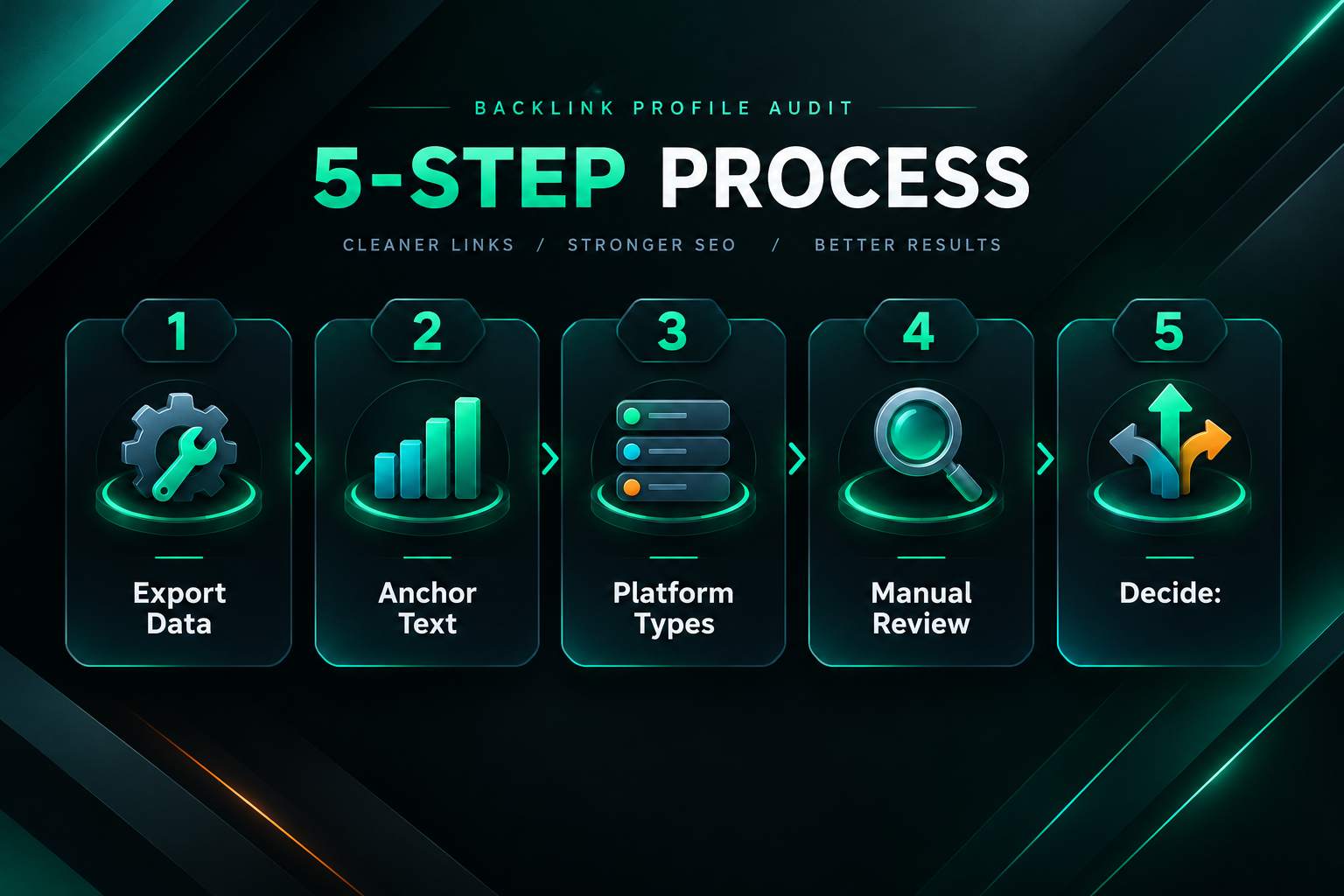
Signals that may indicate link wheel or network-based link building include a high proportion of links from free blogging platforms, repetitive exact-match anchor text across many referring domains, clusters of domains registered around the same time, and links from sites with no apparent organic traffic or editorial content. None of these signals is conclusive on its own, and a professional backlink audit is advisable before taking action such as disavowing links, which can have unintended consequences if applied incorrectly.
Third-party metrics such as Domain Rating from Ahrefs, Domain Authority from Moz, or Trust Flow from Majestic can provide a starting point for assessing referring domain quality, but these are proprietary scores rather than Google metrics and should not be treated as definitive indicators of link value or penalty risk. A manual review of the actual linking pages and their content context is generally more informative than metric thresholds alone.
Modern Alternatives to Link Wheels
The goal that link wheels were designed to achieve — building sufficient link authority to improve rankings for target pages — remains a legitimate SEO objective. The difference lies in the methods used to pursue it. Several approaches are available that focus on acquiring links from genuinely independent, editorially relevant sources rather than manufactured networks.
Manual Outreach and Guest Posting
Manual outreach involves identifying relevant websites in your industry or niche, assessing their editorial quality and audience relevance, and proposing content contributions or link placements that provide genuine value to their readers. Guest posting, when executed with attention to topical relevance and content quality, can produce links from real websites with real audiences. The acquisition process is slower and more resource-intensive than building a link wheel, but the resulting links are more likely to be treated as genuine editorial endorsements by search engines and are less vulnerable to network-level detection.
Niche Edits and Link Insertions
Niche edits involve adding a link to an existing piece of published content on a relevant website, rather than creating new content for the purpose. When the linking page is topically relevant and the link adds genuine value for readers, this approach can produce contextually strong placements. As with guest posting, the quality of the linking domain, the relevance of the surrounding content, and the naturalness of the link placement are important factors in assessing likely value.
Digital PR and Earned Links
Digital PR focuses on creating content, data, or stories that attract links from journalists, bloggers, and publishers without direct solicitation of each individual placement. This approach can produce links from high-authority news and media sites that would be difficult to acquire through direct outreach. Digital PR campaigns typically require more upfront investment in content creation and media relations, and results are less predictable than outreach-based methods, but the links produced tend to be highly diverse in terms of referring domains and anchor text.
Resource Page and Broken Link Building
Resource page link building involves identifying pages on relevant websites that curate useful links for their audience and proposing your content as an addition. Broken link building involves finding links on relevant pages that point to content that no longer exists and offering your own content as a replacement. Both methods require genuine content assets worth linking to and produce links in editorial contexts, though the scale achievable through these methods is typically lower than through direct outreach campaigns.
What to Consider Before Choosing a Link Building Strategy
No link building strategy is universally appropriate, and the right approach depends on factors specific to your website, industry, and goals. Before committing to any link acquisition method, it is worth considering the following:
- Existing backlink profile: A profile that already contains low-quality or manipulative links may need remediation before new link building is effective.
- Content quality: Links from genuine editorial sources are more likely to be acquired and retained when the target pages contain substantive, well-researched content.
- Competitive landscape: The number and quality of links required to compete for a given keyword set varies significantly by industry and geography.
- Technical SEO condition: Crawling, indexing, and on-page issues can limit the impact of link building regardless of the quality of links acquired.
- Budget and timeline: Manual outreach and content-based link building require ongoing investment and typically produce measurable results over months rather than weeks.
- Risk tolerance: Higher-risk tactics may produce faster short-term results in some cases but carry the possibility of algorithmic or manual action that can be difficult and time-consuming to recover from.
A site-specific assessment by a qualified SEO professional is generally more useful than applying a generic link building formula, particularly if the website has a complex history or operates in a competitive or regulated industry.
Frequently Asked Questions
Do link wheels still work for SEO?
Link wheels built on low-quality free platforms are unlikely to produce sustained ranking improvements in most competitive markets today. Search engines have become significantly better at identifying artificial link patterns, and the links produced by typical link wheel structures are more likely to be discounted than credited. In some low-competition niches, manipulative tactics may still produce short-term effects, but the risk of algorithmic or manual action makes this an unreliable long-term strategy.
Can I get a Google penalty for having link wheel links pointing to my site?
A site can receive a manual action if Google’s spam team determines that its backlink profile contains links that violate Google’s spam policies. Algorithmic systems such as Penguin may also discount or suppress rankings for sites with manipulative link patterns. If you are concerned about existing links, a professional backlink audit and, where appropriate, a disavow file submitted through Google Search Console may be advisable. Recovery outcomes vary and are not guaranteed.
What is the difference between a link wheel and a link pyramid?
A link pyramid is a tiered structure where the lowest tier contains the highest volume of low-quality links pointing to a middle tier of slightly higher-quality properties, which in turn link to the target site. A link wheel is a circular arrangement where each property links to the next and to the target. Both are forms of artificial link network intended to amplify link signals, and both conflict with Google’s link scheme policies. The structural difference is primarily in the arrangement of the tiers rather than the underlying intent.
Should I disavow link wheel links pointing to my site?
Google’s disavow tool allows site owners to ask Google to ignore specific links when assessing their site. Whether to disavow depends on the nature of the links, whether a manual action has been applied, and the overall composition of the backlink profile. Disavowing links incorrectly can remove signals that are actually beneficial. A professional audit is advisable before submitting a disavow file, particularly if the site has a large or complex backlink profile.
How long does it take to recover from a link-related manual action?
Recovery timelines vary considerably depending on the extent of the issue, how thoroughly problematic links are removed or disavowed, and how quickly Google processes the reconsideration request. Some sites see improvements within a few months of a successful reconsideration; others take longer. There is no guaranteed recovery timeline, and outcomes depend on the specific circumstances of each case.
Are there any legitimate uses of interconnected web properties for SEO?
Owning multiple legitimate websites and linking between them in a natural, editorially relevant way is not inherently problematic. The issue arises when the primary purpose of the properties is to manufacture link signals rather than to serve a genuine audience. Legitimate content hubs, brand microsites, and subsidiary websites that link to each other in contextually relevant ways are different in intent and execution from link wheels built solely to manipulate rankings.
Is a Link Wheel Worth the Risk for Your Website?
For most websites and most business goals, the risk-to-benefit ratio of link wheel construction is unfavourable in the current search environment. The potential short-term ranking gains are uncertain, the links produced are structurally vulnerable to devaluation, and the consequences of a manual action or algorithmic demotion can be significant and slow to reverse. The time and resources required to build and maintain a link wheel network could generally be better directed toward acquiring links from genuinely independent, editorially relevant sources.
That said, understanding what a link wheel is and how it works remains practically useful. It helps you evaluate the backlink profiles of sites you acquire or audit, assess the tactics used by competitors, and recognise when a link building provider is proposing an approach that carries higher risk than they may be acknowledging. Not all link building services operate with the same standards, and knowing the difference between a manufactured network and a genuine editorial link is a meaningful part of evaluating any proposal.
If you are considering a link building campaign and want to understand which approaches may be appropriate for your website’s current profile, competitive position, and goals, a conversation with a qualified link building specialist is a reasonable starting point. A site-specific assessment is more useful than any general recommendation, and the right strategy will depend on factors that vary from one website and market to the next.