

Building links for a business with multiple locations requires a controlled plan. A single backlink profile cannot carry every market equally, especially when each city has different competitors, publishers, directories, and buyer behavior.
Our agency manages outreach, publisher communication, citation cleanup, anchor planning, and placement review for companies that need visibility by city. We connect backlink acquisition with Google Business Profile work, reviews, NAP consistency, and location-page quality so links support real search outcomes, not vanity metrics. For many brands, multiple locations requires disciplined rollout planning, not scattered outreach.
Local Link Building Foundations for Multi-Location SEO
Strong execution starts with market separation. Each location needs its own authority signals, destination pages, and citation footprint. For outsourced campaigns, our team plans the rollout by city, service line, and ranking priority.
A managed campaign usually includes:
- City-by-city opportunity research.
- Publisher qualification and outreach.
- Citation review and NAP cleanup.
- Geo-targeted anchor text planning.
- Placement monitoring and rank tracking.
This is why many agencies and brands use local link building services when internal teams lack time for manual prospecting.
Local Backlink Value for Local Search Visibility
A backlink from a neighborhood blog, regional publication, chamber page, or industry association can help search engines connect a business location with a specific market. That connection supports prominence and geographic relevance.
We evaluate whether each placement points to the right page. A link to your site should support a city page, service-area page, or useful regional guide in a way that makes sense to readers. The best placements add context, not just PageRank.

Mon-Fri: 09:00 AM – 06:00 PM
Local Citations vs Local Links
Citations validate business data. Links pass editorial authority and contextual relevance. A complete local seo strategy uses both, but they are not interchangeable.
| Asset | Primary Role | Best Use |
| Citation | Confirms business information | Directories, maps platforms, associations |
| Editorial link | Builds authority | Regional blogs, news, industry publishers |
| Sponsorship mention | Adds community proof | Events, nonprofits, schools |
| Partner feature | Supports referral visibility | Nearby businesses and organizations |
Citations help confirm the entity. Editorial links help strengthen trust around the page being promoted.
Local Authority Signals Across Cities
A brand with ten branches may rank strongly in one market and poorly in another. That usually happens when some pages have better citations, reviews, relevant links, or clearer content.
We review local authority city by city. A branch in a competitive metro area may need regional editorial backlinks, while a smaller suburb may benefit first from citations, chamber listings, and nearby partner mentions. The mix changes with competition.
Location Pages Built to Support High-Quality Local Backlinks
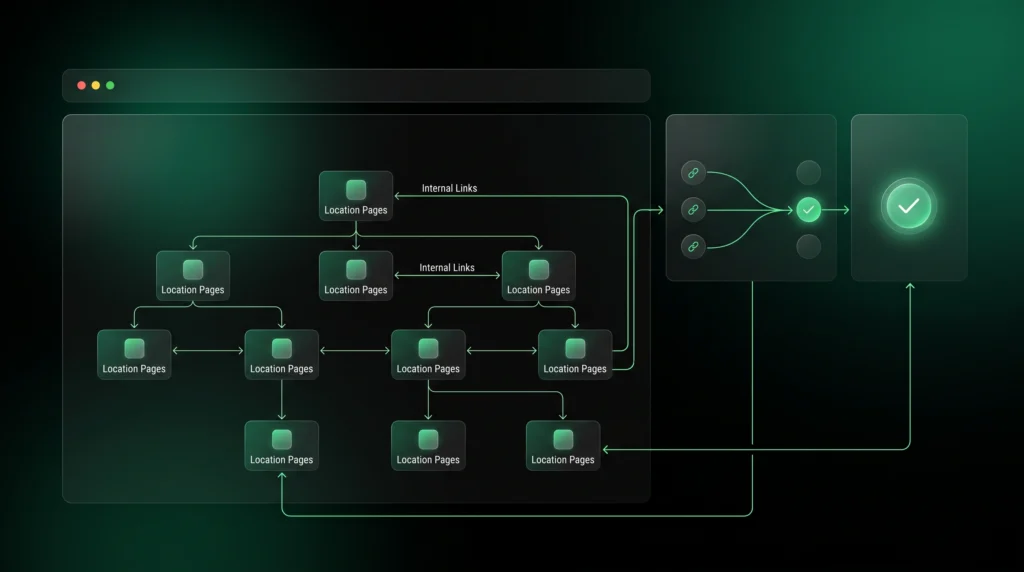
A backlink campaign performs better when the destination page deserves visibility. Thin location pages, copied text, weak service details, and unclear contact information reduce the value of good outreach.
Before acquisition begins, we review page quality, internal links, service coverage, schema, and user intent. High-quality backlinks work best when the page answers the searcher’s question and confirms the business serves that area. We build high-quality campaigns only after the destination page is ready. This is one reason local seo for multiple locations depends on both content and authority.
Dedicated Pages for Each Business Location
Each office, clinic, store, or service-area branch should have a dedicated page. That page gives publishers a precise URL to cite and gives search engines a clear entity-location relationship.
A useful location page includes the business name, address or service-area details, phone number, hours, services, reviews, team information, directions when relevant, and proof of area experience. Without that foundation, link equity is harder to interpret.
Clear URL Structure for Multiple Locations
A clean URL structure helps campaign management. Formats such as /locations/city/ or /areas/city/ allow teams to assign links, track rankings, and audit performance without confusion.
For businesses across multiple markets, URL consistency also helps reporting. We can see which links support which pages, which anchors were used, and how each market responds over time. Managing local seo for multiple branches becomes easier when every URL has a clear purpose.
Location-Specific Keywords for Local SEO
Keyword targeting should reflect how real customers search in each market. That includes service terms, city modifiers, neighborhood references, county language, and “near me” behavior without repetitive phrasing.
Anchor text should stay natural. We mix branded anchors, URL anchors, partial-match service terms, city phrases, and plain-language references. This improves anchor diversity and helps improve your local seo without over-optimization.
Internal Links Between Priority Location Pages
Internal links help distribute authority from strong pages to related services and nearby markets. When a page earns a quality backlink, internal links can help users reach connected resources.
The structure should feel useful, not mechanical. A regional hub can link to service pages, branch pages, and support content, but every link should help a potential customer navigate. Better internal links can also improve your local search rankings by clarifying page relationships.
Optimizing Google Business Profiles and Listings for Each Location
Backlinks should reinforce business profiles and listings, not replace them. Google Maps visibility depends on several signals, including relevance, proximity, prominence, profile quality, reviews, and accurate business data.
Our team aligns outreach with profile optimization and citation consistency. Optimizing your Google Business presence and website together gives backlinks a cleaner context to support rankings. This balanced approach helps improve your local visibility and local seo performance without relying on one signal.
Business Profile for Each Location
Each verified profile should match the corresponding website page. Categories, services, hours, phone numbers, descriptions, photos, and URLs need to be accurate for that branch or service area.
For service-area businesses, profiles should reflect real coverage without overstating reach. Optimizing your Google Business Profiles by location helps search engines connect the business to the right market and customer intent.
NAP Consistency Across Local Listings
NAP consistency means the business name, address, and phone number are the same across directories, maps platforms, chambers, and industry listings. Inconsistent data can confuse users and search engines.
Our citation workflow checks:
- Business name formatting.
- Address and suite details.
- Phone numbers.
- Website destination URLs.
- Duplicates and outdated profiles.
- Category relevance.
Accurate listings make backlink signals easier to connect with the correct branch.
Customer Reviews Supporting Local Authority
Reviews confirm that people in the service area interact with the business. They also influence trust and conversion when customers compare map results.
Backlinks and reviews support different parts of visibility. A business with regional mentions but weak reviews may struggle to convert. A branch with strong reviews and credible editorial links sends a more complete trust signal.
Google Maps Signals for Local Link Building Opportunities
Google Maps can reveal nearby organizations, vendors, charities, venues, associations, and complementary businesses. These entities often have websites that publish partner pages, event listings, or sponsor mentions.
We use map-based prospecting to find opportunities that are close to the target branch and relevant to its audience. geo relevant backlinks are strongest when the relationship is genuine and the source serves the same market.
Local Business Listings for Every Location
Every branch should have accurate listings on trusted directories and industry platforms. Quality matters more than bulk submission.
Broad tools can identify gaps, but manual review catches opportunities automated systems miss. Chambers, professional associations, neighborhood directories, and regional business indexes often provide better relevance than generic listing farms. Listings on local platforms also help customers verify contact details before they call.
Local Link Building Opportunities by City and Market
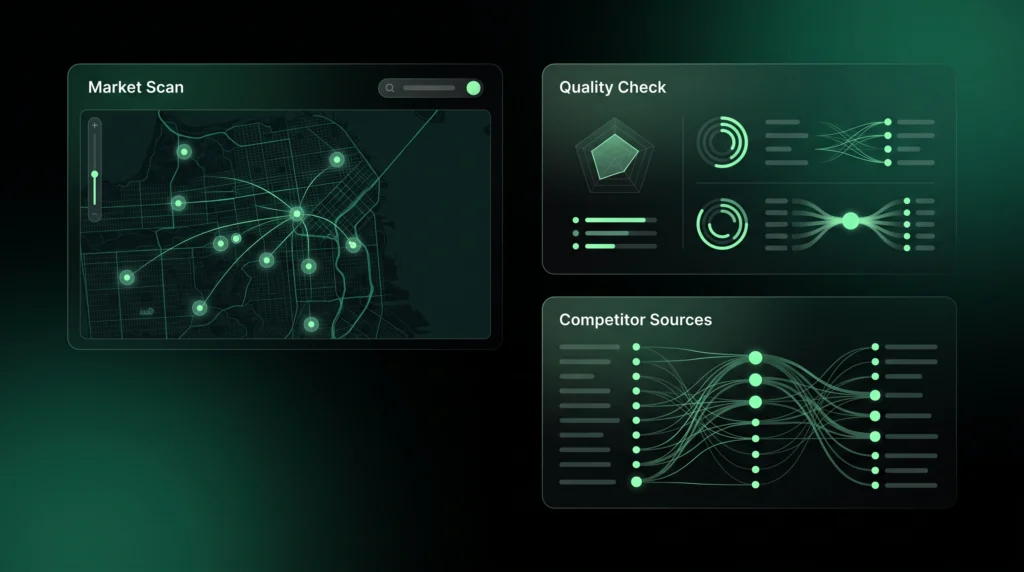
Each city has its own link environment. A law firm, dentist, plumber, roofer, or real estate office should not use the same outreach list for every branch.
We build prospect lists around service fit, geography, organic traffic, editorial standards, outbound link patterns, and audience value. That review protects the campaign from weak placements and helps each page earn links that match its market. Strong seo strategies for local search results start with market-level qualification.
Competitor Backlink Analysis by Location
Competitor analysis shows which publishers, directories, associations, and news sites already influence search results in a given market. We review competitors at the branch level, not only the brand level.
Useful findings include shared directory links, unclaimed chamber pages, industry resource lists, regional publications, and sponsor pages. We do not copy everything. We qualify each source before outreach.
Local Directory Research for High-Quality Local Links
Directory research should focus on trusted, relevant, and active sources. A directory with real users, clear categories, and regional focus can support visibility. A thin directory with excessive outbound links is usually not worth pursuing.
We prioritize the local chamber of commerce, associations, niche platforms, neighborhood resources, and respected business indexes. The destination URL should usually be the most relevant branch page. Clean profiles across local directories help confirm the entity behind each location.
Community Site Discovery
Community sites often publish neighborhood updates, guides, events, sponsor pages, and resource lists. These websites can be valuable when they have active content and real readership.
Our team checks whether the site serves the same audience as the business. A respected community blog can provide stronger geographic context than a generic national website with unrelated content.
Brand Mention Tracking
Mentions of your business can appear on event pages, association posts, old sponsorship pages, regional articles, and partner websites. Some mentions include no backlink.
When a mention is accurate and relevant, we contact the publisher politely and request a link to the best page. This approach works well because the brand has already been referenced.
Link Reclamation for Existing Mentions
Link reclamation fixes broken, outdated, or incomplete references. A page may link to an old URL, a redirected page, or the homepage when a specific branch page would be more useful.
Reclamation is efficient because the relationship already exists. It can improve link quality without creating unnatural velocity. For brands with many branches, this is often one of the first cleanup opportunities.
Google Maps Prospecting for Nearby Partners
Nearby businesses and organizations can become strong partners when there is a real reason to collaborate. Examples include referral partners, event venues, schools, nonprofits, and complementary service providers.
The goal is not to ask every nearby website for a link. We look for audience overlap, editorial fit, and a practical reason the publisher would mention the business. This helps connect the business to local entities that customers already trust.
Community Partnerships to Build Local Links
Community partnerships create backlinks through real activity. Sponsorships, events, nonprofit work, scholarships, and business collaborations can generate referral visibility and search relevance when handled properly.
We help clients choose partnerships that fit the brand, service area, and audience. The link should be a byproduct of meaningful involvement, not the only reason for the relationship. For a local business owner, partnership selection should support trust as much as rankings.
Local Sponsorship Opportunities
Local sponsorships may include youth sports, schools, fundraisers, festivals, neighborhood events, and professional groups. The placement should be visible, accurate, and tied to a real activity.
We review sponsor pages for quality, audience fit, and outbound link behavior. Sponsoring local programs can support awareness, trust, and city-level relevance when the organization serves the same market.
Local Event Participation
Local events give businesses a reason to earn coverage. Workshops, clinics, open houses, safety sessions, and educational programs often attract mentions from organizers and community calendars.
Sponsoring local events or participating in them works best when the activity serves the audience. A contractor explaining storm preparation or a clinic joining a health fair has a natural reason to be cited by area publishers.
Local Charity Partnerships
Local charity partnerships can support public trust when the involvement is genuine. Nonprofits may publish donor pages, event recaps, volunteer features, or partner resources.
Our agency avoids forced charity outreach. The organization should align with the business and market. When the relationship is real, the link supports both community reputation and search relevance.
Scholarship Programs for Local Students
Scholarship campaigns can earn links from schools, foundations, and education resources when the program is legitimate. The business must offer real funding, clear requirements, deadlines, and a transparent application process.
This tactic works best for companies with a sincere education or workforce-development angle. For multi-location brands, scholarship outreach should be organized by region rather than sent broadly to unrelated sites.
Nearby Business Partnerships
Nearby business partnerships work when companies serve the same audience without competing directly. A realtor, home inspector, mover, and mortgage broker may all provide value to the same customer journey.
Joint guides, referral pages, interviews, and resource articles can create useful links. The content should help customers make decisions, not read like a link exchange. Many service brands can partner with local organizations to expand referral visibility.
Local Media, Influencer Outreach, Digital PR
Local media and digital PR can earn editorial placements from newsrooms, city blogs, niche publishers, and industry platforms. These links are valuable because they often combine authority, audience, and geographic relevance.
We manage pitching, content angles, follow-ups, editor communication, and placement review. backlinks for local pack rankings should support a complete campaign that also includes profile quality, reviews, citations, and useful pages.
Local Newspaper Story Pitches
Local newspaper pitches need a reader-focused angle. Opening a branch, supporting a community project, publishing regional insights, or offering expert commentary can be newsworthy.
We avoid asking journalists for links without a story. Editors respond to useful, timely, and relevant ideas. Local news sites are more likely to mention a company when the pitch has public value.
Local Expert Columns
Local expert columns help professionals show authority in a market. Attorneys, dentists, contractors, doctors, and real estate agents can answer common customer questions through regional publications.
The content should be practical and editorial, not promotional. A strong column teaches readers something useful and gives the publisher a reason to include the expert.
Local Business Spotlights
Business spotlights can appear on chamber sites, neighborhood blogs, regional magazines, and association pages. These features work well when the company has a story, community role, or clear service-area value.
We check whether the publication has real readership and indexed content. A thoughtful spotlight can support reputation and help the company show up in local search through stronger brand context.
Local Roundups
Roundups include service lists, expert quote pieces, neighborhood resources, buying guides, and event previews. The quality depends on editorial standards.
We avoid pay-to-list pages that accept every submission. A roundup with real selection criteria, traffic, and audience value can help a business appear in local search results and referral paths.
Local Influencer Collaborations
Creators, bloggers, and group moderators can help brands reach audiences that do not rely only on search engines. Local Facebook groups and creator websites can both support discovery, though website-based placements usually carry stronger SEO value.
We focus on collaborations that produce useful articles, reviews, guides, or interviews. The publisher should disclose relationships when needed and write for real readers.
Speaking Opportunities at Local Events
Speaking opportunities can lead to event-page links, speaker bios, association mentions, and media coverage. This is useful for experts who can educate the market.
Examples include legal seminars, home maintenance workshops, health panels, safety events, and real estate sessions. When the topic fits buyer needs, the backlink has stronger context.
Best Local Link-Building Strategies Through Content
Content-led outreach works when the asset gives publishers a reason to cite it. Thin articles rarely earn quality backlinks. Useful assets answer city-specific questions, explain regional service issues, or provide helpful customer guidance.
Our content team builds outreach assets that match search intent and publisher needs. city-level editorial links are easier to earn when the page is useful beyond self-promotion. This is where local seo link building becomes a content and outreach system, not just prospecting.
Localized Content for Each Market
Localized content should reflect market differences without duplicating the same copy. Service demand, weather, regulations, neighborhood patterns, and customer concerns can vary across regions.
Good content helps customers and publishers. A useful guide gives websites a reason to reference the business while helping search engines understand the page’s area relevance. This can boost your local presence when paired with strong outreach.
Local Case Studies for Multiple Locations
Local case studies can show how a company solves problems in different markets. They should describe the challenge, service area, approach, and outcome without unsupported claims.
We do not invent numbers or results. Even qualitative case studies can support trust when they include clear context, real services, and practical details. A business with multiple locations can use these assets to show area-specific experience.
City Guides Built for Link Outreach
City guides can support outreach when they help readers make decisions. Strong guides explain service needs, area conditions, seasonal issues, or customer considerations.
A guide written only to repeat keywords will not earn strong links. A guide that solves a real problem can attract citations from community websites, bloggers, associations, and regional publishers. This is one of the safer local link building tactics for long-term authority.
Guest Posts on Local Blogs
Guest posts on blogs, regional publications, and niche websites can work when the article is useful and editorially reviewed. Mass guest posting creates weak signals.
Our agency checks traffic, topic fit, geography, editorial standards, and outbound link patterns before pitching. We prefer contextual links inside helpful content that points to the page most relevant to the reader.
FAQ
High-quality backlinks help multiple locations rank by giving each branch stronger city-level authority, relevance, and prominence signals. A backlink from a relevant regional website can support a specific location page when that page has accurate business data, useful content, reviews, and strong profile alignment. This can improve your local visibility in local search results, but it should support broader local seo efforts.
Each location page should earn enough links to compete in its market, not a fixed number. A dense metro area usually needs more authority than a smaller suburb. We review competitor links, map visibility, organic rankings, citations, reviews, and page quality before setting link targets and velocity for a local seo campaign.
The best opportunities usually come from relevant regional sources with real audiences, editorial standards, and geographic fit. Chambers, sponsorship pages, industry associations, niche blogs, community websites, and local media outlets can all work. Strong links from relevant local sources depend on business type, competition, market size, and the page being promoted.
Priority location pages should earn backlinks when they compete for city-level searches. A brand should not rely only on homepage authority if individual branches need visibility. Some smaller or newer pages may need citations, content improvements, reviews, and internal links before active outreach begins. Managing SEO across multiple locations means sequencing work by market value.
Businesses can build links with natural anchor text by mixing branded anchors, URL anchors, service phrases, city modifiers, neighborhood references, and plain editorial language. Exact-match anchors should be limited. A healthy profile reflects how publishers naturally describe a company, service, and location. This is central to ethical seo link building and long-term stability.
Useful tools include backlink crawlers, rank trackers, Google Business Profile reporting, citation platforms, analytics dashboards, and tools like Local Search Grid. The best reporting connects placements to rankings, Google Maps visibility, organic movement, citation status, referral traffic, and page-level performance. Manual quality review is still necessary for local search engine optimization.


