

Key Takeaways
- A link building campaign is a planned, goal-driven process for acquiring high-quality backlinks from relevant, authoritative sites to improve organic search visibility.
- Backlinks act as trust signals for search engines; the quality, relevance, and placement of each link matter more than raw quantity.
- Effective campaigns begin with clear SMART campaign goals, a defined target page list, and realistic timelines — typically eight to twelve weeks per cycle.
- Common tactics include guest posting, broken link building, digital PR, niche edits, and unlinked brand mention outreach — all white-hat link building methods.
- Results rarely appear overnight; most campaigns require three to six months before measurable ranking or traffic improvements are visible.
What Is a Link Building Campaign?
A link building campaign is a coordinated, time-bound effort to acquire backlinks — also called inbound links — from external websites back to pages on your own site. Each backlink functions as a vote of confidence in the eyes of search engines: when an authoritative, relevant site links to your content, it signals that your page is credible and worth referencing. Over time, accumulating high-quality backlinks strengthens your domain authority, improves your backlink profile, and can lift your positions in search engine results pages (SERPs).
The word “campaign” is deliberate. Random or opportunistic link acquisition rarely produces consistent results. A campaign applies structure: you define target pages, set measurable objectives, select appropriate tactics, conduct systematic link prospecting, execute outreach, and track progress against defined key performance indicators. This disciplined approach is what separates effective off-page SEO from scattered, low-impact activity.
It is also worth clarifying what a link building campaign is not. It is not the purchase of links from link farms or private blog networks (PBNs), which violates Google’s guidelines and can result in a manual action penalty. Legitimate campaigns rely on white-hat link building — earning links through genuine value, relevant content, and professional outreach.
Why Backlinks Still Matter for SEO
Backlinks have been a core Google ranking factor since PageRank was introduced in the late 1990s. While the algorithm has grown considerably more sophisticated, independent studies by Ahrefs, Semrush, and Moz consistently find a strong correlation between the number of high-quality referring domains pointing to a page and that page’s organic rankings. In essence, link equity — the ranking power passed from one page to another via a hyperlink — remains one of the most reliable signals of page authority available to search engines.
Beyond rankings, backlinks drive referral traffic directly. A well-placed editorial link on a high-traffic, relevant publication can send qualified visitors to your site regardless of where you currently rank for a given keyword. This makes link building valuable even in markets where organic competition is intense.
An emerging consideration for 2025 and beyond is visibility in AI-generated answers. Large language models and AI overviews increasingly surface content from domains that carry strong backlink profiles and established trust signals. Running a consistent link building campaign therefore supports not only traditional SERP positions but also the likelihood that your content appears as a cited source in AI-assisted search results.
What Makes a Good Backlink?
Not all backlinks contribute equally to your backlink profile. Search engines evaluate several qualities when assessing the value of an inbound link.
- Relevance: A link from a website that covers closely related topics carries more contextual weight than a link from an unrelated domain. Topical relevance signals that the endorsement is meaningful rather than incidental.
- Domain authority: Links from sites with strong domain authority — reflecting a well-established, widely trusted web presence — generally transfer more link equity than links from low-authority pages. Tools such as Ahrefs Domain Rating (DR) or Moz Domain Authority (DA) give approximate proxies for this, though neither is a direct Google metric.
- Dofollow status: A dofollow link passes link equity to the target page. A nofollow link signals to crawlers not to follow it for ranking purposes, though nofollow links still have value for traffic, brand visibility, and a natural-looking link profile.
- Anchor text: The clickable text of a link provides context about the destination page. A healthy anchor text distribution includes branded anchors, partial-match phrases, and generic terms. Over-optimizing for exact-match anchor text can appear manipulative and may attract algorithmic scrutiny.
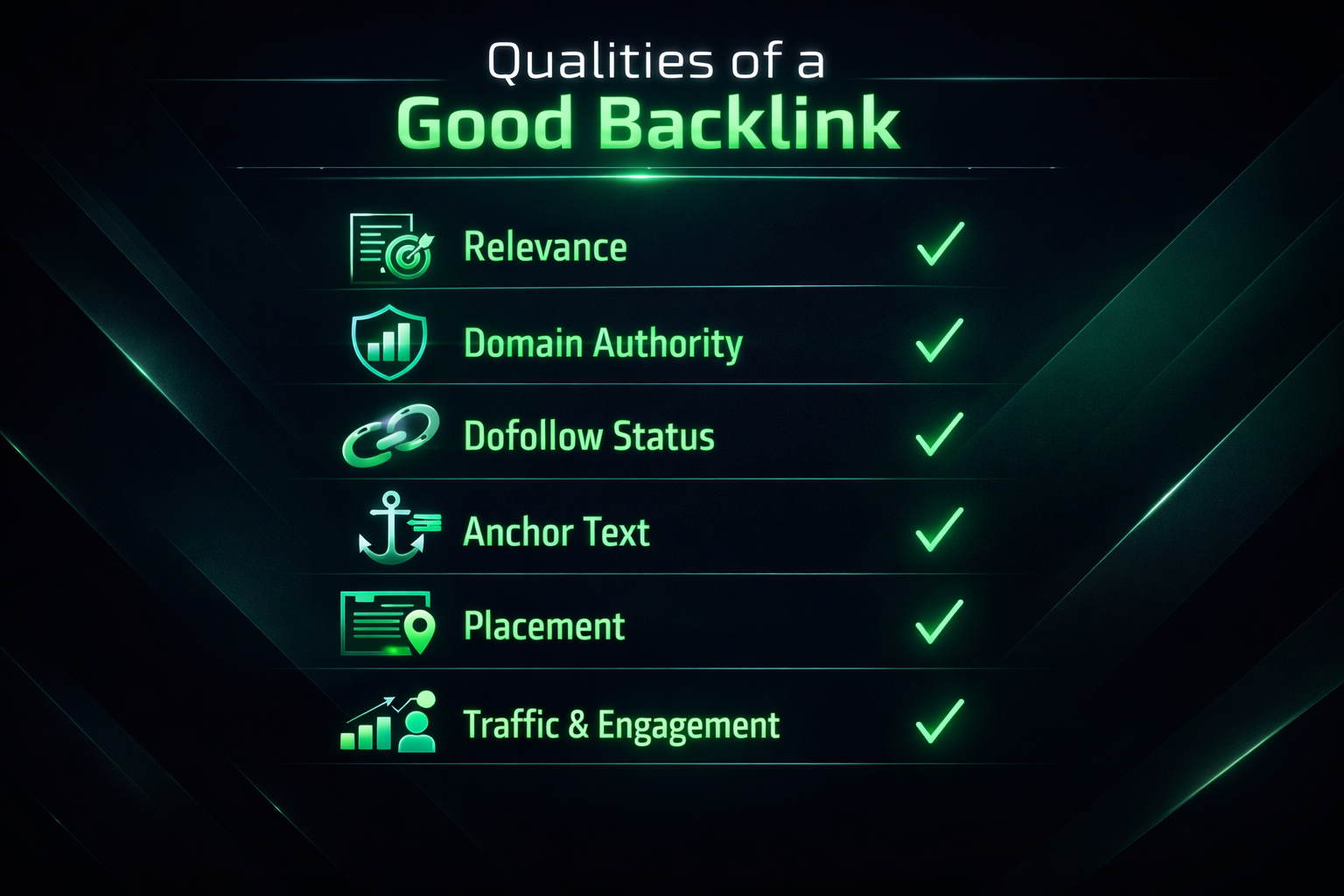
- Placement: Editorial links placed naturally within the body of relevant content are typically valued more highly than links buried in footers, sidebars, or boilerplate author boxes.
- Traffic and engagement: A referring domain that itself receives meaningful organic traffic suggests the site is genuinely valued by users, adding a further quality signal beyond raw authority scores.
How to Plan a Link Building Campaign
Thoughtful planning before any outreach begins is one of the most commonly overlooked steps in link building. Campaigns that lack clear objectives tend to produce inconsistent results and make it difficult to demonstrate return on investment.
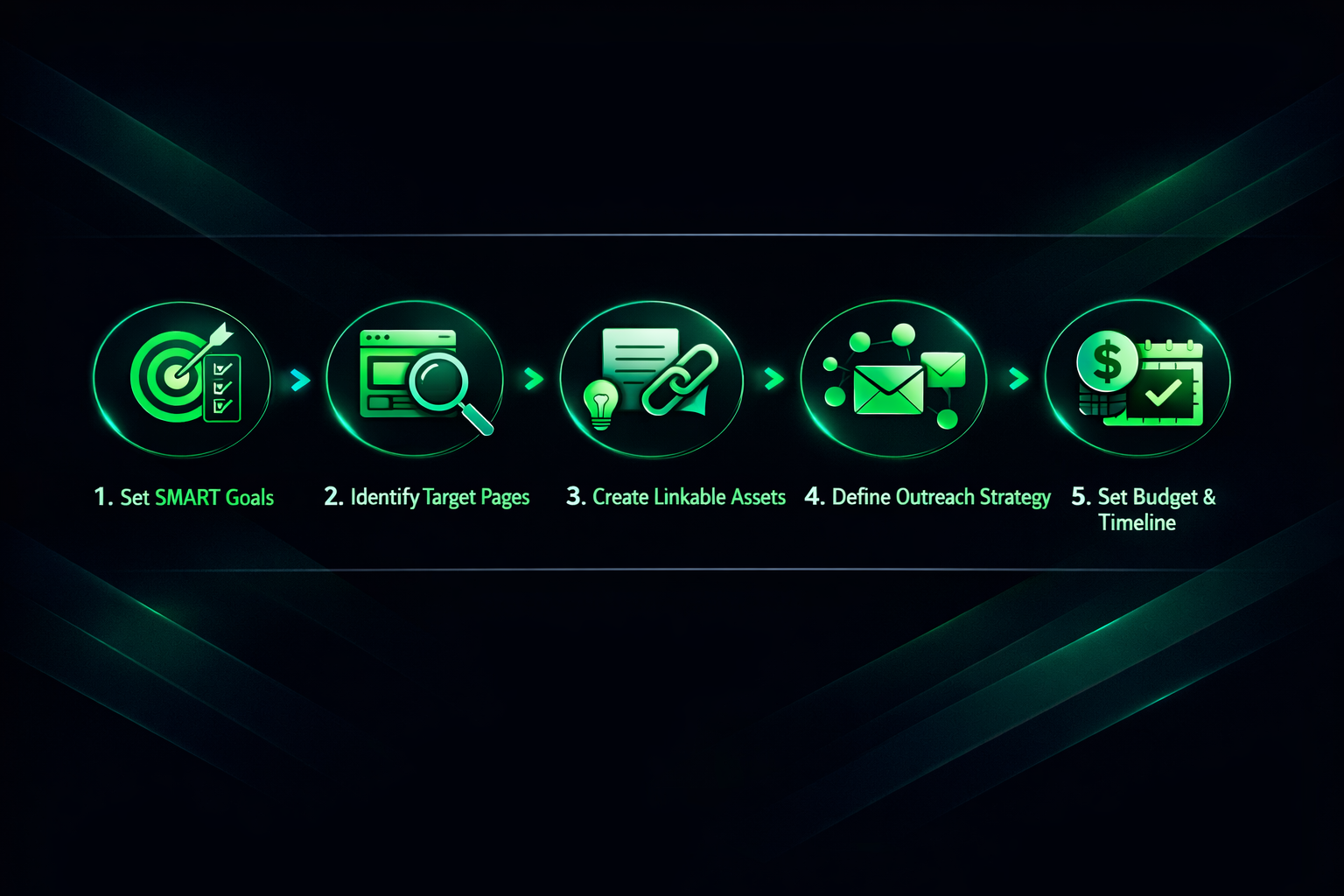
Set SMART Campaign Goals
SMART campaign goals are Specific, Measurable, Achievable, Relevant, and Time-bound. Rather than stating a vague intention to “get more links,” a well-formed goal might read: “Acquire fifteen new referring domains with a DR of 40 or above pointing to our services page within twelve weeks.” This level of specificity makes it straightforward to assess whether the campaign succeeded and where adjustments are needed.
Identify Target Pages and Linkable Assets
Not every page on your site is equally worth linking to. Prioritise pages that are commercially important — key service or product pages, cornerstone content, or pages already showing some ranking momentum. Alongside target pages, assess whether you have linkable assets: in-depth guides, original research, data studies, free tools, or well-designed resource pages that give publishers a genuine reason to link. If your current content is thin, investing in a linkable asset before launching outreach often improves campaign efficiency significantly.
Define Your Outreach Strategy and Budget
A realistic link building campaign requires time and resource planning. Consider how many prospects you can contact per week, whether you have in-house capacity for outreach or need external support, and what tools you will use for link prospecting and contact management. An honest budget conversation at this stage prevents scope creep and sets appropriate expectations for campaign outputs.
Link Building Tactics That Deliver Results
Several proven tactics form the foundation of most effective link building campaigns. The best approach for any site depends on its niche, content assets, and competitive landscape.
Guest Posting
Guest posting — contributing an original article to a relevant third-party publication in exchange for an editorial link — remains one of the most widely used white-hat link building tactics. The key is targeting publications with genuine audiences and editorial standards, rather than sites that exist solely to publish guest content. A well-placed guest post can simultaneously earn a high-quality backlink, build brand awareness, and establish topical authority.
Broken Link Building
Broken link building involves identifying pages on relevant sites that link to content no longer available — returning a 404 error — and reaching out to the site owner to suggest your own relevant content as a replacement. This approach is attractive because it frames your outreach as genuinely helpful: you are flagging a problem on their site and offering a solution simultaneously. Tools such as Ahrefs Site Explorer or Check My Links make it practical to find broken link opportunities at scale.
Niche Edits and Link Insertions
Niche edits, sometimes called link insertions, involve reaching out to authors or site owners to request that a link to your content be added within an existing, already-indexed article. Because the host page already has history and backlinks of its own, niche edits can pass link equity efficiently. They are most effective when the insertion is genuinely relevant to the existing content and adds value for the reader.
Digital PR
Digital PR involves creating newsworthy content — original research, industry surveys, data studies, or expert commentary — and pitching it to journalists, bloggers, and online publications. When successful, digital PR can generate multiple high-authority editorial links from a single campaign asset. Response rates vary, and the effort required to produce genuinely press-worthy content is higher than for other tactics, but the resulting links tend to be from highly authoritative domains that would be difficult to acquire through standard outreach.
Unlinked Brand Mention Outreach
When a publication mentions your brand, product, or content by name but does not link back to your site, you have an opportunity to request a simple addition of a hyperlink. These outreach conversations tend to have relatively high conversion rates because the publisher has already demonstrated a positive relationship with your brand. Tools such as Ahrefs Alerts or Google Alerts can flag new unlinked mentions as they appear.
Competitor Backlink Analysis
Competitor backlink analysis involves examining the referring domains of pages that rank above you for your target keywords and identifying sites that have linked to multiple competitors but not yet to you. These sites have already demonstrated willingness to link within your niche, making them high-priority prospects. Ahrefs, Semrush, and Moz all offer features for this type of competitor backlink research.
Skyscraper Technique
The skyscraper technique involves identifying highly linked-to content in your niche, creating a demonstrably superior or more comprehensive version, and then reaching out to sites linking to the original to suggest your improved resource. This tactic is resource-intensive but can yield a strong cluster of relevant backlinks when the improved content genuinely offers more value than what it replaces.
Outreach Mechanics: How to Make Contact Effectively
Even the strongest linkable asset will not earn links without an effective outreach strategy. The quality of your prospecting and communication is a decisive factor in campaign outcomes.
Successful link building outreach typically begins with careful link prospecting: compiling a list of genuinely relevant domains, vetting each for domain authority, traffic, and content quality, and identifying the correct contact — ideally the editor or author rather than a generic inbox. Personalized pitches that demonstrate familiarity with the target site and explain clearly why linking to your content benefits their readers consistently outperform generic templates.
Reply rates for cold email outreach typically range from five to fifteen percent in most niches, though well-targeted campaigns with strong personalization can achieve higher rates. A structured follow-up sequence — usually one or two polite follow-up messages sent several days apart — meaningfully improves total response rates without becoming intrusive. Email deliverability basics, such as warming up sending domains and avoiding spam trigger phrases, are worth addressing before large outreach volumes begin.
Tools Commonly Used in Link Building Campaigns
A range of tools supports different stages of a link building campaign. No single platform does everything equally well, and the right combination depends on campaign size and available budget.
| Tool | Primary Use Case | Particular Strengths |
|---|---|---|
| Ahrefs | Backlink analysis, competitor research, broken link finding | Largest backlink index; detailed referring domain data |
| Semrush | Backlink audit, link prospecting, keyword research | Integrated SEO suite; strong competitor gap analysis |
| Moz | Domain Authority scoring, link tracking | DA/PA metrics; straightforward link explorer |
| Pitchbox | Outreach automation and CRM | Prospecting at scale; follow-up sequencing |
| Respona | Outreach and contact discovery | Integrated contact finding; campaign tracking |
For teams running campaigns manually, a well-organized spreadsheet can function adequately at smaller scales. As campaign volume grows, a dedicated outreach platform improves deliverability tracking, reduces duplicate contact errors, and provides cleaner reporting.
How to Measure Link Building Campaign Success
Measuring campaign outcomes accurately requires tracking the right metrics at regular intervals — typically monthly — rather than expecting instant visibility in rankings.
- Referring domains gained: The number of unique domains linking to your target pages within the campaign period. This is the most direct measure of campaign output.
- Domain authority or domain rating growth: Changes in DA or DR over the campaign period reflect the cumulative effect of new links on your site’s perceived authority, though these scores lag behind actual link acquisition by weeks.
- Organic traffic lift: A meaningful increase in sessions arriving via organic search to target pages, measured against a comparable prior period.
- SERP ranking improvements: Movement in tracked keyword positions for the pages you targeted with link building activity.
- Link quality distribution: A review of the domain authority, relevance, and dofollow ratio of acquired links ensures the campaign is building a healthy, diverse backlink profile rather than accumulating low-value links.
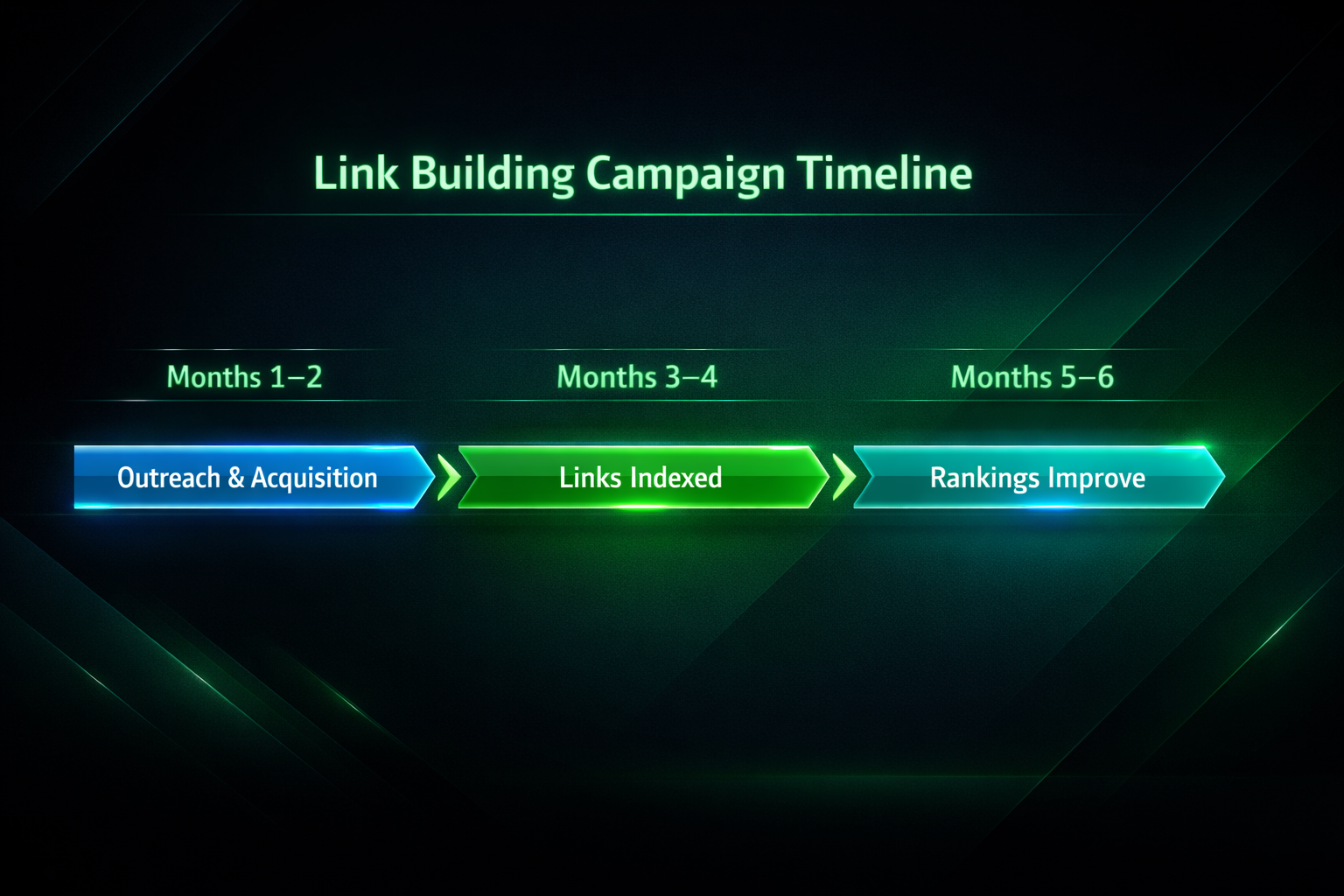
Realistic timeline expectations matter here. Most campaigns begin to show measurable ranking movement between three and six months after links are acquired, as search engines crawl, index, and process new backlinks. Campaigns shorter than eight weeks rarely produce reportable outcomes, and setting this expectation with stakeholders at the outset prevents premature conclusions about campaign effectiveness.
Risks to Avoid in Link Building
Not every link building approach is safe. Tactics that conflict with Google’s link spam policies can result in algorithmic suppression or a manual action that damages organic search visibility significantly.
Private blog networks (PBNs) — groups of sites created or purchased specifically to pass link equity to a target site — are explicitly prohibited and frequently identified by Google’s spam detection systems. Paid links that pass PageRank without disclosure, mass directory submissions, and large-scale article spinning with embedded links all carry similar risks. Acquiring links from sites with no real audience, no editorial standards, or content entirely unrelated to your niche adds little value and may attract negative attention.
Link velocity is also worth monitoring. Acquiring hundreds of links in a short window following a period of zero activity can appear unnatural. A steady, consistent acquisition pace generally produces safer and more durable results. If your site has accumulated low-quality links through past activity, Google’s Disavow Tool allows you to request that specific links not be considered when evaluating your site, though disavow files should be used cautiously and selectively.
Frequently Asked Questions
Is link building still worth it in 2026?
Yes. Backlinks remain among the strongest ranking signals used by major search engines. While the threshold for link quality has risen — meaning spammy or irrelevant links carry far less value than they once did — earning high-quality backlinks from relevant, authoritative sites continues to correlate strongly with improved organic rankings and traffic. The growing importance of AI-generated search results adds a further incentive: well-cited, authoritative domains are more likely to appear as sources within AI overviews.
How many links do I need to rank?
There is no universal number. The quantity and quality of backlinks you need depends on your niche, the competitiveness of your target keywords, and the strength of your existing backlink profile relative to the pages currently ranking above you. Competitor backlink analysis — reviewing how many referring domains your competitors have — gives the most practical benchmark for a given keyword.
What is a realistic outreach reply rate?
Most well-targeted cold email outreach campaigns achieve reply rates between five and fifteen percent. Highly personalized pitches sent to closely relevant prospects can exceed this range. A structured follow-up sequence typically adds two to five percentage points to overall reply rates. Conversion from reply to live link is lower still, so campaigns should build outreach volume into their planning accordingly.
How long does a link building campaign take to show results?
Most campaigns require three to six months before measurable improvements in organic rankings or traffic become clearly attributable to link building activity. Links need to be discovered and processed by search engine crawlers, and authority changes take time to be reflected in ranking signals. Campaign planning should account for this lag and set reporting expectations accordingly.
What is the difference between dofollow and nofollow links?
A dofollow link passes link equity — ranking power — to the destination page and is the primary type targeted in link building campaigns. A nofollow link instructs search engine crawlers not to follow it for ranking credit. Nofollow links still have value for driving referral traffic and creating a natural-looking, diverse backlink profile, but a healthy campaign should aim for a meaningful proportion of dofollow editorial links.
Can I run a link building campaign myself, or do I need an agency?
Both are viable depending on available time, expertise, and tools. In-house campaigns work well for teams with strong content capabilities, patience for manual outreach, and access to at least one backlink analysis tool. Agencies or specialist freelancers can be cost-effective for organizations that lack dedicated SEO resource or need to scale outreach volume quickly. The critical factor in either case is maintaining consistent quality standards — link quality, not link quantity, determines long-term impact.
Building a Link Campaign That Delivers Durable Results
A well-planned link building campaign is one of the highest-leverage investments available in off-page SEO. By combining clear SMART goals with systematic link prospecting, relevant tactic selection, and disciplined outreach, it is possible to build a backlink profile that meaningfully improves domain authority and organic search visibility over time.
The most important principles to carry forward are these: prioritise relevance and genuine authority over volume; invest in linkable assets that give publishers a real reason to link; set honest timelines with stakeholders; and track referring domains, traffic, and ranking movement consistently across each campaign cycle. Avoiding black-hat shortcuts protects your site from penalties that can take months or years to recover from.
Whether you are managing an in-house campaign or evaluating external support, starting with a clear plan, realistic targets, and a commitment to quality outreach gives any link building campaign the strongest possible foundation for lasting results.


