Key Takeaways
- Podcast link building generates backlinks primarily through show notes on a podcast’s own website, not from major platforms like Spotify or Apple Podcasts, which produce nofollow links with limited direct SEO value.
- The three main approaches are podcast guesting, hosting your own podcast, and podcast sponsorship — each with different effort levels, costs, and link acquisition potential.
- Niche relevance and domain authority of the podcast’s website matter more than raw listener numbers when evaluating SEO value.
- Post-recording follow-up, including sending exact target URLs to hosts within 24 hours, is the step most commonly skipped and the one most likely to determine whether a backlink is actually placed.
- Content repurposing turns a single episode into multiple secondary link opportunities through blog posts, clips, and social assets.
What Is Podcast Link Building?
Podcast link building is a link acquisition strategy that involves earning backlinks from podcast-related web pages — most commonly the episode description or show notes published on the podcast’s own website. When a guest appears on a podcast, the host typically publishes an episode page containing a written summary, timestamps, guest biography, and links to the guest’s website, products, or resources mentioned during the conversation. Those links, when placed on an indexed, publicly accessible website with reasonable domain authority, function as standard SEO backlinks and can contribute to improved search engine rankings over time.
The strategy sits at the intersection of digital PR, content marketing, and traditional link building. Unlike outreach campaigns that ask webmasters for editorial links, podcast link building creates a genuine value exchange: the guest provides expertise and content for the host’s audience; the host provides exposure and, crucially, a backlink from an indexable episode page on their site. When executed with niche relevance in mind, this approach can build brand authority, drive referral traffic from engaged listeners, and strengthen a domain’s overall backlink profile.
How the Backlink Mechanism Actually Works
Understanding exactly where podcast backlinks come from is essential before investing time or budget into this strategy. The mechanism depends on one important distinction: links from major podcast streaming platforms are not the same as links from a podcast’s dedicated website.
Dofollow vs. Nofollow Podcast Links
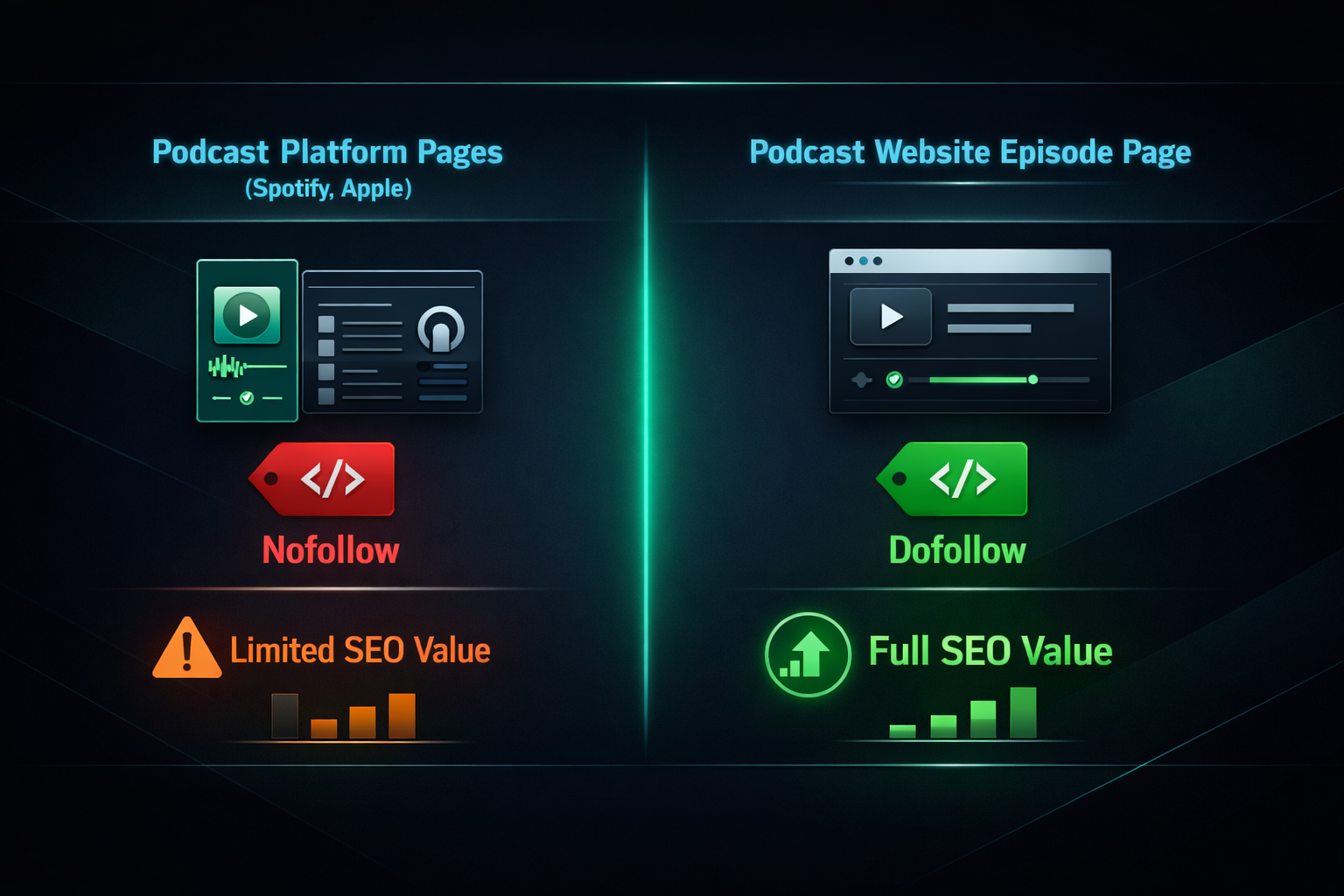
Spotify, Apple Podcasts, and Amazon Music collectively account for the vast majority of podcast listening, but links embedded in their platform pages are almost universally nofollow. A nofollow attribute signals to search engine crawlers that the linking page is not passing ranking authority to the destination URL. Google has stated it treats nofollow as a “hint” rather than a hard directive, meaning some indirect signal may be present, but these links should not be the primary target of a podcast link building campaign.
The real SEO prize is a dofollow link placed in the show notes on the podcast’s own website — a self-hosted WordPress blog, a Squarespace site, or a custom domain where the host publishes episode content. These episode pages are crawlable, indexable, and function identically to any other editorial backlink on the open web. When evaluating podcast opportunities, the first question should always be: does this show publish its own website with episode pages, and does Google index those pages?
Show Notes Backlinks: The Primary Placement
Show notes backlinks typically appear in two forms. The first is a direct link to the guest’s homepage or a specific landing page, placed in the guest bio section at the top or bottom of the episode description. The second, and often more valuable, form is a contextual link embedded within the episode’s written content — for example, a phrase like “visit [guest’s resource page] for the full framework” linked directly to a specific URL. Contextual links surrounded by relevant text generally carry more SEO weight than bare URL placements, making it worthwhile to suggest specific anchor text and target pages to the host after recording.
The Three Core Podcast Link Building Strategies
1. Podcast Guesting Strategy
Appearing as a guest on established podcasts in your niche is the most accessible entry point. The guest contributes a recorded conversation — typically 30 to 60 minutes — and in return receives attribution in the episode page, including links back to their website. A strong podcast guesting strategy focuses on shows whose websites have measurable domain authority, whose episode pages are consistently published and indexed, and whose audience overlaps meaningfully with the guest’s own target market. Volume matters: a single appearance on one show has limited SEO impact, but a consistent programme of 10 to 20 appearances per year across niche-relevant podcasts can produce a meaningful cluster of high-quality backlinks over time.
2. Hosting Your Own Podcast
Launching a branded podcast allows you to control the episode pages and their content entirely. When you invite industry guests to appear on your show, those guests typically share the episode with their own audiences and may link back to the episode page from their own websites or social profiles — generating inbound links to your domain. The tradeoff is significant upfront investment in equipment, editing, and consistent publishing, but the long-term benefits include owned content, audience growth, and a compound accumulation of inbound links as your episode library grows.
3. Podcast Sponsorship
Podcast sponsorship involves paying a show to mention your brand during an episode, often in the pre-roll, mid-roll, or post-roll segments. Some sponsorship arrangements also include a link in the show notes. From an SEO perspective, sponsored links should ideally be disclosed and marked appropriately; Google’s guidelines generally expect paid links to carry a sponsored or nofollow attribute. Despite this, sponsorship can still generate meaningful referral traffic from listeners and build brand awareness even where the direct SEO link value is limited. It is most useful as a complementary tactic rather than a core link acquisition method.
How to Find and Vet Niche-Relevant Podcasts
Effective podcast outreach begins with identifying shows that are genuinely relevant to your industry, are actively publishing episodes, accept outside guests, and have a website with indexed episode pages. Sending pitches to inactive shows or shows without their own website wastes time and yields no backlinks.
Podcast Vetting Criteria
When assessing a podcast opportunity, apply the following podcast vetting criteria in order of priority:
- Niche relevance: The show’s topic should closely match your industry or the expertise you plan to discuss. A link from a tangentially related show carries less SEO value and is less likely to drive relevant referral traffic.
- Website with indexable episode pages: Confirm the podcast publishes episode descriptions on its own domain and that those pages are being indexed by Google. Use a site: search operator to verify.
- Domain authority: Use tools such as Ahrefs, Semrush, or Moz to check the domain authority of the podcast’s website. Prioritise shows with a DA above 20 for meaningful link equity, though highly relevant low-DA sites are often still worth pursuing for referral traffic and brand authority.
- Publication frequency: Shows publishing at least twice per month are generally active enough to be reliable partners. Irregular or dormant shows may never publish your episode.
- Guest-friendly format: Review recent episodes to confirm the show regularly features external guests rather than solo commentary only.
Tools for Podcast Discovery
Podcast databases such as Rephonic, Listen Notes, and Podchaser allow you to filter shows by category, estimated audience size, and contact information. Google search operators — for example, searching “your niche” + “podcast” + “guest” — can surface smaller, high-relevance shows that databases may not index. For competitive intelligence, tools like Ahrefs and Semrush allow you to analyse a competitor’s backlink profile and identify podcast episode pages already linking to their site. Replicating that list of shows is one of the fastest ways to build a targeted pipeline of outreach opportunities.
Podcast Outreach: How to Pitch Yourself as a Guest
Podcast outreach that converts requires personalization, brevity, and a clear articulation of what the host’s audience will gain from the conversation. Generic pitches sent at scale rarely succeed. The most effective approach treats each pitch as a short editorial proposal rather than a request for a favour.
Pitch Email Template Structure
A reliable pitch email template follows this structure:
- Personalised opener: Reference a specific recent episode or guest the host has featured, demonstrating that you have actually listened to the show.
- Who you are: One to two sentences establishing relevant credentials without a full biography. Focus on why you are credible on a specific topic rather than listing career history.
- Topic suggestion: Propose two or three specific episode angles with working titles. This reduces friction for the host and signals that you are prepared to deliver structured content.
- Audience value statement: Explain concisely what the host’s listeners will learn or be able to do differently after the episode.
- Soft call to action: Ask whether the host would be open to a brief conversation, rather than requesting a booking immediately.
Keep the pitch email to under 200 words where possible. Hosts receive many approaches; a concise, targeted pitch that respects their time performs better than a detailed press kit attached unsolicited.
Inbound Opportunities via HARO and Connectively
Help a Reporter Out (HARO), now operating under the Connectively platform, is primarily used for media commentary, but journalists and podcast producers occasionally post requests for expert guests through similar services. Monitoring these platforms can surface inbound podcast opportunities — situations where a host is actively seeking a guest with your profile, reversing the usual outreach dynamic and often resulting in more motivated hosts who are already committed to publishing the episode.
Preparing for Your Episode and Securing the Backlink
Appearing on a podcast is the middle of the process, not the end. What happens before and after recording determines the actual link acquisition outcome.
Before the Recording
Prepare three to five substantive talking points that provide genuine value to the audience. Identify one or two specific resources on your website — ideally a detailed blog post, a free tool, or a useful guide — that you intend to mention naturally during the conversation. Having a concrete resource to reference gives the host a clear URL to include in the show notes and gives listeners a reason to visit your site, generating referral traffic beyond the SEO benefit.
After the Recording: The Follow-Up That Determines Your Link
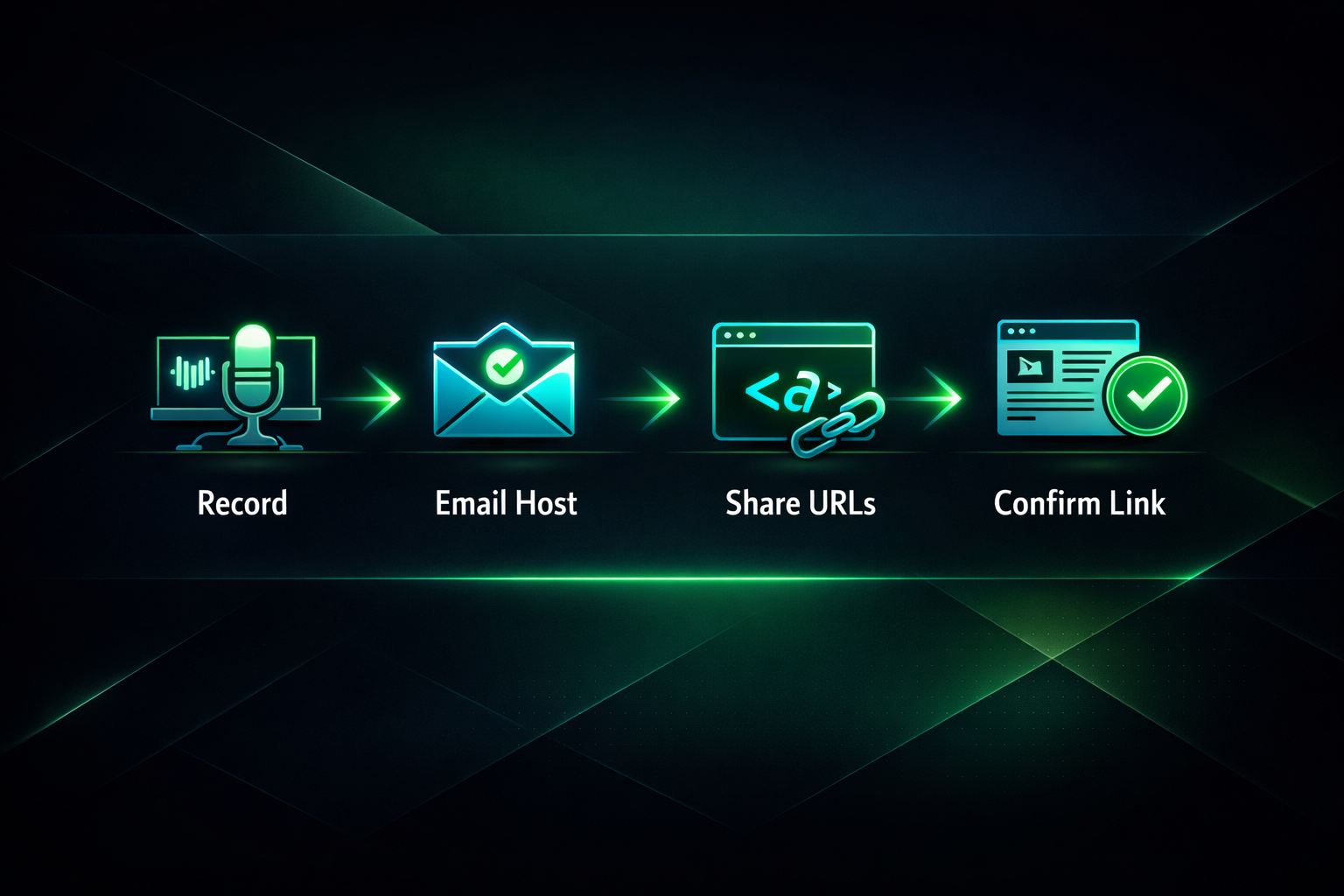
Within 24 hours of completing the recording, send the host a thank-you email that includes the exact URLs you would like linked in the show notes, along with suggested anchor text for each. Many hosts are willing to include these links but will default to linking only to a homepage if no specific URLs are provided. Specifying a target page — for example, a resource page or a service-specific landing page rather than a root domain — ensures the backlink points where it will have the most relevance and SEO impact. This post-recording follow-up step is the most commonly skipped part of the entire process and the one most directly responsible for whether a dofollow backlink actually materialises.
Content Repurposing for Secondary Link Acquisition
A single podcast appearance, treated as a one-time event, captures only a fraction of its potential link value. Content repurposing extends that value by transforming the recorded episode into additional assets, each of which can attract secondary backlinks and drive further referral traffic.
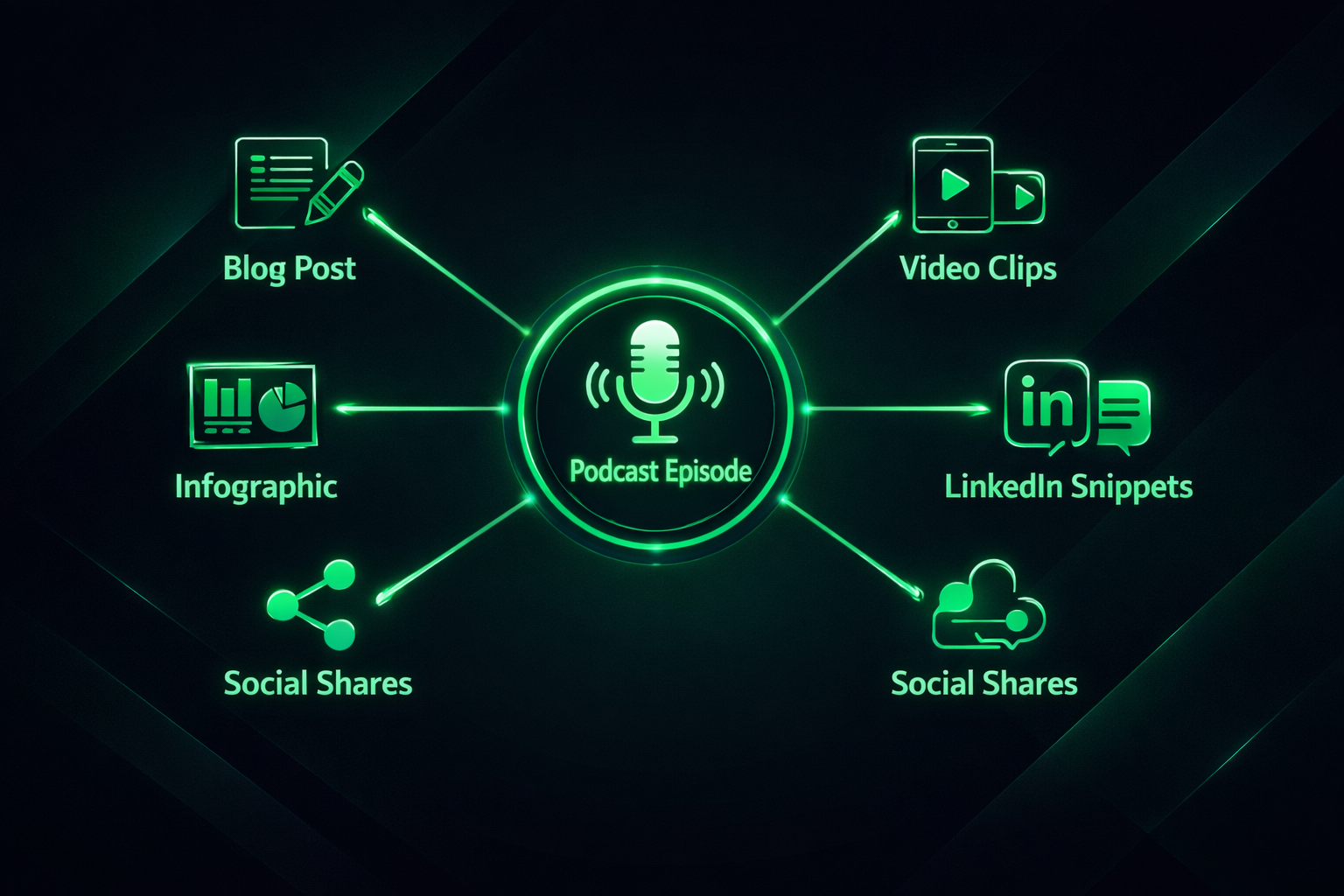
Common repurposing formats include:
- Written blog post: A long-form article expanding on the key points from the episode, published on your own site with a link back to the original episode page. This creates a reciprocal link signal and keeps the episode discoverable via organic search.
- Short video clips: Edited highlight clips from the episode distributed on YouTube, LinkedIn, Instagram, or TikTok. These clips often attract additional links from aggregator sites and can be embedded in other publications.
- Infographics: Visual summaries of statistics or frameworks discussed during the episode are shareable assets that other sites may embed with attribution links.
- LinkedIn and social snippets: Quoting key insights from the episode with a link to the full episode page drives traffic and signals editorial relevance to the host’s audience, increasing the likelihood of organic sharing.
Each repurposed asset that links back to the original episode page also reinforces the episode’s own search visibility, which can indirectly benefit the backlinks contained within that page.
Tracking and Measuring Podcast Link Building ROI
Attribution is one of the genuine challenges of podcast link building. Unlike pay-per-click advertising with immediate conversion tracking, the SEO impact of individual podcast appearances typically takes weeks or months to appear in search rankings, and isolating the contribution of a specific link from a specific episode is rarely straightforward.
Useful Tracking Methods
UTM parameters appended to the URLs you share with hosts allow Google Analytics to track referral traffic specifically from podcast episode pages, helping you identify which shows are sending engaged visitors to your site. Monitoring your backlink profile in Ahrefs or Semrush after each episode is published confirms whether the link was actually placed and whether the page has been indexed. Google Search Console can show incremental improvements in organic impressions and click-through rates for pages that have accumulated new backlinks, providing a longer-term signal of cumulative impact. Social listening tools can surface mentions and shares of the episode across platforms, giving a broader picture of brand authority gains beyond direct link metrics.
Realistic Expectations and Common Pitfalls
Podcast link building is a medium-to-long-term strategy. A realistic programme involves consistent outreach, multiple appearances, and patience. Expecting a single guest appearance to produce measurable ranking improvements within weeks is unlikely to be satisfied. The value accumulates across a portfolio of appearances on niche-relevant podcasts over months, not from a single high-profile episode.
Common pitfalls include:
- Targeting shows without their own indexed websites: If a podcast exists only on streaming platforms, no dofollow backlink is possible from that appearance.
- Prioritising audience size over niche relevance: A large general-interest show may offer no SEO benefit if its topic has no overlap with your industry, and its high-DA website link will carry less relevance signal than a link from a smaller but highly focused niche site.
- Being overtly promotional during the episode: Hosts edit or omit overly sales-oriented segments. If a guest spends the conversation promoting their products rather than delivering genuine insight, the host may exclude the segment, reduce the show notes, or decline to publish.
- Failing to follow up: Without a post-recording email containing specific target URLs, many hosts default to linking to a homepage only, or omit guest links entirely.
- Expecting guaranteed link placement: No podcast appearance guarantees a dofollow backlink. Platform policies, editorial decisions, and host workload all affect whether a link is placed, what type of link it is, and how quickly the episode page is published.
Frequently Asked Questions
Do podcast backlinks actually help SEO?
Backlinks from indexable episode pages on podcast websites can help SEO in the same way that other editorial backlinks do, provided the linking page has some domain authority, the link is dofollow, and the topic is relevant to the linked site. Links from major streaming platforms like Spotify or Apple Podcasts are nofollow and provide minimal direct ranking benefit, though they may still contribute to brand visibility and referral traffic.
How many podcast appearances do I need to see results?
There is no universal number. SEO impact from podcast link building accumulates gradually. A consistent programme of appearances on relevant shows over six to twelve months typically produces more meaningful backlink profile improvements than isolated individual episodes. Volume combined with niche relevance and the domain authority of the shows’ websites determines the aggregate effect.
What is the difference between podcast guesting and podcast sponsorship for link building?
Podcast guesting involves appearing as an expert contributor and typically earns editorially placed backlinks in show notes at no direct cost beyond time investment. Podcast sponsorship involves paying for brand mentions and may include show notes links, but paid links should generally be disclosed or marked appropriately per search engine guidelines. Guesting is the preferred approach for building genuine link equity; sponsorship is better suited to brand awareness and referral traffic goals.
Should I target high-DA podcasts or niche-relevant ones?
Both factors matter, but niche relevance should take priority. A dofollow link from a highly relevant mid-authority podcast website will generally provide more contextual SEO value than a link from an unrelated high-DA site. Where both criteria overlap — a high-authority site in your specific niche — prioritise those opportunities, but do not ignore smaller, tightly focused shows simply because their domain authority is modest.
How do I confirm my backlink was actually placed?
After the episode is published, check the episode page on the podcast’s website and manually verify that the link is present and points to your intended URL. Tools such as Ahrefs, Semrush, or Moz will detect the backlink within days to a few weeks of the page being indexed by Google. If the link is missing or incorrect, a polite follow-up email to the host referencing the specific URL is the appropriate next step.
Can I do podcast link building myself or should I hire an agency?
Both approaches are viable depending on available time and budget. Self-managed podcast outreach using databases like Rephonic or Listen Notes and an organised tracking spreadsheet is achievable for individuals and small teams, particularly in the early stages. Agencies specialising in podcast link building can scale the outreach and vetting process significantly but come with ongoing costs. Whichever approach you choose, the fundamentals — niche relevance, follow-up on show notes links, and content repurposing — remain the same.
Is Podcast Link Building Worth Adding to Your SEO Strategy?
Podcast link building is a legitimate and sustainable link acquisition channel when approached with realistic expectations and a structured process. Its core advantages are the genuine value exchange it creates — expertise for exposure — and the compound effect of building both a backlink profile and brand authority simultaneously. Unlike some link building tactics that carry penalty risk, earning backlinks through substantive podcast appearances is aligned with the editorial intent that search engines reward.
The strategy works best for subject-matter experts, founders, practitioners, and B2B professionals who can demonstrate genuine knowledge in a defined niche. It requires consistent effort over time rather than a one-time campaign, and its SEO impact is most measurable when combined with proper tracking via UTM parameters, Google Search Console monitoring, and regular backlink profile reviews.
If your current link building activity relies heavily on one or two tactics, podcast guesting offers meaningful diversification. Start by identifying ten to fifteen niche-relevant podcasts with indexed episode pages, prepare a concise and personalised pitch, and commit to the post-recording follow-up process. The links that result, combined with the referral traffic and thought leadership positioning that good episodes generate, make this one of the more durable approaches available to content-driven brands.