

Geo relevant backlinks help search engines connect a business with a real market, audience, and service area. For a plumber, dentist, law firm, clinic, roofer, or franchise location, those connections can support trust beyond what on-page content can show alone.
As a local link building agency, we build placements through manual outreach, publisher review, citation cleanup, and city-level content strategy. Backlinks should reinforce proximity, relevance, and prominence, not replace Google Business Profile work, reviews, or accurate business information. We plan every placement around what a local buyer, editor, and search engine can verify from the page itself.
Role Of Local SEO Backlinks In Local Search
Local SEO backlinks give outside validation that a business belongs in a specific market. Search engines see signals from directories, regional publications, chambers, associations, community blogs, and niche websites that mention or link to the company.
In real campaigns, the strongest results usually come from combining citations, reviews, service pages, GBP optimization, and backlinks from local sources. A link profile should reflect the business footprint, not a random collection of unrelated domains. When that footprint is clear, service pages become easier to evaluate against competitors serving the same demand.
Local SEO Backlink Vs Traditional SEO Backlinks
Traditional link building often focuses on topical authority, domain strength, and editorial placement. A Local SEO backlink adds geographic context: the linking page, publisher, or audience has a relationship with the service area.
That difference matters for service-area businesses. A regional roofing association, city blog, or neighborhood publication may carry more practical value than a broad national article with no area-specific intent. Relevance for local searches depends on place plus topic. That is why our prospect lists are built around market fit before metrics, rather than chasing any site that accepts content.

Mon-Fri: 09:00 AM – 06:00 PM
Why Geographic Relevance Matters For Local Rankings
Geographic relevance helps search engines verify where a company operates and which users it can serve. Links from local websites can support city pages, service-area pages, and branded entity signals.
For example, a backlink from a local source may reinforce that a contractor serves nearby suburbs, while a mention from a regional publication may support broader market credibility. The link should feel useful to readers first; SEO value follows that fit. If the mention would look out of place to a resident or buyer, it usually belongs lower on the priority list.
How Local SEO Link Building Improves Visibility

Local SEO link building improves visibility by strengthening authority around services, markets, and customer intent. It helps search engines see that a business is not only optimized internally but also referenced by credible outside sources.
Our managed campaigns connect link building efforts with Google Maps visibility, organic rankings, citations, and page-level performance. We avoid treating backlinks as isolated deliverables because local search results are shaped by multiple signals working together. This keeps acquisition aligned with pages that can convert, not only pages that need authority.
Impact On Google Search Rankings
Backlinks from relevant websites can help service pages and location pages compete in organic results. A quality backlink gives a page stronger support when the content already answers search intent well.
In our review process, we check whether the source has real traffic, editorial standards, topical alignment, and a reason to link to your website. That prevents placements on thin sites that publish anything for anyone. We also verify the destination page so the link supports a page with clear service intent, useful copy, and a logical path to contact.
Impact On Google Maps Rankings
Backlinks do not guarantee map pack rankings. Google Business Profile quality, categories, reviews, proximity, NAP consistency, and business information all influence Maps visibility.
Still, backlinks for local pack rankings can support prominence when they come from trusted city, neighborhood, or industry sources. Our guide to backlinks for local pack rankings explains how link signals can fit into Maps-focused SEO strategies without unrealistic ranking claims. The point is to strengthen credibility around the business, not pretend that one backlink can replace a complete Maps strategy.
Visibility Gains From Strong SEO Efforts
Strong SEO efforts connect content, citations, reviews, and backlinks into one measurable plan. A campaign should improve your local search presence by supporting page authority, publisher trust, and service-area clarity.
Our typical process:
- Audit backlinks, citations, GBP data, and location pages.
- Map competitors by city, niche, and service category.
- Qualify publishers by traffic, editorial quality, and local audience fit.
- Plan geo-targeted anchor text without exact-match overload.
- Track Maps, organic rankings, referral visits, and placement status. Reporting then shows whether authority is increasing in the same markets where revenue matters.
Backlinks, Citations, Directories For Local Business Authority
Backlinks, citations, and directories support authority in different ways. Citations help verify NAP data, while editorial links show that third-party websites recognize the company as relevant and useful.
A balanced area-focused SEO strategy uses both. Citations create consistency; backlinks create authority and context. For competitive industries, citations alone rarely provide enough strength to improve visibility in local search results. They are a foundation, not the full structure.
Local Citations Vs Local SEO Backlinks
Local citations mention the company name, address, phone number, and sometimes a website URL. Local SEO backlinks are clickable links from business directories, editorial pages, industry resources, or community websites.
| Asset Type | Main Purpose | Best Use |
| Citations | Verify business data | NAP consistency |
| Directory links | Establish baseline presence | Discovery and trust |
| Editorial backlinks | Build authority | Rankings and referral visibility |
Both assets matter, but they should not be evaluated the same way. A citation can be useful without much traffic, while an editorial placement should have context, audience value, and a reason for the link. Our team separates these assets during audits so reporting stays honest.
Limits Of Citations For Competitive Local SEO
Citations are helpful, but citation volume alone will not usually outrank strong competitors. A law firm in a busy metro area or an HVAC company targeting many suburbs needs stronger proof of relevance.
That proof often comes from editorial mentions, industry resources, local blogs, and regional websites. Effective local SEO requires citation consistency plus authority-building placements that match the buyer journey and the service area. In crowded niches, that distinction often separates visible brands from businesses with clean listings but weak authority.
Local Directories As Foundational Link Opportunities
Local directories can be useful when they are moderated, indexed, and trusted by area customers. Weak directories with no review process usually add little value and can make the link profile look careless.
Before submitting a listing, we check:
- NAP fields and category relevance.
- Indexation and search visibility.
- Editorial or approval standards.
- Outbound link quality.
- Real usefulness for local customers.
This review keeps directory work focused on trust rather than raw submission count. It also prevents budget from being spent on pages that add neither discovery nor confidence.
Google Business Profile Link Opportunities
Google Business Profile can reveal link opportunities through categories, competitors, services, reviews, and nearby relationships. We often study ranking businesses to see which associations, sponsorships, publishers, and directories support their visibility.
GBP work also helps align anchor targets. When a location page, citation profile, and profile content all describe the same services and areas, links to your site become easier for users and search engines to interpret. Clear alignment also helps internal teams understand which page each placement should support.
Quality Signals For High-Quality Local Links
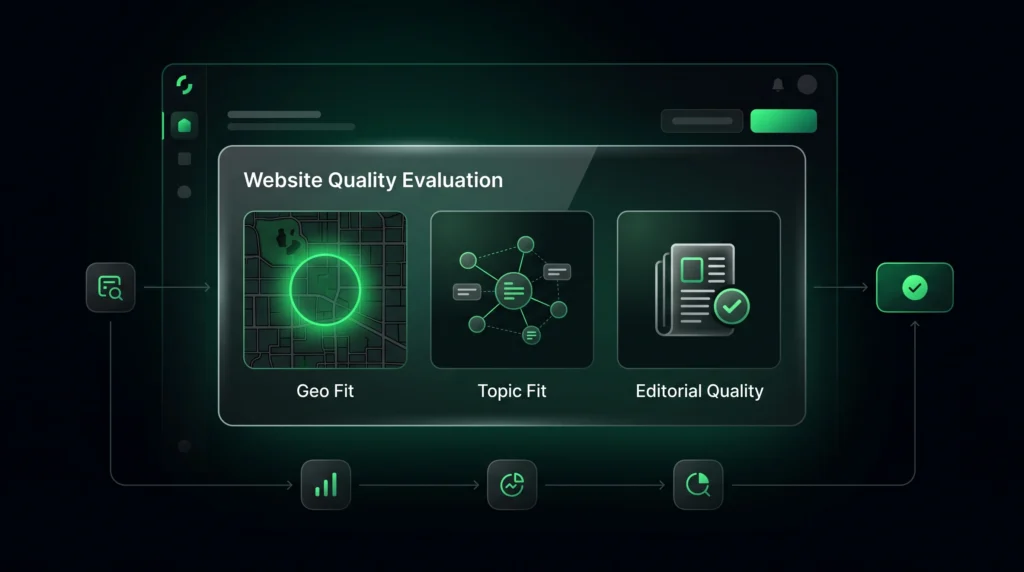
High-quality local links are judged by fit, not vanity metrics alone. A useful placement has geographic connection, topical relevance, real audience value, editorial review, and clean outbound linking behavior.
As an outsourced link-building team, we evaluate each prospect before outreach. The best backlinks for local SEO are placements a real customer could reasonably trust, not just URLs placed on pages with inflated authority scores. A weaker-looking but well-read community page may outperform a stronger metric with no audience fit.
Geographic Proximity
Geographic proximity means the publisher, page topic, or audience connects to the service area. A chamber page, regional business journal, neighborhood guide, or county resource can all provide useful geographic context.
Proximity does not always mean same street or same city. A regional publication can still be relevant when it serves the same metro area, suburbs, county, or customer base. The question is whether the audience overlaps with potential buyers. That judgment requires manual review because tools rarely capture community context on their own.
Topical Relevance
Topical relevance checks whether the linking page fits the service category. A dental clinic benefits from health, parenting, community, or city wellness publications more than unrelated coupon blogs.
When local sites link within content that explains the problem, service, and market, the backlink carries clearer meaning. That context can support city-level rankings because search engines see both subject matter and geographic fit. It also makes the placement more convincing for readers who arrive through referral traffic.
Authority Vs Location
Authority and location should be weighed together. A powerful regional publication can help brand prominence, while a smaller niche association can support tightly focused service relevance.
| Source | Strongest Attribute | Best Campaign Role |
| Regional news site | Editorial authority | Public trust |
| City blog | Audience relevance | Content support |
| Chamber site | Business legitimacy | Entity validation |
| Niche platform | Topical fit | Service authority |
We rarely choose a source from one metric. Link value depends on the full context. We document this reasoning for clients so every approved prospect has a clear purpose.
Anchor Text Diversity
Geo-targeted anchor text should sound natural. We use branded anchors, URL anchors, service terms, city modifiers, neighborhood references, and plain-language phrases depending on publisher context.
Over-optimized anchors can weaken trust. Balanced anchor planning helps boost your local relevance without making the profile look engineered. A real publisher would not repeat the same money phrase across every placement. Natural variation protects the profile while still giving search engines enough context.
Dofollow And Nofollow Balance
Dofollow links can pass stronger ranking signals, but nofollow links can still provide referral visibility, brand exposure, and credibility. Some reputable regional publications and sponsorship pages use nofollow policies by default.
We do not reject a placement only because the link attribute is nofollow. If the audience is real and the mention supports trust, the placement can still contribute to stronger local presence and discovery. Attribute diversity also makes the backlink profile look closer to how genuine media mentions accumulate over time.
Local Link-Building Techniques That Still Work
Local link-building techniques still work when they are built around genuine relationships and useful content. Manual outreach, publisher communication, and quality review matter more than automated placement volume.
Our agency works with community blogs, regional publications, city directories, local business sites, associations, and niche publishers. Each campaign is tailored by market, industry, competition, and service-area goals. Outreach lists are built differently for legal, dental, home service, medical, real estate, and franchise campaigns.
Local Press And News Websites
Local news sites can provide strong editorial trust when the pitch is relevant. Editors are more likely to respond to expert commentary, community involvement, seasonal advice, hiring news, or useful market data.
City-level editorial links can support authority and referral visibility. For businesses that need market-specific placements, city-level editorial links can strengthen location-page relevance through real publisher coverage. These placements are especially useful when a location page needs proof beyond internal copy.
Chamber Of Commerce And Business Associations
A local chamber of commerce backlink can confirm that a business participates in the area economy. Trade groups, professional associations, and member directories can also support trust.
These links are not just citations. They connect a company with recognized organizations, which can help search engines and customers interpret legitimacy. We prioritize active associations with current pages and real member standards. Dead directories and abandoned member pages rarely deserve the same priority.
Community Partnerships And Sponsorships
Community partnerships can lead to backlinks when the relationship is authentic. Schools, nonprofits, neighborhood groups, events, and sports teams often publish sponsor pages or event recaps.
Strong sponsorship opportunities usually include:
- A relevant community audience.
- A live page with useful context.
- Clear business identification.
- No spam-heavy outbound pattern.
- A reason visitors might click.
A sponsorship should never exist only as an exchange for a link. It should make sense offline and online. When the relationship is real, the backlink reads like a citation of involvement rather than a purchased placement.
Local Resource Pages
Local resource pages earn backlinks by solving area-specific problems. A clinic might publish a patient access guide, while a contractor might create a seasonal home maintenance checklist.
These assets work because they give publishers something useful to reference. The content must be relevant to your local audience and tied to actual service demand. Thin pages with only a city name added rarely earn backlinks naturally. Publishers prefer resources that save readers time or answer a practical question.
Local Influencers And Bloggers
Local bloggers and community creators can help businesses reach neighborhood audiences that national publishers never touch. Good prospects often cover family services, homes, health, restaurants, real estate, events, or small business topics.
We review engagement, editorial tone, audience fit, and website quality before outreach. A link to your site from a trusted creator can bring referral visits and support visibility in local search results when the content is relevant. We also check whether the creator maintains a real website, not only a social profile.
Niche Edits And Guest Posts
Niche edits place a link into existing content that already has context and potential traffic. Guest posts create new editorial content for city blogs, regional publishers, or niche websites serving a defined audience.
Both require careful review. We check indexability, content quality, topical fit, organic traffic, outbound links, and publisher standards. For country-specific outreach, geo-relevant local link building in India shows how regional targeting shapes campaign planning. The same logic applies when a brand needs region-by-region rollout instead of generic outreach.
Link Building Strategies To Build Local Backlinks
Strategies for building local backlinks should reflect competition, market size, and service-area coverage. A single-location clinic needs a different plan than a franchise with dozens of city pages.
For multi-location local SEO, we use market-by-market rollout plans. Controlled link velocity, unique publisher lists, and location-specific landing pages help avoid repetitive footprints while supporting each area’s authority. This is especially useful for franchises and agencies managing many locations under one brand.
List Local Business On Local Directories
Listing a local business on trusted directories helps confirm business information and build foundational visibility. The best directories are indexed, moderated, category-relevant, and useful for area customers.
We avoid mass submission packages that ignore quality. A directory link should support discovery, trust, or citation consistency. If the platform has no audience and weak standards, it rarely deserves priority. Directory work should support accuracy and discovery, not inflate a report.
Sponsor Local Events And Sports Teams
Sponsoring events, schools, sports teams, or neighborhood programs can create credible community backlinks. These placements work best when the sponsor page includes business context and serves real residents.
For SEO, the value comes from authenticity. A page that shows real community involvement can support trust signals better than a generic paid placement. The strongest opportunities connect brand, audience, and service area naturally. We review these pages for lasting visibility because event pages can disappear after the season ends.
Partner With Local Charities And Nonprofits
Local charities and nonprofits often publish supporter pages, campaign recaps, and resource guides. Real partnerships with local businesses can lead to backlinks when the organization has an active website and clear editorial oversight.
We prioritize partners with recent updates, transparent missions, and audience overlap. Links from trusted local sources can reinforce community relevance while also supporting brand credibility. The relationship should be documented honestly, with no forced anchor text or irrelevant landing page.
Pitch Stories To Local Media
Media outreach works when the pitch helps the editor serve readers. Businesses can provide expert quotes, safety tips, seasonal guidance, hiring updates, or analysis of buyer behavior in the region.
Our outreach team customizes angles by publication type. A regional newspaper needs a different pitch than a neighborhood blog or industry-specific city platform. Better alignment usually means better placement quality. Editors can spot mass outreach quickly, so tailored pitches protect both acceptance rate and brand reputation.
Create Locally Relevant Content
Locally relevant content gives publishers a reason to cite the business. Service-area guides, comparison pages, cost explainers, checklists, and community resources can earn backlinks when they answer real buyer questions.
For multi-location brands, duplicate pages are a common weakness. Each market page needs distinct service details, internal links, and authority support. local backlinks for multiple locations can help scale city-by-city coverage without using the same outreach pattern everywhere. Scaled acquisition should still feel specific to each market.
Analyze Competitor Backlink Profiles
Competitor analysis helps identify websites link patterns that already influence rankings. It can reveal sponsorships, directories, associations, city blogs, chambers, and editorial placements.
A practical audit includes:
- Identify competitors ranking in Maps and organic results.
- Separate citations from editorial links.
- Review backlinks from websites with area relevance.
- Score traffic, authority, topical fit, and audience value.
- Prioritize outreach opportunities competitors earned but your brand lacks.
This process turns research into action, not a spreadsheet nobody uses. The final prospect list should be realistic for outreach, not just impressive in an audit.
Common Mistakes In Local Link Building
Common mistakes in local link building often happen when businesses copy national SEO strategies. A strong metric from an unrelated site may not help a city page compete for service-area intent.
Our quality checks focus on relevance, publisher standards, anchor text, link velocity, destination pages, and placement value. Sustainable acquisition should support trust, referral visibility, and long-term SEO efforts. Bad placements may look fine in a monthly report, but they rarely help pages earn durable search trust.
Chasing Quantity Over Relevance
Building backlinks at high volume can create noise when the sources are weak. A few strong placements from trusted local sources may outperform dozens of generic submissions.
Relevance should lead every decision. We ask whether the source serves the audience, whether the content fits the service, and whether the placement would make sense to a real customer. If not, quantity will not fix the problem. Relevance is the filter that keeps acquisition tied to business goals.
Buying Links From Spammy Sources
Spammy paid links can create unstable signals. Many vendors sell placements on websites that publish every industry, accept thin articles, and have no local audience.
We reject sources with suspicious outbound patterns, fake traffic, unrelated categories, or no editorial review. A safe campaign earns backlinks through publisher relationships, useful content, and placements that add value for readers. If a page exists only to sell links, it is not a strategic asset.
Ignoring Geographic Relevance
Ignoring geographic relevance weakens city-level performance. A service-area business needs signals from local websites, regional publishers, business groups, and industry pages relevant to your local market.
A backlink from a local publication or chamber can communicate authority in a way unrelated national pages cannot. The placement should clarify where the business operates, who it serves, and why the company is trusted there. A link should add context that a citation or homepage mention cannot provide alone.
Measuring Impact From Building High-Quality Local Backlinks
Measuring link acquisition requires more than counting delivered URLs. We track Maps rankings, organic movement, referral traffic, citation status, anchor distribution, publisher quality, and placement indexation.
A strong reporting model connects backlinks to your site with business outcomes. The goal is better visibility in local search results, stronger city-level authority, and more qualified customers from the right service areas. This is why we connect reporting with rankings, leads, and publisher quality rather than treating links as isolated wins.
Rankings, Traffic, Leads, Map Pack Movement
Ranking reports should include map pack movement, Google Maps positions, organic location-page rankings, and leads from target service areas. Referral traffic matters when it comes from a relevant audience.
| Metric | Why It Matters |
| Local pack movement | Shows Maps visibility changes |
| Organic city rankings | Measures service-page growth |
| Referral visits | Confirms audience value |
| Citation status | Verifies NAP consistency |
| Placement monitoring | Confirms links remain live |
We also check whether links point to the right pages, not only whether they exist. A misplaced link can dilute impact even when the source is strong.
ROI For Local SEO Campaigns
ROI for link building for local SEO should be measured by qualified visibility, lead quality, market coverage, and placement value. Link count alone is not a business result.
Our reports include publisher details, anchor text, destination pages, citation status, ranking movement, and link monitoring. That gives business owners, franchises, and agencies a clear view of which strategies for building backlinks are supporting growth. Clear attribution helps agencies explain why a campaign is being scaled, adjusted, or paused.
FAQ
Geo relevant backlinks are important because they support relevance, authority, and trust for a defined service area. They work best alongside Google Business Profile optimization, reviews, accurate citations, strong service pages, and consistent business information. Backlinks alone cannot guarantee rankings, but quality placements from relevant websites can improve local visibility.
Yes, local backlinks can still support map pack visibility by strengthening prominence and trust. Maps results also depend on proximity, profile optimization, reviews, categories, citations, and relevance. The best campaigns combine backlinks with GBP improvements, review growth, NAP consistency, and content that matches service-area intent.
No, citations do not replace geo relevant backlinks. Citations verify business information, while editorial links help build authority and contextual relevance. Competitive markets usually need both. Citations create consistency, and strong backlinks from reputable websites can support organic rankings, referral visibility, and broader trust.
There is no fixed number. The need depends on competition, industry, current authority, location-page quality, citation health, and service-area size. A small suburban business may need fewer strong links than a law firm, roofing company, or franchise location competing in a dense metro area.
Local relevance often matters more for city-level search, but authority still matters. The strongest source has audience overlap, topical fit, editorial standards, traffic, and geographic connection. A regional publication, chamber page, or niche city blog can be more useful than a high-authority site with no market relevance.
Useful tools include backlink analysis platforms, rank trackers, Google Business Profile insights, citation management tools, and placement monitoring systems. Tools can surface opportunities, but human review is still needed to confirm publisher quality, geographic fit, organic traffic, editorial standards, and whether the placement helps a real customer.


